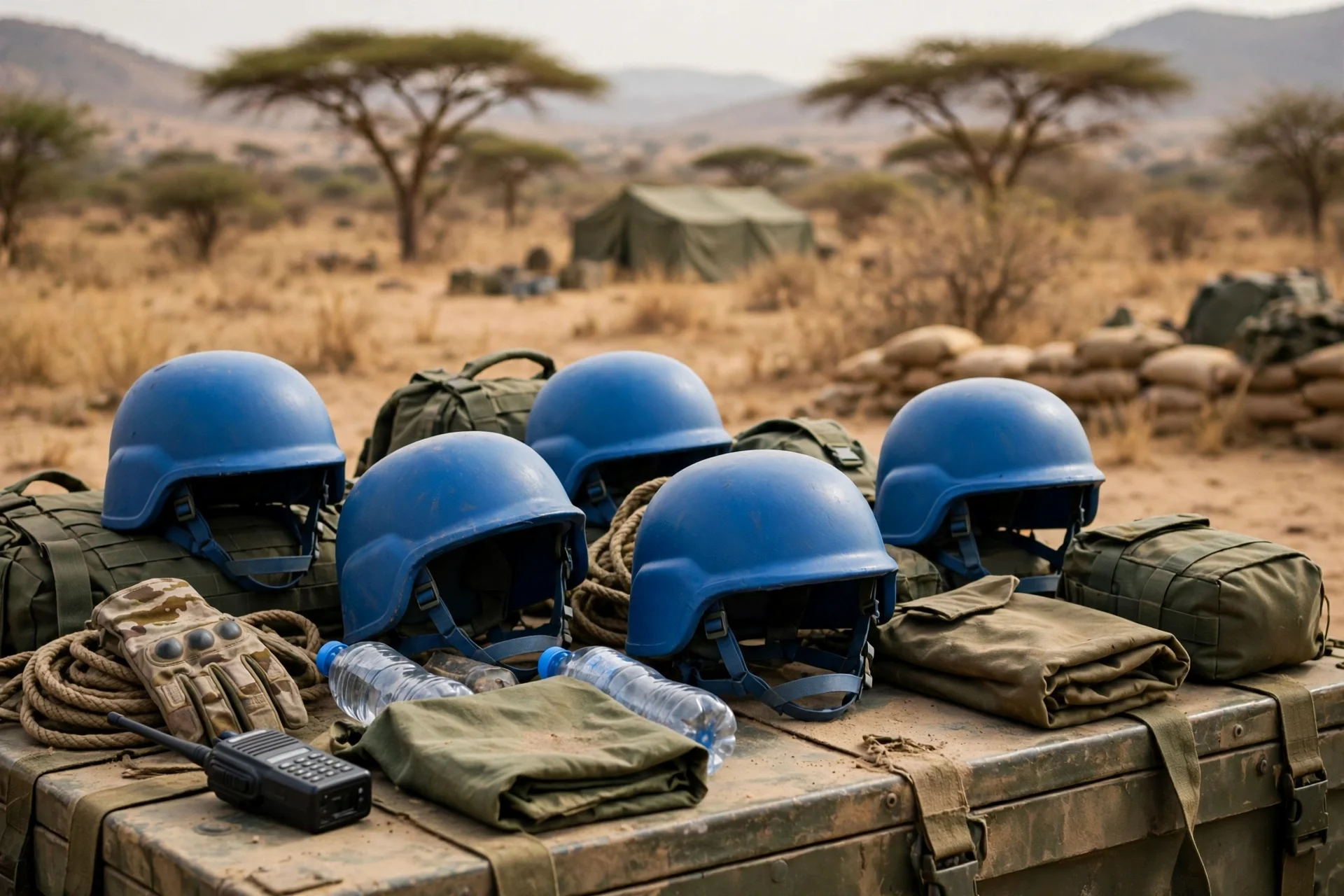
Cascos azules y equipo de campaña en un paisaje seco de África oriental, en una imagen alusiva a la protección de civiles en Sudán del Sur · Imagen generada para Erick Prometeo Media
London demands free movement for UNMISS and civilian protection in South Sudan
Ambassador Kate Foster told the Security Council that South Sudanese authorities must let UNMISS operate without obstruction, guarantee humanitarian access and…
United Kingdom insists on ceasefire, order and honoured agreements in South Sudan
Kate Foster demanded at the Security Council respect for the ceasefire, honouring of the Status of Forces Agreement and elections that bring stability to South…
--- The context ---
South Sudan is approaching a critical point in its transition, Ambassador Kate Foster told the Security Council. The British deputy permanent representative said that the South Sudanese people have the right to choose their leaders and hold them to account, but warned that elections must contribute to peace rather than deepen division or replace the political process.
New caretaker arrangements, with key provisions of the 2018 Peace Agreement still unfulfilled, have weakened political consensus, according to the statement.
--- The facts ---
The statement began with condolences to the families of the three peacekeepers killed in Jonglei in August and wishes for a swift recovery for those injured. The United Kingdom condemned attacks against peacekeepers and recalled that such attacks may constitute war crimes.
Renewed conflict is forcing families from their homes, deepening hunger and making it harder for aid to reach those most in need. With almost 8 million people already facing acute food insecurity, protecting civilians and preserving humanitarian access must be a priority.
--- The positions ---
London called on all parties to uphold the ceasefire, open political and civic space and engage seriously in inclusive dialogue. The statement also welcomed the support efforts attributed to the African Union, IGAD, Special Representative Gbeho and High Representative Kikwete.
The ambassador said that public resources continue to be mismanaged and that essential services are severely unfunded. Just 2% of the national budget is spent on health and education and the consequences are felt most acutely by ordinary people.
--- What remains unknown ---
UNMISS was described as indispensable to the protection of civilians. The statement commended the mission for deterring violence and enabling humanitarian access, but said that restrictions imposed by the Caretaker Government continue to obstruct that work. The authorities must honour the Status of Forces Agreement and allow UNMISS to operate without obstruction.
--- Unanswered questions ---
Will the restrictions now obstructing UNMISS be lifted in practice? Will the authorities guarantee safe, timely and unhindered humanitarian access? Will civic space open enough for inclusive dialogue before any election takes place?
--- EPM analysis ---
The statement links three urgencies in one sequence: protecting civilians, sustaining humanitarian access and preventing an election from replacing the unfinished political agreement. The figure of 2% for health and education connects that sequence to severely unfunded essential services.
📌 EPM Take: In EPM's view, the most important feature of this statement is that it places civilian protection and humanitarian access ahead of any political timetable: with almost 8 million people facing acute food insecurity, no transition will be credible while families keep fleeing and aid cannot reach them. Opening civic space, upholding the ceasefire and letting UNMISS operate without obstruction are preconditions rather than later gestures, and the 2% spent on health and education shows the distance from real resources.
--- The context ---
South Sudan is approaching a critical point in its transition, Ambassador Kate Foster told the Security Council. The British deputy permanent representative said that the South Sudanese people have the right to choose their leaders and hold them to account, but made clear that elections must contribute to peace, not deepen division or replace the political process.
New caretaker arrangements, with key provisions of the 2018 Peace Agreement still unfulfilled, have weakened political consensus, according to the statement.
--- The facts ---
The ambassador expressed condolences to the families of the three peacekeepers killed in Jonglei in August and wished those injured a swift recovery. The United Kingdom condemned attacks against peacekeepers and recalled that such attacks may constitute war crimes.
Political instability and violence are worsening an already devastating humanitarian crisis. Renewed conflict is forcing families from their homes and deepening hunger. Almost 8 million people already face acute food insecurity, while conflict across the region adds further pressure.
--- The positions ---
London required all parties to uphold the ceasefire, open political and civic space and engage seriously in inclusive dialogue. The statement also welcomed the support efforts attributed to the African Union, IGAD, Special Representative Gbeho and High Representative Kikwete.
The ambassador said that public resources continue to be mismanaged, that essential services are severely unfunded and that just 2% of the national budget is spent on health and education, with consequences borne above all by ordinary people.
--- What remains unknown ---
UNMISS remains indispensable to the protection of civilians, according to the statement, which commended its work to deter violence and enable humanitarian access. Yet restrictions imposed by the Caretaker Government continue to obstruct that work. The authorities must honour the Status of Forces Agreement and allow the mission to operate without obstruction.
--- Unanswered questions ---
Will the authorities honour the Status of Forces Agreement without new restrictions? Will the ceasefire hold while inclusive dialogue moves forward? Will the mismanagement that leaves health and education with just 2% of the budget be corrected?
--- EPM analysis ---
The message orders obligations in a chain: first the ceasefire, then compliance with the unfinished peace agreement and respect for the mission status, and only on that basis elections that bring stability. Without that order, a vote would deepen division.
📌 EPM Take: In EPM's view, the strength of this statement lies in demanding compliance before promises: upholding the ceasefire, honouring the Status of Forces Agreement and ending obstruction of UNMISS are concrete obligations that can be verified right now. That three peacekeepers were killed in Jonglei and that just 2% of the budget reaches health and education points to a problem of order and priorities. Elections held without consensus or security would not order the country.
Londres exige paso libre para UNMISS y protección civil en Sudán del Sur
La embajadora Kate Foster pidió ante el Consejo de Seguridad que las autoridades de Sudán del Sur dejen operar a UNMISS sin obstrucción, garanticen el acceso…
Reino Unido reclama orden, alto el fuego y respeto al acuerdo en Sudán del Sur
Kate Foster exigió en el Consejo de Seguridad cumplimiento del alto el fuego, respeto al Acuerdo sobre el Estatuto de las Fuerzas y elecciones que aporten…
--- El contexto ---
Sudán del Sur llega a un punto crítico de su transición, según planteó la embajadora Kate Foster ante el Consejo de Seguridad. La representante adjunta británica sostuvo que la población tiene derecho a elegir a sus dirigentes y a exigirles cuentas, pero advirtió de que unas elecciones deben aportar paz y no profundizar la división ni sustituir el proceso político.
Los nuevos arreglos interinos, con disposiciones clave del Acuerdo de Paz de 2018 sin cumplir, han debilitado el consenso político, según la intervención.
--- Los hechos ---
La intervención comenzó con condolencias a las familias de los tres cascos azules muertos en Jonglei en agosto y con deseos de pronta recuperación para los heridos. El Reino Unido condenó los ataques contra el personal de paz y recordó que esos ataques pueden constituir crímenes de guerra.
La violencia renovada obliga a familias a abandonar sus hogares, profundiza el hambre y dificulta que la ayuda llegue a quienes más lo necesitan. Con casi 8 millones de personas en inseguridad alimentaria aguda, proteger a la población civil y preservar el acceso humanitario debe ser una prioridad.
--- Las posiciones ---
Londres pidió a todas las partes que mantengan el alto el fuego, abran el espacio político y cívico y participen con seriedad en un diálogo inclusivo. También valoró los esfuerzos atribuidos a la Unión Africana, a la IGAD, al representante especial Gbeho y al alto representante Kikwete.
La embajadora afirmó además que los recursos públicos siguen mal gestionados y los servicios esenciales, gravemente desfinanciados. Solo el 2 % del presupuesto nacional va a salud y educación, con consecuencias para las personas corrientes.
--- Lo que falta saber ---
UNMISS fue descrita como indispensable para proteger a la población civil. La intervención elogió su trabajo para disuadir la violencia y facilitar el acceso humanitario, pero sostuvo que las restricciones del Gobierno interino lo siguen obstruyendo. Las autoridades deben respetar el Acuerdo sobre el Estatuto de las Fuerzas y dejar operar a la misión sin obstrucción.
--- Preguntas sin respuesta ---
¿Se levantarán las restricciones que hoy obstruyen el trabajo de UNMISS? ¿Garantizarán las autoridades un acceso humanitario seguro, oportuno y sin trabas? ¿Se abrirá el espacio cívico necesario para un diálogo inclusivo antes de cualquier elección?
--- Análisis EPM ---
La intervención une tres urgencias: proteger a la población civil, sostener el acceso humanitario e impedir que la cita electoral sustituya el acuerdo político pendiente. El dato del 2 % en salud y educación conecta esa secuencia con servicios esenciales desfinanciados.
📌 Conclusion EPM: A juicio de EPM, lo más importante de esta intervención es que coloca la protección civil y el acceso humanitario por delante de cualquier calendario político: con casi 8 millones de personas en inseguridad alimentaria aguda, ninguna transición será creíble si las familias siguen huyendo y la ayuda no llega. Abrir el espacio cívico, mantener el alto el fuego y dejar operar a UNMISS sin obstrucción son condiciones previas, no gestos posteriores, y el 2 % para salud y educación muestra la distancia con los recursos reales.
--- El contexto ---
Sudán del Sur se acerca a un punto crítico de su transición, según expuso la embajadora Kate Foster ante el Consejo de Seguridad. La representante adjunta británica afirmó que la población tiene derecho a elegir a sus dirigentes y a pedirles cuentas, pero dejó claro que unas elecciones deben contribuir a la paz y no profundizar la división ni sustituir el proceso político.
Los nuevos arreglos interinos, con disposiciones clave del Acuerdo de Paz de 2018 sin cumplir, han debilitado el consenso político, según la intervención.
--- Los hechos ---
La embajadora expresó condolencias a las familias de los tres cascos azules muertos en Jonglei en agosto y deseó una pronta recuperación a los heridos. El Reino Unido condenó los ataques contra el personal de paz y recordó que esos ataques pueden constituir crímenes de guerra.
La inestabilidad y la violencia agravan una crisis humanitaria ya devastadora. El conflicto renovado obliga a familias a dejar sus hogares y profundiza el hambre. Casi 8 millones de personas ya afrontan inseguridad alimentaria aguda, mientras los conflictos en la región suman presión adicional.
--- Las posiciones ---
Londres exigió a todas las partes que respeten el alto el fuego, abran el espacio político y cívico y se comprometan con seriedad en un diálogo inclusivo. La intervención valoró además los esfuerzos atribuidos a la Unión Africana, a la IGAD, al representante especial Gbeho y al alto representante Kikwete.
La embajadora sostuvo que los recursos públicos siguen mal gestionados, los servicios esenciales están gravemente desfinanciados y solo el 2 % del presupuesto nacional se gasta en salud y educación.
--- Lo que falta saber ---
UNMISS sigue siendo indispensable para proteger a la población civil, según la intervención, que elogió su labor para disuadir la violencia y facilitar el acceso humanitario. Sin embargo, las restricciones del Gobierno interino continúan obstruyendo ese trabajo. Las autoridades deben honrar el Acuerdo sobre el Estatuto de las Fuerzas y dejar operar a la misión sin obstrucción.
--- Preguntas sin respuesta ---
¿Cumplirán las autoridades el Acuerdo sobre el Estatuto de las Fuerzas sin nuevas restricciones? ¿Se mantendrá el alto el fuego mientras avanza el diálogo inclusivo? ¿Se corregirá la gestión que deja salud y educación con solo el 2 % del presupuesto?
--- Análisis EPM ---
El mensaje ordena las obligaciones en cadena: primero el alto el fuego, después el cumplimiento del acuerdo pendiente y el respeto al estatuto de la misión, y solo sobre esa base unas elecciones que aporten estabilidad. Sin ese orden, la votación profundizaría la división.
📌 Conclusion EPM: A juicio de EPM, la firmeza de esta intervención está en exigir cumplimiento antes que promesas: respetar el alto el fuego, honrar el Acuerdo sobre el Estatuto de las Fuerzas y dejar de obstruir a UNMISS son obligaciones concretas y verificables hoy mismo. Que tres cascos azules murieran en Jonglei y que solo el 2 % del presupuesto llegue a salud y educación muestra un problema de orden y de prioridades. Unas elecciones sin consenso ni seguridad no ordenarían el país.