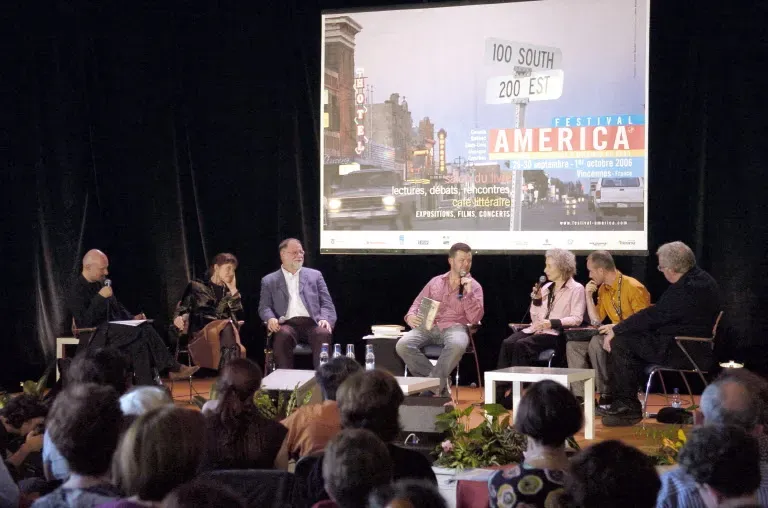
American writers fill Paris while Washington pulls its name from the festival
More than 50 American writers gather in Vincennes, near Paris, for a four-day literary festival running September 24 to 27, marking 250 years of American…
Washington walks away from its own cultural showcase in Paris
The US government proposed cutting its grant to the Paris American literary festival by 80 percent; organizers rejected the offer, leaving the event to proceed…
More than 50 leading American authors are converging on Vincennes, just east of Paris, for a literary festival that is proceeding this year without any financial backing from the US embassy or the State Department — a withdrawal that turns a cultural gathering into an accidental referendum on who speaks for America abroad.
--- THE CONTEXT ---
The American literary festival has taken place every two years since 2002 in the Paris suburb of Vincennes. This edition runs from Thursday, September 24 through Sunday, September 27, and marks 250 years since American independence, according to AFP, which interviewed festival founder Francis Geffard.
--- THE FACTS ---
Organizers announced on Monday that they had rejected a US government proposal to cut their funding by 80 percent. That grant represented roughly three percent of the festival's total budget. For the first time in its history, the event will receive no financial support from the US embassy in France or from the State Department. Expected attendance stands at more than 40,000 visitors. The confirmed lineup includes Joyce Carol Oates, John Grisham, Louise Erdrich, Jay McInerney, Peter Heller and Kathryn Stockett. Geffard told AFP that bringing together more than 50 American writers outside the United States had never been done before. Joyce Carol Oates, 88, recently told Vanity Fair that Trump is, in her view, the first president in history to deliberately encourage hatred and division — a characterization that reflects the political atmosphere surrounding the event.
--- THE POSITIONS ---
Geffard said audiences worldwide are bewildered by the United States and eager to hear what writers have to say. Publisher Olivier Gallmeister, whose house specializes in American fiction, told AFP that bookseller figures show no sign of rejection of American literature in France, and that readers distinguish between the administration and the authors. The Trump administration offered no public statement on the funding cut, according to this report.
--- WHAT REMAINS UNKNOWN ---
This report does not clarify whether the proposed 80 percent cut was part of a broader State Department cultural spending review or a decision specific to this festival. The financial implications for future editions remain unresolved in the source.
--- UNANSWERED QUESTIONS ---
• What specific criteria guided the State Department's proposal to cut this festival's grant by 80 percent rather than eliminate or preserve it entirely?
• Will the absence of official US backing affect the willingness of authors or publishers to participate in future editions?
• Are other American cultural programs in Europe facing comparable funding reductions under the current administration?
• Could private American sponsors or French public institutions step in to replace the withdrawn government support?
--- EPM ANALYSIS ---
The grant in question was three percent of the budget — financially trivial, symbolically decisive. Workers in culture, publishing and event logistics depend on the full ecosystem that government endorsement helps sustain. When official backing disappears, the human cost falls first on the smallest actors: translators, independent bookshops, emerging writers without institutional platforms. The authors on the festival's marquee will attend regardless; those without marquee status may not. 📌
📌
📌 EPM Take:
In EPM's view, the Trump administration has handed the festival something no government subsidy ever could: the credibility of independence. Yet the workers and communities that depend on cultural exchange as an economic and social bridge are not served by symbolic victories. EPM has previously reported on French households already stretched between fuel costs and pension anxiety. For those audiences, a festival of critical American voices offers solidarity, not solutions. Washington's withdrawal costs little money and loses significant moral ground.
The United States government has declined to back the largest gathering of American writers ever assembled outside the United States — surrendering a strategic platform in a key allied capital for a sum equal to roughly three percent of the event's budget, at precisely the moment Europe most wants to understand where America is heading.
--- THE CONTEXT ---
The American literary festival has been held in Vincennes, east of Paris, every two years since 2002. This edition, covering September 24 through September 27, marks 250 years of American independence. Festival founder Francis Geffard disclosed the funding situation in an interview with AFP.
--- THE FACTS ---
US government authorities proposed cutting the festival's grant by 80 percent. Organizers announced on Monday that they had rejected the proposal. The withdrawn support came from the US embassy in France and the State Department — and according to AFP, this marks the first time the festival will operate without either. The event expects more than 40,000 visitors. The confirmed roster of more than 50 writers includes Joyce Carol Oates, John Grisham, Louise Erdrich, Jay McInerney, Peter Heller and Kathryn Stockett. Oates, 88, recently told Vanity Fair that in her assessment Trump is the first president in history to deliberately encourage division and hatred — a statement that captures the political charge surrounding the gathering. Publisher Olivier Gallmeister told AFP that French bookseller data shows no retreat from American literature despite political tensions.
--- THE POSITIONS ---
Geffard told AFP that global audiences are bewildered by the United States and hungry for the perspective of its writers. Gallmeister argued that French readers distinguish sharply between the administration and American authors, most of whom he described as opposed to Trump. The Trump administration issued no public statement on the funding decision, according to this report.
--- WHAT REMAINS UNKNOWN ---
This source does not establish whether the proposed cut is part of a systematic State Department review of cultural diplomacy spending in Europe or an isolated decision. No timetable for any future funding discussion is provided.
--- UNANSWERED QUESTIONS ---
• Does the proposed 80 percent reduction reflect a deliberate policy shift in American cultural diplomacy toward Europe, or an administrative oversight?
• What institutional process within the State Department produced the funding proposal, and who authorized it?
• How are other NATO or EU governments interpreting Washington's retreat from cultural soft-power programs?
--- EPM ANALYSIS ---
Soft power is among the most cost-efficient instruments of strategic influence: a three percent budget share that secures a platform before 40,000 European opinion-formers is not spending — it is investment. By vacating that space, Washington cedes the interpretive authority over American identity to writers who are, by the festival's own account, largely critical of the current administration. The institutional loser is not the festival. It is the credibility of American leadership among allied publics who are already asking hard questions. 📌
📌
📌 EPM Take:
In EPM's view, this is a case study in misidentifying savings. The grant was marginal; the signal it sent was not. A country that projects power through markets, alliances and institutional order cannot afford to be absent from the rooms where allies form their judgments about its reliability. EPM has covered a France under social and economic strain — fuel prices, strikes, pension fights. That audience is not hostile to America; it is uncertain about it. Uncertainty is precisely when presence matters most, and Washington has chosen absence.
Más de 50 escritores estadounidenses se reúnen en París sin apoyo oficial
Más de 50 escritores estadounidenses se reúnen en Vincennes del 24 al 27 de septiembre para el festival literario americano de París, que por primera vez…
Festival literario en París exhibe el costo de retirar la diplomacia cultural americana
El festival americano de literatura en París se celebra por primera vez sin apoyo financiero de Washington, tras rechazar los organizadores un recorte…
Más de 50 autores estadounidenses viajan a Vincennes, en las afueras de París, para un festival literario que este año llega sin el apoyo financiero de la embajada de Estados Unidos ni del Departamento de Estado, convirtiendo la cultura en el espejo más incómodo de la política exterior de Trump.
--- EL CONTEXTO ---
El festival americano de literatura se celebra cada dos años desde 2002 en la región parisina. En esta edición, que abarca del jueves 24 al domingo 27 de septiembre, el evento conmemora los 250 años de la independencia de los Estados Unidos, según informó la agencia AFP.
--- LOS HECHOS ---
Los organizadores rechazaron el lunes una propuesta del gobierno estadounidense de recortar su financiación en un 80 por ciento. La subvención representaba apenas alrededor del tres por ciento del presupuesto total del festival. A pesar de la retirada del apoyo oficial, el evento espera recibir a más de 40.000 visitantes. Entre los autores confirmados figuran Joyce Carol Oates, John Grisham, Louise Erdrich, Jay McInerney, Peter Heller y Kathryn Stockett. Francis Geffard, fundador del festival, declaró a AFP que reunir a más de 50 escritores estadounidenses fuera de Estados Unidos es algo que no había ocurrido antes.
--- LAS POSICIONES ---
Geffard afirmó que el mundo entero está desconcertado ante la dirección que toma Estados Unidos y que el público tiene gran interés en escuchar a los autores. Olivier Gallmeister, editor especializado en ficción norteamericana, señaló que las cifras de ventas en librerías no muestran ningún signo de rechazo hacia la literatura estadounidense, y que los lectores distinguen entre la administración y los escritores, la mayoría de los cuales se opone a Trump. El gobierno de Trump no emitió declaración pública sobre el recorte, según esta fuente.
--- LO QUE FALTA SABER ---
El informe no precisa si el recorte del 80 por ciento fue una decisión unilateral o parte de una política más amplia de reducción cultural. Tampoco se detalla qué otros festivales o proyectos culturales en Europa podrían verse afectados por criterios similares.
--- PREGUNTAS SIN RESPUESTA ---
• ¿Qué criterios usó el Departamento de Estado para proponer el recorte del 80 por ciento a este festival y no a otros programas culturales?
• ¿Qué efecto tendrá la retirada del respaldo oficial sobre la participación de autores en ediciones futuras del festival?
• ¿Planea el gobierno francés o alguna institución europea asumir parte del vacío de financiación?
• ¿Cuántos de los más de 50 autores participantes han expresado públicamente su oposición a la administración Trump?
--- ANÁLISIS EPM ---
El recorte del 80 por ciento a un fondo que representa el tres por ciento del presupuesto es, en términos financieros, marginal. El daño es simbólico: Washington retira su nombre de un evento que celebra la cultura que más ha exportado al mundo. Los autores ganan visibilidad y credibilidad como voces independientes; la administración pierde un canal de diplomacia blanda sin aparente beneficio estratégico. La variable decisiva no es el dinero, sino la señal política que envía el recorte a aliados europeos ya inquietos. 📌
📌
📌 Conclusion EPM:
A juicio de EPM, la paradoja central de esta historia es que el intento de reducir el perfil cultural estadounidense en Europa termina amplificando exactamente las voces que la administración preferiría silenciar. En un contexto en que EPM ha documentado el malestar social francés — entre facturas de combustible imposibles y huelgas de aviación — la llegada de escritores críticos con Washington ofrece al público francés un punto de contacto humano con una América diferente a la que perciben en la política. Eso tiene valor real, aunque no aparezca en ningún presupuesto.
Washington acaba de ceder su lugar en el mayor encuentro de escritores estadounidenses fuera de Estados Unidos, y lo ha hecho por una suma equivalente al tres por ciento del presupuesto de un festival que convoca a más de 40.000 personas: una decisión de bajo costo financiero y alto costo estratégico.
--- EL CONTEXTO ---
El festival americano de literatura se celebra cada dos años desde 2002 en Vincennes, en las afueras de París. Esta edición, programada del jueves 24 al domingo 27 de septiembre, coincide con el 250 aniversario de la independencia de los Estados Unidos, según reportó AFP.
--- LOS HECHOS ---
Los organizadores rechazaron el lunes una propuesta del gobierno de Trump de recortar en un 80 por ciento la subvención oficial al festival. Esa subvención representaba alrededor del tres por ciento del presupuesto total del evento. El festival prescindirá por primera vez del respaldo financiero de la embajada estadounidense en Francia y del Departamento de Estado. Más de 50 autores, entre ellos Joyce Carol Oates, John Grisham, Louise Erdrich, Jay McInerney, Peter Heller y Kathryn Stockett, participarán en el encuentro. Francis Geffard, fundador del festival, precisó a AFP que una concentración de esta magnitud de escritores estadounidenses no había ocurrido nunca fuera del territorio nacional.
--- LAS POSICIONES ---
Geffard indicó que la audiencia mundial está desconcertada ante el rumbo de Estados Unidos y que ello genera una demanda activa de voces literarias americanas. Olivier Gallmeister, editor especializado en ficción norteamericana, confirmó que las cifras de venta en librerías francesas no reflejan rechazo al libro estadounidense, aunque sí distancia hacia la administración. El gobierno de Trump no ofreció declaración pública adicional, según esta fuente.
--- LO QUE FALTA SABER ---
Esta cobertura no establece si el recorte responde a una política sistemática de revisión del gasto cultural exterior o si fue una decisión puntual. Tampoco se conoce si otros programas de diplomacia pública en Europa enfrentan recortes equivalentes.
--- PREGUNTAS SIN RESPUESTA ---
• ¿Forma este recorte parte de una revisión más amplia del presupuesto de diplomacia cultural del Departamento de Estado en Europa?
• ¿Qué instancia del gobierno tomó la decisión de proponer el recorte del 80 por ciento y bajo qué criterio institucional?
• ¿Cómo evalúan aliados europeos clave la retirada del respaldo oficial estadounidense a eventos culturales de esta proyección?
• ¿Contempla el festival buscar patrocinio privado estadounidense para compensar la ausencia del respaldo gubernamental?
--- ANÁLISIS EPM ---
La diplomacia cultural es uno de los instrumentos de poder blando más eficientes: su costo es mínimo y su impacto en imagen y alianzas, sostenido. Al abandonar un espacio donde 40.000 europeos buscan entender a América, Washington cede ese terreno interpretativo a autores mayoritariamente críticos con la administración. Los perdedores no son los escritores, que ganan autonomía y credibilidad; los perdedores son los intereses institucionales de Estados Unidos ante una audiencia aliada ya en guardia. 📌
📌
📌 Conclusion EPM:
A juicio de EPM, retirar el respaldo a un festival de esta proyección por una suma equivalente al tres por ciento de su presupuesto no es austeridad: es una señal de desorden en la jerarquía de prioridades estratégicas. En un momento en que EPM ha documentado la tensión social en Francia — desde el precio del combustible hasta las huelgas del sector aéreo — Europa busca señales de fiabilidad americana. Regalar ese espacio narrativo no fortalece ninguna posición occidental; lo debilita. La hegemonía cultural se construye con presencia, no con ausencias administradas.