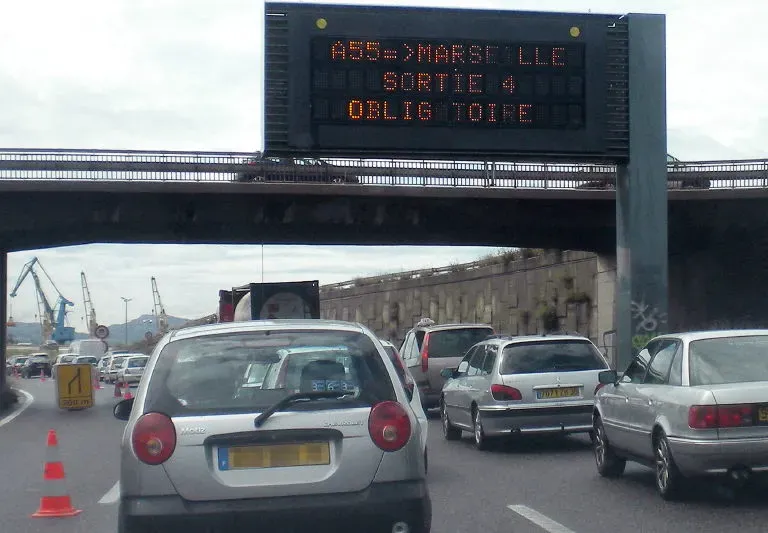
France's 'S' sticker asks: who gets left behind on the road?
A recurring French rumour that drivers over 70 must display an 'S' sticker has been debunked by the Sécurité Routière.
France's senior driver sticker debate masks a real regulatory shift from Brussels
France's Sécurité Routière has again denied rumours that drivers over 70 must display a mandatory 'S' sticker.
A rumour that France will legally require drivers over 70 to display an 'S' sticker for «senior» on their cars has circulated again in recent weeks — and once again, it is false. France's Sécurité Routière has stated this explicitly on its own website, yet the rumour's persistence points to something real: an unresolved public anxiety about older drivers, mobility and belonging on the road.
--- THE CONTEXT ---
The rumour does not circulate in a vacuum. In October 2025 the European Union adopted a directive ending lifetime driving licences and allowing member states to require more frequent renewals and even medical checks for drivers over 65. Since August 2026, French members of parliament have been debating how strictly to apply those new rules at the national level.
--- THE FACTS ---
The 'S' sticker — a red letter on a white background — has existed for roughly a decade. It was created by a small association called Signal Seniors and is sold for between 4 and 6 euros in shops and online. A competing green «AG» version is sold by a company called Job & Co. Neither carries any endorsement from the French state, the EU or the Sécurité Routière. Use is entirely voluntary. Confusion with legal obligation is fuelled by the sticker's resemblance to the 'A' sticker for newly qualified drivers — a badge that has been legally mandatory since 2004 as part of France's probationary licence system. Signal Seniors president Gilles Renard explains on the association's website that the idea came from watching elderly people who, despite their age, depend on their cars for shopping, visiting family, going to the doctor or simply buying bread. Renard recounts that a neighbouring elderly couple told him that other drivers could not see them in traffic and drove recklessly around them, and that they did not feel safe — asking why, if young drivers with the 'A' sticker receive more caution from others, older drivers could not receive the same consideration.
--- THE POSITIONS ---
Signal Seniors argues that the badge protects older people by prompting other drivers to be more careful. The Sécurité Routière has confined itself to confirming the sticker is not official or compulsory. This report does not include responses from health authorities, consumer organisations or parliamentary groups currently debating the new rules.
--- WHAT REMAINS UNKNOWN ---
This source does not establish how many drivers currently use the sticker, whether any institution has assessed its real-world effect on road behaviour, or what specific measures the parliamentary debate since August 2026 is considering for older drivers.
--- UNANSWERED QUESTIONS ---
• What proportion of older drivers in France rely on private vehicles as their only realistic means of transport?
• Has any institution studied whether voluntary visibility badges change the behaviour of surrounding drivers?
• What support or alternative transport measures, if any, are being discussed alongside the new licence restrictions?
• What are the exact medical or renewal conditions the 2025 EU directive allows member states to impose?
--- EPM ANALYSIS ---
The sticker debate is a proxy for a harder conversation France has not yet had publicly: what happens to older people who lose their licence and have no alternative transport? 📌
📌 EPM Take:
In EPM's view, the repeated appearance of this rumour is not a media accident — it is a signal that older drivers in France sense a policy shift coming before lawmakers have been transparent about its shape. EPM has covered how fuel costs already force French workers into impossible trade-offs; losing the right to drive without any compensating transport option would extend that same logic of exclusion to older citizens. The Sécurité Routière's debunks are accurate but insufficient. The real article France needs is not about a sticker — it is about who bears the cost of tighter road safety rules.
Every time a high-profile accident involving an older driver makes the news in France, the same claim resurfaces online: that the government is about to force drivers over 70 to display an 'S' sticker for «senior» on their vehicles. France's Sécurité Routière has publicly and explicitly denied it on its own website — but the institutional effort required to keep correcting the record exposes how poorly the broader regulatory conversation has been managed.
--- THE CONTEXT ---
Behind the rumour sits a concrete legal development. In October 2025 the European Union adopted a directive that ends lifetime driving licences across member states and allows national governments to require more frequent licence renewals and medical checks for drivers over 65. Since August 2026, French lawmakers have been debating how far to extend those requirements domestically.
--- THE FACTS ---
The 'S' sticker itself — a red letter on a white background — has existed for approximately a decade. It was designed by a small private association called Signal Seniors and sells for between 4 and 6 euros. A separate green «AG» version is marketed by a company called Job & Co. Neither product holds any endorsement from the French state, the EU or the Sécurité Routière, and neither is compulsory. The confusion with legal obligation partly stems from the sticker's visual resemblance to the 'A' badge worn by newly qualified drivers under France's probationary licence system — a badge that has been legally mandatory since 2004. Gilles Renard, president of Signal Seniors, describes on the association's website how the initiative grew from observing elderly neighbours who depend on their cars for daily essentials and who told him that other drivers treat them as invisible and drive recklessly around them. The sticker, in Renard's framing, is a request for the same cautious deference that the 'A' badge generates for young drivers.
--- THE POSITIONS ---
Signal Seniors positions the badge as a voluntary safety signal that shifts responsibility toward surrounding drivers. The Sécurité Routière has limited its public communication to clarifying the sticker's non-official status. This source does not provide the positions of the parliamentary factions debating the national implementation of the 2025 EU directive.
--- WHAT REMAINS UNKNOWN ---
This source does not establish what specific renewal intervals or medical conditions the French parliament is weighing, what enforcement mechanisms might accompany new rules, or whether Brussels has set a transposition deadline for the 2025 directive.
--- UNANSWERED QUESTIONS ---
• What medical or renewal standards is the French parliament currently considering to comply with the 2025 EU directive?
• Has the Sécurité Routière or any road safety body evaluated whether voluntary stickers produce measurable safety outcomes?
• What transposition timeline does the 2025 EU directive impose on France?
• How will licensing authorities coordinate with health services if mandatory medical checks are introduced?
--- EPM ANALYSIS ---
The sticker rumour is a distraction from the weightier institutional question: the 2025 EU directive is the first Brussels-level instrument that explicitly authorises member states to condition driving rights on age-linked medical review. France's parliamentary debate since August 2026 will define the enforcement architecture. Whether that architecture is rigorous or permissive matters far more for road order and public safety than a 4-euro badge with no legal standing. 📌
📌
📌 EPM Take:
In EPM's view, France's failure to communicate its regulatory intentions clearly is producing exactly the informational disorder that erodes public trust in institutions. The Sécurité Routière debunks a myth; lawmakers debate in relative opacity; and citizens fill the gap with rumour. EPM has followed how French institutions repeatedly accumulate unresolved tensions across policy areas. Road safety governance should not follow the same pattern. The 2025 EU directive is a legitimate tool — using it transparently, with clear standards and public debate, is the test France's parliament now faces.
La pegatina 'S' en Francia: un debate sobre movilidad que afecta a los más vulnerables
Un rumor sobre la obligatoriedad de la pegatina 'S' para conductores mayores de 70 años vuelve a circular en Francia.
Francia y la pegatina 'S': el orden vial entre rumores y una directiva europea con dientes
El rumor de una pegatina 'S' obligatoria para conductores mayores de 70 años reaparece en Francia.
Un rumor recurrente vuelve a circular en Francia: que los conductores mayores de 70 años estarán obligados por ley a pegar una 'S' de «senior» en su vehículo. La Sécurité Routière ha tenido que desmentirlo explícitamente en su propio sitio web, pero la desinformación persiste y con ella una pregunta más profunda: ¿quién protege la movilidad de las personas mayores?
--- EL CONTEXTO ---
El rumor no surge en el vacío. En octubre de 2025 la Unión Europea adoptó una directiva que elimina los permisos de conducir vitalicios y permite a los estados miembros exigir renovaciones más frecuentes y revisiones médicas a conductores mayores de 65 años. Desde agosto de 2026, diputados franceses debaten cuán estrictas serán las reglas nacionales.
--- LOS HECHOS ---
La pegatina 'S' —una letra roja sobre fondo blanco— existe desde hace aproximadamente una década. La creó una pequeña asociación llamada Signal Seniors y se vende entre 4 y 6 euros en tiendas y en línea. Una versión alternativa, la «AG» en verde, la comercializa una empresa llamada Job & Co. Ninguna cuenta con respaldo del Estado, la UE ni la Sécurité Routière. Su uso es completamente voluntario. La confusión con la obligatoriedad se alimenta de su parecido con la pegatina 'A' —de «apprend»— que sí es legalmente obligatoria para conductores noveles desde 2004. El presidente de Signal Seniors, Gilles Renard, explica en la web de la asociación que la idea surgió de observar a personas mayores que, pese a su edad avanzada, dependen del coche para hacer la compra, visitar a la familia, ir al médico o simplemente comprar el pan. Según Renard, una pareja de vecinos le dijo que los demás conductores no los ven en el tráfico y conducen de forma temeraria, y que no se sienten seguros.
--- LAS POSICIONES ---
Signal Seniors defiende que el distintivo protege a los mayores al invitar a otros conductores a moderar su conducta. La Sécurité Routière, por su parte, se ha limitado a confirmar que la pegatina no es obligatoria ni oficial. Este informe no recoge posición alguna de las autoridades sanitarias ni de organizaciones de consumidores.
--- LO QUE FALTA SABER ---
La fuente no establece cuántas personas usan actualmente la pegatina, ni qué cambios concretos contempla el debate parlamentario desde agosto de 2026, ni si alguna institución médica ha evaluado su efectividad real en carretera.
--- PREGUNTAS SIN RESPUESTA ---
• ¿Qué porcentaje de conductores mayores en Francia dependen del vehículo privado como único medio de transporte?
• ¿Han evaluado la Sécurité Routière u otras instituciones si las pegatinas voluntarias modifican el comportamiento de otros conductores?
• ¿Qué medidas de apoyo a la movilidad contempla el actual debate parlamentario para quienes no puedan seguir conduciendo?
• ¿Cuáles son las condiciones concretas que la directiva europea de 2025 impone para las revisiones médicas de conductores mayores de 65?
--- ANALISIS EPM ---
El foco mediático sobre la pegatina oculta una tensión real: la directiva europea de 2025 abre la puerta a restricciones que pueden privar a personas mayores de movilidad básica, especialmente en zonas rurales con transporte público escaso. Los rumores actúan como termómetro de una ansiedad legítima. 📌
📌 Conclusion EPM:
A juicio de EPM, la repetición de este rumor no es un accidente informativo: es el síntoma de una política de movilidad para personas mayores que Francia aún no ha definido con claridad. Mientras los diputados debaten restricciones desde agosto de 2026, nadie discute en voz alta qué ocurrirá con quienes pierdan el permiso y no tengan alternativa de transporte. EPM ha seguido cómo el precio del carburante ya presiona a los trabajadores franceses; privar de movilidad a personas mayores en zonas rurales añadiría otra capa de exclusión social que ningún adhesivo puede resolver.
Cada vez que un conductor mayor protagoniza un accidente de tráfico de alto perfil en Francia, reaparece el mismo rumor: que el gobierno impondrá una pegatina 'S' —de «senior»— a todo conductor de más de 70 años. La Sécurité Routière ha tenido que desmentirlo públicamente en su sitio web, lo que ilustra tanto la persistencia de la desinformación como la fragilidad de la comunicación institucional en materia de seguridad vial.
--- EL CONTEXTO ---
El telón de fondo es concreto: en octubre de 2025 la Unión Europea adoptó una directiva que elimina los permisos de conducir vitalicios y habilita a los estados miembros para exigir renovaciones frecuentes y controles médicos a conductores mayores de 65 años. Desde agosto de 2026, el parlamento francés debate el nivel de exigencia de las normas nacionales de adaptación.
--- LOS HECHOS ---
La pegatina 'S' —letra roja sobre fondo blanco— existe desde hace aproximadamente una década. La concibió una pequeña asociación llamada Signal Seniors y se comercializa a entre 4 y 6 euros. Existe también una versión verde «AG» de la empresa Job & Co. Ninguna cuenta con aval estatal, europeo ni de la Sécurité Routière; su uso es estrictamente voluntario. La confusión con la obligatoriedad se explica en parte porque se asemeja a la pegatina 'A', que sí es legalmente obligatoria para conductores noveles desde 2004. Gilles Renard, presidente de Signal Seniors, explica en la web de la asociación que la iniciativa nació al observar a personas mayores que dependen del coche para actividades cotidianas básicas y que sienten que el resto del tráfico no los ve ni los respeta. El debate parlamentario coincide con una serie de accidentes de alta visibilidad mediática que han reavivado el rumor más reciente.
--- LAS POSICIONES ---
Signal Seniors argumenta que el distintivo mejora la seguridad al alertar a otros conductores. La Sécurité Routière se ciñe a confirmar que no es oficial ni obligatorio. Este informe no recoge la posición de los grupos parlamentarios que debaten las normas nacionales desde agosto de 2026.
--- LO QUE FALTA SABER ---
La fuente no precisa qué mecanismos de control médico o de renovación contempla el debate parlamentario en curso, ni qué sanciones podrían acompañar futuras normas, ni si la directiva europea fija plazos de transposición concretos para Francia.
--- PREGUNTAS SIN RESPUESTA ---
• ¿Qué modelo de renovación periódica o control médico está evaluando el parlamento francés para adaptarse a la directiva de 2025?
• ¿Existe evidencia de que los distintivos voluntarios reduzcan la accidentalidad en segmentos de conductores específicos?
• ¿Qué plazo tiene Francia para transponer la directiva europea a su legislación nacional?
• ¿Cómo se coordinará la aplicación de las nuevas reglas entre las autoridades sanitarias y las de tráfico?
--- ANALISIS EPM ---
La directiva europea de 2025 es un hecho institucional de peso: por primera vez, Bruselas habilita a los estados a intervenir sistemáticamente en la aptitud de conductores mayores. Francia enfrenta la presión de armonizar seguridad vial con libertad individual. El rumor de la pegatina 'S' funciona como válvula de opinión pública, pero el verdadero debate —qué estándares médicos y qué sanciones— ocurre lejos del adhesivo y dentro del parlamento. 📌
📌 Conclusion EPM:
A juicio de EPM, el episodio revela una falla de comunicación institucional que se repite: la Sécurité Routière desmiente el rumor, pero no lidera el debate sobre qué normas sí vendrán. La directiva europea de 2025 otorga a Francia una herramienta real de regulación; aplazar el debate público con desmentidos puntuales no es gobernanza, es gestión de la percepción. EPM ha cubierto cómo las instituciones francesas acumulan tensiones sin resolverlas; la seguridad vial no debería seguir ese patrón. 📌