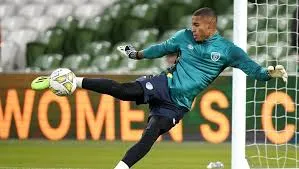
Bazunu stands alone: the Irish goalkeeper who chose conscience over the team vote
Irish goalkeeper Gavin Bazunu, 24, announced on September 26 that he will boycott Ireland's Nations League matches against Israel on September 27 and October…
Bazunu's boycott fractures Irish squad and raises questions about sporting order
Irish international goalkeeper Gavin Bazunu, 24, announced on September 26 he will boycott Ireland's Nations League fixtures against Israel on September 27 and…
Gavin Bazunu, the 24-year-old Irish international goalkeeper, announced on September 26 that he will not play the Nations League matches against Israel scheduled for September 27 and October 4. The decision, made against the result of a vote by his own teammates, places the Bolton goalkeeper at the center of a debate about whether athletes have a duty to act when civilian lives are at stake.
--- THE CONTEXT ---
Ireland's Nations League calendar included two matches against Israel on those dates and a third against Austria on October 1. According to Irish journalist Daniel McDonnell, Bazunu had already tried to persuade his teammates to join a full team boycott before the vote took place.
--- THE FACTS ---
The Irish squad voted and chose to play both fixtures. As a collective concession, the players agreed not to shake hands with their Israeli counterparts before the September 27 match. Bazunu refused to accept that compromise. In a statement published on the evening of September 26, he said he had not taken his decision lightly, describing himself as a man of deep faith who strives to live by character and principle. He stated that his decision rests solely on his personal conviction that killing innocents is unacceptable and that he opposes the atrocities committed in the region. He added that it is rare in life to have the chance to stand for something larger than oneself and that he believes this is one of those moments. Manager Heimir Hallgrimsson had also spoken before the match, declaring that the team plays against genocide, not with it, though the source does not indicate that Hallgrimsson explicitly endorsed Bazunu's individual boycott.
--- THE POSITIONS ---
Bazunu stands alone against a majority team decision. Hallgrimsson condemned the violence in Gaza in general terms while defending the team's participation. The source records no statement from the Football Association of Ireland or from UEFA regarding Bazunu's individual absence.
--- WHAT REMAINS UNKNOWN ---
The source does not establish whether the Football Association of Ireland or UEFA will pursue disciplinary proceedings. It is also unclear whether Bolton's club management has responded or whether a formal replacement goalkeeper was announced.
--- UNANSWERED QUESTIONS ---
• Will Bazunu face any sanction from the Football Association of Ireland or UEFA for missing the fixtures?
• How will Bolton address his absence and any potential contractual implications?
• Did other players in the Nations League consider a similar individual refusal, and if so, what stopped them?
• What human and humanitarian impact, if any, do athlete boycotts of this kind produce on the ground?
--- EPM ANALYSIS ---
Bazunu's choice draws a line that his teammates chose not to cross. For workers and participants in elite sport, the cost of individual conscience is almost always absorbed alone: no guaranteed protection, no institutional cover. His teammates are not condemned by their vote; they found a different, more cautious path. But Bazunu's statement makes visible what collective silence can obscure — that a player's name on a team sheet is also a form of endorsement, however reluctant. 📌
📌
📌 EPM Take:
In EPM's view, Bazunu's refusal is one of the most direct acts of individual conscience seen in European football in this cycle, and it deserves to be taken seriously rather than romanticized. The real test is institutional: whether federations will punish him for it. EPM has noted before, in our coverage of France's road-safety debate, that collective rules impose unequal costs on individuals. Here the dynamic runs in reverse — one individual opts out of a collective obligation. That tension will not resolve itself without clear rules that currently do not appear to exist.
When a national team votes to play and one player refuses to honor that decision, the integrity of the institution is tested just as much as the individual's conscience. Gavin Bazunu, Ireland's 24-year-old international goalkeeper, announced on September 26 that he will not feature in the Nations League matches against Israel on September 27 and October 4, defying the outcome of an internal squad vote and setting a precedent with unclear institutional consequences.
--- THE CONTEXT ---
Ireland's Nations League schedule placed two matches against Israel on those dates, with a third fixture against Austria on October 1. Irish journalist Daniel McDonnell reported that Bazunu had previously attempted to persuade the full squad to boycott collectively, an effort that failed when the group went to a vote.
--- THE FACTS ---
The Irish squad voted to participate in both fixtures. As a symbolic gesture, the players agreed to refuse the pre-match handshake for the September 27 game. Bazunu declined to accept that partial measure and held his individual position. In a statement released on the evening of September 26, he described himself as a man of deep faith acting on principle, stating that his decision rests solely on his personal conviction that killing innocents is unacceptable and that he opposes the atrocities committed in the region. He also said it is rare to have the opportunity to stand for something greater than oneself and that he believes this is such a moment. Manager Heimir Hallgrimsson, speaking before the announcement, stated that the team plays against genocide and not with it — a formulation that distinguished participation from endorsement without explicitly supporting Bazunu's individual stance. Bazunu developed at Manchester City and gained wider recognition during the 2022/2023 Premier League season at Southampton; he currently plays for Bolton.
--- THE POSITIONS ---
A majority of the squad chose institutional compliance with a symbolic protest attached. Bazunu chose unilateral non-compliance. The source contains no statement from the Football Association of Ireland or UEFA on how Bazunu's absence will be treated under competition rules.
--- WHAT REMAINS UNKNOWN ---
This source does not establish whether any disciplinary process has been initiated. It does not clarify who replaced Bazunu in goal or whether the federation issued a formal response to his decision.
--- UNANSWERED QUESTIONS ---
• Does UEFA's regulatory framework allow individual players to absent themselves from competitive fixtures on grounds of conscience without sanction?
• Does Bazunu's refusal to honor a democratic squad vote undermine the internal governance mechanisms that national teams rely on?
• What institutional leverage, if any, does the Football Association of Ireland retain over a player contracted to a club rather than the federation?
• Could this case establish a precedent that weakens scheduling reliability for UEFA's competition calendar?
--- EPM ANALYSIS ---
The institutional question here is more durable than the moral one. Bazunu's conviction may be sincere, but national team participation is governed by agreements between clubs, federations and governing bodies, not by individual discretion. A player who can unilaterally withdraw from fixtures on personal grounds — however principled — creates a gap in the authority of federations that administrations will eventually be forced to address. The order of elite football depends on those rules holding. 📌
📌
📌 EPM Take:
In EPM's view, the debate about Bazunu cannot be settled by applauding his courage or dismissing his politics. The more consequential issue is structural: elite sport functions on the premise that institutional obligations override personal preference except through established channels. EPM previously noted in its France coverage that collective frameworks impose unequal burdens. Here, the burden falls on the institution. Without a clear regulatory response from the Football Association of Ireland or UEFA, this source leaves open whether the system has any effective answer at all.
Bazunu boycotea a Israel: un guardameta pone su conciencia por encima del equipo
Gavin Bazunu, portero irlandés de 24 años, anunció el 26 de septiembre que boycoteará los partidos de Liga de Naciones contra Israel del 27 de septiembre y el…
Bazunu desafía al vestuario irlandés con boicot individual
Gavin Bazunu, portero irlandés de 24 años, anunció el 26 de septiembre que boycoteará los partidos de Liga de Naciones contra Israel del 27 de septiembre y el…
Gavin Bazunu, portero internacional irlandés de 24 años, anunció el 26 de septiembre que no disputará los partidos de Liga de Naciones contra Israel previstos para el 27 de septiembre y el 4 de octubre. Su decisión rompe con la mayoría de sus compañeros, que votaron seguir jugando, y convierte al jugador formado en Manchester City en la voz más visible de la disidencia deportiva europea frente al conflicto en Gaza.
--- EL CONTEXTO ---
La selección irlandesa debía afrontar dos encuentros de Liga de Naciones contra Israel en esas fechas, además de un tercer partido ante Austria el 1 de octubre. El debate sobre si jugar o boycotear había generado tensión dentro del vestuario, según el periodista irlandés Daniel McDonnell, quien informó que Bazunu intentó convencer al resto del equipo de no jugar.
--- LOS HECHOS ---
Tras una votación interna, los jugadores irlandeses decidieron disputar ambos partidos, pero acordaron no estrecharse la mano con sus rivales antes del encuentro del 27 de septiembre. Bazunu se mantuvo firme. En un comunicado publicado el 26 de septiembre, explicó que tomó su decisión «sin tomarla a la ligera» y que actúa desde una fe profunda y una convicción de principios. Describió el asesinato de inocentes como inaceptable y subrayó su oposición a las atrocidades cometidas en la región. El seleccionador Heimir Hallgrimsson también se posicionó, declarando que el equipo juega contra el genocidio, no con él, aunque esa declaración no equivale a un apoyo al boycott individual de Bazunu.
--- LAS POSICIONES ---
Bazunu actúa en solitario frente a la decisión colectiva de sus compañeros. El seleccionador Hallgrimsson expresó una condena genérica del genocidio pero defendió la participación del equipo. La fuente no registra ninguna declaración de la federación irlandesa de fútbol ni de UEFA sobre la situación específica de Bazunu.
--- LO QUE FALTA SABER ---
No se conoce si la federación irlandesa impondrá sanción disciplinaria a Bazunu, ni si su club Bolton ha reaccionado. La fuente no indica si Bazunu coordinó su decisión con organizaciones humanitarias ni qué respaldo institucional, si alguno, respalda su postura.
--- PREGUNTAS SIN RESPUESTA ---
• ¿Recibirá Bazunu alguna sanción disciplinaria por parte de la federación irlandesa o de UEFA?
• ¿Cómo gestionará Bolton, su club, las posibles repercusiones sobre su contrato o disponibilidad?
• ¿Otros jugadores de Liga de Naciones han adoptado o contemplan posturas similares ante el mismo calendario de partidos?
• ¿Qué criterios utilizó el grupo para organizar la votación interna, y fue unánime o ajustada?
--- ANALISIS EPM ---
El caso Bazunu ilustra una tensión real: la conciencia individual frente a la solidaridad colectiva del vestuario. Sus compañeros no son cómplices del silencio; eligieron otro camino, el del gesto simbólico sin abandono. Bazunu eligió la ruptura personal. Esa diferencia es moralmente significativa y deportivamente costosa para él. El perdedor inmediato es la cohesión del equipo; el ganador, si existe, es la visibilidad del debate humanitario en el deporte europeo. 📌
📌
📌 Conclusion EPM:
A juicio de EPM, la decisión de Bazunu merece respeto, no romantización. Es un jugador de 24 años que renuncia a partidos internacionales en nombre de una convicción genuina, algo infrecuente en el deporte de élite. Sin embargo, el fútbol organizado no cambiará sus calendarios por una disidencia individual. La pregunta más incómoda no es si Bazunu tiene razón moral, sino si el gesto individual, sin respaldo institucional visible, tiene alguna consecuencia real sobre el sufrimiento que denuncia. EPM cree que la respuesta, hoy, es negativa.
Un portero de 24 años acaba de demostrar que la presión política puede quebrar la unidad de una selección nacional antes de que empiece el partido. Gavin Bazunu, guardameta internacional irlandés, anunció el 26 de septiembre que no jugará los encuentros de Liga de Naciones contra Israel fijados para el 27 de septiembre y el 4 de octubre, contradiciendo el resultado de una votación interna de sus propios compañeros.
--- EL CONTEXTO ---
Irlanda debía disputar a Israel dos partidos de Liga de Naciones en esas fechas y un tercer encuentro contra Austria el 1 de octubre. Según el periodista Daniel McDonnell, Bazunu intentó previamente movilizar al resto del equipo para un boycott colectivo, esfuerzo que no prosperó.
--- LOS HECHOS ---
Los jugadores irlandeses sometieron la cuestión a votación y decidieron participar, aunque acordaron rechazar el saludo protocolar de manos antes del encuentro del 27 de septiembre. Bazunu emitió un comunicado el 26 de septiembre explicando que actúa desde una «fe profunda» y que considera inaceptable el asesinato de inocentes, así como las atrocidades cometidas en la región. Señaló que hay pocas ocasiones en la vida para defender una causa que trasciende al individuo, y que considera esta como una de ellas. El seleccionador Heimir Hallgrimsson declaró que el equipo juega contra el genocidio, no con él; la fuente no registra que Hallgrimsson haya respaldado explícitamente el boycott individual de Bazunu. Bazunu se formó en Manchester City y se dio a conocer durante la temporada 2022/2023 en la Premier League con Southampton; actualmente defiende la portería del Bolton.
--- LAS POSICIONES ---
La mayoría del vestuario optó por jugar con un gesto simbólico. Bazunu rechaza esa solución intermedia. El comunicado no recoge la posición de la federación irlandesa ni de UEFA respecto a la conducta individual del portero.
--- LO QUE FALTA SABER ---
No consta en la fuente si UEFA o la federación irlandesa activarán un procedimiento disciplinario. Tampoco se sabe si el Bolton puede verse afectado contractualmente ni si la selección ya designó un sustituto formal bajo los palos.
--- PREGUNTAS SIN RESPUESTA ---
• ¿Aplicará la federación irlandesa o UEFA alguna sanción a Bazunu por incumplir la convocatoria?
• ¿Crea este precedente un marco para que otros jugadores convocados rechacen partidos por motivos de conciencia?
• ¿Qué mecanismo institucional regula las abstenciones individuales de este tipo en competiciones UEFA?
• ¿Quién ocupa la portería irlandesa en ausencia de Bazunu, y fue ya comunicado oficialmente?
--- ANALISIS EPM ---
La fractura más relevante aquí no es moral, es institucional. Una selección nacional opera bajo compromisos de UEFA y de su federación. El boycott individual no resuelto mediante un canal reglamentario establece que cualquier jugador puede ausentarse por convicción propia, lo que erosiona la autoridad de las federaciones y la previsibilidad de los calendarios competitivos. El ganador a corto plazo es Bazunu en visibilidad; el perdedor, la gobernanza del fútbol organizado. 📌
📌
📌 Conclusion EPM:
A juicio de EPM, el problema de fondo no es la valentía de Bazunu, que puede ser genuina, sino la ausencia de un marco claro. Las instituciones deportivas no pueden funcionar si cada convocado decide unilateralmente si acude o no, por noble que sea el motivo. EPM ya señaló en su cobertura sobre Francia que las reglas del juego colectivo tienen un coste personal para quienes quedan fuera; aquí ocurre lo inverso: un individuo impone su lógica al colectivo sin rendir cuentas ante ningún proceso reglamentario visible. Eso también tiene un precio institucional.