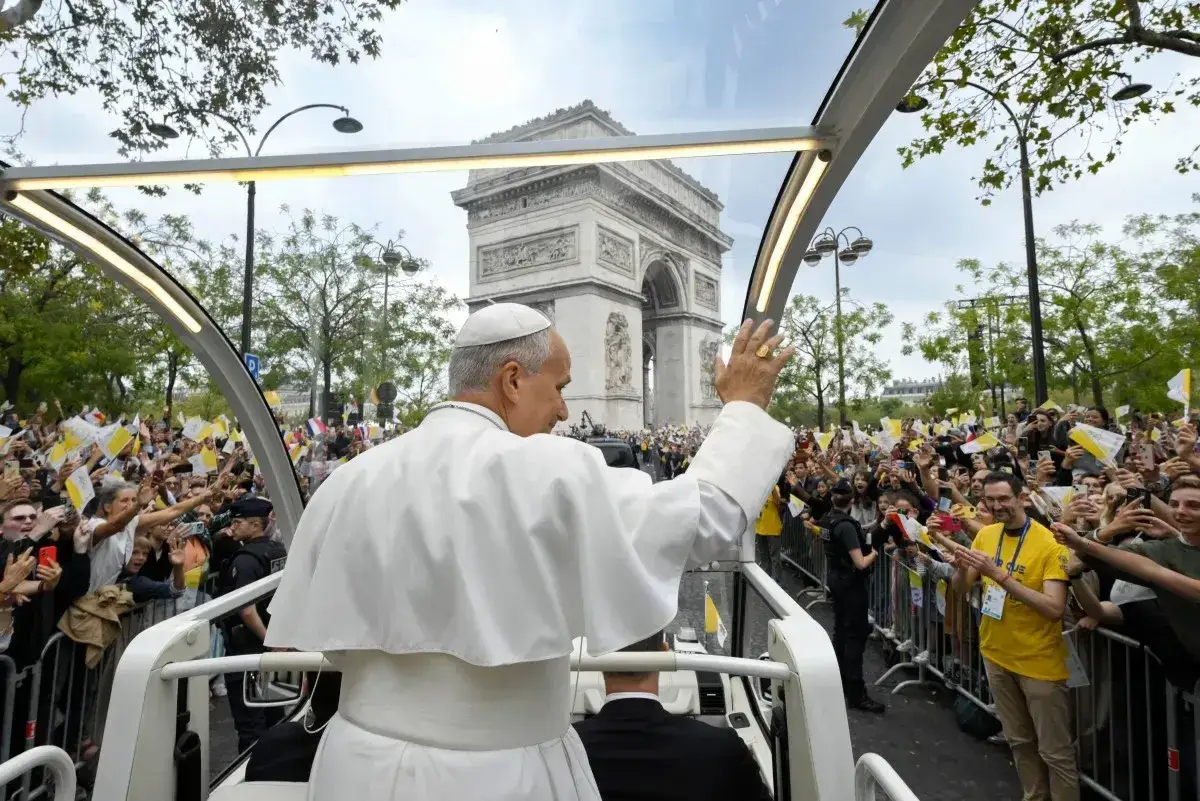
Pope Leo XIV meets abuse survivors in Lourdes during France visit
Pope Leo XIV met privately with seven clerical abuse survivors in Lourdes during his first official visit to France in nearly two decades.
Pope Leo XIV visits Lourdes on official trip to France
Pope Leo XIV met privately with seven clerical abuse survivors in Lourdes on the third day of the first official papal visit to France in nearly two decades.
Pope Leo XIV traveled to the pilgrimage town of Lourdes on Saturday and met privately the following day with seven survivors of clerical sexual abuse, a moment that supporters call long overdue and critics will measure against the concrete reforms the Church has yet to specify.
--- THE CONTEXT ---
France is a constitutionally secular country with deep Catholic roots. A 2021 independent inquiry found that clergy or lay members of the Church had abused approximately 330,000 people as minors over 70 years. The figure placed France's scandal among the most extensively documented in the world.
--- THE FACTS ---
Leo XIV, 71, is on a four-day official visit to France — the first papal visit in nearly two decades. On Saturday he led a mass at the Place de la Concorde in Paris, where the Vatican estimated around 800,000 people gathered along the Champs-Élysées and adjoining streets. That evening he arrived in Lourdes. On Sunday he met privately with seven victims, including a former pupil of the Notre-Dame de Betharram boarding school, which has been at the centre of widespread accusations of physical and sexual abuse over several decades. Leo had promised before the trip to advance Church reform in the wake of the global abuse scandal. During prayers at Lourdes, he asked the Virgin Mary to grant France leaders who are wise, generous and eager to serve the common good, and to reject what he called the mentality of war.
--- THE POSITIONS ---
Domitille Bardoul, 26, woke before dawn and took the train from Paris to Lourdes to attend prayers. She described the pope's meeting with survivors as very beautiful and said it represents an acknowledgment that every possible measure is being taken to prevent future abuse. Aline Riziki, 41, born in the Democratic Republic of Congo and living in France for 11 years, attended the Paris mass to pray for peace in the east of her homeland. The source does not include statements from the survivors themselves or from any survivor organization.
--- WHAT REMAINS UNKNOWN ---
This report does not specify what concrete reforms the Vatican has committed to, what institutional follow-up mechanism exists after private meetings, or whether survivors participated in designing the format of the encounter.
--- UNANSWERED QUESTIONS ---
• What specific, verifiable commitments did the Vatican announce following the private meeting with the seven survivors?
• Did survivors or their representative organizations help shape the format and conditions of the encounter?
• What formal follow-up structure exists to implement recommendations from the 2021 independent inquiry?
• How do French civil authorities view the Church's accountability steps in relation to the documented 330,000 cases?
--- EPM ANALYSIS ---
For the 330,000 people identified in the 2021 inquiry, a private audience with seven survivors is not a conclusion — it is a gesture that acquires meaning only if institutional architecture follows it. Leo XIV has genuine political capital as the first American pope and a fresh face outside the European ecclesiastical establishment. The decisive variable is whether the reform promise translates into auditable mechanisms or remains pastoral language. 📌
📌
EPM Take:
In EPM's view, Domitille Bardoul's train ride before dawn and Aline Riziki's prayer for a distant war are not sidebar color: they illustrate who actually carries the weight of the Church's credibility crisis on a daily basis — ordinary believers who invest hope in symbols precisely because they lack access to the institutional levers. A pope willing to sit with survivors earns respect. A pope who leaves Lourdes without a verifiable reform framework leaves those believers holding a beautiful gesture and nothing more.
Pope Leo XIV arrived in the pilgrimage sanctuary of Lourdes on Saturday and met privately the next day with seven victims of clerical sexual abuse, completing a visit to France that blends institutional accountability with a deliberate assertion of the Catholic Church's continuing relevance to Western civilization.
--- THE CONTEXT ---
This is the first official papal visit to France in nearly two decades. Leo XIV is the third pope to visit Lourdes, after John Paul II in 1983 and 2004 and Benedict XVI in 2008. The sanctuary draws approximately three million pilgrims each year and ranks among the most significant Catholic holy sites in the world. France is a secular republic with historically deep Catholic roots.
--- THE FACTS ---
The 71-year-old pontiff led a mass at the Place de la Concorde in Paris on Saturday before an estimated 800,000 people who lined the Champs-Élysées and adjacent streets, according to Vatican figures. He arrived in Lourdes that evening and on Sunday held a private meeting with seven victims, including a former pupil of the Notre-Dame de Betharram boarding school, named as the centre of widespread physical and sexual abuse accusations over several decades. A 2021 independent inquiry found that clergy or lay members of the Church had abused approximately 330,000 people as minors over 70 years in France. At Lourdes, Leo prayed for France to have wise and generous leaders committed to the common good, to the defence of fundamental human rights, and to peace — explicitly rejecting what he termed the mentality of war.
--- THE POSITIONS ---
Domitille Bardoul, 26, traveled from Paris before dawn to attend prayers and told reporters the meeting with survivors was very beautiful and signalled that all possible measures are being taken to prevent future abuse. Aline Riziki, 41, a Congo-born resident of France for 11 years, attended the Paris mass to pray for peace in the east of her homeland. This report does not include a statement from the French Bishops' Conference, any government official or any survivor organization.
--- WHAT REMAINS UNKNOWN ---
This report does not establish what specific reform commitments the Vatican has announced, what legal or institutional framework governs follow-up to the 2021 inquiry, or whether the French state attached formal conditions to the visit.
--- UNANSWERED QUESTIONS ---
• What concrete, institutionally binding reforms has the Holy See committed to as a result of this visit?
• How does the French government assess the Church's accountability steps against the documented scale of the 2021 findings?
• Was the choice of Lourdes — rather than Paris — for the survivor meeting a deliberate strategic or symbolic decision, and by whom?
• What oversight body, if any, will monitor compliance with the reform promises Leo XIV made before this trip?
--- EPM ANALYSIS ---
Leo XIV holds a strategic advantage that his predecessors lacked: he enters Europe as an outsider to its exhausted ecclesiastical politics. The mass at the Place de la Concorde — 800,000 attendees on one of the most symbolically loaded avenues in the Western world — and the private meeting in Lourdes together constitute a dual signal: the Church retains mass social legitimacy and is willing to confront its institutional failures. 📌
📌
EPM Take:
In EPM's view, the visit's true significance is geopolitical as much as spiritual. A first American pope drawing 800,000 people to the Champs-Élysées months before a French presidential election, in a country where the far right is surging, sends a message about the durability of Western institutions rooted in shared values — not ethnic nationalism. EPM has covered how individual conscience can stand against institutional pressure. Leo XIV's Lourdes encounter tests whether the largest institution in Christendom can do the same from the top down.
Papa Leo XIV escucha a víctimas de abuso sexual en Lourdes
El papa Leo XIV se reunió privadamente con siete víctimas de abuso clerical en Lourdes durante su primera visita oficial a Francia en casi dos décadas.
Papa americano Leo XIV visita Lourdes en gira oficial por Francia
El papa Leo XIV visitó Lourdes y se reunió en privado con siete víctimas de abuso clerical en la primera visita papal a Francia en casi dos décadas.
El primer pontífice estadounidense de la historia llegó a Lourdes el sábado por la noche para encontrarse de manera privada con siete sobrevivientes de abuso sexual clerical, un gesto que sus seguidores describen como señal de que la Iglesia comienza a mirar de frente una herida que tardó décadas en reconocer.
--- EL CONTEXTO ---
Francia es un país de raíces católicas profundas que se define constitucionalmente como laico. Una comisión independiente publicó en 2021 que miembros del clero o laicos vinculados a la Iglesia abusaron de unas 330,000 personas siendo menores a lo largo de 70 años. Esa cifra situó el escándalo francés entre los más documentados del mundo.
--- LOS HECHOS ---
Leo XIV llegó a Lourdes, ciudad de peregrinación al pie de los Pirineos, tras presidir una multitudinaria misa al aire libre en la Plaza de la Concordia de París, donde el Vaticano estimó que unas 800,000 personas se congregaron en la avenida de los Campos Elíseos y calles adyacentes. El jueves la misa, el sábado Lourdes, y el domingo la reunión privada con siete víctimas —entre ellas un exalumno del internado Notre-Dame de Betharram, señalado como foco de abusos físicos y sexuales durante varias décadas. El papa, de 71 años, prometió antes del viaje impulsar reformas dentro de la Iglesia como respuesta al escándalo global de abusos.
--- LAS POSICIONES ---
Domitille Bardoul, de 26 años, viajó desde París en tren antes del amanecer para estar en Lourdes. Aline Riziki, de 41 años, nacida en la República Democrática del Congo y residente en Francia desde hace 11 años, acudió a la misa en París para rezar por la paz en el este de su país. La fuente no recoge la posición de las víctimas que se reunirán con el papa ni de organizaciones de sobrevivientes.
--- LO QUE FALTA SABER ---
Este reportaje no detalla qué reformas concretas promoverá el papa, cuál es el marco institucional de esos encuentros privados, ni si las víctimas participaron en el diseño del formato de la reunión o sus condiciones.
--- PREGUNTAS SIN RESPUESTA ---
• ¿Qué compromisos institucionales concretos anunciará la Santa Sede tras la reunión privada con las siete víctimas? • ¿Participaron las víctimas y sus organizaciones en la definición del formato y las condiciones del encuentro? • ¿Qué seguimiento formal existe para las recomendaciones de la comisión independiente de 2021? • ¿Cuál es la posición pública de los sobrevivientes del internado Notre-Dame de Betharram sobre este encuentro? • ¿Condicionó el gobierno francés algún aspecto de la visita al avance en materia de rendición de cuentas eclesial?
--- ANÁLISIS EPM ---
La visita combina liturgia masiva con un gesto de alcance más íntimo y políticamente sensible: sentarse con siete personas que representan a cientos de miles. El riesgo para los sobrevivientes es que el encuentro quede en símbolo sin estructura de seguimiento. El riesgo para la Iglesia es el contrario: que rechazar el gesto sea leer el dolor como relaciones públicas. 📌
📌
Conclusion EPM:
A juicio de EPM, la reunión privada con siete víctimas no puede juzgarse por su fotografía sino por lo que produzca después. Francia tiene una investigación de 2021 con cifras devastadoras —330,000 menores afectados en 70 años— que exige respuestas institucionales, no solo gestos pastorales. Un papa que ha prometido reformas llega a uno de los santuarios más simbólicos del catolicismo mundial: si esa promesa no se traduce en mecanismos concretos y auditables, el gesto, por sincero que sea, no cierra ninguna herida.
El primer papa estadounidense de la historia completó el segundo día de su visita oficial a Francia reuniéndose de manera privada con siete víctimas de abuso sexual clerical en Lourdes, en una maniobra que combina rendición de cuentas institucional con la reafirmación del peso moral de la Iglesia dentro del mundo occidental.
--- EL CONTEXTO ---
La visita es la primera de un pontífice a Francia en casi dos décadas. Leo XIV es el tercer papa en visitar Lourdes, tras Juan Pablo II en 1983 y 2004, y Benedicto XVI en 2008. El santuario recibe unos tres millones de peregrinos al año y constituye uno de los centros de peregrinación católica más importantes del mundo.
--- LOS HECHOS ---
El papa, de 71 años, presidió el sábado una misa multitudinaria en la Plaza de la Concordia de París ante una concurrencia que el Vaticano estimó en unas 800,000 personas distribuidas por los Campos Elíseos y sus calles adyacentes. Llegó esa noche a Lourdes y el domingo se reunió en privado con siete víctimas, entre ellas un exalumno del internado Notre-Dame de Betharram, señalado durante décadas por abusos físicos y sexuales. Una comisión independiente publicó en 2021 que miembros del clero o laicos vinculados a la Iglesia en Francia abusaron de unas 330,000 personas siendo menores en el transcurso de 70 años. Antes de la reunión, el papa rezó para que Francia tuviese líderes "sabios y generosos" comprometidos con el bien común y con la defensa de los derechos humanos y la paz, rechazando lo que denominó "la mentalidad de la guerra".
--- LAS POSICIONES ---
Domitille Bardoul, de 26 años, viajada desde París, calificó el encuentro con víctimas de "muy bello" y lo interpretó como señal de que se adoptan medidas preventivas. Aline Riziki, de 41 años, nacida en el Congo y residente en Francia desde hace 11 años, acudió a la misa en París para rezar por la paz en el este de su país de origen. La fuente no recoge la posición de la Conferencia Episcopal francesa ni de ninguna organización de víctimas.
--- LO QUE FALTA SABER ---
Este reportaje no especifica qué reformas institucionales concretas propone el pontífice, qué estructura de seguimiento existe para el acuerdo o encuentro, ni si el Estado francés ha establecido alguna condición formal a la visita.
--- PREGUNTAS SIN RESPUESTA ---
• ¿Qué reformas específicas y verificables ha comprometido la Santa Sede como resultado de esta visita?
• ¿Cómo articula la Iglesia en Francia la rendición de cuentas frente a los hallazgos de la comisión de 2021?
• ¿Existe un protocolo institucional acordado con el gobierno francés para dar seguimiento a los casos documentados?
• ¿En qué medida la elección de Lourdes, en lugar de París, como escenario del encuentro con víctimas fue una decisión simbólica deliberada?
--- ANÁLISIS EPM ---
Leo XIV opera con la ventaja de ser el primer papa americano en un momento en que el prestigio institucional de la Iglesia en Europa occidental lleva décadas bajo presión. Su capacidad para combinar autoridad moral con demanda de reforma sitúa a la Santa Sede en una posición de influencia renovada dentro del debate occidental sobre valores, liderazgo e instituciones. 📌
📌
Conclusion EPM:
A juicio de EPM, la presencia de 800,000 personas en los Campos Elíseos y la decisión de sentarse con siete víctimas en Lourdes no son gestos opuestos: son los dos pilares de una estrategia coherente de restauración institucional. En un Occidente donde la autoridad moral de las instituciones se erosiona con rapidez, una Iglesia que asume su historia sin eludirla recupera capital político y espiritual que ninguna campaña de imagen podría fabricar. El riesgo está en que los mecanismos de reforma no estén a la altura del símbolo.