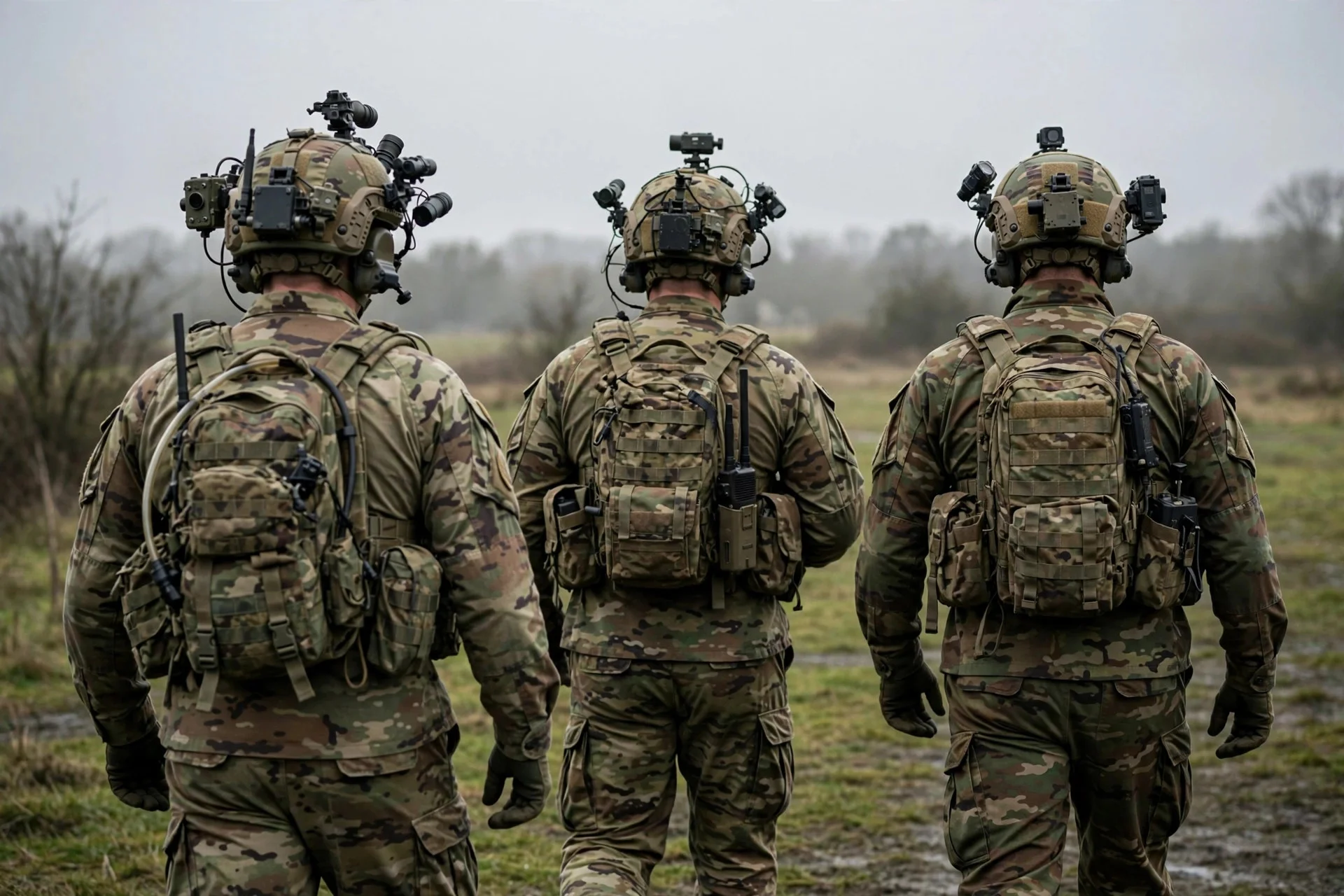
British soldiers test head-mounted loads to perform without injury
Dstl is trialling a custom rig with the University of Chichester and QinetiQ that simulates head-mounted loads.
Britain tests head-mounted loads to sharpen soldiers in combat
The HEADS UP project from Dstl, with the University of Chichester and QinetiQ, tests a rig simulating head-mounted loads on serving soldiers.
--- The context ---
Today's warfighters carry more equipment than ever to manoeuvre and communicate, detect and engage threats. Much of it is mounted on the head, from night vision goggles to increasingly common virtual and augmented reality systems.
--- The facts ---
Dstl's HEADS UP project, delivered with the University of Chichester and QinetiQ, brings serving soldiers from the Queen's Royal Hussars, the Princess of Wales Royal Regiment, the Royal Dragoon Guards and the Royal Engineers. They wear a custom designed rig simulating different head-mounted load configurations during representative military tasks.
The trial collects movement speed, muscle activity, motion capture, metabolic cost, cognitive performance and eye-tracking, providing an interdisciplinary understanding of how head-mounted equipment influences soldier performance.
--- The positions ---
Matt, the Dstl lead from the Human Augmentation project, argued in indirect terms that putting the soldier at the centre of design and reducing effects such as fatigue can improve performance and effectiveness. Professor Sam Blacker said in indirect terms that his group improves health and performance in demanding occupations and studies the physical and cognitive effects of added load.
--- What remains unknown ---
No results, timetable or load threshold at which performance suffers are yet detailed. Nor is it specified which design changes would follow or when new capabilities might be adopted across the Ministry of Defence.
--- Unanswered questions ---
Which load stays sustainable without costing speed or attention? What level of strain and metabolic cost should set the design limit? How will measurements become equipment that lowers long-term injury risk?
--- EPM analysis ---
Increased head mass is associated with greater metabolic and thermal demands, biomechanical loading and neck muscle strain, and attentional and cognitive demands. Measuring those effects during representative tasks puts evidence about body and mind ahead of adopting new capabilities.
📌 EPM Take: In EPM's view, protecting the soldier and improving performance are not competing goals, but two sides of the same human-centred design. If head-mounted load strains the neck, raises metabolic cost and steals attention, any technological advantage loses value in practice. The strongest contribution HEADS UP could make would be to turn physiological, biomechanical and cognitive measurements into concrete design criteria, so future capabilities are adopted because they help the wearer, not at the expense of future health.
--- The context ---
Modern warfighters rely on numerous capabilities to manoeuvre and communicate, detect and engage threats. Many are mounted on the head, such as night vision goggles and, increasingly, virtual reality and augmented reality systems, at a physical and cognitive cost.
--- The facts ---
Dstl is delivering HEADS UP in collaboration with the University of Chichester and QinetiQ. Serving soldiers from the Queen's Royal Hussars, the Princess of Wales Royal Regiment, the Royal Dragoon Guards and the Royal Engineers wear a custom rig simulating different head-mounted loads during representative military tasks at the university.
The trial gathers movement speed, muscle activity, motion capture, metabolic cost, cognitive performance and eye-tracking. Its purpose is to improve warfighter performance, reduce long-term injury risk and support adoption of new capabilities across the Ministry of Defence.
--- The positions ---
Matt, the Dstl lead from the Human Augmentation project, said in indirect terms that centring design on the soldier and reducing fatigue would improve performance and effectiveness, and also lethality, agility and resilience. Professor Sam Blacker explained in indirect terms that his group specialises in health and performance in demanding occupations and examines the physical and cognitive effects of added mass.
--- What remains unknown ---
No results are yet available, and which configurations proved most demanding is not stated. Which design decisions the Ministry of Defence will take, and on what timetable, also remains open.
--- Unanswered questions ---
What maximum load keeps a soldier fast, attentive and effective? What gains in lethality, agility and resilience do the measurements verify? Which equipment changes will the Ministry of Defence adopt with the full findings?
--- EPM analysis ---
Equipment that raises biomechanical loading, neck strain and metabolic, thermal and attentional demands can erode the performance it promises to raise. Testing configurations on serving soldiers distinguishes kit that works in combat from kit that only impresses outside the field.
📌 EPM Take: In EPM's view, combat effectiveness starts with not wasting the soldier's own strength. HEADS UP is right to put head-mounted load through a demanding trial before new capabilities are generalised, because every added ounce of mass should justify itself in real performance. If the measurements help cut fatigue and preserve speed, attention and endurance, the benefit will be operational rather than merely technological. Testing first and adopting afterwards turns a promising innovation into a durable advantage for units.
Soldados británicos prueban cargas en la cabeza para rendir sin lesionarse
Dstl ensaya con la University of Chichester y QinetiQ un equipo a medida que simula cargas montadas en la cabeza.
Reino Unido mide el peso en la cabeza para ganar eficacia en combate
El proyecto HEADS UP de Dstl, con la University of Chichester y QinetiQ, prueba en soldados en servicio un equipo que simula cargas sobre la cabeza.
--- El contexto ---
Los soldados actuales portan más equipo que nunca para maniobrar, comunicarse, detectar y enfrentar amenazas. Buena parte va montada en la cabeza, desde gafas de visión nocturna hasta sistemas crecientes de realidad virtual y aumentada.
--- Los hechos ---
El proyecto HEADS UP, de Dstl junto a la University of Chichester y QinetiQ, reúne a soldados en servicio de los Queen's Royal Hussars, el Princess of Wales Royal Regiment, los Royal Dragoon Guards y los Royal Engineers. Usan un equipo a medida que simula distintas cargas sobre la cabeza mientras realizan tareas militares representativas.
El ensayo recoge velocidad de movimiento, actividad muscular, captura de movimiento, costo metabólico, rendimiento cognitivo y seguimiento ocular, para comprender de forma interdisciplinaria cómo el equipo montado en la cabeza influye en el rendimiento.
--- Las posiciones ---
Matt, responsable en Dstl del proyecto de aumento humano, planteó en indirecto que poner al soldado en el centro del diseño y reducir efectos como la fatiga mejora rendimiento y eficacia. El profesor Sam Blacker señaló en indirecto que su grupo mejora salud y rendimiento en ocupaciones exigentes y estudia los efectos físicos y cognitivos de la carga adicional.
--- Lo que falta saber ---
No se detallan resultados, plazos ni umbrales de carga a partir de los cuales empeora el rendimiento. Tampoco se precisa qué cambios de diseño seguirán ni cuándo podrían aplicarse en el Ministry of Defence.
--- Preguntas sin respuesta ---
¿Qué carga resulta sostenible sin perder velocidad ni atención? ¿Qué nivel de esfuerzo y costo metabólico debería marcar el límite de diseño? ¿Cómo se traducirán las mediciones en equipos que reduzcan lesiones a largo plazo?
--- Análisis EPM ---
Más masa en la cabeza se asocia con mayores demandas metabólicas y térmicas, mayor carga biomecánica y tensión muscular en el cuello, y mayores demandas atencionales y cognitivas. Medir esos efectos en tareas representativas sitúa la evidencia antes de adoptar nuevas capacidades.
📌 Conclusion EPM: A juicio de EPM, proteger al soldado y hacerlo rendir no son objetivos opuestos, sino dos caras del mismo diseño centrado en la persona. Si la carga fatiga el cuello, eleva el costo metabólico y roba atención, cualquier ventaja tecnológica pierde valor en la práctica. La aportación más sólida de HEADS UP sería convertir mediciones fisiológicas, biomecánicas y cognitivas en criterios concretos de diseño, para que las futuras capacidades se adopten porque ayudan a quien las porta y no a costa de su salud futura.
--- El contexto ---
El combatiente actual depende de numerosos equipos para maniobrar y comunicarse, detectar y enfrentar amenazas. Muchos van montados en la cabeza, como las gafas de visión nocturna y, cada vez más, los sistemas de realidad virtual y aumentada, con un costo físico y cognitivo.
--- Los hechos ---
Dstl impulsa HEADS UP con la University of Chichester y QinetiQ. Participan soldados en servicio de los Queen's Royal Hussars, el Princess of Wales Royal Regiment, los Royal Dragoon Guards y los Royal Engineers, con un equipo a medida que simula distintas cargas sobre la cabeza durante tareas militares representativas.
Se recogen velocidad de movimiento, actividad muscular, captura de movimiento, costo metabólico, rendimiento cognitivo y seguimiento ocular. El objetivo es mejorar el rendimiento de los combatientes y reducir el riesgo de lesión a largo plazo.
--- Las posiciones ---
Matt, responsable en Dstl del proyecto de aumento humano, sostuvo en indirecto que centrar el diseño en el soldado y reducir la fatiga mejora rendimiento y eficacia, y también letalidad, agilidad y resiliencia. El profesor Sam Blacker explicó en indirecto que su grupo trabaja en salud y rendimiento militar y examina los efectos físicos y cognitivos de portar masa adicional.
--- Lo que falta saber ---
Aún no se conocen resultados ni qué configuraciones resultaron más exigentes. Tampoco se indica qué decisiones de diseño tomará el Ministry of Defence ni en qué plazos llegarían las nuevas capacidades al personal.
--- Preguntas sin respuesta ---
¿Qué carga máxima mantiene al soldado rápido, atento y eficaz? ¿Qué mejoras de letalidad, agilidad y resiliencia verifican las mediciones? ¿Qué cambios de equipo adoptará el Ministry of Defence con los resultados completos?
--- Análisis EPM ---
Una capacidad que aumenta la carga biomecánica, la tensión del cuello y las demandas metabólicas, térmicas y atencionales puede erosionar el rendimiento que promete elevar. Probar configuraciones con soldados en activo permite distinguir equipo útil en combate de equipo que solo impresiona fuera del terreno.
📌 Conclusion EPM: A juicio de EPM, la eficacia en combate empieza por no desperdiciar la fuerza del propio soldado. HEADS UP acierta al someter la carga sobre la cabeza a una prueba exigente antes de generalizar nuevas capacidades, porque cada gramo añadido debe justificarse en rendimiento real. Si las mediciones ayudan a recortar fatiga y preservar velocidad, atención y resistencia, el beneficio será operativo y no solo tecnológico. Probar primero y adoptar después convierte una innovación prometedora en ventaja durable para las unidades.