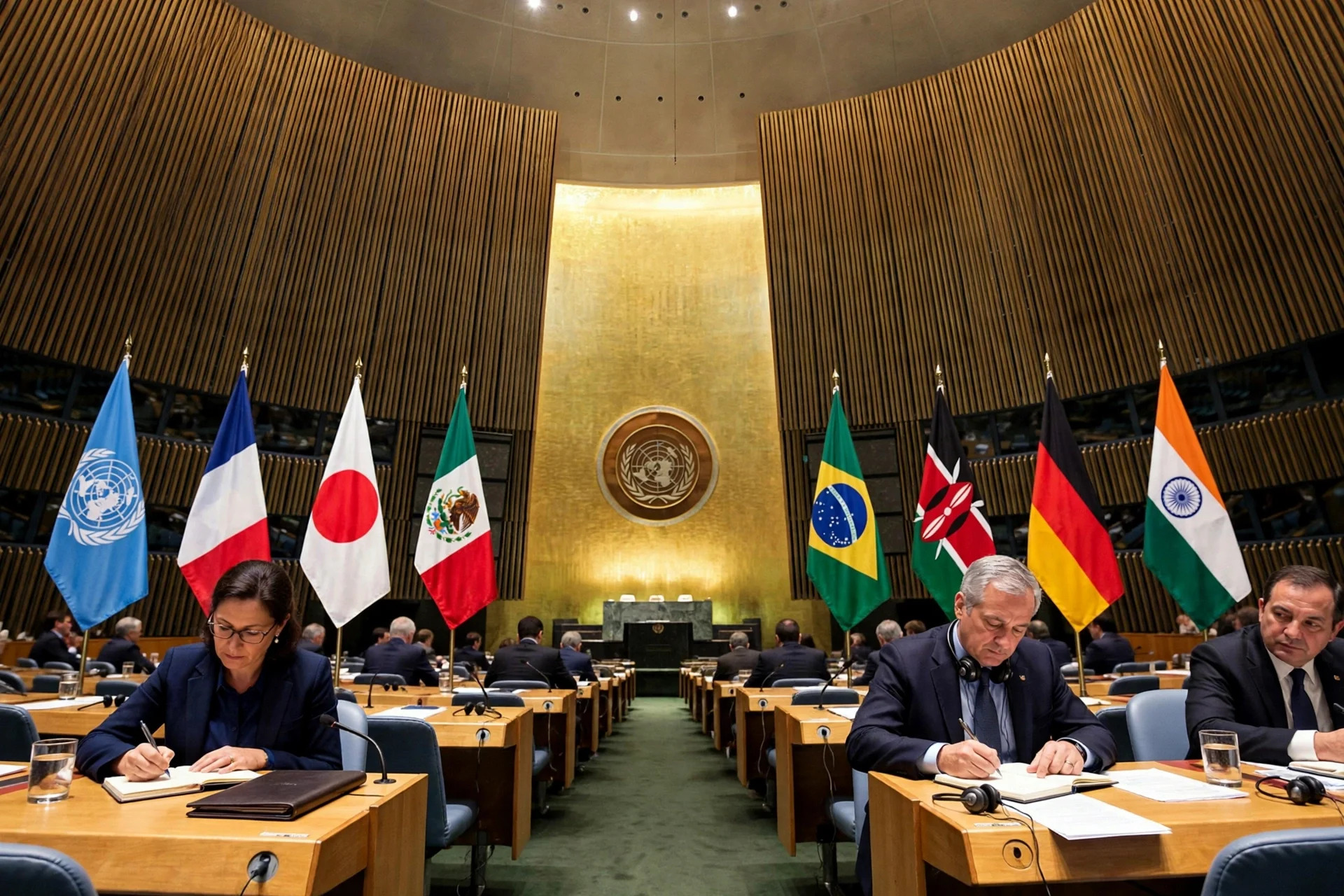
Imagen ilustrativa generada con IA: una sala de la ONU con delegados y banderas durante una sesión diplomática. · Imagen generada con IA para Erick Prometeo Media
UK defends sovereignty and international law at the UN
The United Kingdom denounced before the UN First Committee an industrial-scale information assault by hostile actors like Russia, defended sovereignty and…
Britain pledges firmness on Russia, Iran and North Korea
The United Kingdom set out before the UN First Committee raising the cost to Russia for its war against Ukraine, challenging Iran's safeguards non-compliance…
--- The context ---
The United Kingdom told the UN First Committee that the international security architecture, built over generations, cannot be taken for granted. Its statement described a dangerous and turbulent age, with intensifying strategic competition and rapid technological change creating new security challenges at a moment when the principles behind international peace are again under strain.
--- The facts ---
The statement denounced an industrial-scale assault by hostile actors like Russia on the information environment in the UK and in many of its allies. It also set out raising the cost to Russia for its war against Ukraine, challenging Iran's non-compliance with its nuclear safeguards obligations and calling out North Korea's unlawful nuclear and ballistic missile programmes.
Against that backdrop, it pointed to concrete progress. The group of experts on lethal autonomous weapons systems agreed elements for a possible future instrument after more than a decade of debate, under Dutch chairmanship. It also placed within reach recommendations to strengthen the Biological Weapons Convention, including cooperation and assistance mechanisms and responses to emerging technologies such as frontier AI.
--- The positions ---
The British position combined a recommitment to sovereignty, territorial integrity and international law with strong support for the IAEA and its safeguards system, the peaceful uses of nuclear technology and nuclear weapon free zones. On the Non-Proliferation Treaty, it valued the common ground across all three pillars even though the Review Conference held in New York in May was unable to achieve a consensus final document.
--- What remains unknown ---
It remains to be seen how those commitments become verifiable results. The statement gives no timetable for turning the elements on autonomous weapons into an instrument, nor a path to close the differences that prevented consensus at the nuclear review, nor the concrete mechanisms that would strengthen collective responses to emerging technologies such as frontier AI.
--- Unanswered questions ---
Will the agreed elements on autonomous weapons become an instrument with broad support? Can the common ground on the Non-Proliferation Treaty sustain progress on transparency, safeguards and risk reduction? How will the risk of conflict in outer space be managed if some States seek to reinterpret the existing mandate?
--- EPM analysis ---
The progressive reading stresses the proposed method: pragmatism, dialogue and effective multilateralism, without stepping back from naming threats. The United Kingdom presented its chairship of the P5 Process as a space for transparency and strategic stability, defended the chemical and biological weapons conventions and said it will put frontier AI at the heart of its G20 Presidency next year.
📌 EPM Take:
In EPM's view, the strength of this statement lies in joining a diagnosis to institutional channels in a single message. Denouncing the information assault, defending sovereignty and seeking practical progress towards a world without nuclear weapons will only carry weight if the outlined understandings on autonomous weapons, biological weapons and safeguards become checkable commitments. The common ground invoked at the nuclear review offers a real, if narrow, base, and the task now is to widen it through transparency, cooperation and results that other States can verify.
--- The context ---
The United Kingdom warned the UN First Committee that the international security architecture, built over generations, cannot be taken for granted. Its statement described a dangerous and turbulent age, with intensifying strategic competition and rapid technological change creating new challenges in an environment of increasingly direct hostile state threats that demand a clear response.
--- The facts ---
The core of the denunciation was an industrial-scale assault by hostile actors like Russia on the information environment in the UK and in many allies. The response set out involves raising the cost to Russia for its war against Ukraine, challenging Iran's non-compliance with its nuclear safeguards obligations and keeping pressure on North Korea's nuclear and ballistic missile programmes, described as unlawful.
The statement also recorded progress. The group of experts on lethal autonomous weapons systems agreed elements for a possible future instrument after more than a decade of debate, under Dutch chairmanship. It also placed within reach recommendations to strengthen the Biological Weapons Convention, including cooperation and assistance mechanisms and attention to emerging technologies such as frontier AI.
--- The positions ---
British priorities were stated plainly: keep investing in defence, meet NATO commitments and strengthen European capabilities, not in search of confrontation, but unflinching in defending its people and its allies. It added support for the IAEA and its safeguards system, defence of the chemical and biological weapons conventions and backing for the OPCW as it supports the Syrian Government's determination to eliminate the remaining elements of the former regime's chemical weapons programme.
--- What remains unknown ---
What is not yet known is how fast European capabilities will be strengthened or how the cost imposed on Russia for its war will be measured. Nor are the expected consequences set out if Iran maintains its safeguards non-compliance or North Korea continues its programmes, nor the timetable for turning the agreed elements on lethal autonomous weapons into an instrument.
--- Unanswered questions ---
What concrete measures will raise the cost to Russia if the war against Ukraine continues? Will there be verifiable consequences for Iran and North Korea if the non-compliance and the programmes persist? Can the strengthening of European defence advance at the same pace as the threats described in the statement itself?
--- EPM analysis ---
From a conservative standpoint, the speech orders priorities around deterrence and credibility. The United Kingdom linked its chairship of the P5 Process to transparency, risk reduction and strategic stability, defended the norms of humanitarian arms control and, in indirect terms attributed to King Charles, took up the idea that technology must remain firmly in the service of humanity, a principle it will carry into its G20 Presidency.
📌 EPM Take:
In EPM's view, firmness is the thread running through this statement and also its main test. Investing in defence, meeting NATO commitments and strengthening European capabilities only deter if they are sustained with continued decisions and real resources. The same applies to raising the cost to Russia and to challenging Iran and North Korea: without checkable consequences, denunciation loses force. The message is right not to seek confrontation, but its credibility will depend on the announced determination becoming capacity, consistency and visible results.
Reino Unido defiende en la ONU soberanía y derecho internacional
El Reino Unido denunció ante la Primera Comisión de la ONU un asalto informativo a escala industrial atribuido a actores hostiles como Rusia, defendió la…
Londres promete firmeza ante Rusia, Irán y Corea del Norte
El Reino Unido planteó ante la Primera Comisión de la ONU subir el coste a Rusia por su guerra contra Ucrania, cuestionar el incumplimiento iraní de…
--- El contexto ---
El Reino Unido llevó ante la Primera Comisión de la ONU una defensa de la arquitectura de seguridad internacional construida durante generaciones y que no puede darse por garantizada. Describió una edad peligrosa y turbulenta, marcada por una competencia estratégica creciente y por un cambio tecnológico rápido que crea nuevos retos para la paz y la seguridad.
--- Los hechos ---
La declaración denunció un asalto a escala industrial de actores hostiles como Rusia contra el entorno informativo británico y el de muchos de sus aliados. También planteó subir el coste para Rusia por su guerra contra Ucrania, cuestionar el incumplimiento iraní de sus obligaciones de salvaguardias nucleares y señalar como ilegales los programas nucleares y de misiles balísticos de Corea del Norte.
Frente a ese panorama, citó avances concretos. El grupo de expertos sobre sistemas de armas autónomas letales acordó elementos para un posible instrumento futuro tras más de una década de debate, bajo presidencia neerlandesa. Además, situó al alcance recomendaciones para fortalecer la Convención de Armas Biológicas, con mecanismos de cooperación y asistencia ante tecnologías emergentes como la inteligencia artificial de frontera.
--- Las posiciones ---
La posición británica combinó el recompromiso con la soberanía, la integridad territorial y el derecho internacional con el apoyo a la OIEA y a su sistema de salvaguardias, a los usos pacíficos de la tecnología nuclear y a las zonas libres de armas nucleares. Sobre el Tratado de No Proliferación, valoró el terreno común en sus tres pilares pese a que la Conferencia de Revisión celebrada en Nueva York en mayo no logró un documento final por consenso.
--- Lo que falta saber ---
Queda por ver cómo se traducen esos compromisos en resultados verificables. La declaración no detalla plazos para convertir los elementos sobre armas autónomas en un instrumento, ni cómo se cerrarán las diferencias que impidieron el consenso en la revisión del tratado nuclear, ni qué mecanismos reforzarán la respuesta ante las tecnologías emergentes.
--- Preguntas sin respuesta ---
¿Lograrán los elementos acordados sobre armas autónomas convertirse en un instrumento con apoyo amplio? ¿Podrá el terreno común del Tratado de No Proliferación sostener progresos en transparencia, salvaguardias y reducción de riesgos? ¿Cómo se gestionará el riesgo de conflicto en el espacio exterior si algunos Estados buscan reinterpretar el mandato existente?
--- Análisis EPM ---
La lectura progresiva subraya el método propuesto: pragmatismo, diálogo y multilateralismo eficaz, sin renunciar a señalar las amenazas. El Reino Unido presentó su presidencia del Proceso P5 como un espacio de transparencia y estabilidad estratégica, defendió las convenciones de armas químicas y biológicas y anunció que situará la inteligencia artificial de frontera en el centro de su presidencia del G20 el próximo año.
📌 Conclusion EPM:
A juicio de EPM, el valor de esta declaración está en unir diagnóstico y cauces institucionales en un mismo mensaje. Denunciar el asalto informativo, defender la soberanía y pedir progreso práctico hacia un mundo sin armas nucleares solo tendrá peso si los acuerdos esbozados sobre armas autónomas, armas biológicas y salvaguardias se convierten en compromisos comprobables. El terreno común invocado en la revisión nuclear ofrece una base real, aunque estrecha, y el reto ahora es ensancharla con transparencia, cooperación y resultados que otros Estados puedan verificar.
--- El contexto ---
El Reino Unido advirtió ante la Primera Comisión de la ONU de que la arquitectura de seguridad internacional, construida durante generaciones, no puede darse por garantizada. Describió una edad peligrosa y turbulenta, con competencia estratégica creciente y un cambio tecnológico rápido que plantea nuevos retos ante amenazas estatales hostiles.
--- Los hechos ---
El núcleo de la denuncia fue un asalto a escala industrial de actores hostiles como Rusia contra el entorno informativo británico y el de muchos aliados. La respuesta planteada pasa por subir el coste para Rusia por su guerra contra Ucrania, cuestionar el incumplimiento iraní de sus obligaciones de salvaguardias nucleares y mantener la presión sobre los programas nucleares y de misiles balísticos de Corea del Norte, calificados de ilegales.
La declaración también recogió progresos. El grupo de expertos sobre sistemas de armas autónomas letales acordó elementos para un posible instrumento futuro tras más de una década de debate, bajo presidencia neerlandesa. Y situó al alcance recomendaciones para fortalecer la Convención de Armas Biológicas, con cooperación, asistencia y atención a tecnologías emergentes como la inteligencia artificial de frontera.
--- Las posiciones ---
Las prioridades británicas quedaron claras: seguir invirtiendo en defensa, cumplir los compromisos con la OTAN y fortalecer las capacidades europeas, sin buscar confrontación, pero con firmeza para defender a su población y a sus aliados. Sumó el apoyo a la OIEA y a sus salvaguardias, la defensa de las convenciones de armas químicas y biológicas y el respaldo a la OPAQ junto a la determinación siria de eliminar los restos del programa químico del régimen anterior.
--- Lo que falta saber ---
No se conoce el ritmo de refuerzo de las capacidades europeas ni cómo se medirá el coste impuesto a Rusia. Tampoco se detallan las consecuencias previstas si Irán mantiene su incumplimiento de salvaguardias o si Corea del Norte continúa con sus programas, ni el calendario para transformar en instrumento los elementos acordados sobre armas autónomas letales.
--- Preguntas sin respuesta ---
¿Qué medidas concretas elevarán el coste para Rusia si la guerra contra Ucrania continúa? ¿Habrá consecuencias verificables para Irán y Corea del Norte si persisten el incumplimiento y los programas señalados? ¿Podrá el refuerzo de la defensa europea avanzar al mismo ritmo que las amenazas descritas en la propia declaración?
--- Análisis EPM ---
En clave conservadora, el discurso ordena prioridades en torno a la disuasión. El Reino Unido vinculó su presidencia del Proceso P5 a la transparencia, la reducción de riesgos y la estabilidad estratégica, defendió las normas del control de armas humanitario y, en indirecto atribuido al rey Carlos, recogió que la tecnología debe permanecer al servicio de la humanidad.
📌 Conclusion EPM:
A juicio de EPM, la firmeza es el hilo conductor de esta declaración y también su principal prueba. Invertir en defensa, cumplir con la OTAN y fortalecer Europa solo disuade si se sostiene con decisiones y recursos reales. Lo mismo vale para subir el coste a Rusia y para cuestionar a Irán y a Corea del Norte: sin consecuencias comprobables, la denuncia pierde fuerza. Acierta al no buscar confrontación, pero su credibilidad dependerá de que la determinación se traduzca en capacidad y resultados visibles.