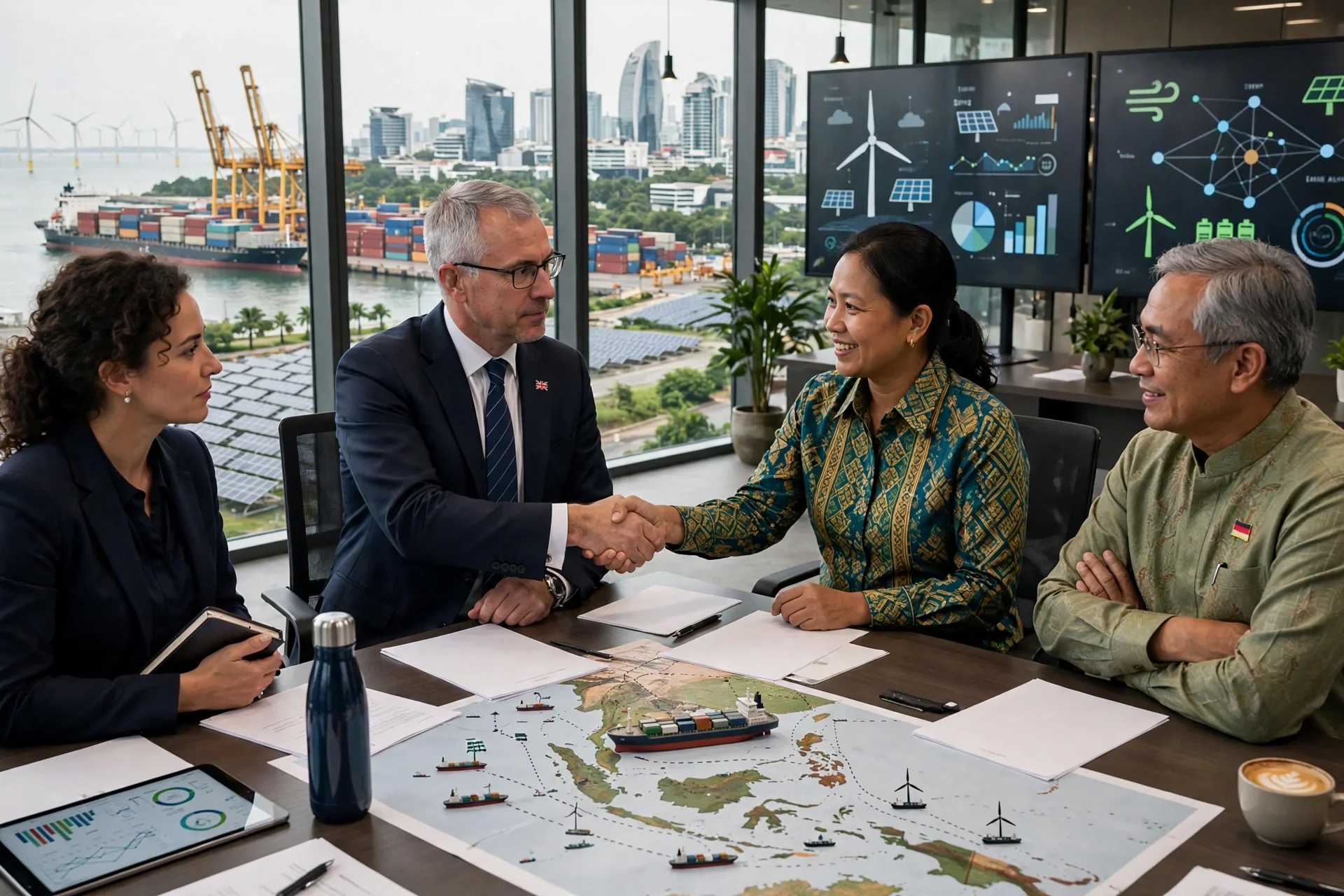
Imagen ilustrativa generada con IA: cooperación comercial y verde entre el Reino Unido y el Sudeste Asiático. · Imagen generada con IA para Erick Prometeo Media
UK and ASEAN seek more inclusive and greener prosperity
Five years after becoming an ASEAN dialogue partner, the UK argues the partnership must move from presence to performance.
UK and ASEAN bet on clear rules and predictable trade
Five years as an ASEAN dialogue partner, the UK proposes cooperation judged by measurable results.
--- The context ---
Five years after the UK became ASEAN dialogue partner, the relationship is entering a different stage. Helen Fazey argues that showing up is no longer enough and that cooperation should be judged by concrete results for people. In her view, prosperity and security can no longer be treated separately, because supply chains are being rewired for resilience as well as efficiency and the cost of climate adaptation is rising faster than available finance.
That context explains the shift Fazey proposes. In a more contested global economy, where reciprocal tariff pressures test every open economy, partnership becomes a practical capability rather than a slogan. Working through ASEAN, and not around it, is presented as the condition for progress that takes an ASEAN shape, lasts beyond an initial announcement and earns trust layer by layer through steady delivery.
--- The facts ---
Two-way trade between the UK and ASEAN now exceeds £60 billion and the first ASEAN-UK Plan of Action has been delivered. The UK was the fourth largest investor in ASEAN in 2024, a figure Fazey presents as reflecting sustained confidence in regional growth and stability. UK accession to the CPTPP also connects British businesses to four ASEAN economies through a single rules based framework.
On that foundation sits the ASEAN-UK Economic Integration Programme, delivered with the ASEAN Secretariat and ASEAN Member States. It focuses on micro, small and medium-sized enterprises, helping them trade across borders, integrate into regional value chains and adopt digital tools and finance. Fazey underlines that women-led businesses are a deliberate priority, because systems that exclude half the workforce do not compound, while inclusive ones do.
--- The positions ---
Fazey argues that behind every point of trade growth sits a concrete story, such as a small business digitising its first cross-border shipment, a fintech founder accessing UK capital, or a woman-led agricultural cooperative meeting international standards because the right partnership emerged at the right moment. That, in her assessment, is where resilient prosperity is built.
She also ties that agenda to the direction set by ASEAN itself. The Philippines 2026 Chairmanship theme, the ASEAN Community Vision 2045 and the Strategic Plan 2026-2030 provide the architecture, and the next Plan of Action for 2027 to 2031 is being built to serve those frameworks. For Fazey, ASEAN centrality is not a slogan but a discipline, and only ASEAN-led work produces ASEAN-shaped outcomes.
--- What remains unknown ---
The detailed commitments of the next Plan of Action for 2027 to 2031 are not yet known, nor how its priorities will be divided among digital trade, SME support and the green transition. The article also does not specify which further ASEAN states might join the CPTPP framework or on what timetable, and it gives no amounts or verifiable targets for each announced line of work.
--- Unanswered questions ---
Will SMEs gain access to digital finance on terms that genuinely widen their place in regional value chains? How much private capital will the Green Transition Fund actually mobilise for clean infrastructure and climate resilient growth? Will the digital economy framework agreement spread its benefits widely rather than concentrating them in a few large firms? How will public data show whether women-led businesses truly advanced during the 2027 to 2031 plan?
--- EPM analysis ---
An inclusive reading of this stage links trade with climate and representation. The ASEAN Digital Economy Framework Agreement, projected in the assessment cited by Fazey to add up to US$2 trillion to the regional digital economy by 2030, will only make social sense if its rules reach small firms. The same applies to the Green Transition Fund, designed to mobilise private capital for clean infrastructure and new jobs in sunrise industries.
📌 EPM Take: In EPM's view, the worth of this partnership will be decided by whether shared principles become verifiable opportunities for those with least access to trade, credit and technology today. The focus on SMEs, women entrepreneurs, green finance and multilateral cooperation gains credibility when it comes with steady delivery and stronger regional institutions. The 2027 calendar, with the UK chairing the G20, Vietnam hosting APEC and Singapore chairing ASEAN, offers a rare window to align inclusion, climate action and digital rules with results that citizens can check directly in their everyday economic and collective lives across the region.
--- The context ---
Five years after the UK became ASEAN dialogue partner, Helen Fazey argues that the relationship must shift from presence to performance. In her view, prosperity and security can no longer be treated separately when economic choices carry strategic weight. Supply chains are being rewired for resilience as well as efficiency, and reciprocal tariff pressures are testing the bargaining power of every open economy.
Against that backdrop, Fazey defends a deliberately practical response. The UK aims to be useful by working through ASEAN rather than around it, grounded in a rules-based international trading system. For businesses and investors, consistency and delivery on commitments become a strategic asset, because predictability underpins trade, investment and long-term confidence even in an era of volatility and shifting alignments.
--- The facts ---
Two-way trade now exceeds £60 billion and the first ASEAN-UK Plan of Action has been delivered. The UK was the fourth largest investor in ASEAN in 2024, which Fazey reads as sustained confidence in regional growth and stability. Its accession to the Comprehensive and Progressive Agreement for Trans-Pacific Partnership connects UK businesses to four ASEAN economies through a single rules based framework, with further ASEAN Member States likely to join in future.
The ASEAN-UK Economic Integration Programme, delivered with the ASEAN Secretariat and ASEAN Member States, focuses on micro, small and medium-sized enterprises, helping them trade across borders, integrate into regional value chains and adopt digital tools and finance. Digital trade and finance are also central, two areas where Fazey considers clear, agreed rules decisive if growth is to remain orderly, competitive and sustainable.
--- The positions ---
Fazey contends that the UK distinguishes itself through consistency and a steadfast commitment to the rules-based international system underpinning sustainable growth. In her assessment, other partners may trade in larger volumes or run bigger budgets, but the British offer rests on showing up, delivering on what it commits to and working through ASEAN institutions rather than around them.
That line aligns with the direction set by ASEAN itself. The Philippines 2026 Chairmanship theme, the ASEAN Community Vision 2045 and the Strategic Plan 2026 to 2030 provide the architecture, and the next Plan of Action for 2027 to 2031 is being shaped to serve those frameworks. For Fazey, ASEAN centrality is a working discipline, judged on resilience, SME support, digital rules and green finance.
--- What remains unknown ---
The article does not detail the concrete commitments or indicators by which the Plan of Action for 2027 to 2031, still being shaped, will be assessed. It also does not specify which further ASEAN states could join the CPTPP framework or on what timetable, and it gives no figures for resources assigned to each programme line, making the real pace of delivery hard to verify.
--- Unanswered questions ---
Will the 2027 to 2031 Plan of Action publish measurable goals and verifiable deadlines for trade, investment and digital rules? Can the CPTPP framework expand to more ASEAN economies while keeping clear and enforceable standards for businesses? How much private capital will the Green Transition Fund mobilise in practice and under what performance criteria? Will the UK preserve the same commercial predictability if tariff pressures and strategic competition intensify further?
--- EPM analysis ---
Read through a lens of order and results, the strength of the proposal is its emphasis on rules. The digital economy framework agreement, projected in the assessment cited by Fazey to add up to US$2 trillion to the regional digital economy by 2030, will need predictable norms to perform. The same holds for the Green Transition Fund, aimed at mobilising private capital for clean infrastructure with well defined projects and auditable execution.
📌 EPM Take: In EPM's view, the credibility of this partnership will depend less on fresh declarations and more on clear rules, commitments actually kept and results that can be measured without embellishment. Predictable trade, economic security and respect for ASEAN institutions form a sensible combination if they translate into sustained investment and more competitive businesses. The 2027 alignment, with the UK chairing the G20, Vietnam hosting APEC and Singapore chairing ASEAN, could order that agenda with discipline, provided every announcement arrives with deadlines, owners and public, verifiable accountability for all partners involved in delivery over time.
Reino Unido y ASEAN buscan una prosperidad más inclusiva
Cinco años después de convertirse en socio de diálogo de ASEAN, el Reino Unido defiende pasar de la presencia a los resultados.
Reino Unido y ASEAN apuestan por reglas y comercio previsible
Cinco años como socio de diálogo de ASEAN, el Reino Unido plantea una cooperación juzgada por resultados medibles.
--- El contexto ---
Cinco años después de que el Reino Unido se convirtiera en socio de diálogo de ASEAN, la relación entra en otra etapa. Helen Fazey sostiene que ya no basta con estar presente y que la cooperación debe medirse por resultados concretos. A su juicio, prosperidad y seguridad ya no pueden tratarse por separado, porque las cadenas de suministro se reorganizan buscando resiliencia además de eficiencia y el costo de adaptarse al clima crece más rápido que la financiación disponible.
En ese escenario, Fazey propone una respuesta práctica en una economía global más disputada, donde las presiones arancelarias recíprocas ponen a prueba a las economías abiertas. Trabajar a través de ASEAN y no al margen del bloque es, en su valoración, la condición para que cada avance tenga forma propia en la región y perdure más allá del anuncio.
--- Los hechos ---
El comercio bilateral entre el Reino Unido y ASEAN supera los 60 mil millones de libras y el primer Plan de Acción conjunto ya fue entregado. El Reino Unido fue el cuarto mayor inversor en ASEAN en 2024, un dato que Fazey presenta como reflejo de confianza sostenida en el crecimiento regional. La adhesión británica al CPTPP conecta además a las empresas británicas con cuatro economías de ASEAN mediante un marco basado en reglas.
Sobre esa base opera el Programa de Integración Económica entre ASEAN y el Reino Unido, desarrollado junto a la Secretaría de ASEAN y sus Estados miembros. El programa se centra en las micro, pequeñas y medianas empresas, apoya su comercio transfronterizo y su integración en cadenas regionales de valor, e impulsa herramientas digitales y acceso a financiación. Fazey subraya que los negocios liderados por mujeres son una prioridad deliberada de ese esfuerzo.
--- Las posiciones ---
Fazey defiende que un sistema económico que excluye a la mitad de la fuerza laboral no se multiplica, mientras que uno inclusivo sí lo hace. Detrás de cada avance comercial, señala, hay historias concretas, como una pequeña empresa que digitaliza su primer envío transfronterizo o una cooperativa agrícola liderada por mujeres que cumple estándares internacionales.
La autora vincula esa agenda con la dirección del propio bloque. El tema de la presidencia filipina de 2026, la Visión Comunitaria ASEAN 2045 y el Plan Estratégico 2026-2030 ofrecen la arquitectura, y el próximo Plan de Acción 2027-2031 se construye para servir a esos marcos. Para Fazey, la centralidad de ASEAN no es un lema sino una disciplina de trabajo.
--- Lo que falta saber ---
Todavía no se conocen los compromisos detallados del próximo Plan de Acción 2027-2031 ni cómo se repartirán sus prioridades entre comercio digital, pymes y transición verde. Tampoco se precisa qué nuevos Estados de ASEAN podrían incorporarse al marco del CPTPP ni en qué plazos, y no se detallan montos ni metas.
--- Preguntas sin respuesta ---
¿Lograrán las pymes acceder a financiación digital en condiciones que amplíen su participación en las cadenas de valor? ¿Cuánto capital privado movilizará el Fondo de Transición Verde para infraestructura limpia y crecimiento resiliente al clima? ¿Se traducirá el acuerdo marco de economía digital en beneficios repartidos y no concentrados en pocas grandes empresas? ¿Cómo se medirá si la inclusión de negocios liderados por mujeres avanzó durante el Plan 2027-2031?
--- Análisis EPM ---
La lectura inclusiva de esta etapa conecta comercio con clima y representación. El acuerdo marco de economía digital de ASEAN, que según la valoración recogida por Fazey podría sumar hasta 2 trillion de dólares estadounidenses a la economía digital regional en 2030, solo tendrá sentido social si sus reglas llegan a empresas pequeñas. Lo mismo vale para el Fondo de Transición Verde, pensado para movilizar capital privado hacia infraestructura limpia y crear empleos en industrias nacientes.
📌 Conclusion EPM: A juicio de EPM, el valor de esta alianza se jugará en si convierte principios compartidos en oportunidades verificables para quienes hoy tienen menos acceso al comercio, al crédito y a la tecnología. La mención a pymes, mujeres emprendedoras, finanzas verdes y multilateralismo gana credibilidad cuando se acompaña de entrega constante y de instituciones regionales fortalecidas. El calendario de 2027, con el Reino Unido al frente del G20, Vietnam como anfitrión de APEC y Singapur en la presidencia de ASEAN, ofrece una ventana poco común para alinear inclusión, clima y reglas digitales con resultados que la ciudadanía pueda comprobar directamente en su vida económica cotidiana y colectiva.
--- El contexto ---
Cinco años después de que el Reino Unido se convirtiera en socio de diálogo de ASEAN, Helen Fazey plantea que la relación debe pasar de la presencia al rendimiento. A su juicio, prosperidad y seguridad ya no pueden tratarse por separado en una era donde las decisiones económicas cargan peso estratégico. Las cadenas de suministro se reorganizan para ganar resiliencia además de eficiencia, y las presiones arancelarias recíprocas prueban a cada economía abierta.
En ese escenario, Fazey defiende una respuesta deliberadamente práctica. El Reino Unido busca ser útil trabajando a través de ASEAN y no al margen de sus instituciones, apoyado en un sistema internacional basado en reglas. Para empresas e inversores, la constancia y el cumplimiento de lo comprometido se convierten en un activo, porque la previsibilidad sostiene el comercio, la inversión y la confianza de largo plazo.
--- Los hechos ---
El comercio bilateral supera los 60 mil millones de libras y el primer Plan de Acción entre ASEAN y el Reino Unido ya fue entregado. El Reino Unido fue el cuarto mayor inversor en ASEAN en 2024, lo que Fazey interpreta como señal de confianza sostenida en el crecimiento y la estabilidad regionales. Su adhesión al CPTPP conecta a las empresas británicas con cuatro economías de ASEAN mediante un marco basado en reglas.
El Programa de Integración Económica entre ASEAN y el Reino Unido, ejecutado con la Secretaría y los Estados miembros, se centra en micro, pequeñas y medianas empresas, en su capacidad de comerciar entre fronteras, integrarse en cadenas regionales de valor y adoptar herramientas digitales y financiación. El comercio digital y las finanzas son frentes centrales, donde Fazey considera decisivo acordar reglas claras para un crecimiento competitivo.
--- Las posiciones ---
Fazey sostiene que el Reino Unido se distingue por su consistencia y por su compromiso firme con el sistema internacional basado en reglas que sostiene el crecimiento duradero. En su valoración, otros actores pueden comerciar en volúmenes mayores o manejar programas más grandes, pero la oferta británica descansa en aparecer, cumplir lo prometido y trabajar mediante las instituciones de ASEAN.
Esa línea se alinea con la dirección del propio bloque. El tema de la presidencia filipina de 2026, la Visión Comunitaria ASEAN 2045 y el Plan Estratégico 2026-2030 fijan la arquitectura, y el próximo Plan de Acción 2027-2031 se diseña para servir a esos marcos. Para Fazey, la centralidad de ASEAN es una disciplina, y la fase será juzgada por resiliencia, apoyo a pymes, reglas digitales y finanzas verdes.
--- Lo que falta saber ---
El texto no detalla los compromisos concretos ni los indicadores con los que se evaluará el Plan de Acción 2027-2031, todavía en preparación. Tampoco precisa qué otros Estados de ASEAN podrían sumarse al CPTPP ni con qué calendario, ni cuantifica los recursos de cada línea del Programa de Integración Económica, lo que dificulta comprobar el ritmo de ejecución.
--- Preguntas sin respuesta ---
¿Publicará el Plan de Acción 2027-2031 metas medibles y plazos verificables para comercio, inversión y reglas digitales? ¿Conseguirá el marco del CPTPP ampliarse a más economías de ASEAN manteniendo estándares claros y exigibles? ¿Cuánto capital privado movilizará en la práctica el Fondo de Transición Verde y con qué criterios de rendimiento? ¿Mantendrá el Reino Unido la misma previsibilidad comercial si aumentan las presiones arancelarias en la región?
--- Análisis EPM ---
Desde una lectura de orden y resultados, el punto fuerte del planteo es su énfasis en reglas. El acuerdo marco de economía digital, que podría sumar hasta 2 trillion de dólares estadounidenses a la economía digital regional en 2030 según la proyección citada por Fazey, exige normas previsibles para rendir. Lo mismo ocurre con el Fondo de Transición Verde, orientado a movilizar capital privado para infraestructura limpia con proyectos definidos y ejecución auditable.
📌 Conclusion EPM: A juicio de EPM, la credibilidad de esta asociación dependerá menos de nuevas declaraciones y más de reglas claras, compromisos cumplidos y resultados que puedan medirse sin adornos. Comercio previsible, seguridad económica y respeto por las instituciones de ASEAN forman una combinación sensata si se traduce en inversión sostenida y empresas más competitivas. La coincidencia de 2027, con el Reino Unido presidiendo el G20, Vietnam acogiendo APEC y Singapur al frente de ASEAN, puede ordenar esa agenda con disciplina, siempre que cada anuncio llegue acompañado de plazos, responsables y una rendición de cuentas pública y verificable para todos los socios.