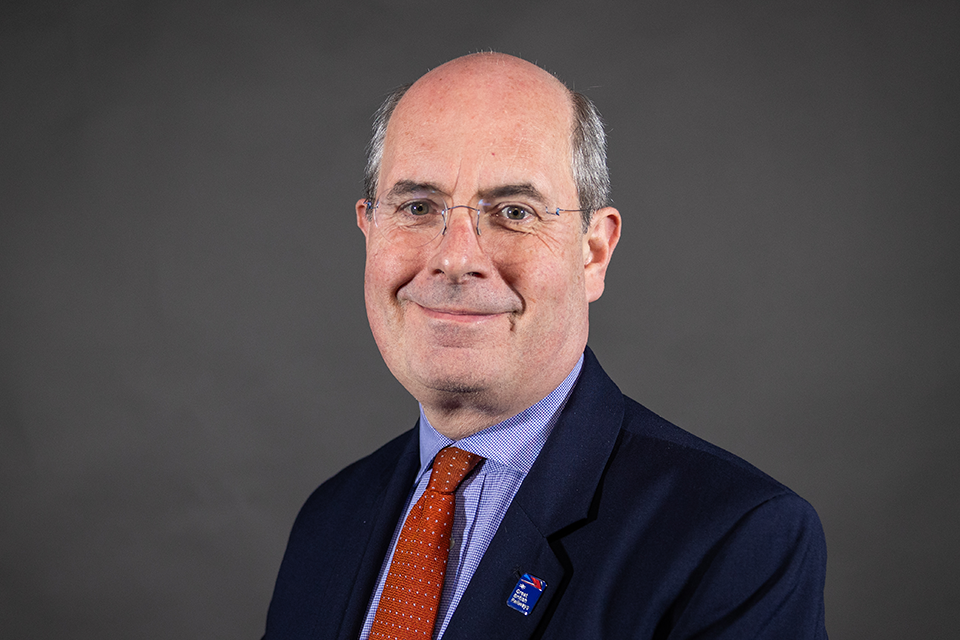
Retrato oficial de Sir John Kingman, confirmado como primer presidente de Great British Railways. · GOV.UK — Department for Transport
Kingman to lead Great British Railways and its return to public control
The British government has confirmed Sir John Kingman as the first Chair of Great British Railways.
Great British Railways begins with a demand for discipline and results
Sir John Kingman takes over as the first Chair of Great British Railways with a mandate to design the organisation and integrate train and track.
The British government confirmed on 16 October 2026 that Sir John Kingman will be the first Chair of Great British Railways, the organisation that will bring train and track together under public control and put passengers at the heart of the railway.
--- The context --- The appointment marks the next stage in the journey to bring the railways back under public control. The Railways Bill continues its passage through Parliament while the transition is prepared, and once the organisation is formally established, Kingman will lead the third biggest public sector organisation in Britain, working with the industry and devolved transport bodies to improve services.
--- The facts --- Kingman begins immediately, with a critical role in shaping the new organisation, continuing the integration of train and track and driving industry readiness for transition. He chaired Barclays UK, Legal and General and Tesco Personal Finance, served as Second Permanent Secretary at HM Treasury during the financial crisis, played a central role in the nationalisation of Northern Rock and the Greater Manchester devolution deal, and became the first Chair of UK Research and Innovation, overseeing £8 billion in annual science funding.
The headquarters at Becketwell, Derby, revealed this week, will bring hundreds of rail jobs to the city and an estimated £151 million boost to the regional economy. According to the government, publicly owned operators perform better on average, fares have been frozen this year for the first time in 30 years, and 76,000 extra seats a week have been introduced across the network.
--- The positions --- Transport Secretary Heidi Alexander described the appointment, in attributed remarks, as a defining moment in the mission to put passengers first and rebuild Britain's railways, pointing to Kingman's record. Kingman said he wants a simpler, more unified railway that puts passengers and customers first, supports growth and creates opportunity. Richard George of Network Rail welcomed his arrival, and Sir Andrew Haines of DFTO praised his experience for a more integrated, customer-focused railway.
--- What remains unknown --- The official announcement does not set a date for the organisation to be formally established, nor detail its final structure, because both depend on the Bill's passage and on the design work Kingman now leads. It also does not specify how the improvements attributed to public operators will be measured over time, or which concrete targets the new organisation will have to meet.
--- Unanswered questions --- When will Great British Railways be formally established if its Bill is still passing through Parliament? How will integrating train and track translate into visible, everyday improvements for passengers? Which public targets will show whether public control keeps delivering benefits such as frozen fares and the extra seats already announced?
--- EPM analysis --- The government's wager is that public ownership, properly led, can restore the railway as an essential public service: contained fares, more capacity and one organisation answerable to the traveller. Choosing a chair seasoned in large institutions lends that promise credibility, and Derby symbolises a reform meant to spread its benefits beyond the capital.
📌 EPM Take: In EPM's view, Kingman's appointment is the missing piece that turns the return to public control from an announcement into an organisation with a face, a headquarters and clear responsibilities. Its success will not be measured in statements, but in more reliable trains, affordable fares and enough capacity for daily travellers. If the railway's new common home delivers that, the reform will have kept its central promise: to serve passengers first and show that public hands can run a shared service well.
The British government confirmed on 16 October 2026 that Sir John Kingman will be the first Chair of Great British Railways, a very large organisation whose worth will depend less on public ownership than on management and results for passengers and taxpayers.
--- The context --- The appointment marks the next stage in the journey to bring the railways back under public control, with the Railways Bill still continuing its passage through Parliament. Once formally established, Kingman will lead the third biggest public sector organisation in Britain, working with the industry and devolved transport bodies, judged on whether services actually improve.
--- The facts --- Kingman starts immediately, tasked with shaping the organisation, integrating train and track and preparing the transition. He chaired Barclays UK, Legal and General and Tesco Personal Finance, served as Second Permanent Secretary at HM Treasury during the financial crisis, with a central role in the nationalisation of Northern Rock and the Greater Manchester devolution deal, and became the first Chair of UK Research and Innovation, overseeing £8 billion in annual science funding.
The headquarters at Becketwell, Derby, revealed this week, will bring hundreds of jobs and an estimated £151 million boost to the regional economy. The government says publicly owned operators perform better on average, fares have been frozen this year for the first time in 30 years, and 76,000 extra seats a week have been added: claims the new leadership must sustain through management rather than announcements.
--- The positions --- Transport Secretary Heidi Alexander argued, in attributed remarks, that Kingman's record across government and industry makes him the leader needed for a more reliable railway. Kingman committed himself to a simpler, more unified railway that puts passengers and customers first. Richard George of Network Rail stressed that integration must also work better for taxpayers, and Sir Andrew Haines of DFTO trusted his leadership to deliver better outcomes for all.
--- What remains unknown --- The official announcement offers no fixed timetable for the organisation's formal establishment and does not detail its cost structure, accountability or performance indicators. Those definitions are left to the design process Kingman now begins to lead, while Parliament completes the Bill.
--- Unanswered questions --- Which demanding public indicators will measure whether Great British Railways manages the railway better than the model it replaces? How much will the transition cost the taxpayer, and who will answer if the results do not arrive? Can an organisation of this size keep cost discipline, frozen fares and extra seats without letting service quality slip?
--- EPM analysis --- Changing ownership does not fix a railway: professional management, the right incentives and real accountability do. Kingman's profile, formed across major businesses, the Treasury and public bodies, points to that discipline, but the sheer size of the organisation he will chair is also its greatest risk. Every official promise, from the Derby boost to the fares freeze, will need to become a verifiable figure, because taxpayers will fund the new era's mistakes as surely as its successes.
📌 EPM Take: In EPM's view, Kingman is a serious appointment for a task that allows no romanticism: running the country's third biggest public organisation demands efficiency, spending control and measurable results from the first year. Public ownership is not a merit in itself; it will become one only if it delivers a more reliable service at a reasonable cost. The bar has been set by the government's own figures, and the new leadership should be held to them, without excuses, by passengers and taxpayers alike.
Kingman presidirá Great British Railways en su vuelta al control público
El Gobierno británico confirmó a Sir John Kingman como primer presidente de Great British Railways.
Great British Railways nace con la exigencia de gestión y resultados
Sir John Kingman presidirá Great British Railways desde hoy, con el encargo de diseñar la organización e integrar tren y vía.
El Gobierno británico confirmó este 16 de octubre de 2026 a Sir John Kingman como primer presidente de Great British Railways, la organización que reunirá tren y vía bajo control público y pondrá al pasajero en el centro del ferrocarril.
--- El contexto --- El nombramiento marca la siguiente etapa del camino para devolver los ferrocarriles al control público. El proyecto de ley ferroviario sigue en el Parlamento mientras se prepara la transición, y cuando la organización quede formalmente establecida, Kingman liderará la tercera mayor organización del sector público en Gran Bretaña, junto a la industria ferroviaria.
--- Los hechos --- Kingman empieza de inmediato, con un papel decisivo en dar forma a la nueva organización, continuar la integración de tren y vía y preparar al sector para la transición. Presidió Barclays UK, Legal and General y Tesco Personal Finance, fue segundo secretario permanente del Tesoro durante la crisis financiera, participó en la nacionalización de Northern Rock y en el acuerdo de devolución de Greater Manchester, y fue el primer presidente de UK Research and Innovation, con 8 mil millones de libras anuales en ciencia.
La sede de Becketwell, en Derby, revelada esta semana, llevará cientos de empleos ferroviarios a la ciudad y un impulso estimado de 151 millones de libras a la región. Según el Gobierno, los operadores públicos rinden mejor en promedio, las tarifas se congelaron este año por primera vez en 30 años y se incorporaron 76,000 asientos extra semanales en los servicios públicos de toda la red.
--- Las posiciones --- La ministra de Transporte, Heidi Alexander, presentó el nombramiento como un momento definitorio para poner a los pasajeros primero y reconstruir los ferrocarriles. Kingman afirmó que quiere un ferrocarril más simple y unificado, centrado en pasajeros y clientes, que apoye el crecimiento y cree oportunidades. Richard George, de Network Rail, celebró su llegada, y Sir Andrew Haines, de DFTO, valoró su experiencia para una red más integrada.
--- Lo que falta saber --- La nota oficial no precisa cuándo quedará formalmente establecida la organización ni su estructura definitiva, según la tramitación parlamentaria y el diseño que encabeza Kingman. Tampoco detalla cómo se medirán las mejoras atribuidas a los operadores públicos ni qué metas concretas se fijarán para la nueva etapa.
--- Preguntas sin respuesta --- ¿Cuándo quedará formalmente establecida Great British Railways si su proyecto de ley aún sigue en el Parlamento? ¿Cómo se traducirá la integración de tren y vía en mejoras visibles para los pasajeros? ¿Qué metas públicas permitirán comprobar si el control público mantiene ventajas como la congelación de tarifas y los asientos adicionales?
--- Análisis EPM --- La apuesta oficial es que la propiedad pública, bien dirigida, devuelva al ferrocarril su condición de servicio esencial: tarifas contenidas, más capacidad y una sola organización responsable ante el viajero. Elegir a un presidente curtido en grandes instituciones busca dar credibilidad a esa promesa, y Derby simboliza que la reforma también repartirá beneficios fuera de la capital.
📌 Conclusion EPM: A juicio de EPM, el nombramiento de Kingman es la pieza que faltaba para que la vuelta al control público deje de ser un anuncio y empiece a ser una organización con rostro, sede y responsabilidades. Su éxito no se medirá en declaraciones, sino en trenes más fiables, tarifas asumibles y capacidad suficiente para quien viaja a diario. Si la nueva casa común del ferrocarril logra eso, la reforma habrá cumplido su promesa central: servir primero a los pasajeros y demostrar que lo público puede gestionar bien lo que es de todos.
El Gobierno británico confirmó este 16 de octubre de 2026 a Sir John Kingman como primer presidente de Great British Railways, una organización enorme cuyo acierto dependerá menos de su titularidad pública que de su gestión y sus resultados para pasajeros y contribuyentes.
--- El contexto --- El nombramiento marca la siguiente etapa del camino para devolver los ferrocarriles al control público, con el proyecto de ley ferroviario aún en el Parlamento. Cuando la organización quede formalmente establecida, Kingman liderará la tercera mayor organización del sector público en Gran Bretaña, junto a la industria y los organismos de transporte delegados, obligado a mejorar la experiencia del pasajero y la calidad de los servicios.
--- Los hechos --- Kingman asume de inmediato, para dar forma a la organización, integrar tren y vía y preparar la transición. Presidió Barclays UK, Legal and General y Tesco Personal Finance, fue segundo secretario permanente del Tesoro durante la crisis financiera, con papel central en la nacionalización de Northern Rock y en el acuerdo de devolución de Greater Manchester, y fue el primer presidente de UK Research and Innovation, con 8 mil millones de libras anuales en ciencia.
La sede de Becketwell, en Derby, revelada esta semana, aportará cientos de empleos y un impulso estimado de 151 millones de libras a la región. El Gobierno sostiene que los operadores públicos rinden mejor en promedio, que las tarifas se congelaron este año por primera vez en 30 años y que se añadieron 76,000 asientos extra semanales: datos que la nueva dirección deberá sostener con gestión, no solo con anuncios.
--- Las posiciones --- La ministra de Transporte, Heidi Alexander, defendió que el historial de Kingman en gobierno e industria lo hace el líder preciso para un ferrocarril más fiable. Kingman se comprometió a construir un ferrocarril más simple y unificado que ponga primero a pasajeros y clientes. Richard George, de Network Rail, subrayó que la integración debe funcionar mejor también para los contribuyentes, y Sir Andrew Haines, de DFTO, confió en mejores resultados para todos.
--- Lo que falta saber --- La comunicación oficial no ofrece un calendario cerrado para la constitución formal de la organización ni detalla su estructura de costes, sus mecanismos de rendición de cuentas o los indicadores de su desempeño. Esas definiciones quedan en manos del diseño que Kingman dirige desde hoy.
--- Preguntas sin respuesta --- ¿Qué indicadores públicos y exigentes medirán si Great British Railways gestiona mejor que el modelo anterior? ¿Cuánto costará la transición al contribuyente y quién responderá si los resultados no llegan? ¿Podrá una organización tan grande mantener disciplina de costes, tarifas congeladas y más asientos sin deteriorar el servicio?
--- Análisis EPM --- Cambiar la titularidad no arregla un ferrocarril: lo arreglan la gestión profesional, los incentivos correctos y la rendición de cuentas. El perfil de Kingman apunta a esa exigencia, pero el tamaño de la organización es también su mayor riesgo. Cada promesa oficial, del impulso de Derby a la congelación tarifaria, deberá traducirse en cifras verificables, porque el contribuyente financiará aciertos y errores.
📌 Conclusion EPM: A juicio de EPM, Kingman es un nombramiento serio para una tarea que no admite romanticismo: dirigir la tercera mayor organización pública del país exige eficiencia, control del gasto y resultados medibles desde el primer año. La propiedad pública no es un mérito en sí misma; lo será solo si ofrece un servicio más fiable a un coste razonable. El listón queda fijado por las propias cifras del Gobierno, y frente a ellas deberá responder la nueva dirección, sin excusas, ante pasajeros y contribuyentes.