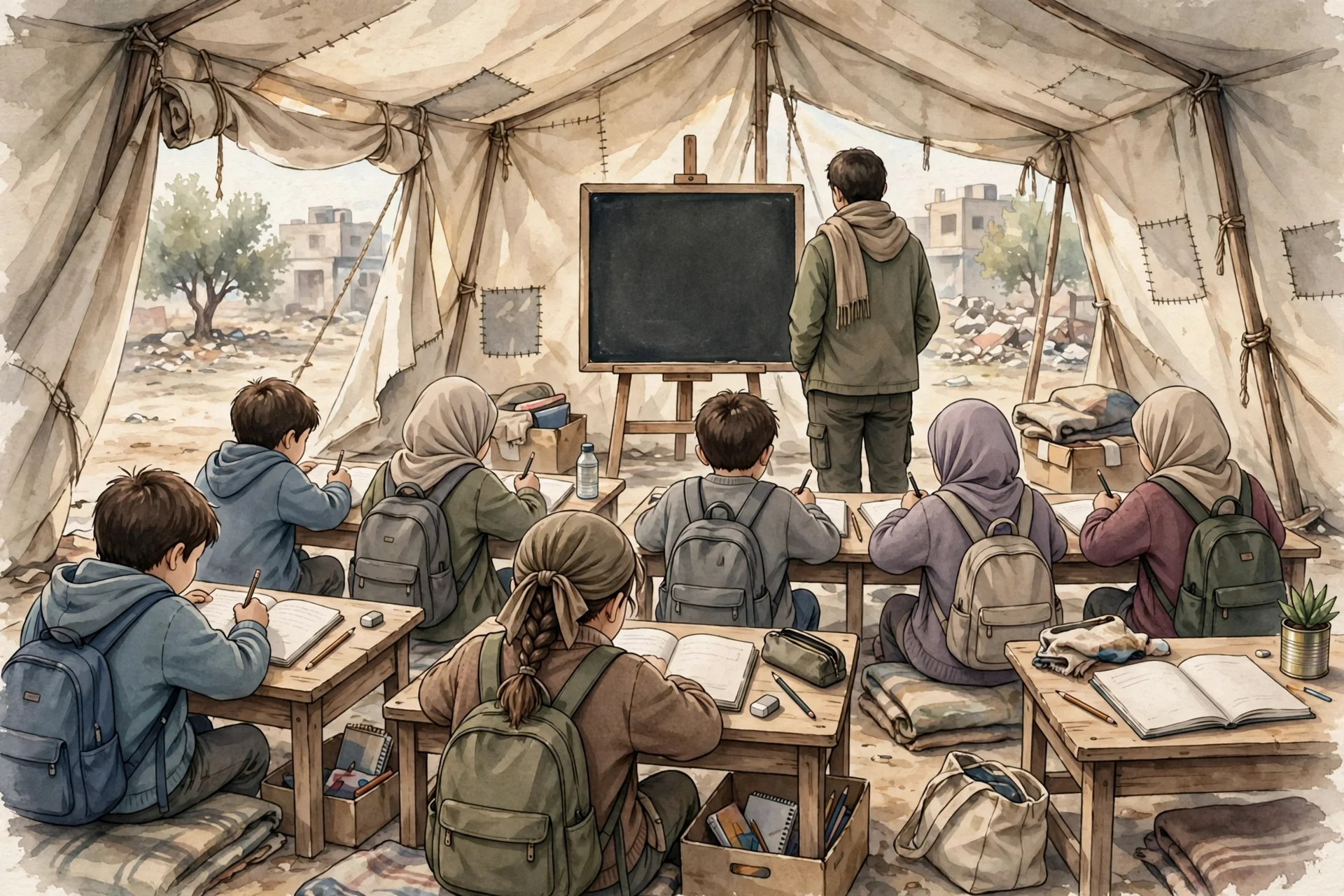
Imagen ilustrativa generada: aula en tienda con niños que retoman el aprendizaje junto a su maestro · Erick Prometeo Media
UNICEF: 340 children killed in Gaza despite the ceasefire agreement
UNICEF said more than 340 children have been reported killed and hundreds more injured despite the ceasefire agreement between Hamas and Israel, with 33…
Child deaths in Gaza continue a year after the ceasefire announcement
UNICEF reported more than 340 children killed and hundreds injured despite the ceasefire in Gaza, alongside 800,000 displaced children, 60,000 who lost one or…
--- The context ---
A little over one year since a ceasefire agreement was announced between Hamas fighters and Israel, UNICEF said on Friday that children in Gaza continue to be killed and injured. Spokesperson Ricardo Pires stressed that, for families mourning their children, those statistics do not equate with a ceasefire.
--- The facts ---
UNICEF placed the reported toll since the agreement was announced at more than 340 children killed, with hundreds more injured. Mr. Pires told journalists in Geneva that airstrikes, drone strikes and gunfire across the Strip had killed five boys and two girls in the last two weeks in Gaza alone, had seriously injured at least 33 children, and that another two boys died of earlier injuries.
The case of 16-year-old Norhan shows how that burden falls on children. Mr. Pires explained that her mother was shot while eight months pregnant, delivered her baby and then died the following day. Her father is living with a disability, so Norhan now cares for her one-year-old sister Narjis: she tidies the home, cooks and helps her three other siblings with their studies after class at a UNICEF-supported learning centre.
According to UNICEF, 800,000 children remain displaced in Gaza, most in tents or dangerous bombed-out buildings. An estimated 60,000 children have seen either one or both parents killed during the war, or since the ceasefire, while nearly every child needs mental health support.
--- The positions ---
Mr. Pires added that the war is everywhere for children, in where they sleep, what they eat and whether they can learn. Asked about reports that private traders had halted cooperation on allowing food trucks to enter, he stressed that the uninterrupted flow of humanitarian and commercial goods remained essential for recovery, and recalled the pre-ceasefire days when supplies were not getting into Gaza City and famine was declared.
The spokesperson also warned about the sanitation crisis, where Israeli bombardment has severely damaged the drainage network. He described large wastewater pools, among them the Sheikh Radwan stormwater basin, now half-full, and warned that, with winter rains fast approaching, time is running out to pump it out before contaminated water spills into residential areas downstream.
--- What remains unknown ---
The update does not set out how food truck access will evolve or what steps will prevent wastewater overflowing before the rains. It also gives no timetable for strengthening shelter for displaced families as temperatures drop.
--- Unanswered questions ---
Will humanitarian and commercial goods keep flowing into Gaza without interruption? Will the Sheikh Radwan basin be pumped out in time before the winter rains? What added protection will the 800,000 displaced children receive during the winter? How will mental health support reach nearly every child who needs it?
--- EPM analysis ---
Education is a path to recovery: UNICEF has helped more than 560,000 children return to learning since the ceasefire, including at over 200 UNICEF-supported learning centres. It has also given digital cash help to more than 380,000 people and safe water to 1.2 million people.
📌 EPM Take: In EPM's view, a ceasefire that coexists with 340 reported child deaths and 33 children seriously injured in two weeks must be judged by the safety it delivers each day, not by its announcement alone. The immediate priorities are protecting children, sustaining the flow of essential goods, resolving the sanitation emergency before the rains and expanding the return to learning that has already reached more than 560,000 children, because without safety, clean water, shelter and schooling there is no recovery for Gaza.
--- The context ---
A little over one year since a ceasefire agreement was announced between Hamas fighters and Israel, the United Nations agency for children said that Gaza children are still being killed. Spokesperson Ricardo Pires stressed that for families mourning their children, those statistics do not equate with a ceasefire.
--- The facts ---
Despite the agreement, the reported child toll stands at more than 340 killed and hundreds more injured, UNICEF said. Mr. Pires told journalists in Geneva that, in the last two weeks in Gaza alone, airstrikes, drone strikes and gunfire across the Strip killed five boys and two girls, seriously injured at least 33 children, and left another two boys dead from earlier injuries.
The story of 16-year-old Norhan illustrates the responsibilities now carried by minors. Mr. Pires explained that her mother was shot while eight months pregnant, delivered her baby and died the next day. The father of Norhan is living with a disability, so she cares for her one-year-old sister Narjis: she tidies the home, cooks and helps her three other siblings with their studies after class at a UNICEF-supported learning centre.
According to UNICEF, 800,000 children remain displaced in Gaza, most in tents or dangerous bombed-out buildings. An estimated 60,000 children have seen either one or both parents killed during the war, or since the ceasefire, while nearly every child needs mental health support.
--- The positions ---
Mr. Pires continued that the war is everywhere for children, in where they sleep, what they eat and whether they can learn. On reports that private traders had halted cooperation on allowing food trucks to enter the occupied enclave, he stressed that the uninterrupted flow of humanitarian and commercial goods remained essential, and insisted there can be no return to families lacking what they require to survive.
The alert comes as temperatures drop and families fill empty flour bags with sand against rainwater in their tents. Mr. Pires warned that the sanitation crisis is a particular concern because Israeli bombardment has severely damaged the drainage network, pointing to wastewater pools such as the Sheikh Radwan basin, now half-full, as winter rains approach.
--- What remains unknown ---
The briefing does not clarify whether commercial food trucks will keep entering or which measures will empty the wastewater basins before the rains. Nor does it give a schedule for safer shelter, after three years of war sparked by Hamas-led terror attacks in Israel, as the source describes its origin.
--- Unanswered questions ---
Will the flow of humanitarian and commercial goods into Gaza remain uninterrupted? Will the Sheikh Radwan stormwater basin be pumped out before the winter rains arrive? What safe shelter will the 800,000 displaced children have as temperatures drop? How will mental health support reach nearly every child who needs it?
--- EPM analysis ---
Alongside the losses, UNICEF set out its assistance. The agency has helped more than 560,000 children return to learning since the ceasefire, including at over 200 UNICEF-supported learning centres, and has given digital cash help to more than 380,000 people and safe water to 1.2 million people.
📌 EPM Take: In EPM's view, the test of any agreement is the protection it gives to those least able to protect themselves, and by that test Gaza children remain unprotected. With 340 children reported killed, 800,000 displaced and wastewater threatening homes ahead of winter, the practical duties are plain: keep essential goods moving, secure shelter and clean water, and treat education and mental health support as essential services whose recovery cannot wait for better conditions.
UNICEF: 340 niños muertos en Gaza pese al acuerdo de alto el fuego
UNICEF informó de que más de 340 niños han sido reportados muertos y cientos más heridos desde el anuncio del acuerdo de alto el fuego entre Hamás e Israel…
La infancia de Gaza sigue muriendo un año después del alto el fuego
UNICEF reportó más de 340 niños muertos y cientos de heridos pese al acuerdo de alto el fuego en Gaza, con 800,000 niños desplazados, 60,000 que perdieron a…
--- El contexto ---
Ha pasado poco más de un año desde que se anunció un acuerdo de alto el fuego entre combatientes de Hamás e Israel, según informó UNICEF el viernes. El portavoz Ricardo Pires subrayó que, para las familias en duelo, esas cifras no equivalen a un alto el fuego.
--- Los hechos ---
UNICEF informó de más de 340 niños reportados muertos y cientos más heridos desde el anuncio del acuerdo. En las últimas dos semanas en Gaza, cinco niños y dos niñas han sido reportados muertos y al menos 33 niños gravemente heridos en ataques aéreos, ataques con drones y disparos en toda la Franja, indicó Pires. Otros dos niños murieron por heridas previas.
El caso de Norhan, de 16 años, ilustra esa carga. Su madre recibió un disparo embarazada de ocho meses, dio a luz y murió al día siguiente, explicó Pires. Su padre vive con una discapacidad, por lo que ella cuida a su hermana Narjis, de un año: ordena la casa, cocina y ayuda con los estudios a sus otros tres hermanos, que asisten a un centro de aprendizaje apoyado por UNICEF.
Según UNICEF, 800,000 niños siguen desplazados en Gaza y la mayoría vive en tiendas o edificios bombardeados y peligrosos. Se estima que 60,000 niños perdieron a uno de sus padres o a ambos durante la guerra o desde el alto el fuego, y casi todos necesitan apoyo en salud mental.
--- Las posiciones ---
Pires señaló que la guerra alcanza a los niños en dónde duermen, qué comen y si pueden aprender. Insistió en que el flujo ininterrumpido de bienes humanitarios y comerciales sigue siendo esencial para su recuperación, y advirtió contra volver a la escasez previa al alto el fuego, cuando se declaró una hambruna.
El portavoz alertó sobre la crisis de saneamiento: el bombardeo israelí ha dañado la red de drenaje y hay acumulaciones de aguas residuales, como la cuenca de Sheikh Radwan, que está medio llena. Con las lluvias de invierno acercándose, advirtió de que se acaba el tiempo para bombear esa agua antes de que se desborde.
--- Lo que falta saber ---
No se precisa cómo evolucionará el acceso de los camiones comerciales de alimentos ni qué medidas evitarán el desbordamiento antes de las lluvias. Tampoco detalla plazos de refugio para las familias desplazadas ante el frío y la lluvia.
--- Preguntas sin respuesta ---
¿Se mantendrá sin interrupciones el flujo de bienes humanitarios y comerciales hacia Gaza? ¿Se bombeará a tiempo la cuenca de Sheikh Radwan antes de las lluvias de invierno? ¿Qué protección adicional recibirán los 800,000 niños desplazados durante el invierno? ¿Cómo se garantizará el apoyo en salud mental que casi todos necesitan?
--- Análisis EPM ---
La educación es vía de recuperación: UNICEF ha ayudado a más de 560,000 niños a volver a aprender desde el alto el fuego, incluso en más de 200 centros apoyados por la agencia, y ha dado asistencia en efectivo a más de 380,000 personas y agua segura a 1.2 million de personas.
📌 Conclusion EPM: A juicio de EPM, un alto el fuego que convive con 340 niños muertos y 33 niños gravemente heridos en dos semanas no puede medirse solo por su anuncio formal, sino por la seguridad que ofrece cada día. La prioridad es proteger a la infancia, sostener la entrada de bienes esenciales, resolver la emergencia de saneamiento antes de las lluvias y ampliar el aprendizaje que ya llegó a más de 560,000 niños, porque sin seguridad, agua limpia, refugio y escuela no hay recuperación para Gaza.
--- El contexto ---
Poco más de un año después del anuncio del acuerdo de alto el fuego entre combatientes de Hamás e Israel, UNICEF informó el viernes de que la violencia sigue golpeando a la infancia de Gaza. El portavoz Ricardo Pires subrayó que, para las familias en duelo, esas cifras no equivalen a un alto el fuego.
--- Los hechos ---
De acuerdo con UNICEF, más de 340 niños han sido reportados muertos y cientos heridos pese al acuerdo vigente. En las últimas dos semanas solo en Gaza, cinco niños y dos niñas han sido reportados muertos y al menos 33 niños gravemente heridos en ataques aéreos, ataques con drones y disparos en toda la Franja, dijo Pires. Otros dos niños murieron por heridas previas.
La historia de Norhan, de 16 años, resume ese peso. Pires explicó que su madre recibió un disparo embarazada de ocho meses, entregó a su bebé y murió al día siguiente. Como su padre vive con una discapacidad, Norhan cuida a su hermana Narjis, de un año: ordena la casa, cocina y ayuda con los estudios a sus otros tres hermanos, que asisten a un centro de aprendizaje apoyado por UNICEF.
UNICEF calcula que 800,000 niños permanecen desplazados en Gaza y que la mayoría vive en tiendas o edificios bombardeados y peligrosos. Un estimado de 60,000 niños perdió a uno de sus padres o a ambos durante la guerra o desde el alto el fuego, y casi cada niño necesita apoyo en salud mental.
--- Las posiciones ---
Pires afirmó que ningún lugar es seguro y que la guerra está en todas partes para los niños, en dónde duermen, qué comen y si pueden aprender. Ante las informaciones sobre comerciantes que habrían detenido su cooperación para la entrada de camiones con alimentos, subrayó que el flujo continuo de bienes humanitarios y comerciales sigue siendo esencial.
La agencia lanzó una alerta de invierno. Pires advirtió de que la crisis de saneamiento preocupa porque el bombardeo israelí ha dañado la red de drenaje. Señaló las acumulaciones de aguas residuales, como la cuenca de Sheikh Radwan, medio llena, y que con las lluvias acercándose se acaba el tiempo para bombearla.
--- Lo que falta saber ---
No se ha detallado qué ocurrirá con los camiones de alimentos ni qué calendario existe para vaciar las cuencas antes de las lluvias. Tampoco se conocen medidas nuevas de refugio para las familias desplazadas.
--- Preguntas sin respuesta ---
¿Continuará entrando sin interrupciones la ayuda humanitaria y comercial que los niños necesitan? ¿Habrá tiempo de bombear la cuenca de Sheikh Radwan antes de las lluvias de invierno? ¿Qué refugio seguro tendrán los 800,000 niños desplazados cuando bajen las temperaturas? ¿Quién asumirá el apoyo en salud mental que casi todos requieren?
--- Análisis EPM ---
El balance combina pérdidas y recuperación frágil. Desde el alto el fuego, UNICEF ha ayudado a más de 560,000 niños a volver a aprender, y ha dado asistencia en efectivo a más de 380,000 personas y agua segura a 1.2 million de personas.
📌 Conclusion EPM: A juicio de EPM, la medida de un acuerdo no es su firma sino la vida que protege, y en Gaza esa protección sigue fallando para la infancia. Con 340 niños muertos reportados, 800,000 desplazados y una crisis de saneamiento al borde del desbordamiento invernal, la obligación es clara: mantener abiertos los flujos de bienes, asegurar refugio y agua limpia, y sostener la educación y la salud mental como servicios esenciales ante una emergencia que continúa activa cada día.