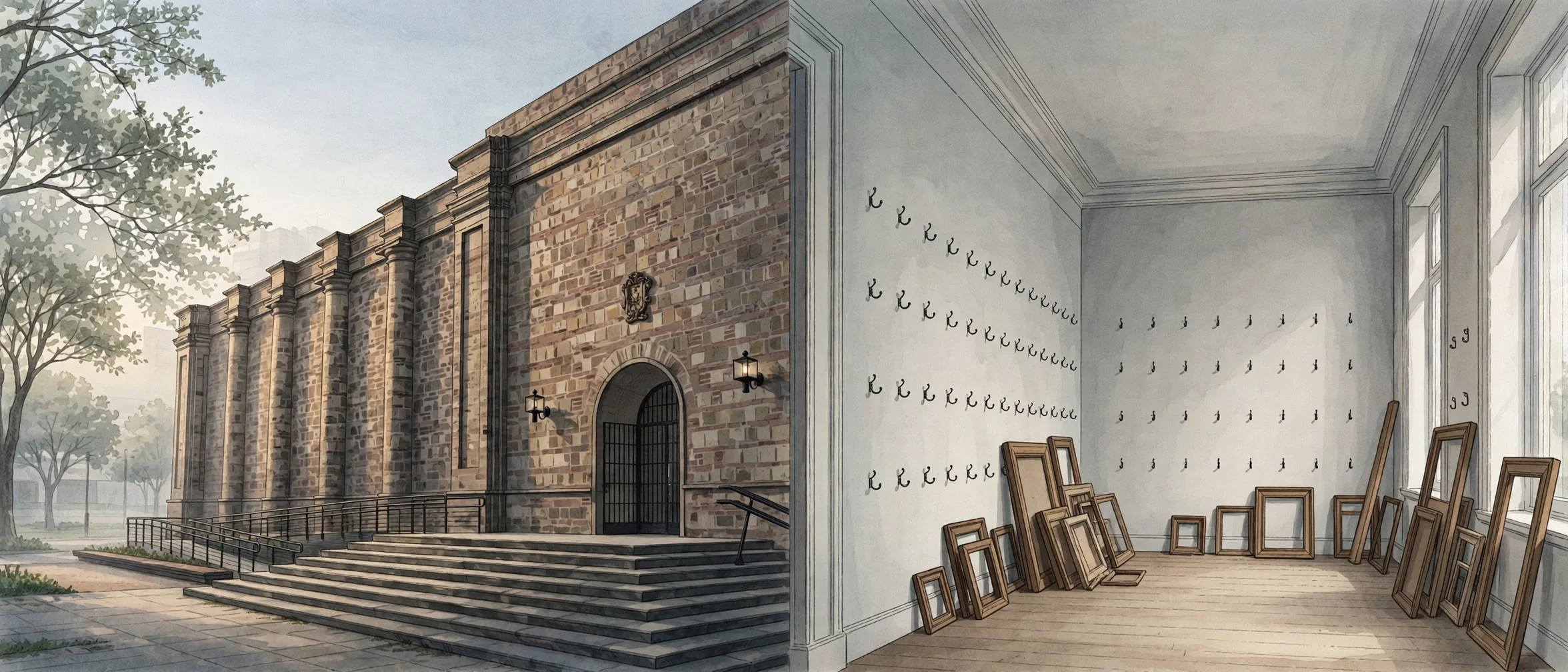
Imagen alusiva al Museo Nacional y a las salas de las que se retiraron las piezas. · Erick Prometeo Media
Cepeda Urges Return of Pieces Removed From National Museum
Senator Iván Cepeda demanded the return of more than 30 pieces removed from the National Museum on orders from President Abelardo De La Espriella and defended…
Government Defends Removal and Rejection of Terrorism Apology
President Abelardo De La Espriella ordered references to Carlos Pizarro removed from public spaces as an apology for terrorism, while Iván Cepeda demanded the…
--- The context ---
Colombia's National Museum has become the focus of a dispute over collective memory after President Abelardo De La Espriella ordered the removal of pieces and references linked to social struggles, victims of political violence, diversity and the country's recent history. Among the references singled out are those to Carlos Pizarro Leongómez, a former M-19 leader and former presidential candidate whose path was tied to a successful peace process and to the 1991 Political Constitution, as Senator Iván Cepeda recalled in his statement.
--- The facts ---
The removal covered more than 30 pieces from a historic gallery, including posters of Bernardo Jaramillo Ossa and Pizarro Leongómez, both presidential candidates murdered during the 1990 elections. Cepeda, a Historic Pact senator holding the seat granted under the Opposition Statute, asked for the removed items to be returned immediately and argued that the measure harms collective memory. He also addressed young people, women, sexual diversities, academia, students, teachers and citizens as a whole in defense of multicultural Colombia.
The senator, who lost the presidential contest to De La Espriella by just 0.95%, closed his message with a call for mobilization to defend, as he put it, the country of multiculturalism, life and democracy. In his remarks, delivered on video, he said the museum belongs to all of Colombia rather than to any government, and he insisted that no decision should define which events may remain in public memory or which experiences of victims should be excluded.
--- The positions ---
For Cepeda, the removal affronts successful peace processes and attempts to deny the experiences of victims and to exclude episodes of national political history, as he argued in attributed remarks. He accused the president of seeking to impose what Colombian society may remember and what it must forget, and he described the measure as an expression of authoritarianism linked to denialism, a practice he attributed to those responsible for crimes against humanity and to those who back them, according to his statement.
--- What remains unknown ---
The source does not state where the more than 30 pieces are now, whether a public inventory of the removals exists, or what technical criteria the Ministry of Culture applied to carry out the order. It also does not say whether there will be a partial replacement, a review of the measure, or a formal government response to the demand for restitution made by Cepeda after his video statement.
--- Unanswered questions ---
Where are the more than 30 removed pieces today and who keeps their inventory? Will the government answer the demand for immediate restitution raised by Cepeda? Will the criteria applied to references about victims and peace processes be reviewed? What role will Culture Minister Paola Holguín play in any eventual restoration of the galleries?
--- EPM analysis ---
The clash sets two readings of the recent past against each other. In the reading defended by Cepeda, a national museum does not order forgetting: it preserves uncomfortable testimonies, including those of people who laid down their arms, so that new generations can understand both violence and peace. Pizarro laid down his arms and took part in a peace process before his murder, a fact the senator presents as an essential part of that shared memory.
In that frame, diversity appears as a democratic wealth that public institutions should protect rather than treat as a threat. The reference to Indigenous peoples, peasants and other social sectors widens the focus: what was removed, according to Cepeda, is not only posters, but accounts of struggles that marked Colombian history and sustain the plural character enshrined in 1991.
📌 EPM Take: In EPM's view, a national museum loses its purpose when an executive order decides which faces may stay in the gallery and which must leave, because the memory of victims, of peace processes and of the candidates murdered in 1990 belongs not to the government of the day, but to the whole country, which must be able to look at it, debate it and learn from it without emptied walls imposed from above or single official accounts of its recent history, and keeping those testimonies also protects new generations from a repetition of the political violence that marked the country.
--- The context ---
A presidential order to remove images, portraits and references to Carlos Pizarro Leongómez from public spaces and Executive facilities has opened a debate over the limits of institutional homage. President Abelardo De La Espriella instructed Culture Minister Paola Holguín and said he would not allow former members of armed groups to be presented as heroes of the homeland, a definition that sets the official criterion for the use of state spaces and for the symbols displayed by the Executive.
--- The facts ---
The measure led to the removal of more than 30 pieces from a historic gallery of the National Museum, including posters of Bernardo Jaramillo Ossa and Pizarro Leongómez, both presidential candidates murdered in the 1990 elections. The presidential statement became known on October 15 and came shortly after the Council of State decision of September 30, which provisionally suspended recognition of Pizarro's hat as cultural heritage of the Nation, a precedent that brings legal certainty to the debate over that symbol.
In that judicial context, the provisional suspension did not settle the merits of the heritage recognition, but it did leave that status without immediate effect while the case is studied. The government framed its decision within that setting and within its authority to define the content displayed in Executive facilities, and the source records no court order requiring the removed pieces to remain on display in the galleries.
--- The positions ---
The Executive justified the measure with criticism of what it described as an apology for terrorism, and the president said in attributed remarks that he does not accept such an apology and that it has ended under his government. He also said he had instructed the minister to remove from public places what he described as an ode to terrorism. Senator Iván Cepeda, by contrast, demanded immediate restitution, described the decision as authoritarianism and said the museum belongs to all of Colombia, while former Senator María José Pizarro, the former candidate's daughter, strongly criticized the measure.
--- What remains unknown ---
The full scope of the presidential instruction in other Executive facilities is not yet known, nor is the procedure the Ministry of Culture will follow to classify the removed pieces. The source also does not report whether the Council of State will soon decide the merits of the hat case, or whether the government will present a general written criterion for future exhibitions in public spaces.
--- Unanswered questions ---
What scope will the presidential instruction have in other Executive facilities? Will the Ministry of Culture publish a general criterion for exhibitions in public spaces? When will the Council of State decide the merits of the hat's heritage recognition? Will the government agree to review specific cases without restoring the questioned references?
--- EPM analysis ---
From a reading centered on institutional order, the state is not obliged to turn figures who belonged to armed groups into permanent homage, and an elected president retains room to order the symbols displayed by his own agencies. That authority, exercised with a public criterion and legal backing, seeks to prevent exaltation from replacing history and to keep victims of violence from taking second place behind those who harmed them.
The sensitive point is procedure. A credible memory policy requires a clear inventory, stated reasons and uniform treatment, so that the decision is not read as a discretionary gesture. The September 30 precedent shows that even recognitions already granted can be reviewed through the courts, and that channel, rather than pressure through video statements, is what gives stability to any final definition on heritage and display.
📌 EPM Take: In EPM's view, the government has the authority to prevent Executive public spaces from presenting former members of armed groups as heroes of the homeland and to reject any apology for terrorism, provided it acts with a transparent inventory, written criteria and respect for legal certainty, because ordering official symbols does not amount to erasing history when academic, judicial and public debate about that past remains open beyond institutional homage, in classrooms, in courts, in books and in informed public discussion, without turning state facilities into showcases for the exaltation of armed violence against Colombian society and its institutions and victims over many long years.
Cepeda pide restituir piezas retiradas del Museo Nacional
El senador Iván Cepeda exigió restituir más de 30 piezas retiradas del Museo Nacional por orden del presidente Abelardo De La Espriella y defendió la memoria…
Gobierno defiende retiro de piezas y rechazo a apología del terrorismo
El presidente Abelardo De La Espriella ordenó retirar referencias a Carlos Pizarro de espacios públicos por considerarlas apología al terrorismo, mientras Iván…
--- El contexto ---
El Museo Nacional quedó en el centro de una disputa sobre la memoria colectiva de Colombia tras la decisión del presidente Abelardo De La Espriella de retirar piezas y referencias vinculadas con las luchas sociales, las víctimas de la violencia política, la diversidad y la historia reciente del país. Entre las referencias señaladas están las de Carlos Pizarro Leongómez, antiguo jefe del M-19 y excandidato presidencial, cuya trayectoria quedó ligada a un proceso de paz exitoso y a la Constitución Política de 1991, según recordó el senador Iván Cepeda.
--- Los hechos ---
El retiro alcanzó más de 30 piezas de una sala histórica, entre ellas afiches de Bernardo Jaramillo Ossa y de Pizarro Leongómez, ambos candidatos presidenciales asesinados durante las elecciones de 1990. Cepeda, senador del Pacto Histórico que ocupa la curul entregada por el Estatuto de la Oposición, pidió que los elementos apartados sean restituidos de inmediato y sostuvo que la medida afecta la memoria colectiva. En su pronunciamiento afirmó: “El Museo Nacional no le pertenece a ningún gobierno. Le pertenece a toda Colombia”.
El congresista, que perdió la contienda presidencial ante De La Espriella por apenas 0,95%, dirigió además un llamado a los jóvenes, a las mujeres, a las diversidades sexuales, a la academia, a los estudiantes, al magisterio y al conjunto de la ciudadanía. Su mensaje cerró con una convocatoria a la movilización para defender, en sus palabras, el país de la multiculturalidad, de la vida y de la democracia, en defensa de una Colombia definida por la Constitución como un país multicultural.
--- Las posiciones ---
Para Cepeda, el retiro es una afrenta a los procesos de paz y un intento de negar las experiencias de las víctimas y de excluir episodios de la historia política nacional. “Podrán dejar las paredes vacías, pero no podrán borrar nuestra memoria”, dijo el senador, que acusó al mandatario de querer imponer qué puede recordar y qué debe olvidar la sociedad. También calificó lo ocurrido como una expresión de autoritarismo y relacionó la postura oficial con el negacionismo, práctica que atribuyó a responsables de crímenes contra la humanidad y a quienes los respaldan.
--- Lo que falta saber ---
La fuente no detalla el destino actual de las más de 30 piezas, ni si existe un inventario público de lo retirado, ni qué criterios técnicos aplicó el Ministerio de Cultura para ejecutar la orden. Tampoco precisa si habrá reposición parcial, revisión de la medida o respuesta formal del Gobierno al pedido de restitución formulado por Cepeda tras su pronunciamiento en video.
--- Preguntas sin respuesta ---
¿Dónde están hoy las más de 30 piezas retiradas y quién custodia ese inventario? ¿Responderá el Gobierno al pedido de restitución inmediata planteado por Cepeda? ¿Se revisará el criterio aplicado a las referencias sobre víctimas y procesos de paz? ¿Qué papel tendrá la ministra de Cultura, Paola Holguín, en una eventual reposición de las salas?
--- Análisis EPM ---
El choque pone en tensión dos lecturas del pasado reciente. Desde la mirada que defiende Cepeda, un museo nacional no ordena el olvido: conserva testimonios incómodos, incluidos los de quienes dejaron las armas, para que nuevas generaciones comprendan la violencia y la paz. Pizarro dejó las armas y participó en un proceso de paz antes de su asesinato, un hecho que el senador presenta como parte esencial de esa memoria compartida.
En esa clave, la diversidad aparece como riqueza democrática que las instituciones públicas deben proteger, y no como amenaza. La referencia a pueblos originarios, campesinos y otros sectores sociales busca ampliar el foco: lo retirado, según Cepeda, no son solo afiches, sino relatos de luchas que marcaron la historia colombiana y que sostienen el carácter plural consagrado en 1991.
📌 Conclusion EPM: A juicio de EPM, un museo nacional pierde su sentido cuando una orden del Ejecutivo decide qué rostros pueden permanecer en la sala y cuáles deben salir, porque la memoria de las víctimas, de los procesos de paz y de los candidatos asesinados en 1990 no pertenece a un gobierno de turno, sino al país entero que debe poder mirarla, discutirla y aprender de ella sin paredes vacías impuestas desde el poder ni relatos únicos sobre su historia reciente, y conservar esos testimonios es también proteger a las nuevas generaciones frente a la repetición de la violencia política que marcó al país.
--- El contexto ---
La orden presidencial de retirar imágenes, retratos y referencias a Carlos Pizarro Leongómez de espacios públicos e instalaciones del Ejecutivo abrió un debate sobre los límites del homenaje institucional. El presidente Abelardo De La Espriella entregó instrucciones a la ministra de Cultura, Paola Holguín, y sostuvo que no permitirá que exintegrantes de grupos armados sean presentados como próceres de la patria, una definición que marca el criterio oficial sobre el uso de los espacios del Estado.
--- Los hechos ---
La medida se tradujo en el retiro de más de 30 piezas de una sala histórica del Museo Nacional, entre ellas afiches de Bernardo Jaramillo Ossa y de Pizarro Leongómez, ambos candidatos presidenciales asesinados en las elecciones de 1990. El pronunciamiento presidencial se conoció el pasado 15 de octubre y llegó poco después de la decisión del Consejo de Estado del 30 de septiembre, que suspendió provisionalmente el reconocimiento del sombrero de Pizarro como patrimonio cultural de la Nación, un antecedente que aporta seguridad jurídica al debate sobre ese símbolo.
En ese contexto judicial, la suspensión provisional no resolvió el fondo del reconocimiento patrimonial, pero sí dejó sin efecto inmediato esa condición mientras avanza el estudio del caso. El Gobierno enmarcó su decisión en ese escenario y en su potestad para definir los contenidos que exhiben las dependencias del Ejecutivo, sin que la fuente registre una orden judicial que obligue a mantener las piezas retiradas en las salas.
--- Las posiciones ---
El Ejecutivo justificó la medida con críticas a la “apología al terrorismo”. “No acepto la apología al terrorismo. En este gobierno se acabó”, remarcó De La Espriella, que también afirmó que dio instrucciones para que desapareciera de los lugares públicos lo que describió como una oda al terrorismo. Frente a ello, el senador Iván Cepeda pidió la restitución inmediata, calificó la decisión como autoritarismo y sostuvo que el museo pertenece a toda Colombia, en una crítica que también cuestionó a la hija del excandidato, la exsenadora María José Pizarro, quien había rechazado fuertemente la medida.
--- Lo que falta saber ---
No se conoce todavía el alcance completo de la instrucción en otras instalaciones del Ejecutivo, ni el procedimiento que seguirá el Ministerio de Cultura para clasificar las piezas retiradas. La fuente tampoco informa si el Consejo de Estado resolverá pronto el fondo del caso del sombrero, ni si el Gobierno presentará un criterio general y escrito para futuras exhibiciones en espacios públicos.
--- Preguntas sin respuesta ---
¿Qué alcance tendrá la instrucción presidencial en otras dependencias del Ejecutivo? ¿Publicará el Ministerio de Cultura un criterio general para las exhibiciones en espacios públicos? ¿Cuándo definirá el Consejo de Estado el fondo del reconocimiento del sombrero como patrimonio? ¿Aceptará el Gobierno revisar casos puntuales sin reponer las referencias cuestionadas?
--- Análisis EPM ---
Desde una lectura de orden institucional, el Estado no está obligado a convertir en homenaje permanente las figuras de quienes integraron grupos armados, y el gobernante elegido conserva margen para ordenar los símbolos que exhiben sus propias dependencias. Esa potestad, ejercida con criterio público y respaldo jurídico, busca evitar que la exaltación reemplace a la historia y que las víctimas de la violencia queden en segundo plano frente a sus victimarios.
El punto delicado es el procedimiento. Una política de memoria creíble exige inventario claro, motivos expresados y trato uniforme, para que la decisión no se lea como gesto discrecional. El antecedente del 30 de septiembre muestra que incluso los reconocimientos ya otorgados pueden ser revisados por la vía judicial, y ese cauce, más que la presión en video, es el que otorga estabilidad a cualquier definición final.
📌 Conclusion EPM: A juicio de EPM, el Gobierno tiene la potestad de impedir que espacios públicos del Ejecutivo presenten como próceres a exintegrantes de grupos armados y de rechazar toda apología al terrorismo, siempre que actúe con inventario transparente, criterios escritos y respeto por la seguridad jurídica, porque ordenar los símbolos oficiales no equivale a borrar la historia cuando el debate académico, judicial y ciudadano sobre ese pasado sigue abierto y puede desarrollarse fuera del homenaje institucional, en las aulas, en los tribunales, en los libros y en la discusión pública informada, sin convertir las dependencias del Estado en vitrinas de exaltación de la violencia armada contra la sociedad colombiana.