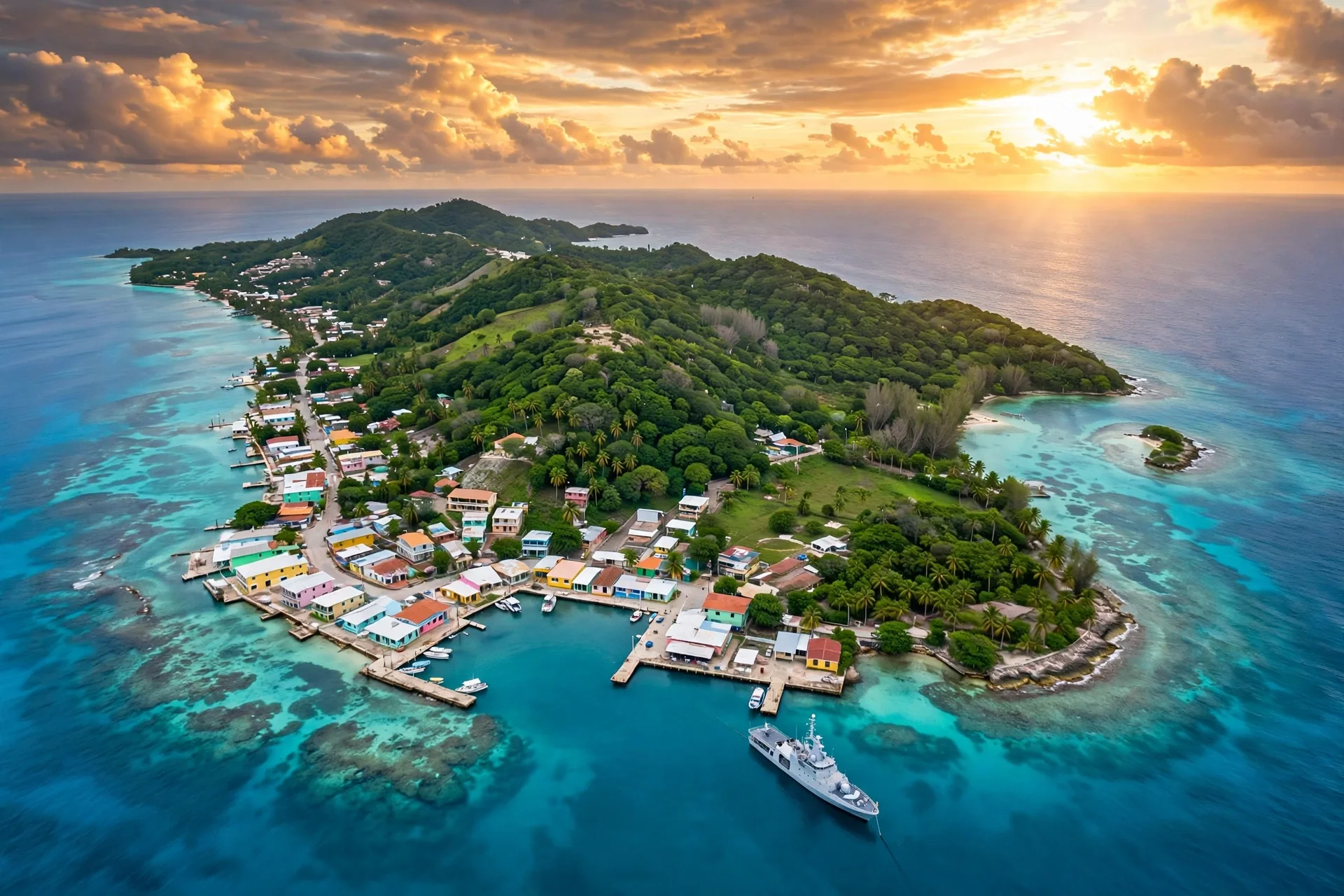
Imagen alusiva a San Andrés y a la presencia naval en el archipiélago. · Erick Prometeo Media
Abelardo de la Espriella's first trip to San Andrés: security and health for the islands
President Abelardo de la Espriella made his first trip to San Andrés and chaired a security council with territorial authorities and six ministers.
De la Espriella orders an offensive in San Andrés: more forces against crime
On his first trip to San Andrés, President Abelardo de la Espriella led a security council with territorial authorities and six ministers, and announced an…
--- The context ---
President Abelardo de la Espriella made his first trip to San Andrés to chair a security council with territorial authorities and members of his cabinet. The island community faces crimes that disrupt its daily life and a health system under intervention.
The president framed the day under El Milagro de las Regiones: bringing the Government to the territories, listening to communities and turning their needs into concrete actions, an approach that joins security and health in a single territorial agenda.
--- The facts ---
The council brought together the territorial authorities of the island department and the ministers of the Interior, Commerce, Health, Transport, Housing and Environment. There he announced an increase in the security forces against drug trafficking, smuggling, micro-trafficking, «gota a gota» loans and extortion, with criminal investigation, video surveillance and «an offensive like never before».
National Police figures put the island's homicides linked to those crimes at 24 by June 2026. The Government ordered the intervention of the Departmental Hospital of San Andrés, a measure adopted by the National Health Superintendency after the supervision following Health Minister Ana Vesga's visits to both islands' hospitals. Two hospital projects are advancing, one per island, along with a shock plan covering more than 4,900 patients awaiting care.
--- The positions ---
The president stated: «These islands are no one's no-man's land. We will enforce the law and bring its full weight down on the criminals». He also wrote: «From San Andrés, with El Milagro de las Regiones, I reaffirm the commitment to bring the Government to the territories, listen to the communities and turn their needs into concrete actions».
Health officials explained that the intervention seeks to strengthen the hospital's administration, restore the quality of care and ensure that resources respond to the population's needs. The stated goal is to «settle the historic debt with the islands». The council also addressed education and transport.
--- What remains unknown ---
The size of the increase in the security forces is not detailed, nor are deadlines or budgets for the offensive, the intervention and the two hospital projects, nor concrete decisions on education and transport, matters addressed at the council without specific announcements on record so far.
--- Unanswered questions ---
How many additional personnel will San Andrés receive and by when will the increase in the security forces be complete? How soon will the shock plan serve the more than 4,900 patients awaiting care? What concrete decisions were taken on education and transport? When will the two hospital projects be ready?
--- EPM analysis ---
Security and health appear as a single problem of State presence, and the Government itself acknowledges a historic debt with the islands. The value of the day will be measured by whether the waiting patients and the hospital's recovery advance at the pace of the announced offensive against crime.
📌 EPM Take: In EPM's view, the San Andrés visit matters because it recognises that security and health are a single problem of State presence on the islands. The larger force deployment and the hospital intervention are aimed at communities that have waited too long, yet both fronts still lack public figures, deadlines and budgets. The historic debt will only begin to be settled when the 4,900 waiting patients receive effective care and the island sees sustained results over time, not just solemn announcements from a single security council meeting.
--- The context ---
President Abelardo de la Espriella made his first trip to San Andrés to lead a security council with territorial authorities and members of his cabinet. The meeting responded to a breakdown of order: those crimes had already claimed lives on the island in 2026.
The head of State framed the day as an exercise of authority in the territory: bringing the Government to the regions and turning community needs into concrete actions. The council combined security with health, education and transport.
--- The facts ---
The council was attended by the territorial authorities of the island department and the ministers of the Interior, Commerce, Health, Transport, Housing and Environment. He announced an increase in the public force against drug trafficking, smuggling, micro-trafficking, «gota a gota» loans and extortion, through criminal investigation, video surveillance and «an offensive like never before».
According to the National Police, by June 2026 there were 24 homicides on the island linked to those crimes. The Government ordered the intervention of the Departmental Hospital of San Andrés, a measure adopted by the National Health Superintendency after the supervision that followed Health Minister Ana Vesga's visits to the hospitals of both islands. Two hospital projects are also advancing, one per island, along with a shock plan covering more than 4,900 patients awaiting care.
--- The positions ---
The president was blunt: «These islands are no one's no-man's land. We will enforce the law and bring its full weight down on the criminals». And he reaffirmed in writing: «From San Andrés, with El Milagro de las Regiones, I reaffirm the commitment to bring the Government to the territories, listen to the communities and turn their needs into concrete actions».
Health authorities said the intervention seeks to strengthen the hospital's administration, restore quality of care and ensure resources reach the population. The Government set as its goal to «settle the historic debt with the islands», a goal that requires regaining control against crime.
--- What remains unknown ---
The size of the increase in the security forces is not known. There are no deadlines or budget for the offensive, no timetable for the intervention and the projects, and no specific education and transport decisions.
--- Unanswered questions ---
How large will the increase in the security forces be and when will it be deployed on the island? What measurable results will be demanded of the offensive against drug trafficking, smuggling and extortion? Within what timeframe will the more than 4,900 patients awaiting treatment be served? What concrete education and transport measures came out of the council?
--- EPM analysis ---
The announcement orders the priorities: restore authority where crime contests the territory, then sustain it with services that work, starting with the intervened hospital. Criminal investigation and video surveillance aim at the structures, not merely at more patrols, although without figures the real scope cannot yet be measured.
📌 EPM Take: In EPM's view, the San Andrés message is right to put the law at the centre: without effective authority there is no health, commerce or community life that can prosper on the islands. The larger deployment and the announced offensive respond to 24 homicides that demanded a reaction, and the hospital intervention corrects an administration that was not up to standard. Now the Government must publish the deployment's size, deadlines and verifiable results, because order is proven through sustained territorial control, not one presidential visit.
Primer viaje de Abelardo de la Espriella a San Andrés: seguridad y salud para las islas
El presidente Abelardo de la Espriella realizó su primer viaje a San Andrés y encabezó un consejo de seguridad con autoridades territoriales y seis ministros.
De la Espriella ordena ofensiva en San Andrés: más pie de fuerza contra el crimen
En su primer viaje a San Andrés, el presidente Abelardo de la Espriella lideró un consejo de seguridad con autoridades territoriales y seis ministros, y…
--- El contexto ---
El presidente Abelardo de la Espriella realizó su primer viaje a San Andrés para encabezar un consejo de seguridad con autoridades territoriales y parte de su gabinete. La comunidad insular enfrenta delitos que golpean su vida diaria y un sistema de salud bajo intervención.
El mandatario enmarcó la jornada en El Milagro de las Regiones: llevar el Gobierno a los territorios, escuchar a las comunidades y convertir sus necesidades en acciones concretas, un enfoque que une seguridad y salud.
--- Los hechos ---
En el consejo participaron las autoridades territoriales del departamento isleño y los ministros del Interior, Comercio, Salud, Transporte, Vivienda y Ambiente. Allí anunció un aumento del pie de fuerza contra el narcotráfico, el contrabando, el microtráfico, los préstamos «gota a gota» y la extorsión, con investigación criminal, videovigilancia y «una ofensiva como nunca antes».
Según la Policía Nacional, hasta junio de 2026 hubo 24 homicidios en la isla vinculados a esos delitos. El Gobierno ordenó intervenir el Hospital Departamental de San Andrés, medida adoptada por la Superintendencia Nacional de Salud tras la supervisión posterior a las visitas de la ministra de Salud, Ana Vesga, a los hospitales de ambas islas. Avanzan dos proyectos hospitalarios, uno por isla, y un plan de choque con más de 4.900 pacientes pendientes.
--- Las posiciones ---
El presidente aseguró: «Estas islas no son tierra de nadie. Vamos a hacer que se cumpla la ley y que caiga todo el peso de ella contra los criminales». También escribió: «Desde San Andrés con El Milagro de las Regiones reafirmo el compromiso de llevar el Gobierno a los territorios, escuchar a las comunidades y convertir sus necesidades en acciones concretas».
La cartera de salud explicó que la intervención busca fortalecer la administración del hospital, recuperar la calidad de la atención y que los recursos respondan a las necesidades de la población. El objetivo declarado es «saldar la deuda histórica con las islas». El consejo también trató educación y transporte.
--- Lo que falta saber ---
No se detalla el tamaño del aumento del pie de fuerza, ni plazos ni presupuesto para la ofensiva, la intervención y los dos proyectos hospitalarios, ni decisiones concretas en educación y transporte, sin anuncios específicos conocidos.
--- Preguntas sin respuesta ---
¿Cuántos efectivos adicionales recibirá San Andrés y en qué plazo se completará el aumento del pie de fuerza? ¿En cuánto tiempo atenderá el plan de choque a los más de 4.900 pacientes pendientes? ¿Qué decisiones concretas se tomaron en educación y transporte? ¿Cuándo estarán listos los dos proyectos hospitalarios?
--- Análisis EPM ---
Seguridad y salud aparecen como un mismo problema de presencia estatal, y el propio Gobierno reconoce una deuda histórica con las islas. El valor de la jornada se medirá en si los pacientes pendientes y la recuperación del hospital avanzan al ritmo de la ofensiva anunciada contra el crimen.
📌 Conclusion EPM: A juicio de EPM, la jornada en San Andrés vale por reconocer que seguridad y salud son un mismo problema de presencia estatal en las islas. El aumento del pie de fuerza y la intervención hospitalaria apuntan a comunidades que han esperado demasiado, pero ambos frentes carecen aún de cifras, plazos y presupuesto públicos. La deuda histórica solo empezará a saldarse cuando los 4.900 pacientes pendientes reciban atención efectiva y la isla compruebe resultados sostenidos en el tiempo, no solo anuncios solemnes de un consejo de seguridad.
--- El contexto ---
El presidente Abelardo de la Espriella realizó su primer viaje a San Andrés para liderar un consejo de seguridad con autoridades territoriales y miembros de su gabinete. La reunión respondió al deterioro del orden: esos delitos ya dejaron víctimas mortales en la isla en 2026.
El jefe de Estado planteó la jornada como un ejercicio de autoridad en el territorio: llevar el Gobierno a las regiones y convertir las necesidades de las comunidades en acciones concretas. El consejo combinó seguridad con salud, educación y transporte.
--- Los hechos ---
Asistieron las autoridades territoriales del departamento isleño y los ministros del Interior, Comercio, Salud, Transporte, Vivienda y Ambiente. Anunció un incremento de la fuerza pública contra el narcotráfico, el contrabando, el microtráfico, los préstamos «gota a gota» y la extorsión, mediante investigación criminal, videovigilancia y «una ofensiva como nunca antes».
Según la Policía Nacional, hasta junio de 2026 hubo 24 homicidios en la isla vinculados a esos delitos. El Gobierno ordenó intervenir el Hospital Departamental de San Andrés, medida adoptada por la Superintendencia Nacional de Salud tras la supervisión a raíz de las visitas de la ministra de Salud, Ana Vesga, a los hospitales de ambas islas. Avanzan dos proyectos hospitalarios, uno por isla, y un plan de choque con más de 4.900 pacientes pendientes.
--- Las posiciones ---
El mandatario fue tajante: «Estas islas no son tierra de nadie. Vamos a hacer que se cumpla la ley y que caiga todo el peso de ella contra los criminales». Y reafirmó por escrito: «Desde San Andrés con El Milagro de las Regiones reafirmo el compromiso de llevar el Gobierno a los territorios, escuchar a las comunidades y convertir sus necesidades en acciones concretas».
Las autoridades sanitarias sostuvieron que la intervención busca fortalecer la administración del hospital, recuperar la calidad asistencial y asegurar que los recursos lleguen a la población. El objetivo es «saldar la deuda histórica con las islas», lo que en orden exige recuperar el control frente al crimen.
--- Lo que falta saber ---
No se conoce la magnitud del aumento del pie de fuerza. Tampoco hay plazos ni presupuesto de la ofensiva, cronograma de la intervención y los proyectos, ni decisiones puntuales de educación y transporte.
--- Preguntas sin respuesta ---
¿De cuánto será el aumento del pie de fuerza y cuándo estará desplegado en la isla? ¿Qué resultados medibles se exigirán a la ofensiva contra el narcotráfico, el contrabando y la extorsión? ¿En qué plazo se atenderá a los más de 4.900 pacientes pendientes? ¿Qué medidas concretas de educación y transporte salieron del consejo?
--- Análisis EPM ---
El anuncio ordena las prioridades: recuperar la autoridad donde el crimen disputa el territorio y sostenerla con servicios que funcionen, empezando por el hospital intervenido. Investigación criminal y videovigilancia apuntan a las estructuras, no solo a sumar patrullas, aunque sin cifras no puede medirse aún su alcance.
📌 Conclusion EPM: A juicio de EPM, el mensaje de San Andrés acierta al poner la ley en el centro: sin autoridad efectiva no hay salud, comercio ni vida comunitaria que prosperen en las islas. El aumento del pie de fuerza y la ofensiva anunciada responden a 24 homicidios que exigían reacción, y la intervención hospitalaria corrige una administración que no daba la talla. Ahora el Gobierno debe publicar magnitud, plazos y resultados verificables, porque el orden se demuestra con control sostenido del territorio, no con una sola visita presidencial.