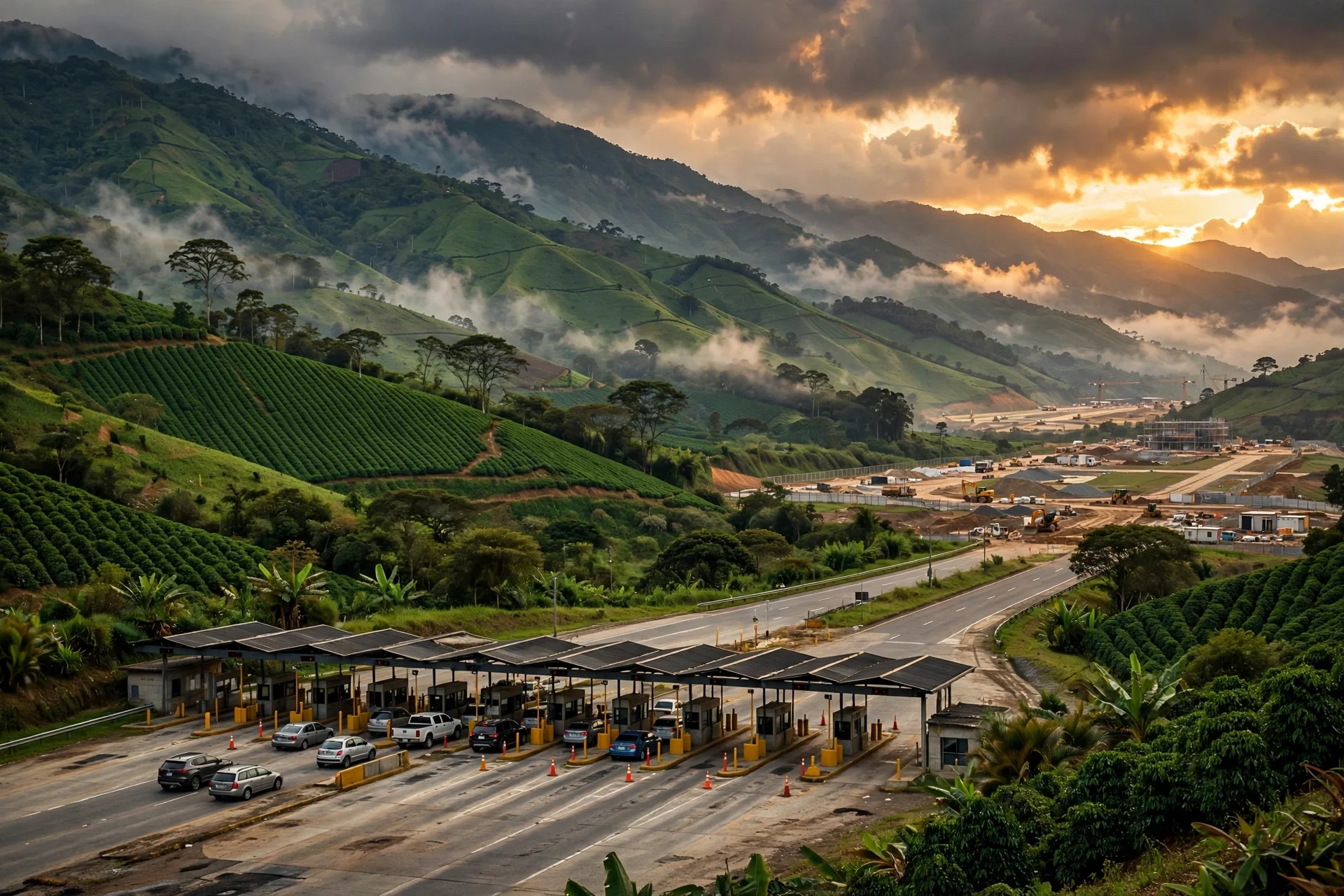
Imagen alusiva a los peajes del Eje Cafetero y a las obras viales y aeroportuarias de Caldas. · Erick Prometeo Media
Petro accuses Abelardo of deceiving the Coffee Region over tolls
Former president Gustavo Petro accused President Abelardo De La Espriella of deceiving Caldas, Risaralda and Quindío over road concessions and Aerocafé, and…
Coffee Region tolls: Petro attacks and the government answers with management
Gustavo Petro questioned the tolls, the new requirements for the differential tariff of 700 pesos and the possible 30-year extension of the concession under IP…
--- The context ---
Former president Gustavo Petro questioned the decisions of President Abelardo De La Espriella's government on road infrastructure in the Coffee Region and said that the measures related to private concessions affect Caldas, Risaralda and Quindío. In a message published on X, he criticised toll charges and the handling of the resources earmarked for the airport of Palestina, in Caldas, known as Aerocafé.
--- The facts ---
In his statement, Petro defended the possibility of the State directly administering the roads once the concession contracts expired. As he argued, the end of those agreements represented an opportunity to withdraw the tolls and avoid new contractual extensions. He wrote at the start of his publication that De La Espriella had deceived Caldas, Risaralda and Quindío, and he also warned about the economic effects of mobility costs for the region's workers.
Petro said that the mobility of the Coffee Region's inhabitants should not be limited by the cost of tolls, describing the region as rich and beautiful and apt to be richer than it is now, and arguing that it cannot impede the free mobility of the people who work there. On his decision to withdraw tolls when concession contracts expired, he said he had decided to remove the tolls from which only a private octopus profited, taking advantage of the expiring concession contract to lift the tolls and not extend them.
The former president also questioned the statements of the Transport Minister, Elsa Noguera, on the State's capacity to administer the roads, arguing that it is not true that the State is incapable of maintaining roads, that almost all states in the world do so, and that it becomes cheaper if more railways are maintained. According to Petro, in Colombia concessions are maintained from tolls and it is the State that really pays for construction, paying the concessionaires apart from the toll.
--- The positions ---
Together with his message, Petro shared a video by Chamber representative Santiago Osorio, of the Historic Pact, who recalled that resolution 745 established differential tariffs of 700 pesos for the Las Pavas, San Bernardo, Santágueda, Tarapacá I, Tarapacá II and Circasia tolls, aimed at farmers, transporters, students and other inhabitants who regularly travel through those points. Osorio said the government established new requirements to access the benefit: presenting a public services receipt, buying a TAG device and registering at least eight monthly passes through the toll.
Osorio also noted that during Petro's administration it had been announced that the Autopistas del Café concession would end in February 2027 and that the roads would revert to the State to be administered by the National Roads Institute. The congressman questioned that the concession project had been retaken under the name IP Conexión Centro, with a planned extension of 30 years, and said that the resources collected in Caldas could be destined to finance the Alcalá-La Paila road, in Quindío.
For its part, the national government defined a roadmap to advance the main infrastructure projects of Caldas, among them Aerocafé, Autopistas del Café and the connections related to the Pacífico 3 concession. Minister Elsa Noguera agreed with the governor of Caldas, Henry Gutiérrez Ángel, the mayor of Manizales, Jorge Eduardo Rojas, and directors of Inficaldas and Pro Caldas on measures to unblock the department's road and airport projects.
At Aerocafé, the government announced the designation of engineer Claudia Pilar Calderón as the president's representative before the Fiduciary Committee of the Autonomous Patrimony and confirmed an upcoming meeting to select the new manager. It also set as priorities reactivating the contracted works, managing resources for the passenger terminal and technically preparing a future expansion of the runway. On roads, the Autopistas del Café concession would be maintained until September 2027, while the National Infrastructure Agency structures the project for the corridor's future, and three projects will be sought to be unblocked: the La María bridge, the bridge over the Cauca River to connect Pácora and the La Manuela-Palestina branch, intended to improve the connection with Aerocafé.
--- What remains unknown ---
The source does not record a direct response from President De La Espriella to Petro's message, nor does it specify the processing status of the IP Conexión Centro project or the dates of the upcoming meeting to select Aerocafé's new manager. It also does not detail investment amounts for the three road projects the government seeks to unblock.
--- Unanswered questions ---
Will the Coffee Region's road concession be extended by 30 years under the IP Conexión Centro scheme? Will the differential tariffs of 700 pesos be maintained and with what requirements will the region's inhabitants be able to access them? When will Aerocafé's new manager be chosen and the contracted works of the Palestina airport reactivated?
--- EPM analysis ---
The clash confronts two readings of the same corridor: Petro maintains that the expiry of the concessions opened the door for the State to administer the roads and withdraw the tolls, while the government presents a roadmap that keeps the Autopistas del Café concession until September 2027 and seeks to unblock concrete works in Caldas. In between stand the users of the differential-tariff tolls, whose access requirements changed according to representative Osorio's complaint.
📌 EPM Take: In EPM's view, Petro's accusation raises a verifiable question: if the differential tariffs that benefited farmers, transporters and students now demand more requirements, the cost will be felt first by the Coffee Region's inhabitants. The government's roadmap, with the designation on Aerocafé's Fiduciary Committee and the three projects to unblock, is the available institutional response, but its credibility will depend on dates and results: the meeting to choose a manager, the reactivation of the contracted works and the definition of the corridor's future when the National Infrastructure Agency structures the project.
--- The context ---
Former president Gustavo Petro attacked President Abelardo De La Espriella over his government's decisions on road concessions, toll charges and the financing of Aerocafé, the airport of Palestina, in Caldas. According to the former president, the change of government allowed private businesses with public things to be brought to the coffee zone.
--- The facts ---
Petro wrote that De La Espriella had deceived Caldas, Risaralda and Quindío and maintained that, when the concession contracts expired, the State could directly assume the roads, withdraw the tolls and avoid new extensions. He also questioned Transport Minister Elsa Noguera and said the State can maintain the roads, arguing that it is not true that the State is incapable of maintaining them, that almost all states in the world do so, and that it becomes cheaper if more railways are maintained.
In his publication, the former president also said that money was being taken from the Palestina airport and that it was being frozen again, while the road concession was extended again, studding every motor displacement with very costly tolls that enrich only the concession's owners. And he concluded his argument on the effects of the concession model by saying that when the product of work becomes rent for the corrupt, the person who works and the entire region are impoverished.
Petro also maintained that in Colombia concessions are maintained from tolls and that it is the State that really pays for construction, paying the concessionaires apart from the toll. On regional mobility, he said that a region as rich and beautiful as this one, apt to be richer than it is now, cannot impede the free mobility of the people who work there.
--- The positions ---
Together with his message, Petro disseminated a video by representative Santiago Osorio, of the Historic Pact, who recalled that resolution 745 set differential tariffs of 700 pesos at the Las Pavas, San Bernardo, Santágueda, Tarapacá I, Tarapacá II and Circasia tolls. As the representative explained, the measure benefited farmers, transporters, students and other inhabitants who regularly travelled through those points, but the government established new requirements for that benefit: a public services receipt, a TAG device and at least eight monthly passes.
Osorio also questioned that the concession scheme had been retaken under the name IP Conexión Centro, with a planned extension of 30 years, when the Autopistas del Café concession was scheduled until February 2027 and its management would pass to the National Roads Institute. The congressman also said that the resources collected in Caldas could be destined to finance the Alcalá-La Paila road, in Quindío.
The government's response was a roadmap defined by Minister Elsa Noguera with the governor of Caldas, Henry Gutiérrez Ángel, the mayor of Manizales, Jorge Eduardo Rojas, and directors of Inficaldas and Pro Caldas, to unblock the department's road and airport projects. At Aerocafé, the Executive designated engineer Claudia Pilar Calderón as the president's representative before the Fiduciary Committee of the Autonomous Patrimony, announced an upcoming meeting to choose the new manager and set as priorities reactivating the contracted works, managing resources for the passenger terminal and preparing a future expansion of the runway.
On roads, the Autopistas del Café concession would be maintained until September 2027 while the National Infrastructure Agency structures the corridor's future, and the Executive will seek to unblock three priority projects: the La María bridge, the bridge over the Cauca River to connect Pácora and the La Manuela-Palestina branch, intended to improve the connection with Aerocafé.
--- What remains unknown ---
The source does not record a direct statement from President De La Espriella in response to Petro, nor the formal status of the IP Conexión Centro project, nor amounts or schedules for the three announced road projects. It also does not specify when the meeting to select Aerocafé's new manager will be held.
--- Unanswered questions ---
Will President De La Espriella respond to the accusation of having deceived Caldas, Risaralda and Quindío? Will the IP Conexión Centro scheme extend the concession for another 30 years and under what conditions for users? Will the new requirements for the differential tariff of 700 pesos leave out farmers, transporters or students who previously accessed the benefit?
--- EPM analysis ---
Petro's and Osorio's complaint concentrates on two concrete decisions: the requirements to keep the differential tariff and the possible prolongation of the concession scheme. Faced with that, the government did not respond with a reply to the former president, but with management: a roadmap with the Caldas authorities, a designation on Aerocafé's Fiduciary Committee and a list of works to unblock, while the current concession is maintained until September 2027.
📌 EPM Take: In EPM's view, Petro's accusations are political assertions by the former president and, as such, must be measured against the documents: the resolution that set the differential tariff, the requirements demanded today to keep it and the text of the IP Conexión Centro project when it becomes known. The government, for its part, already set its position with administrative facts: a roadmap with Caldas, presidential representation on Aerocafé's Fiduciary Committee and three works to unblock. If that management advances with a manager chosen, works reactivated and clear rules for the tolls, the response will have been execution and not an exchange of messages.
Petro acusa a Abelardo de engañar al Eje Cafetero por los peajes
El expresidente Gustavo Petro acusó al presidente Abelardo De La Espriella de engañar a Caldas, Risaralda y Quindío por las concesiones viales y Aerocafé, y…
Peajes del Eje Cafetero: Petro arremete y el Gobierno responde con gestión
Gustavo Petro cuestionó los peajes, los nuevos requisitos de la tarifa diferencial de 700 pesos y la posible extensión de la concesión por 30 años bajo IP…
--- El contexto ---
El expresidente Gustavo Petro cuestionó las decisiones del Gobierno del presidente Abelardo De La Espriella sobre la infraestructura vial del Eje Cafetero y señaló que las medidas relacionadas con las concesiones privadas afectan a Caldas, Risaralda y Quindío. En un mensaje publicado en X, criticó el cobro de peajes y el manejo de los recursos destinados al aeropuerto de Palestina, en Caldas, conocido como Aerocafé.
--- Los hechos ---
En su pronunciamiento, Petro defendió la posibilidad de que el Estado asumiera directamente la administración de las carreteras una vez vencieran los contratos de concesión. Según sostuvo, el final de esos acuerdos representaba una oportunidad para retirar los peajes y evitar nuevas prolongaciones contractuales. «Abelardo engañó a Caldas, Risaralda y Quindio», escribió el exmandatario al comienzo de su publicación, en la que también advirtió sobre los efectos económicos de los costos de movilidad para los trabajadores de la región.
Petro señaló que la movilidad de los habitantes del Eje Cafetero no debía verse limitada por el costo de los peajes: «Una region tan rica y hermosa, apta para ser más rica que ahora, no puede impedir la libre movilidad de la gente que trabaja allí», afirmó. Y sobre su decisión de retirar los peajes cuando vencieran los contratos, manifestó: «Por eso decidí quitar los peajes del que solo gana un pulpo privado. Aproveche que su contrato de concesión se vencía para levantar peajes y no prolongarlos (sic)».
El exmandatario también cuestionó las declaraciones de la ministra de Transporte, Elsa Noguera, sobre la capacidad estatal para administrar las carreteras: «No es cierto como dice la ministra del clan Char que el estado no es capaz de mantener carreteras, casi todos los estados del mundo lo hacen, y se hace más barato si se mantienen cada vez más ferrocarriles», afirmó. Según Petro, en Colombia las concesiones se mantienen de peajes y es el Estado el que realmente paga la construcción a las concesionarias, aparte del peaje.
--- Las posiciones ---
Junto con su mensaje, Petro compartió un video del representante a la Cámara del Pacto Histórico Santiago Osorio, quien recordó que la resolución 745 estableció tarifas diferenciales de 700 pesos para los peajes Las Pavas, San Bernardo, Santágueda, Tarapacá I, Tarapacá II y Circasia, dirigidas a campesinos, transportadores, estudiantes y demás habitantes que transitan regularmente por esos puntos. Osorio afirmó que el Gobierno estableció nuevos requisitos para acceder al beneficio: presentar un recibo de servicios públicos, comprar un dispositivo TAG y registrar al menos ocho pasos mensuales por el peaje.
Osorio también señaló que durante la administración de Petro se había anunciado que la concesión de Autopistas del Café terminaría en febrero de 2027 y que las vías revertirían al Estado para ser administradas por el Instituto Nacional de Vías. El congresista cuestionó que se hubiera retomado el proyecto de concesión bajo la denominación IP Conexión Centro, con una extensión planteada de 30 años, y afirmó que los recursos recaudados en Caldas podrían destinarse a financiar la vía Alcalá-La Paila, en el Quindío.
Por su parte, el Gobierno nacional definió una hoja de ruta para avanzar en los principales proyectos de infraestructura de Caldas, entre ellos Aerocafé, Autopistas del Café y las conexiones relacionadas con la concesión Pacífico 3. La ministra Elsa Noguera acordó con el gobernador de Caldas, Henry Gutiérrez Ángel, el alcalde de Manizales, Jorge Eduardo Rojas, y directivos de Inficaldas y Pro Caldas medidas para destrabar los proyectos viales y aeroportuarios del departamento.
En Aerocafé, el Gobierno anunció la designación de la ingeniera Claudia Pilar Calderón como representante del presidente ante el Comité Fiduciario del Patrimonio Autónomo y confirmó una próxima reunión para seleccionar al nuevo gerente. También fijó como prioridades reactivar las obras contratadas, gestionar recursos para la terminal de pasajeros y preparar técnicamente una futura ampliación de la pista. En materia vial, la concesión de Autopistas del Café se mantendría hasta septiembre de 2027, mientras la Agencia Nacional de Infraestructura estructura el proyecto para el futuro del corredor, y se buscará destrabar tres proyectos: el puente de La María, el puente sobre el río Cauca para conectar a Pácora y el ramal La Manuela-Palestina, destinado a mejorar la conexión con Aerocafé.
--- Lo que falta saber ---
La fuente no registra una respuesta directa del presidente De La Espriella al mensaje de Petro, ni precisa el estado de trámite del proyecto IP Conexión Centro ni las fechas de la próxima reunión para seleccionar al nuevo gerente de Aerocafé. Tampoco detalla montos para los tres proyectos viales por destrabar.
--- Preguntas sin respuesta ---
¿Se extenderá la concesión vial del Eje Cafetero por 30 años bajo el esquema IP Conexión Centro? ¿Se mantendrán las tarifas diferenciales de 700 pesos y con qué requisitos podrán acceder a ellas los habitantes de la región? ¿Cuándo se escogerá al nuevo gerente de Aerocafé y se reactivarán las obras contratadas del aeropuerto de Palestina?
--- Análisis EPM ---
El choque enfrenta dos lecturas del mismo corredor: Petro sostiene que el vencimiento de las concesiones abría la puerta a que el Estado administrara las vías y retirara los peajes, mientras el Gobierno presenta una hoja de ruta que mantiene la concesión hasta septiembre de 2027 y busca destrabar obras en Caldas.
📌 Conclusion EPM: A juicio de EPM, la acusación de Petro pone sobre la mesa una pregunta verificable: si las tarifas diferenciales que beneficiaban a campesinos, transportadores y estudiantes ahora exigen más requisitos, el costo lo sentirán primero los habitantes del Eje Cafetero. La hoja de ruta del Gobierno, con la designación en el Comité Fiduciario de Aerocafé y los tres proyectos por destrabar, es la respuesta institucional disponible, pero su credibilidad dependerá de fechas y resultados: la reunión para escoger gerente, la reactivación de las obras contratadas y la definición del futuro del corredor cuando la Agencia Nacional de Infraestructura estructure el proyecto.
--- El contexto ---
El expresidente Gustavo Petro arremetió contra el presidente Abelardo De La Espriella por las decisiones de su Gobierno sobre las concesiones viales, el cobro de peajes y la financiación de Aerocafé, el aeropuerto de Palestina, en Caldas. Según el exmandatario, el cambio de gobierno permitió llevar a la zona cafetera los negocios privados con las cosas públicas.
--- Los hechos ---
Petro escribió que «Abelardo engañó a Caldas, Risaralda y Quindio» y sostuvo que, al vencer los contratos de concesión, el Estado podía asumir directamente las carreteras, retirar los peajes y evitar nuevas prolongaciones. También cuestionó a la ministra de Transporte, Elsa Noguera, y afirmó que el Estado sí puede mantener las vías: «No es cierto como dice la ministra del clan Char que el estado no es capaz de mantener carreteras, casi todos los estados del mundo lo hacen, y se hace más barato si se mantienen cada vez más ferrocarriles», señaló.
En su publicación, el expresidente afirmó además: «Le quita dineros al aeropuerto de Palestina y lo congela nuevamente y prolonga nuevamente la concesión de carreteras, tachonando todo desplazamiento automotor con costosísimos peajes que enriquecen solo a los dueños de la concesion». Y concluyó su planteamiento sobre los efectos del modelo de concesiones: «Cuando el producto del trabajo se vuelve renta para corruptos, se empobrece el que trabaja y la región entera».
Petro sostuvo también que en Colombia las concesiones se mantienen de peajes y que es el Estado el que paga realmente la construcción, pagándole a las concesionarias aparte del peaje. Sobre la movilidad regional, afirmó: «Una region tan rica y hermosa, apta para ser más rica que ahora, no puede impedir la libre movilidad de la gente que trabaja allí».
--- Las posiciones ---
Junto a su mensaje, Petro difundió un video del representante Santiago Osorio, del Pacto Histórico, quien recordó que la resolución 745 fijó tarifas diferenciales de 700 pesos en los peajes Las Pavas, San Bernardo, Santágueda, Tarapacá I, Tarapacá II y Circasia. Según explicó el representante, la medida beneficiaba a campesinos, transportadores, estudiantes y demás habitantes que transitaban regularmente por esos puntos, pero el Gobierno estableció nuevos requisitos para ese beneficio: recibo de servicios públicos, dispositivo TAG y al menos ocho pasos mensuales.
Osorio cuestionó además que se retomara el esquema de concesión bajo el nombre IP Conexión Centro, con una extensión planteada de 30 años, cuando la concesión de Autopistas del Café estaba prevista hasta febrero de 2027 y su manejo pasaría al Instituto Nacional de Vías. El congresista afirmó además que los recursos recaudados en Caldas podrían destinarse a financiar la vía Alcalá-La Paila, en el Quindío.
La respuesta del Gobierno fue una hoja de ruta definida por la ministra Elsa Noguera con el gobernador de Caldas, Henry Gutiérrez Ángel, el alcalde de Manizales, Jorge Eduardo Rojas, y directivos de Inficaldas y Pro Caldas, para destrabar los proyectos viales y aeroportuarios del departamento. En Aerocafé, el Ejecutivo designó a la ingeniera Claudia Pilar Calderón como representante del presidente ante el Comité Fiduciario del Patrimonio Autónomo, anunció una próxima reunión para escoger al nuevo gerente y fijó como prioridades reactivar las obras contratadas, gestionar recursos para la terminal de pasajeros y preparar una futura ampliación de la pista.
En materia vial, la concesión de Autopistas del Café se mantendría hasta septiembre de 2027 mientras la Agencia Nacional de Infraestructura estructura el futuro del corredor, y el Ejecutivo buscará destrabar tres proyectos prioritarios: el puente de La María, el puente sobre el río Cauca para conectar a Pácora y el ramal La Manuela-Palestina, destinado a mejorar la conexión con Aerocafé.
--- Lo que falta saber ---
La fuente no registra un pronunciamiento directo del presidente De La Espriella en respuesta a Petro, ni el estado formal del proyecto IP Conexión Centro, ni montos o cronogramas para los tres proyectos viales anunciados. Tampoco precisa cuándo se realizará la reunión para seleccionar al nuevo gerente de Aerocafé.
--- Preguntas sin respuesta ---
¿Responderá el presidente De La Espriella a la acusación de haber engañado a Caldas, Risaralda y Quindío? ¿El esquema IP Conexión Centro extenderá la concesión por otros 30 años y con qué condiciones para los usuarios? ¿Los nuevos requisitos para la tarifa diferencial de 700 pesos dejarán por fuera a campesinos, transportadores o estudiantes que antes accedían al beneficio?
--- Análisis EPM ---
La denuncia de Petro y de Osorio se concentra en dos decisiones concretas: los requisitos para mantener la tarifa diferencial y la posible prolongación del esquema de concesión. Frente a eso, el Gobierno no respondió con una réplica al exmandatario, sino con gestión: una hoja de ruta con las autoridades de Caldas, una designación en el Comité Fiduciario de Aerocafé y una lista de obras por destrabar, mientras la concesión actual se mantiene hasta septiembre de 2027.
📌 Conclusion EPM: A juicio de EPM, las acusaciones de Petro son afirmaciones políticas del exmandatario y, como tales, deben medirse contra los documentos: la resolución que fijó la tarifa diferencial, los requisitos exigidos hoy para conservarla y el texto del proyecto IP Conexión Centro cuando se conozca. El Gobierno, por su parte, ya fijó su posición con hechos administrativos: hoja de ruta con Caldas, representación presidencial en el Comité Fiduciario de Aerocafé y tres obras por destrabar. Si esa gestión avanza con gerente escogido, obras reactivadas y reglas claras para los peajes, la respuesta habrá sido la ejecución y no el cruce de mensajes.