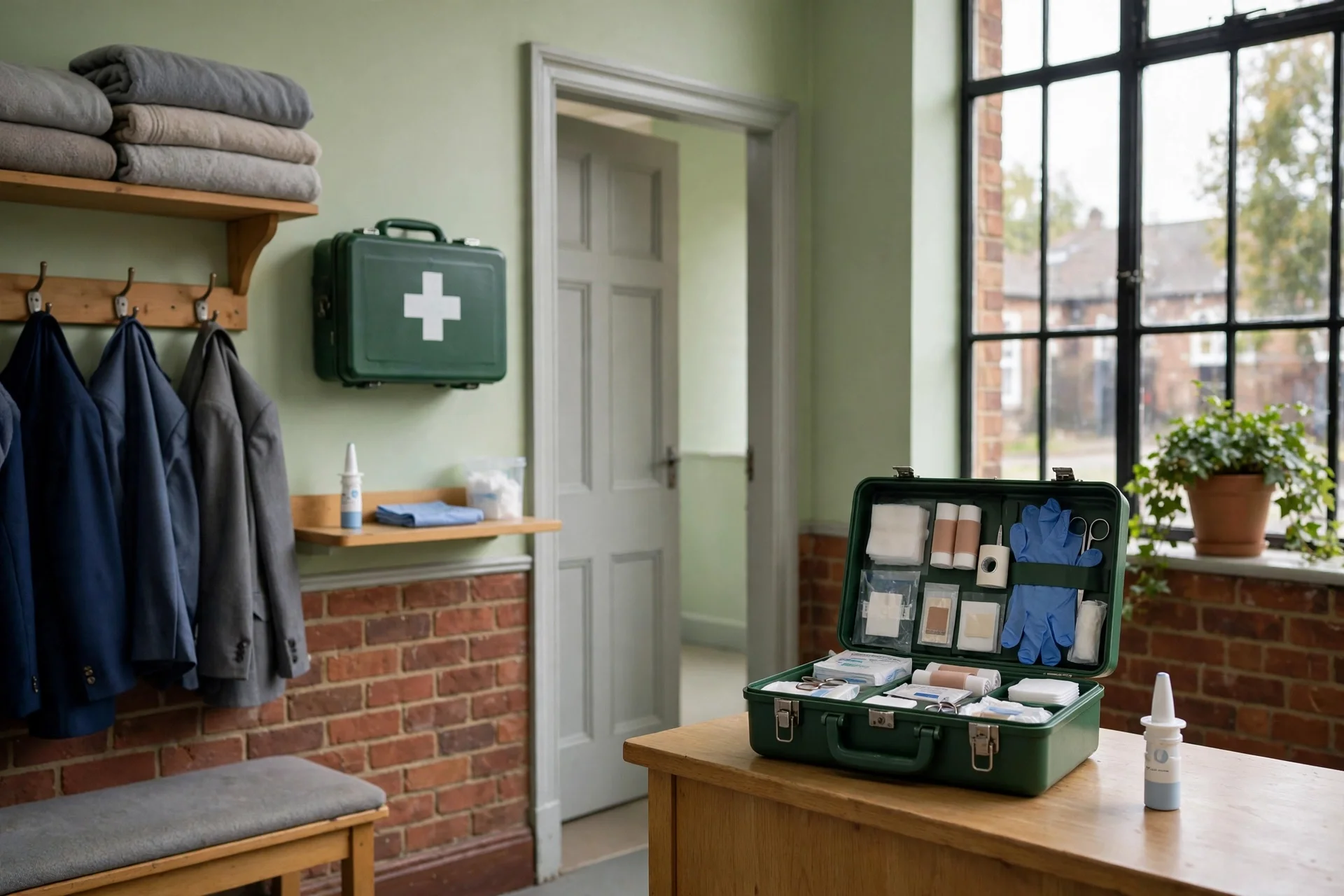
Interior de una escuela con un botiquín verde abierto sobre una mesa, material de primeros auxilios ordenado y un spray nasal genérico sin marcas junto a la ventana. · EPM
British schools could keep spare adrenaline nasal sprays under MHRA consultation
The MHRA is consulting across the United Kingdom on allowing schools to purchase and keep spare adrenaline nasal sprays for children with severe allergies…
UK consultation on school adrenaline nasal sprays keeps safeguards firmly in place
The MHRA has launched a UK-wide consultation on letting schools keep spare adrenaline nasal sprays for severe allergy emergencies.
--- The context ---
In the United Kingdom, around 8% of children and young people have a food allergy, and some are at risk of anaphylaxis, a severe and potentially life-threatening allergic reaction that requires immediate treatment with adrenaline. Schools can already hold spare adrenaline auto-injectors for emergencies, and around 20% of serious allergic reactions to food happen in a school setting.
--- The facts ---
The MHRA has launched a UK-wide consultation, carried out jointly with the Department of Health in Northern Ireland, on proposals that would allow schools to purchase and keep spare adrenaline nasal sprays for emergency use in children with severe allergies. The consultation is open for eight weeks, the full text will be available on 19 October, and it closes on 14 December 2026.
Under the proposals, schools could choose whether to hold auto-injectors, nasal sprays, or both. The existing safeguards would remain, meaning emergency adrenaline could only be given to children known to be at risk of anaphylaxis and by appropriately trained school staff. No school would have to stock a particular product or brand, and school supplies would remain a backup, not a replacement for the prescribed medicine each child carries.
--- The positions ---
Julian Beach, the MHRA Executive Director for Operations, argued in reported remarks that access to medicines in an emergency is vital, that nasal sprays would add a treatment option, and that medicines legislation should keep up with healthcare while safeguards stay in place. Amena Warner of Allergy UK said a needle-free device administered into the nose would offer more confidence to use it promptly and give schools choice in preparing for an allergic emergency.
Paul Whiteman, general secretary of the NAHT school leaders' union, welcomed the chance to contribute and stressed that any proposals must be safe, practical and properly supported, with clear guidance and training for staff. Adam Fox, chair of the National Allergy Strategy Group, said schools should keep up with newer treatment options without creating confusion or unintended consequences, and welcomed that everyone will have their say.
--- What remains unknown ---
It is not yet known how the proposals would work in practice, one of the questions the consultation itself seeks views on. It also remains open whether legislation should use broader terminology for self-administered adrenaline products that might become available in future, so new authorised products could be considered more quickly without a separate legislative amendment each time.
--- Unanswered questions ---
How would the proposals work in the daily practice of schools? Would legislation adopt broader terminology for future adrenaline products? What guidance and training would accompany nasal sprays if schools are allowed to stock them?
--- EPM analysis ---
The consultation follows new allergy-safety requirements for schools in England that came into force in September 2026 as part of the first phase of Benedict's Law. Adding a needle-free backup in schools targets the very setting where a substantial share of serious food reactions happens.
📌 EPM Take: In EPM's view, the consultation gets the balance right by adding a needle-free option without removing any safeguard: schools keep the choice, administration stays with trained staff and children already known to be at risk, and views are gathered before any change in the law. With clear guidance and proper training, a nasal spray could turn a moment of panic into a prompt and safer response for pupils living with severe allergies. That caution, together with the urgency of acting fast in a severe reaction, points to a sensible, evidence-based decision for families and schools alike.
--- The context ---
School safety rests on clear rules and tools that work when minutes matter. In the United Kingdom, around 8% of children and young people have a food allergy, and some are at risk of anaphylaxis, a severe and potentially life-threatening reaction requiring immediate adrenaline. Around 20% of serious allergic reactions to food happen in a school setting, where schools can already hold spare adrenaline auto-injectors for emergencies.
--- The facts ---
The MHRA has launched a consultation across the United Kingdom, jointly with the Department of Health in Northern Ireland, on allowing schools to purchase and keep spare adrenaline nasal sprays for emergency use in children with severe allergies. The consultation runs for eight weeks: the full text will be available on 19 October and responses close on 14 December 2026, with schools, staff, parents, carers, healthcare professionals and anyone interested invited to respond.
The proposals impose nothing on schools: each school would choose auto-injectors, nasal sprays, or both, with no duty to stock a particular product or brand. Existing safeguards would stay firmly in place, so emergency adrenaline could only be given to children known to be at risk of anaphylaxis and only by appropriately trained staff. School supplies would continue as a backup and would not replace the prescribed adrenaline medicine children carry themselves.
--- The positions ---
Julian Beach, the MHRA Executive Director for Operations, said in reported remarks that access to medicines in an emergency is vital and that the proposal aims to keep medicines legislation in step with healthcare developments while preserving the safeguards for safe use. Amena Warner, Head of Clinical Services at Allergy UK, noted that a needle-free device given into the nose would be easy to use, build confidence to act promptly, and give schools choice in managing an allergic emergency.
Paul Whiteman, general secretary of the NAHT union, cautioned in reported remarks that any proposals must be safe, practical and properly supported, with clear guidance and training for school staff. Adam Fox, chair of the National Allergy Strategy Group, called the existing duty to hold spare adrenaline pens a huge leap forward and warned that additional options must not create confusion or unintended consequences.
--- What remains unknown ---
How the proposals would work in practice has not yet been settled, and the consultation expressly seeks views on that point. Also undecided is whether legislation should use broader terminology for future self-administered adrenaline products, so that new authorised products can be considered more quickly without requiring a separate legislative amendment every time.
--- Unanswered questions ---
How would nasal sprays fit into existing school emergency protocols in practice? Would broader legislative wording for future adrenaline products be approved? Would schools receive the clear guidance and training they need before stocking these devices?
--- EPM analysis ---
Order matters here: safeguards first, novelty second. New allergy-safety requirements for schools in England have been in force since September 2026 under the first phase of Benedict's Law, and this consultation builds on that framework instead of creating an uncontrolled parallel route for emergency medicines.
📌 EPM Take: In EPM's view, the strength of the proposal is that it does not dismantle what already works: it preserves the safeguards, the training requirement and each school's freedom to choose, while adding a needle-free tool that may make a prompt response easier. The condition is that the final rules are as clear as the intention, with precise guidance and no confusing or unsupported burdens placed on schools. If that clarity is delivered, the change will strengthen school safety without weakening the discipline required when emergency medicines are handled by trained and responsible staff members.
Las escuelas británicas podrían guardar sprays nasales de adrenalina de repuesto
La MHRA consulta en todo el Reino Unido si las escuelas deben poder comprar y guardar sprays nasales de adrenalina de repuesto para niños con alergias graves…
Consulta en el Reino Unido sobre sprays de adrenalina en escuelas, con garantías
La MHRA abrió una consulta en todo el Reino Unido sobre permitir que las escuelas guarden sprays nasales de adrenalina de repuesto para emergencias por…
--- El contexto ---
En el Reino Unido, alrededor del 8% de los niños y jóvenes tiene una alergia alimentaria, y algunos corren riesgo de anafilaxia, una reacción alérgica grave y potencialmente mortal que exige tratamiento inmediato con adrenalina. Las escuelas ya pueden guardar autoinyectores de adrenalina de repuesto para emergencias, y alrededor del 20% de las reacciones alérgicas graves a los alimentos ocurre en el entorno escolar.
--- Los hechos ---
La MHRA abrió una consulta en todo el Reino Unido, junto con el Departamento de Salud de Irlanda del Norte, sobre propuestas que permitirían a las escuelas comprar y guardar sprays nasales de adrenalina de repuesto para uso de emergencia en niños con alergias graves. La consulta estará abierta ocho semanas, el texto completo estará disponible el 19 de octubre y cerrará el 14 de diciembre de 2026.
Bajo las propuestas, cada escuela podría elegir guardar autoinyectores, sprays nasales o ambos. Las garantías actuales se mantendrían: la adrenalina de emergencia solo podría darse a niños conocidos por estar en riesgo de anafilaxia y por personal escolar debidamente formado. Ninguna escuela estaría obligada a guardar un producto o marca concreta, y el suministro escolar seguiría siendo un respaldo, sin sustituir el medicamento recetado que cada niño lleva consigo.
--- Las posiciones ---
Julian Beach, director ejecutivo de Operaciones de la MHRA, sostuvo en indirecto que garantizar el acceso a los medicamentos en una emergencia es vital, que los sprays nasales serían una opción adicional y que la legislación debe seguir el ritmo de la sanidad manteniendo las garantías. Amena Warner, de Allergy UK, señaló que un dispositivo sin aguja administrado por la nariz daría más confianza para actuar con rapidez y más opciones a las escuelas.
Paul Whiteman, secretario general del sindicato de directores NAHT, celebró poder participar en la consulta y subrayó que toda propuesta debe ser segura, práctica y estar bien apoyada, con orientación clara y formación para el personal. Adam Fox, presidente del National Allergy Strategy Group, valoró que las escuelas sigan las opciones nuevas sin crear confusión ni consecuencias no deseadas, y celebró que todos puedan opinar.
--- Lo que falta saber ---
Todavía no se conoce cómo funcionarían las propuestas en la práctica, uno de los asuntos sobre los que la consulta pide opiniones. Tampoco está definido si la legislación usará una terminología más amplia para futuros productos de adrenalina autoadministrados, de modo que los nuevos productos autorizados puedan considerarse más rápido sin una enmienda legislativa separada cada vez.
--- Preguntas sin respuesta ---
¿Cómo se aplicarán las propuestas en la práctica diaria de las escuelas? ¿Adoptará la legislación una terminología más amplia para los productos futuros de adrenalina? ¿Qué orientación y formación acompañarán a los sprays nasales si finalmente se autorizan en los centros?
--- Análisis EPM ---
El cambio llega después de que en Inglaterra entraran en vigor, en septiembre de 2026, nuevos requisitos de seguridad frente a alergias como primera fase de Benedict's Law. Ampliar el respaldo disponible en la escuela ataca el punto donde ocurre una parte sustancial de las reacciones graves: el propio centro educativo.
📌 Conclusion EPM: A juicio de EPM, la consulta acierta al sumar una opción sin aguja sin retirar ninguna garantía: mantiene la elección en manos de cada escuela, reserva la administración al personal formado y a los niños ya conocidos por su riesgo, y pide opinión antes de legislar. Si la formación y la orientación clara acompañan al cambio, el spray nasal puede convertir un momento de pánico en una respuesta rápida y segura para los alumnos con alergias graves. Esa cautela, unida a la urgencia de actuar en los primeros momentos de una reacción grave, marca un camino razonable para decidir con evidencia y sin improvisación.
--- El contexto ---
La seguridad en la escuela depende de reglas claras y de medios que funcionen cuando cada minuto cuenta. En el Reino Unido, alrededor del 8% de los niños y jóvenes tiene una alergia alimentaria y algunos pueden sufrir anafilaxia, una reacción grave y potencialmente mortal que requiere adrenalina inmediata. Alrededor del 20% de las reacciones alérgicas graves a los alimentos sucede en el entorno escolar, donde las escuelas ya pueden guardar autoinyectores de repuesto.
--- Los hechos ---
La MHRA lanzó una consulta en todo el Reino Unido, realizada junto con el Departamento de Salud de Irlanda del Norte, para permitir que las escuelas compren y guarden sprays nasales de adrenalina de repuesto para emergencias en niños con alergias graves. La consulta dura ocho semanas: el texto completo estará disponible el 19 de octubre y el plazo cerrará el 14 de diciembre de 2026, abierto a escuelas, personal, padres, cuidadores, profesionales sanitarios y cualquier interesado.
Las propuestas no imponen nada a los centros: cada escuela elegiría entre autoinyectores, sprays nasales o ambos, sin obligación de guardar un producto o marca concreta. Las garantías existentes permanecerían intactas, de modo que la adrenalina de emergencia solo la recibirían niños conocidos por su riesgo de anafilaxia y solo de manos de personal escolar debidamente formado. El suministro escolar seguiría siendo un respaldo y no reemplazaría el medicamento recetado que cada niño lleva consigo.
--- Las posiciones ---
Julian Beach, director ejecutivo de Operaciones de la MHRA, defendió en indirecto que el acceso a los medicamentos en una emergencia es vital y que la propuesta busca que la legislación siga los avances sanitarios sin aflojar las garantías de uso seguro. Amena Warner, responsable de Servicios Clínicos de Allergy UK, destacó que un dispositivo sin aguja, administrado por la nariz, sería fácil de usar y daría más confianza para actuar pronto y más opciones de preparación a las escuelas.
Paul Whiteman, secretario general del sindicato NAHT, advirtió en indirecto que cualquier propuesta debe ser segura, práctica y estar debidamente apoyada, con orientación clara y formación del personal. Adam Fox, presidente del National Allergy Strategy Group, consideró un gran avance la obligación de guardar bolígrafos de adrenalina de repuesto y pidió que las opciones nuevas no generen confusión ni consecuencias no deseadas.
--- Lo que falta saber ---
No se ha precisado aún cómo operarían las propuestas en la práctica, cuestión que la propia consulta somete a opinión. También queda abierto si la legislación empleará términos más amplios para los productos de adrenalina autoadministrados que puedan aparecer en el futuro, evitando así una enmienda legislativa separada para cada nuevo producto autorizado.
--- Preguntas sin respuesta ---
¿Cómo funcionarán en la práctica los sprays nasales dentro de los protocolos escolares vigentes? ¿Se aprobará una terminología legislativa más amplia para futuros productos? ¿Recibirán las escuelas la orientación y la formación necesarias antes de guardar estos dispositivos?
--- Análisis EPM ---
El orden importa: primero las garantías, después la novedad. En Inglaterra ya rigen desde septiembre de 2026 nuevos requisitos de seguridad frente a alergias, en la primera fase de Benedict's Law, y esta consulta se apoya en ese marco en lugar de improvisar una vía paralela sin controles.
📌 Conclusion EPM: A juicio de EPM, lo sólido de la propuesta es que no desarma lo que ya funciona: conserva las garantías, la formación exigida y la libertad de cada escuela para elegir, y añade una herramienta sin aguja que puede facilitar una respuesta rápida. La condición es que la norma final sea tan clara como la intención, con orientación precisa y sin cargar a los centros con obligaciones confusas o sin apoyo práctico suficiente. Si esa claridad se cumple, la medida reforzará la seguridad escolar sin debilitar la disciplina que exige manejar medicamentos de emergencia en manos de personal formado y responsable.