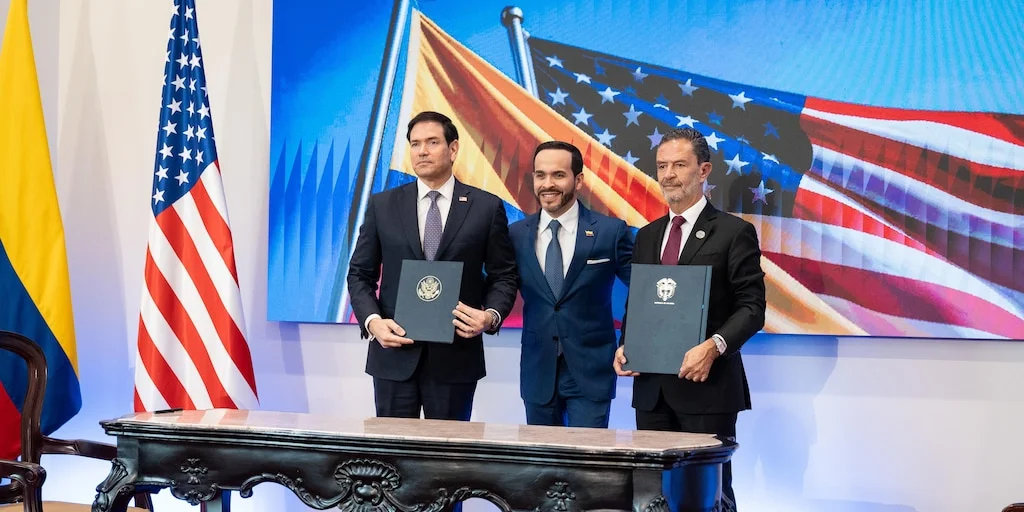
Los cuestionamientos de congresistas sobre la transparencia de los acuerdos de cooperación minera con Estados Unidos anteceden al fallo de tutela. Crédito: Cancillería. · Cancillería
Court orders the Presidency to hand over the U.S. mining agreements within 48 hours
The Twenty-Seventh Labour Court of the Bogotá Circuit gave the Presidency 48 hours to hand over the memoranda with the United States on critical minerals and…
Court orders release of the mining agreements signed with the U.S.
A tutela ruling orders the Presidency to hand over within 48 hours the memoranda with the United States on critical minerals and rare earths; the debate…
--- The context ---
A court ordered Colombia's Presidency to hand over, within 48 hours, the information on the memoranda and agreements with the United States for the exploration, exploitation and processing of critical minerals and rare earths. The decision comes after questioning by lawmakers about agreements that, according to the source, seek to strengthen supply chains for strategic resources. Rare earths are elements used in electronic components and other industrial applications. With strategic resources, it also matters who could see what was signed.
--- The facts ---
Representative José Luis Bohórquez reported that he obtained a favourable tutela ruling. As he explained in a video on X, the decision was adopted by the Twenty-Seventh Labour Court of the Bogotá Circuit and sets 48 hours to hand over the documents. Bohórquez held that the information will reveal the commitments signed and that his purpose is to make the terms public. Earlier, Senator Duvalier Sánchez, of the Green Alliance, requested explanations and, as he noted, was told the documents were under reserve.
--- The positions ---
Sánchez warned that these are strategic resources for the country, its territories and communities, and that their future cannot be decided without Colombians knowing what is agreed, with whom and under what conditions. Vice President José Manuel Restrepo announced in Ibagué on October 10 that Tolima projects on critical minerals could be presented at Milagro Week, in New York between November 16 and 19. Marco Emilio Hincapié questioned promoting projects without heeding community decisions and recalled Piedras and Cajamarca, where more than 98% rejected megamining in 2017. Andrés Camacho questioned the guarantees of sovereignty and industrialization, and Renzo García defended respecting Tolima's decisions and protecting water, biodiversity and the agricultural vocation.
--- What remains unknown ---
The source clarifies a key limit: the Milagro Week announcement refers to initiatives that could be presented to potential financiers, without specifying which projects will go or any definitive exploitation decision in a determined area. Restrepo said initiatives with progress and financing possibilities will be prioritized, but detailed no projects. The content of the memoranda is also unknown.
--- Unanswered questions ---
Will the Presidency hand over the documents within the 48 hours set by the Twenty-Seventh Labour Court of the Bogotá Circuit? What commitments do they contain on exploration, exploitation and processing? Which Tolima projects, if any, will go to Milagro Week, from November 16 to 19?
--- EPM analysis ---
The progressive reading begins with a simple rule: reserve cannot govern as the norm over strategic resources. That a senator requested information and was answered with reserve, and that a tutela was needed to open the documents, shows a deficit of democratic control that this ruling corrects.
That reading also recognizes what the source obliges it to recognize: there is no definitive exploitation decision nor specified projects, and it would be unfair to present as an accomplished fact an intention before financiers. Publishing now allows a timely debate.
📌 EPM Take: In EPM's view, the ruling ordering delivery within 48 hours of the memoranda on critical minerals and rare earths defends an elementary principle: Colombians have the right to know what was agreed on strategic resources before any project moves forward. The Presidency must comply with the order of the Twenty-Seventh Labour Court of the Bogotá Circuit without delay and publish the full documents, because prolonged reserve feeds distrust and leaves communities without tools to decide on their territory, water and collective future with verifiable and timely information.
--- The context ---
A court ordered Colombia's Presidency to hand over, within 48 hours, the information on the memoranda and agreements with the United States for the exploration, exploitation and processing of critical minerals and rare earths. The decision became known amid questioning by lawmakers about agreements aimed, according to the source, at strengthening supply chains for strategic resources. Rare earths are elements used in electronic components. Any such commitment demands sovereignty and legal certainty.
--- The facts ---
Representative José Luis Bohórquez reported that he obtained a favourable tutela ruling. As he explained in a video on X, the decision was adopted by the Twenty-Seventh Labour Court of the Bogotá Circuit and sets 48 hours to hand over the documents on the agreements with the United States. Bohórquez held that the information will reveal the commitments and that his purpose is to make the terms public. Earlier, Senator Duvalier Sánchez, of the Green Alliance, requested information and, as he noted, was told it was under reserve.
--- The positions ---
Sánchez held that these are strategic resources for the country, its territories and communities, and that their future cannot be decided without knowing what is agreed, with whom and under what conditions: a sound demand: no agreement gains solidity under suspicion of opacity. Vice President José Manuel Restrepo announced in Ibagué on October 10 that Tolima projects on critical minerals could be presented at Milagro Week, in New York between November 16 and 19. Marco Emilio Hincapié questioned promoting projects without heeding communities and recalled Piedras and Cajamarca, where more than 98% rejected megamining in 2017. Andrés Camacho questioned the guarantees of sovereignty and industrialization, and Renzo García defended respecting Tolima's decisions and protecting water and biodiversity.
--- What remains unknown ---
The source sets a decisive limit: it has not been specified which projects will go to Milagro Week nor is there a definitive exploitation decision in a determined area; these are initiatives that could be presented to financiers. Without their text, it cannot be judged whether they protect sovereignty and national benefit.
--- Unanswered questions ---
Will the Presidency comply with the order of the Twenty-Seventh Labour Court of the Bogotá Circuit in 48 hours? What conditions do the memoranda set on sovereignty, industrialization and national participation? Which Tolima projects will reach Milagro Week, from November 16 to 19, if any?
--- EPM analysis ---
The conservative reading starts from sovereignty as order: strategic resources are national patrimony and no memorandum with a foreign power can be signed without clear guarantees of State control, industrialization and internal benefit. From there, Andrés Camacho's question is the right question, and the Government would do well to answer it with documents.
At the same time, airing an ongoing bilateral negotiation without criteria can weaken the negotiating position and the legal certainty of future agreements. That is why compliance must be punctual and orderly, with complete delivery and careful publication, without turning transparency into spectacle.
📌 EPM Take: In EPM's view, the order to hand over within 48 hours the agreements on critical minerals must be complied with because it emanates from a court and because sovereignty over strategic resources demands clear accounts, but its execution must protect Colombia's negotiating position and the legal certainty of the agreements. Publishing in an orderly and transparent manner, guaranteeing verifiable industrialization and national benefit, and respecting what Tolima's communities decided in Piedras and Cajamarca is the way for cooperation with the United States to strengthen the country as a whole.
Juzgado da 48 horas para entregar los convenios mineros con EE. UU.
El Juzgado Veintisiete Laboral del Circuito de Bogotá dio 48 horas a la Presidencia para entregar los memorandos con Estados Unidos sobre minerales críticos y…
Tutela ordena publicar los convenios mineros firmados con EE. UU.
Un fallo de tutela ordena a la Presidencia entregar en 48 horas los memorandos con Estados Unidos sobre minerales críticos y tierras raras; el debate cruza…
--- El contexto ---
Un juzgado ordenó a la Presidencia entregar, en 48 horas, la información sobre los memorandos y convenios con Estados Unidos para la exploración, explotación y procesamiento de minerales críticos y tierras raras. La decisión llega tras cuestionamientos de congresistas sobre acuerdos que, según la fuente, buscan fortalecer las cadenas de suministro de recursos estratégicos. Las tierras raras son elementos usados en componentes electrónicos y otras aplicaciones industriales. En recursos estratégicos importa también quién pudo conocer lo firmado.
--- Los hechos ---
El representante José Luis Bohórquez informó que obtuvo un fallo de tutela favorable. Según explicó en un video en X, la decisión fue adoptada por el Juzgado Veintisiete Laboral del Circuito de Bogotá y fija 48 horas para entregar los documentos. Bohórquez sostuvo que la información permitirá conocer los compromisos suscritos y que su propósito es hacer públicos los términos. Antes, el senador Duvalier Sánchez, de la Alianza Verde, pidió explicaciones y, según señaló, le respondieron que los documentos estaban bajo reserva.
--- Las posiciones ---
Sánchez advirtió que son recursos estratégicos para el país, sus territorios y comunidades, y que su futuro no puede decidirse sin que los colombianos sepan qué se acuerda, con quiénes y bajo qué condiciones. El vicepresidente José Manuel Restrepo anunció en Ibagué el 10 de octubre que proyectos del Tolima sobre minerales críticos podrían presentarse en la Milagro Week, en Nueva York entre el 16 y el 19 de noviembre. Marco Emilio Hincapié cuestionó impulsar proyectos sin atender las decisiones comunitarias y recordó Piedras y Cajamarca, donde más del 98% rechazó la megaminería en 2017. Andrés Camacho cuestionó las garantías de soberanía e industrialización, y Renzo García defendió respetar las decisiones del Tolima y proteger el agua, la biodiversidad y la vocación agrícola.
--- Lo que falta saber ---
La fuente aclara un límite clave: el anuncio de la Milagro Week se refiere a iniciativas que podrían presentarse ante potenciales financiadores, sin precisar cuáles proyectos irán ni existir una decisión definitiva de explotación en una zona determinada. Restrepo dijo que se priorizarán iniciativas con avances y financiación posible, pero no detalló proyectos. Tampoco se conoce el contenido de los memorandos.
--- Preguntas sin respuesta ---
¿Entregará la Presidencia los documentos en las 48 horas fijadas por el Juzgado Veintisiete Laboral del Circuito de Bogotá? ¿Qué compromisos contienen sobre exploración, explotación y procesamiento? ¿Qué proyectos del Tolima, si alguno, irán a la Milagro Week, del 16 al 19 de noviembre?
--- Análisis EPM ---
La lectura progresista parte de una regla sencilla: sobre recursos estratégicos no puede gobernar la reserva como norma. Que un senador pidiera información y recibiera la reserva, y que hiciera falta una tutela para abrir los documentos, muestra un déficit de control democrático que este fallo corrige.
Esa lectura reconoce lo que la fuente obliga a reconocer: no hay decisión definitiva de explotación ni proyectos precisados, y sería injusto presentar como hecho consumado una intención ante financiadores. Publicar ahora permite un debate a tiempo.
📌 Conclusion EPM: A juicio de EPM, el fallo que ordena entregar en 48 horas los memorandos sobre minerales críticos y tierras raras defiende un principio elemental: los colombianos tienen derecho a conocer qué se acordó sobre recursos estratégicos antes de que cualquier proyecto avance. La Presidencia debe cumplir la orden del Juzgado Veintisiete Laboral del Circuito de Bogotá sin dilaciones y publicar los documentos, porque la reserva prolongada alimenta la desconfianza y deja a las comunidades sin herramientas para decidir sobre su territorio, su agua y su futuro colectivo con información verificable.
--- El contexto ---
Un juzgado ordenó a la Presidencia entregar, en 48 horas, la información sobre los memorandos y convenios con Estados Unidos para la exploración, explotación y procesamiento de minerales críticos y tierras raras. La decisión se conoce entre cuestionamientos de congresistas sobre acuerdos orientados, según la fuente, a fortalecer las cadenas de suministro de recursos estratégicos. Las tierras raras son elementos usados en componentes electrónicos. Todo compromiso así exige soberanía y seguridad jurídica.
--- Los hechos ---
El representante José Luis Bohórquez informó que obtuvo un fallo de tutela favorable. Según explicó en X, la decisión fue adoptada por el Juzgado Veintisiete Laboral del Circuito de Bogotá y fija 48 horas para entregar los documentos de los convenios con Estados Unidos. Bohórquez sostuvo que la información permitirá conocer los compromisos y que su propósito es hacer públicos los términos. Antes, el senador Duvalier Sánchez, de la Alianza Verde, pidió información y, según señaló, le respondieron que estaba bajo reserva.
--- Las posiciones ---
Sánchez sostuvo que son recursos estratégicos para el país y sus comunidades, y que su futuro no puede decidirse sin saber qué se acuerda, con quiénes y bajo qué condiciones: una exigencia atendible: ningún acuerdo gana solidez bajo sospecha. El vicepresidente José Manuel Restrepo anunció en Ibagué el 10 de octubre que proyectos del Tolima sobre minerales críticos podrían presentarse en la Milagro Week, en Nueva York entre el 16 y el 19 de noviembre. Marco Emilio Hincapié cuestionó impulsar proyectos sin atender a las comunidades y recordó Piedras y Cajamarca, donde más del 98% rechazó la megaminería en 2017. Andrés Camacho cuestionó las garantías de soberanía e industrialización, y Renzo García defendió respetar las decisiones del Tolima y proteger el agua, la biodiversidad y la vocación agrícola.
--- Lo que falta saber ---
La fuente fija un límite decisivo: no se ha precisado qué proyectos irán a la Milagro Week ni existe decisión definitiva de explotación en una zona determinada; se trata de iniciativas que podrían presentarse ante financiadores. Sin el texto tampoco puede juzgarse si protegen soberanía, industrialización y beneficio nacional.
--- Preguntas sin respuesta ---
¿Cumplirá la Presidencia la orden del Juzgado Veintisiete Laboral del Circuito de Bogotá en 48 horas? ¿Qué condiciones fijan los memorandos sobre soberanía, industrialización y participación nacional? ¿Qué proyectos del Tolima llegarán, si alguno, a la Milagro Week, del 16 al 19 de noviembre?
--- Análisis EPM ---
La lectura conservadora parte de la soberanía como orden: los recursos estratégicos son patrimonio nacional y ningún memorando con una potencia extranjera puede firmarse sin garantías claras de control estatal, industrialización y beneficio interno. Desde ahí, la pregunta de Andrés Camacho es la pregunta correcta, y el Gobierno haría bien en responderla con documentos.
Al mismo tiempo, ventilar sin criterio una negociación bilateral puede debilitar la posición negociadora y la seguridad jurídica. Por eso el cumplimiento debe ser puntual y ordenado, con entrega completa y publicación cuidada, sin convertir la transparencia en espectáculo.
📌 Conclusion EPM: A juicio de EPM, la orden de entregar en 48 horas los convenios sobre minerales críticos debe cumplirse porque emana de un juzgado y porque la soberanía sobre recursos estratégicos exige cuentas claras y verificables, pero su ejecución debe proteger la posición negociadora de Colombia y la seguridad jurídica de los acuerdos. Publicar con orden, garantizar industrialización y beneficio nacional verificables y respetar lo decidido por las comunidades del Tolima en Piedras y Cajamarca es el camino para que la cooperación con Estados Unidos fortalezca al país.