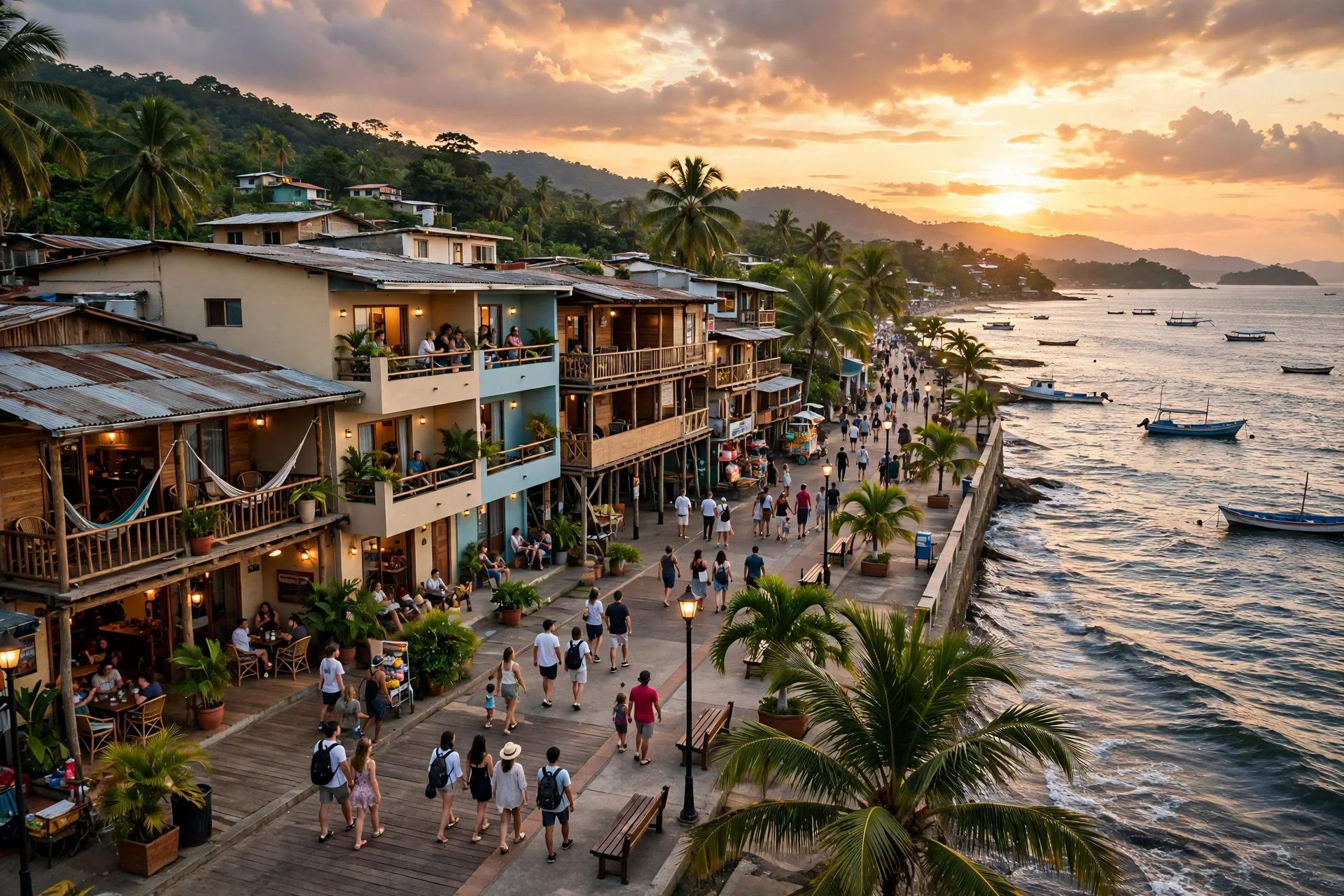
Un malecón turístico del Pacífico con alojamientos frente al mar, imagen alusiva a la reactivación turística propuesta. · Imagen generada para EPM
Lower VAT to help quake-hit towns welcome travelers back
Centro Democrático senators filed a bill cutting VAT from 19 to 10 percent on lodging and air tickets to municipalities hit by the magnitude 7.4 earthquake…
A time-limited VAT cut aimed at reviving quake-zone tourism
The bill by Henríquez and Correa sets a 10 percent VAT rate for 12 months on lodging and tickets bound for sites benefited after the earthquake, adds monthly…
--- The context ---
The magnitude 7.4 earthquake of August 10 left heavy damage across the economies of several departments, especially in the west of the country. For the municipalities that depend on tourism and on the trade that travelers bring, the blow reaches beyond broken infrastructure: it threatens the livelihoods of communities still living with the disaster's aftermath.
--- The facts ---
Senators Honorio Henríquez and Julia Correa, of Centro Democrático, filed a bill designed to offer incentives to travelers, especially Colombians, in order to reactivate tourism and commerce in the affected places. The idea is to bring visitors back to those destinations so their spending once again circulates through local economies.
The proposal's first point would cut VAT from 19 to 10 percent on tourist services legally taxed at the general rate, covering lodging —hotels, hostels, apart-hotels and other tourist accommodation establishments— as well as air tickets bound for the benefited sites, during the 12 months following the law's entry into force.
Its second point would create, for one year, monthly VAT-free tourism days: 3 consecutive calendar days including a weekend each month, with establishments exempt. The initiative also mentions the possibility of differentiated prices for Colombian travelers.
--- The positions ---
Henríquez said the aim is to energize the economy of the affected areas amid the communities' grief. Read that way, the bill is framed as relief first: a concrete hand for territories whose hotels, hostels and shops lost the flow of visitors on which they depend.
Correa noted that the mood in Congress is favorable, that several lawmakers have already joined the proposal, and that they expect support through the debates. The Senate president stated that the initiative forms part of a legislative package from Congress's Bicameral Commission for the Earthquake, created after the emergency to legislate in favor of the victims.
--- What remains unknown ---
The bill does not remove VAT from other sectors such as commerce, agencies or guides, although it argues they would also benefit from the arrival of more tourists consuming their services. What remains unclear is whether that indirect effect will reach the smallest businesses in the benefited municipalities, or concentrate in the operators best placed to capture demand.
--- Unanswered questions ---
Which municipalities will be named exactly among the benefited sites for the rate cut and the VAT-free days? Will small hostels and family-run lodgings manage to capture the demand the incentive promises to attract? Will the differentiated prices for Colombian travelers survive in the text that Congress ultimately approves?
--- EPM analysis ---
Viewed from the affected communities, the proposal treats tourism as a tool of social reconstruction: instead of waiting for demand to return on its own, it makes the trip cheaper so that visitor spending can restart hotels, hostels and shops in the hardest-hit zones. Its promise will be measured by whether relief reaches modest local accommodation rather than only the largest operators.
📌 EPM Take:
In EPM's view, the heart of this bill lies in looking at the emergency from the communities that endured it rather than only from the tally of damage. Turning Colombian travelers into an engine of recovery could return income to western municipalities whose demand has collapsed. For that gesture to become real reconstruction, the legislative process should ensure that small lodgings and local businesses receive a genuine share of the announced benefit.
--- The context ---
After the magnitude 7.4 earthquake of August 10 caused severe economic damage in several departments, hitting western Colombia hardest, Congress is weighing a response with an expiration date: a temporary tax benefit designed to push tourist demand toward the affected municipalities without turning an emergency exception into a permanent rule.
--- The facts ---
The bill, filed by Senators Honorio Henríquez and Julia Correa of Centro Democrático, defines its scope through two components. The first sets the VAT rate at 10 percent, against the general rate of 19, during the 12 months after the law takes effect, for lodging services —hotels, hostels, apart-hotels and other tourist accommodation— and for legally taxed air tickets whose destination is one of the benefited sites.
The second component establishes, for one year, monthly VAT-free tourism days lasting 3 consecutive calendar days and including a weekend each month, with establishments exempt on those dates. The text even contemplates differentiated prices for Colombian travelers.
The design draws an explicit boundary: VAT is not removed from other sectors such as commerce, agencies or guides. According to the initiative, those activities would benefit indirectly, because a larger flow of tourists would raise consumption of the various services they offer in the affected municipalities.
--- The positions ---
Correa pointed out that there is a good atmosphere in Congress, that various lawmakers have joined the proposal, and that they expect backing in the debates. That passage through Congress will test the design: each provision will have to defend the benefit's time limit and its specific destinations.
Henríquez explained that the purpose is to dynamize the economy of the affected zones amid the pain of the communities. The president of the Senate affirmed that the project belongs to a legislative package of the Bicameral Earthquake Commission of Congress, created after the emergency to legislate in favor of the victims of the natural disaster.
--- What remains unknown ---
The full path the proposal will take through the debates is not yet known, nor whether the text will keep its current limits intact: a 12-month duration, enumerated services and precise destinations. Nor has it been detailed how compliance would be verified for each ticket or lodging claiming the reduced rate under the conditions set by the law.
--- Unanswered questions ---
Will the benefit's temporary duration withstand the pressures that usually surface during legislative debate? Will the list of destinations and services stay closed enough to keep the exemption from spreading beyond the affected zones? How will authorities verify in practice that an air ticket or a night of lodging meets the conditions for the reduced rate?
--- EPM analysis ---
The proposal's strongest feature is its restraint: it lowers one specific tax, on enumerated services, bound for defined sites and for a fixed term, instead of opening a general exemption for the tourist sector. That architecture seeks reactivation through demand —more travelers spending in the territory— without installing a permanent hole in revenue or extending the privilege to activities the text itself leaves out.
📌 EPM Take:
In EPM's view, this initiative is right to be born with an expiration date and a defined perimeter, two conditions that separate an emergency stimulus from an indefinite tax privilege. Its legislative review should preserve that discipline: a reduced rate only for lodging and tickets bound for the benefited sites, a counted number of exempt days, and no additional sector entering through the back door. If Congress holds those limits, recovery will be financed by new demand rather than by open-ended forgone revenue.
IVA menor para viajar a las zonas golpeadas por el terremoto
Senadores del Centro Democrático radicaron un proyecto que rebaja el IVA del 19 al 10 % en alojamiento y tiquetes hacia los municipios afectados por el…
Un alivio de IVA acotado para reactivar el turismo tras el sismo
El proyecto de Henríquez y Correa fija por 12 meses una tarifa de IVA del 10 % para alojamiento y tiquetes con destino a los sitios beneficiados por el…
--- El contexto ---
El terremoto de magnitud 7,4 ocurrido el pasado 10 de agosto dejó fuertes estragos en la economía de varios departamentos, con especial impacto en el occidente del país. El golpe alcanza además a los municipios que viven del turismo y del comercio que mueven los viajeros.
--- Los hechos ---
Los senadores Honorio Henríquez y Julia Correa, del Centro Democrático, radicaron un proyecto de ley pensado para brindar incentivos a quienes viajen, especialmente a los colombianos, y así reactivar el turismo y el comercio en los lugares afectados. La apuesta es que el visitante vuelva a esos destinos y que su gasto circule de nuevo por la economía local.
El primer punto de la iniciativa plantea bajar el IVA del 19 al 10 % en los servicios turísticos legalmente gravados a la tarifa general, tanto en el alojamiento —hoteles, hostales, apartahoteles y demás establecimientos de alojamiento turístico— como en los tiquetes aéreos con destino a los sitios beneficiados, durante los 12 meses siguientes a la entrada en vigencia de la ley.
El segundo punto propone, durante un año, jornadas mensuales de turismo sin IVA: 3 días calendario consecutivos que comprendan un fin de semana de cada mes, con los establecimientos exentos. La iniciativa menciona además la posibilidad de precios diferenciados para los viajeros colombianos.
--- Las posiciones ---
Henríquez afirmó que lo que buscan es dinamizar la economía de las zonas afectadas en medio del dolor de las comunidades. Su planteamiento pone el acento en el alivio: que la norma llegue como una ayuda concreta para territorios que todavía cargan las consecuencias del desastre natural.
Correa señaló que ya hay buen ambiente en el Congreso, que varios congresistas se han sumado a la propuesta y que esperan que sea respaldada en los distintos debates. El presidente del Senado afirmó, por su parte, que la iniciativa hace parte de un paquete legislativo de la Comisión Bicameral del Congreso para Terremoto, creada tras la emergencia para legislar en favor de las víctimas.
--- Lo que falta saber ---
El proyecto no extiende la rebaja a otros sectores como el comercio, las agencias o los guías, aunque plantea que también se beneficiarían con la llegada de más turistas que consuman sus servicios. Lo que todavía no se conoce es cómo se traducirá ese efecto indirecto en ingresos reales para los negocios más pequeños de los municipios beneficiados.
--- Preguntas sin respuesta ---
¿Qué municipios quedarán incluidos exactamente entre los sitios beneficiados por la rebaja y por las jornadas sin IVA? ¿Alcanzarán los pequeños hostales y alojamientos familiares a captar la demanda que el incentivo promete atraer? ¿Se mantendrán los precios diferenciados para los viajeros colombianos en el texto que finalmente apruebe el Congreso?
--- Análisis EPM ---
Leída desde las comunidades, la propuesta usa el turismo como herramienta de reconstrucción social: en lugar de esperar a que la demanda regrese sola, abarata el viaje para que el gasto visitante reactive hoteles, hostales y comercios golpeados. Su valor estará en si el alivio llega a los alojamientos modestos y no solo a los grandes operadores.
📌 Conclusion EPM:
A juicio de EPM, el mérito central de esta iniciativa está en mirar la emergencia desde las comunidades que la padecieron y no solo desde las cifras del daño. Convertir el viaje de los colombianos en una vía de reactivación puede devolver ingresos a municipios del occidente que hoy dependen de una demanda caída. Para que el gesto se vuelva reconstrucción efectiva, el trámite deberá cuidar que los pequeños alojamientos y los negocios locales reciban una parte real del beneficio anunciado.
--- El contexto ---
Tras el terremoto de magnitud 7,4 del pasado 10 de agosto, que causó fuertes estragos económicos en varios departamentos y golpeó sobre todo al occidente colombiano, el Congreso examina una respuesta acotada: un beneficio tributario temporal para empujar la demanda turística hacia los municipios afectados, sin convertir la excepción en regla permanente.
--- Los hechos ---
La iniciativa, radicada por los senadores Honorio Henríquez y Julia Correa, del Centro Democrático, ordena su alcance en dos componentes definidos. El primero fija en 10 % la tarifa del IVA durante los 12 meses siguientes a la entrada en vigencia de la ley, frente a la tarifa general del 19, para servicios de alojamiento —hoteles, hostales, apartahoteles y demás alojamiento turístico— y para tiquetes aéreos legalmente gravados que tengan como destino los sitios beneficiados.
El segundo componente crea, por un año, jornadas mensuales de turismo sin IVA de 3 días calendario consecutivos que incluyan un fin de semana de cada mes, con establecimientos exentos. El articulado contempla incluso precios diferenciados para los viajeros colombianos.
El diseño traza un límite expreso: no se quita el IVA a otros sectores como el comercio, las agencias o los guías. Según la iniciativa, esos renglones se beneficiarían de manera indirecta, porque una mayor llegada de turistas elevaría el consumo de los distintos servicios que ofrecen en los municipios afectados.
--- Las posiciones ---
Correa destacó que existe buen ambiente en el Congreso, que varios congresistas ya se sumaron a la propuesta y que confían en obtener respaldo durante los debates. Ese trámite será la prueba del diseño: cada artículo deberá sostener la temporalidad y el destino específico del beneficio.
Henríquez explicó que la finalidad es dinamizar la economía de las zonas afectadas en medio del dolor de las comunidades. El presidente del Senado sostuvo que el proyecto integra un paquete legislativo de la Comisión Bicameral del Congreso para Terremoto, creada tras la emergencia con el mandato de legislar en favor de las víctimas del desastre natural.
--- Lo que falta saber ---
Todavía no se conoce el recorrido de la propuesta en los debates ni si el texto conservará sus límites actuales: vigencia de 12 meses, servicios enumerados y destinos precisos. Tampoco se ha detallado cómo se verificará que cada tiquete o alojamiento cumpla las condiciones de la ley.
--- Preguntas sin respuesta ---
¿Sobrevivirá la vigencia temporal del beneficio a las presiones que suelen aparecer durante los debates legislativos? ¿Quedará la lista de destinos y servicios lo bastante cerrada para evitar que la exención se extienda más allá de las zonas afectadas? ¿Cómo se comprobará en la práctica que un tiquete aéreo o una noche de alojamiento cumplen las condiciones para acceder a la tarifa reducida?
--- Análisis EPM ---
El rasgo más sólido de la propuesta es su contención: rebaja un impuesto concreto, sobre servicios enumerados, con destino a sitios beneficiados y por un plazo fijo, en vez de abrir una exención general al sector. Esa arquitectura busca reactivar por demanda —más viajeros gastando en el territorio— sin instalar un hueco permanente en el recaudo ni extender el privilegio a renglones excluidos por el propio texto.
📌 Conclusion EPM:
A juicio de EPM, esta iniciativa acierta al nacer con fecha de vencimiento y con un perímetro definido, dos condiciones que separan un estímulo de emergencia de un privilegio tributario indefinido. Su examen legislativo debería preservar esa disciplina: tarifa reducida solo para alojamiento y tiquetes con destino a los sitios beneficiados, jornadas exentas contadas y ningún sector adicional por la puerta de atrás. Si el Congreso mantiene esos límites, la reactivación se financiará con demanda nueva y no con una renuncia fiscal abierta.