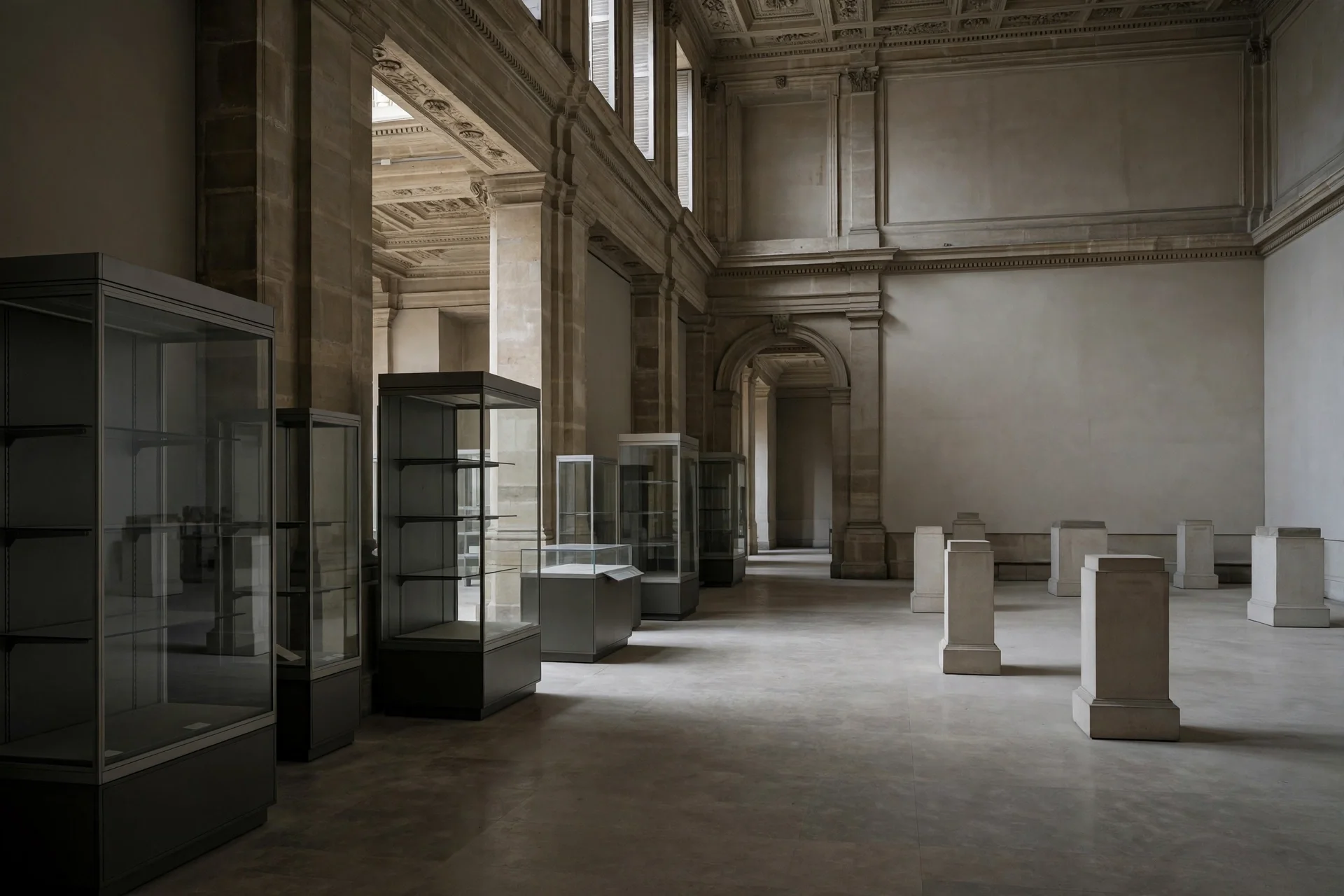
Sala de museo con vitrinas vacías, imagen alusiva al retiro de piezas de la exposición permanente. · Imagen generada para EPM
Samper criticizes Holguin over National Museum removals in Colombia
Ernesto Samper, president from 1994 to 1998, criticized Minister Paola Holguin on X for removing more than 30 National Museum pieces linked to diversity…
Holguin defends National Museum removal after Samper criticism
Paola Holguin defended removing more than 30 National Museum pieces and announced a museography and curation review, after Ernesto Samper criticism comparing…
Former president Ernesto Samper criticized Culture Minister Paola Holguin on Tuesday, October 20, over the removal of pieces from Colombia National Museum, comparing her appointment in a post on X to naming Herod to run a nursery.
--- The context ---
Samper led the country from 1994 to 1998 and heads the Poder Popular movement. His message came after the government removed more than 30 pieces from the permanent exhibition rooms, following a visit by De La Espriella to the Culture Ministry in which, according to the report, he ordered Holguin to dismantle those items over alleged apology for terrorism.
--- The facts ---
The removed pieces were related to sexual diversity, feminist movements, the Patriotic Union, the 2016 Peace Agreement and the memory of Carlos Pizarro Leongomez. Samper argued, in reported speech, that Holguin turned culture, which should be a space for encounter and peace, into a war zone of confrontation among Colombians, their diversity and their memory.
The Herod comparison alluded to the biblical figure associated with the persecution and death of children. For Samper, the minister background as a former Centro Democratico militant who supported De La Espriella candidacy for head of state made her appointment to lead the culture portfolio inappropriate.
--- The positions ---
Holguin defended the removal and argued that museums under state administration must represent the whole nation and not only one sector. She also announced that her office will review the museography, museology and curation of the National Museum and other cultural spaces run by the government, and guaranteed that the museum will conserve, restore, protect and disseminate culture.
The minister said those who turned culture into a tool of historical deconstruction, apology for crime and revictimization of victims called protests outside the museum. She denounced hooded people and minors used as shields during the demonstrations, backed the Police in relation to Decree 1525 of 2026 and said she will protect victims rights to truth, justice, reparation and non repetition. Former president Juan Manuel Santos also expressed rejection of what happened.
--- What remains unknown ---
The report does not detail the complete inventory of the more than 30 pieces, their destination, the technical criteria for each removal or the timetable for the announced review. Nor does it specify how the cultural groups, activists and citizens who protested outside the headquarters in Bogota, along Calle 26 and Carrera Septima, will take part.
--- Unanswered questions ---
Will the complete inventory of the removed pieces and the criterion applied to each one be published? Will those pieces return to the permanent rooms or remain out of the exhibition? What independent bodies will participate in the review of museography, museology and curation announced by the minister?
--- EPM analysis ---
The clash is not only about display cases. It is about the official account of episodes still alive in Colombian politics: the 2016 peace, the Patriotic Union and the memory of Pizarro. From a plural perspective, removing that content without a known public procedure fuels suspicion that the history the state is willing to show is being narrowed.
📌 EPM Take: In EPM's view, removing more than 30 pieces places historical memory at the center of a dispute over who narrates the country. When a state museum withdraws accounts of diversity, feminism, the Patriotic Union, peace and Carlos Pizarro, the discussion stops being museographic and becomes democratic. The announced review should proceed with public criteria, broad participation and guarantees for victims, without erasing uncomfortable chapters. Protecting memory requires verifiable plurality, not institutional silence, and requires explaining every decision to citizens with complete transparency and documented reasons for each removal.
Culture Minister Paola Holguin defended the removal of pieces from the National Museum after former president Ernesto Samper criticized her on Tuesday, October 20, on X and compared her appointment to naming Herod to run a nursery.
--- The context ---
The government removed more than 30 pieces from the permanent exhibition rooms. The measure followed a visit by De La Espriella to the Culture Ministry in which, according to the report, he ordered Holguin to dismantle those items over alleged apology for terrorism, amid protests outside the museum headquarters in Bogota.
--- The facts ---
The pieces were related to sexual diversity, feminist movements, the Patriotic Union, the 2016 Peace Agreement and the memory of Carlos Pizarro Leongomez. Samper, who governed from 1994 to 1998, argued in reported speech that the minister turned a space of memory and encounter into a focus of political confrontation and questioned her appointment.
The former Liberal leader, head of Poder Popular, linked Holguin decisions to an attempt to restrict the country narratives. He recalled her background as a former Centro Democratico militant and supporter of De La Espriella, and used the reference to Herod, the biblical figure associated with persecution and the death of children, to underline his rejection.
--- The positions ---
Holguin replied that museums under state administration must represent the whole nation and not only one sector. She promised that the National Museum will conserve, restore, protect and disseminate culture, announced a review of museography, museology and curation there and in other spaces, and said she seeks to avoid political indoctrination and proscribe apology for crime.
On the protests, the minister said those who turned culture into historical deconstruction, apology for crime and revictimization called the demonstrations. She denounced hooded people and minors used as shields, backed the National Police intervention in relation to Decree 1525 of 2026 and said she will protect victims dignity and their rights to truth, justice, reparation and non repetition. Juan Manuel Santos also rejected what happened.
--- What remains unknown ---
The piece by piece detail of the removal is not yet known, nor the reports supporting the alleged apology for terrorism, nor the scope and deadlines of the announced review. The report also does not clarify whether there will be a new installation, what content it will include or how it will be assessed as representing the whole nation.
--- Unanswered questions ---
What documents support, piece by piece, the alleged apology for terrorism cited by the government? When will the Ministry present the technical criteria for the museography and curation review? How will it be verified that the new rooms represent the whole nation and protect victims?
--- EPM analysis ---
A state museum is not a space without rules: its content commits public resources and the image the state offers of itself. From that responsibility, reviewing a curation accused of apology is defensible, provided the decision is technical, documented and proportionate. The burden of proof, however, lies with the government, which must show the file and not only the slogan.
📌 EPM Take: In EPM's view, the controversy requires distinguishing between legitimate curation and apology for crime inside a state funded museum. If the minister maintains that the rooms must represent the whole nation and protect victims, she must demonstrate that with a public inventory, technical criteria and a transparent review of museography and curation. Samper criticism, with the Herod comparison, raises the confrontation, but does not replace that accountability. Cultural order also requires clear rules, institutional respect and decisions explained without improvisation, especially when public protests and policing are involved.
Samper critica a Holguín por retiro de piezas del Museo Nacional
Ernesto Samper, presidente entre 1994 y 1998, criticó en X a la ministra Paola Holguín por retirar más de 30 piezas del Museo Nacional vinculadas a diversidad…
Holguín defiende retiro en Museo Nacional tras crítica de Samper
Paola Holguín defendió el retiro de más de 30 piezas del Museo Nacional y anunció revisar museografía y curaduría, tras la crítica de Ernesto Samper que…
El expresidente Ernesto Samper cuestionó el martes 20 de octubre a la ministra de Cultura, Paola Holguín, por el retiro de piezas del Museo Nacional de Colombia y comparó su nombramiento con entregar una sala cuna a Herodes, en una crítica publicada en su perfil en X.
--- El contexto ---
Samper dirigió el país entre 1994 y 1998 y lidera Poder Popular. Su mensaje llegó tras el retiro de más de 30 piezas de las salas permanentes, después de que De La Espriella ordenara a Holguín desmontarlas por presunta apología al terrorismo.
--- Los hechos ---
Las piezas retiradas estaban relacionadas con la diversidad sexual, los movimientos feministas, la Unión Patriótica, el Acuerdo de Paz de 2016 y la memoria de Carlos Pizarro Leongómez. Samper sostuvo, en indirecto, que Holguín convirtió la cultura, que debería ser un espacio de encuentro y de paz, en una zona de guerra y enfrentamiento entre los colombianos, su diversidad y su memoria.
La comparación con Herodes aludió al personaje bíblico asociado con la persecución y la muerte de niños. Para Samper, los antecedentes de la ministra, exmilitante del Centro Democrático y partidaria de la candidatura de De La Espriella a la jefatura de Estado, hacían inadecuada su designación al frente de la cartera cultural.
--- Las posiciones ---
Holguín defendió el retiro y planteó que los museos bajo administración estatal deben representar a toda la nación y no solo a un sector. Anunció además que su despacho revisará la museografía, la museología y la curaduría del Museo Nacional y de otros espacios culturales a cargo del Gobierno, y garantizó que el museo conservará, restaurará, protegerá y divulgará la cultura.
La ministra afirmó que quienes convirtieron la cultura en deconstrucción histórica y apología al delito llamaron a protestar. Denunció encapuchados y menores usados como escudos, respaldó a la Policía en relación con el Decreto 1525 de 2026 y aseguró que protegerá los derechos de las víctimas. Juan Manuel Santos también rechazó lo ocurrido.
--- Lo que falta saber ---
La crónica no detalla el inventario completo de las más de 30 piezas, su destino, los criterios técnicos de cada retiro ni el calendario de la revisión anunciada. Tampoco precisa cómo se garantizará la participación de colectivos culturales, activistas y ciudadanos que protestaron frente a la sede, en Bogotá, por la calle 26 y la Carrera Séptima.
--- Preguntas sin respuesta ---
¿Se publicará el inventario completo de las piezas retiradas y el criterio aplicado a cada una? ¿Volverán esas piezas a las salas permanentes o quedarán fuera de la exposición? ¿Qué instancias independientes participarán en la revisión de museografía, museología y curaduría anunciada por la ministra?
--- Análisis EPM ---
El choque es por el relato oficial de episodios vivos en la política colombiana: la paz de 2016, la Unión Patriótica y Pizarro. Retirar esos contenidos sin procedimiento público conocido alimenta la sospecha de que se estrecha la historia que el Estado muestra.
📌 Conclusion EPM: A juicio de EPM, el retiro de más de 30 piezas coloca la memoria histórica en el centro de una disputa sobre quién narra el país. Cuando un museo estatal retira relatos sobre diversidad, feminismo, Unión Patriótica, paz y Carlos Pizarro, la discusión deja de ser museográfica y se vuelve democrática. La revisión anunciada debería hacerse con criterios públicos, participación amplia y garantías para las víctimas, sin borrar capítulos incómodos. Proteger la memoria exige pluralidad verificable, no silencio institucional, y exige explicar cada decisión ante la ciudadanía con transparencia completa.
La ministra de Cultura, Paola Holguín, defendió el retiro de piezas del Museo Nacional después de que el expresidente Ernesto Samper la criticara el martes 20 de octubre en X y comparara su nombramiento con entregar una sala cuna a Herodes.
--- El contexto ---
El Gobierno retiró más de 30 piezas de las salas de exposición permanente. La medida siguió a una visita de De La Espriella al Ministerio de Cultura en la que, según la crónica, ordenó a Holguín desmontar esos artículos por presunta apología al terrorismo, en medio de protestas frente a la sede del museo en Bogotá.
--- Los hechos ---
Las piezas estaban relacionadas con la diversidad sexual, los movimientos feministas, la Unión Patriótica, el Acuerdo de Paz de 2016 y la memoria de Carlos Pizarro Leongómez. Samper, que gobernó entre 1994 y 1998, afirmó en indirecto que la ministra convirtió un espacio de memoria y encuentro en un foco de confrontación política y cuestionó su designación.
El exdirigente liberal, líder de Poder Popular, relacionó las decisiones de Holguín con un intento de restringir los relatos de país. Recordó sus antecedentes como exmilitante del Centro Democrático y partidaria de De La Espriella, y usó la referencia a Herodes, personaje bíblico asociado con la persecución y la muerte de niños, para subrayar su rechazo.
--- Las posiciones ---
Holguín respondió que los museos bajo administración estatal deben representar a toda la nación y no solo a un sector. Prometió que el Museo Nacional conservará, restaurará, protegerá y divulgará la cultura, anunció una revisión de museografía, museología y curaduría en ese y otros espacios, y sostuvo que busca evitar el adoctrinamiento político y proscribir la apología al delito.
Sobre las protestas, la ministra dijo que quienes convirtieron la cultura en apología al delito llamaron a manifestarse. Denunció encapuchados y menores usados como escudos, respaldó a la Policía en relación con el Decreto 1525 de 2026 y aseguró que protegerá a las víctimas. Juan Manuel Santos también rechazó lo ocurrido.
--- Lo que falta saber ---
No se conoce todavía el detalle pieza por pieza del retiro, ni los informes que sustentaron la presunta apología al terrorismo, ni el alcance y los plazos de la revisión anunciada. La crónica tampoco aclara si habrá un nuevo montaje, qué contenidos lo integrarán o cómo se evaluará que represente efectivamente a toda la nación.
--- Preguntas sin respuesta ---
¿Qué documentos sustentan, pieza por pieza, la presunta apología al terrorismo señalada por el Gobierno? ¿Cuándo presentará el Ministerio los criterios técnicos de la revisión de museografía y curaduría? ¿Cómo se comprobará que las nuevas salas representan a toda la nación y protegen a las víctimas?
--- Análisis EPM ---
Un museo estatal no es un espacio sin reglas: compromete recursos públicos. Revisar una curaduría señalada de apología es defendible si la decisión es técnica, documentada y proporcional. La carga de la prueba está en el Gobierno, que debe mostrar el expediente.
📌 Conclusion EPM: A juicio de EPM, la controversia obliga a distinguir entre curaduría legítima y apología del delito dentro de un museo financiado por el Estado. Si la ministra sostiene que las salas deben representar a toda la nación y proteger a las víctimas, debe demostrarlo con un inventario público, criterios técnicos y una revisión transparente de museografía y curaduría. La crítica de Samper, con la comparación con Herodes, eleva la confrontación, pero no sustituye esa rendición de cuentas. El orden cultural también requiere reglas claras, respeto institucional y decisiones explicadas sin improvisación alguna.