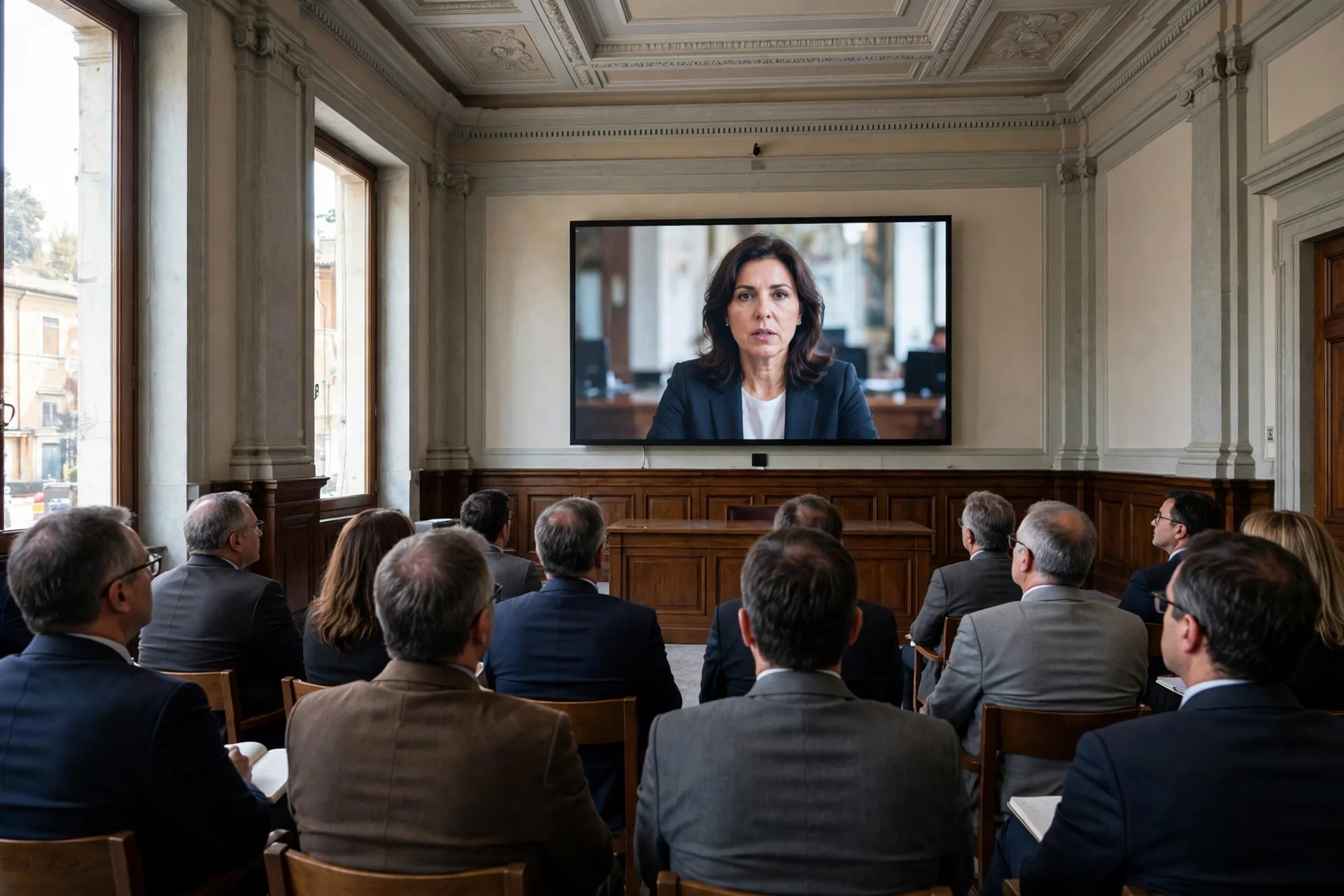
Asamblea de administradores locales siguiendo un videomensaje en pantalla, imagen alusiva a la 39ª Asamblea de las provincias italianas. · Imagen generada para EPM
Meloni urges review of Italy's provinces and local reform
Giorgia Meloni sent a message to the 39th Assembly of the Union of the Italian Provinces in Imperia, addressed to President Lattuca.
Meloni defends provinces and promises local reform
In her message to the 39th Assembly of the Union of the Italian Provinces, Giorgia Meloni argued that Law No.
--- The context ---
Prime Minister Giorgia Meloni sent a message to the 39th General Assembly of the Union of the Italian Provinces, meeting in Imperia, addressed to President Lattuca. She regretted being unable to attend in person and wanted to send her contribution to a gathering that this year coincides with the eightieth anniversary of the birth of the Republic.
--- The facts ---
According to the message, the provinces are strongholds of territorial cohesion and perform an indispensable linking function for the development of the territories, with a decisive role under the principles of autonomy and subsidiarity recognised by the Constitution. Meloni recalled that she herself, as a provincial councillor, appreciated their importance in strategic coordination and in supporting inland areas and smaller municipalities.
The message credits the provinces with maintaining essential functions despite staff shortages and rigid budget limits, from maintenance of the road network to management of upper secondary school buildings. It also says they honoured the commitments of the National Recovery and Resilience Plan, spending the resources in full within the established deadlines.
--- The positions ---
Meloni said the provinces carry the legacy of Law No. 56 of 2014, which left them in a limbo that recognises neither their history nor their constitutional function. She asked Parliament to assess, without partisan prejudice, the effects of that law and the electoral model, including in metropolitan areas, where citizens are governed by the mayor of the main city without being able to elect that mayor.
--- What remains unknown ---
The message does not spell out which changes Parliament might adopt on the electoral model, nor does it set deadlines for that assessment. It also does not specify which resources would accompany the new framework, or how responsibilities between levels of government will be settled while the reform of local authorities moves forward.
--- Unanswered questions ---
What changes will Parliament propose for the electoral model of the provinces? How will representation be guaranteed for citizens in metropolitan areas? What resources will accompany the new framework so that essential functions can be sustained?
--- EPM analysis ---
More than twenty-five years have passed since the consolidated act on the organisation of local authorities entered into force, and updating the overall architecture is urgent. The reform of that act is about to reach the Council of Ministers and will then go to Parliament with a threefold objective: a coherent framework, certain boundaries under the principle of who does what, and restored dignity for territorial authorities, with the provinces as a hinge between municipalities and regions.
📌 EPM Take: In EPM's view, the message puts the provinces at the centre of a pending discussion about representation and capable nearby government, because it links the defence of their essential functions with the demand for clear rules on who does what. Its real scope will depend on whether the announced reform defines responsibilities, resources and electoral mechanisms without new ambiguities, and on whether the parliamentary debate turns that threefold objective into verifiable decisions for municipalities, provinces and regions across the whole Italian territory.
--- The context ---
In a message addressed to President Lattuca and the administrators gathered in Imperia for the 39th General Assembly of the Union of the Italian Provinces, Prime Minister Giorgia Meloni regretted that she could not be with them in person and sent her greeting and her contribution. This year's gathering coincides with the eightieth anniversary of the birth of the Republic.
--- The facts ---
The text describes the provinces as strongholds of territorial cohesion performing an indispensable linking function for the development of the territories, with a decisive role under the principles of autonomy and subsidiarity recognised by the Constitution. Meloni also recalled her own experience as a provincial councillor, from which she appreciated their importance in strategic coordination and in support for inland areas and smaller municipalities.
Despite staff shortages and rigid budget constraints, the provinces guaranteed essential functions, from maintenance of the road network to management of upper secondary school buildings. The message stresses that they respected the commitments of the National Recovery and Resilience Plan, identifying real needs, planning coherently and spending the resources entirely within the established deadlines.
--- The positions ---
The central position is that Law No. 56 of 2014 left the provinces in an unsustainable limbo that recognises neither their history nor their constitutional function. Meloni asked Parliament to assess, without partisan prejudice, the effects of that law and the electoral model to strengthen efficiency and representativeness, including in metropolitan areas, where citizens are governed by the mayor of the main city without having been able to elect that mayor.
--- What remains unknown ---
The message does not specify which electoral formula should replace the current one, nor does it set a timetable for the parliamentary assessment. It also does not detail how responsibilities and resources will be divided among municipalities, provinces and regions once the reform is approved, or what will happen to current functions while that path is completed.
--- Unanswered questions ---
Which electoral model will Parliament propose for the provinces and metropolitan areas? How will certain boundaries be fixed between what each level of government does? Will the provinces recover the dignity and planning capacity that the message demands for them?
--- EPM analysis ---
More than twenty-five years have passed since the consolidated act on the organisation of local authorities entered into force, and successive regulatory interventions complicated administrative action. The reform of that text is about to reach the Council of Ministers and will then pass to Parliament with a threefold objective: a coherent framework, certain boundaries under the principle of who does what, and full dignity for territorial authorities, with the provinces as a hinge between municipalities and regions.
📌 EPM Take: In EPM's view, the strength of the message lies in connecting the defence of the provinces with a demand for institutional order: strong local institutions, delimited responsibilities and a real capacity to programme works and services for citizens. That promise of a more efficient State, attentive to people's needs, will only be credible if the reform closes the limbo opened years ago, corrects the representation deficit in metropolitan areas and gives each territorial authority a clear, stable and verifiable role in daily practice.
Meloni pide revisar el futuro de las provincias italianas
Giorgia Meloni envió un mensaje a la 39ª Asamblea de la Unión de las Provincias Italianas en Imperia, dirigido al presidente Lattuca.
Meloni defiende a las provincias y anuncia reforma local
En su mensaje a la 39ª Asamblea de la Unión de las Provincias Italianas, Giorgia Meloni sostuvo que la ley n.
--- El contexto ---
La presidenta del Consejo, Giorgia Meloni, envió un mensaje a la 39ª Asamblea general de la Unión de las Provincias Italianas, reunida en Imperia, dirigido al presidente Lattuca. Lamentó no haber podido estar presente y quiso hacer llegar su contribución a un encuentro que este año coincide con el octogésimo aniversario del nacimiento de la República.
--- Los hechos ---
Según el mensaje, las provincias son presidios de cohesión territorial y cumplen una función indispensable de enlace para el desarrollo de los territorios, con un papel decisivo según los principios de autonomía y subsidiariedad reconocidos por la Constitución. Meloni recordó que ella misma, como consejera provincial, valoró su importancia en la coordinación estratégica y en el apoyo a las áreas internas y a los municipios más pequeños.
El mensaje atribuye a las provincias la continuidad de funciones esenciales pese a la escasez de personal y los rígidos límites presupuestarios, desde el mantenimiento de la red vial hasta la gestión de los edificios de escuelas secundarias superiores. También señala que cumplieron los compromisos del Plan nacional de Recuperación y Resiliencia, gastando íntegramente los recursos en los plazos establecidos.
--- Las posiciones ---
Meloni afirmó que las provincias cargan con la herencia de la ley n. 56 de 2014, que las dejó en un limbo que no reconoce su historia ni su función constitucional. Pidió que el Parlamento evalúe, sin prejuicios de parte, los efectos de esa norma y el modelo de elección, también en las áreas metropolitanas, donde los ciudadanos son gobernados por el alcalde del capoluogo sin poder elegirlo.
--- Lo que falta saber ---
El mensaje no detalla qué cambios podría adoptar el Parlamento sobre el modelo de elección ni precisa plazos para esa evaluación. Tampoco especifica qué recursos acompañarían el nuevo marco, ni cómo se resolverán las competencias entre niveles de gobierno mientras avanza la reforma de los entes locales.
--- Preguntas sin respuesta ---
¿Qué cambios propondrá el Parlamento sobre el modelo de elección de las provincias? ¿Cómo se garantizará la representación ciudadana en las áreas metropolitanas? ¿Qué recursos acompañarán el nuevo marco para sostener las funciones esenciales?
--- Análisis EPM ---
Han pasado más de veinticinco años desde la entrada en vigor del Testo Unico sobre el ordenamiento de los entes locales y urge actualizar la arquitectura completa. La reforma de ese texto está por llegar al Consejo de ministros y seguirá luego en el Parlamento con un triple objetivo: un marco coherente, confines ciertos según el principio de quién hace qué y devolver dignidad a los entes territoriales, con las provincias como bisagra entre municipios y regiones.
📌 Conclusion EPM: A juicio de EPM, el mensaje coloca a las provincias en el centro de una discusión pendiente sobre representación y capacidad de gobierno cercano, porque une la defensa de sus funciones esenciales con la exigencia de reglas claras sobre quién hace qué. Su alcance real dependerá de que la reforma anunciada defina competencias, recursos y mecanismos de elección sin nuevas ambigüedades, y de que el debate parlamentario traduzca ese triple objetivo en decisiones verificables para municipios, provincias y regiones en todo el territorio italiano.
--- El contexto ---
En un mensaje dirigido al presidente Lattuca y a los administradores reunidos en Imperia por la 39ª Asamblea general de la Unión de las Provincias Italianas, la presidenta del Consejo, Giorgia Meloni, lamentó no poder acompañarlos y les hizo llegar su saludo. El encuentro de este año coincide con el octogésimo aniversario del nacimiento de la República.
--- Los hechos ---
El texto describe a las provincias como presidios de cohesión territorial que cumplen una función indispensable de enlace para el desarrollo de los territorios, con un papel decisivo según los principios de autonomía y subsidiariedad reconocidos por la Constitución. Meloni recordó su propia experiencia como consejera provincial, desde la que valoró su importancia en la coordinación estratégica y en el apoyo a las áreas internas y a los municipios más pequeños.
Pese a la escasez de personal y los rígidos límites presupuestarios, las provincias garantizaron funciones esenciales, desde el mantenimiento de la red vial hasta la gestión de los edificios de escuelas secundarias superiores. El mensaje subraya que respetaron los compromisos del Plan nacional de Recuperación y Resiliencia, planificando con coherencia y gastando íntegramente los recursos en los plazos establecidos.
--- Las posiciones ---
Según el mensaje, la ley n. 56 de 2014 dejó a las provincias en un limbo insostenible que no reconoce su historia ni su función constitucional. Meloni pidió que el Parlamento evalúe, sin prejuicios de parte, los efectos de esa norma y el modelo de elección para reforzar la eficiencia y la representatividad, también en las áreas metropolitanas, donde los ciudadanos son gobernados por el alcalde del capoluogo sin haber podido elegirlo.
--- Lo que falta saber ---
El mensaje no precisa qué fórmula de elección debería sustituir a la vigente ni fija un calendario para la evaluación parlamentaria. Tampoco detalla cómo se repartirán competencias y recursos entre municipios, provincias y regiones tras la reforma, ni qué ocurrirá con las funciones actuales mientras se completa ese recorrido.
--- Preguntas sin respuesta ---
¿Qué modelo de elección propondrá el Parlamento para las provincias y las áreas metropolitanas? ¿Cómo se fijarán los confines ciertos entre niveles de gobierno? ¿Recuperarán las provincias la dignidad reclamada?
--- Análisis EPM ---
Han pasado más de veinticinco años desde la entrada en vigor del Testo Unico sobre el ordenamiento de los entes locales, y las intervenciones sucesivas complicaron la acción administrativa. La reforma de ese texto está por llegar al Consejo de ministros y pasará después al Parlamento con un triple objetivo: un marco coherente, confines ciertos según el principio de quién hace qué y plena dignidad para los entes territoriales, con las provincias como bisagra entre municipios y regiones.
📌 Conclusion EPM: A juicio de EPM, la fuerza del mensaje está en conectar la defensa de las provincias con una exigencia de orden institucional: instituciones locales fuertes, competencias delimitadas y capacidad real de programar obras y servicios para los ciudadanos. Esa promesa de un Estado más eficiente y atento solo será creíble si la reforma cierra el limbo abierto hace años, corrige el déficit de representación en las áreas metropolitanas y devuelve a cada ente territorial un papel claro, estable y comprobable en la práctica diaria.