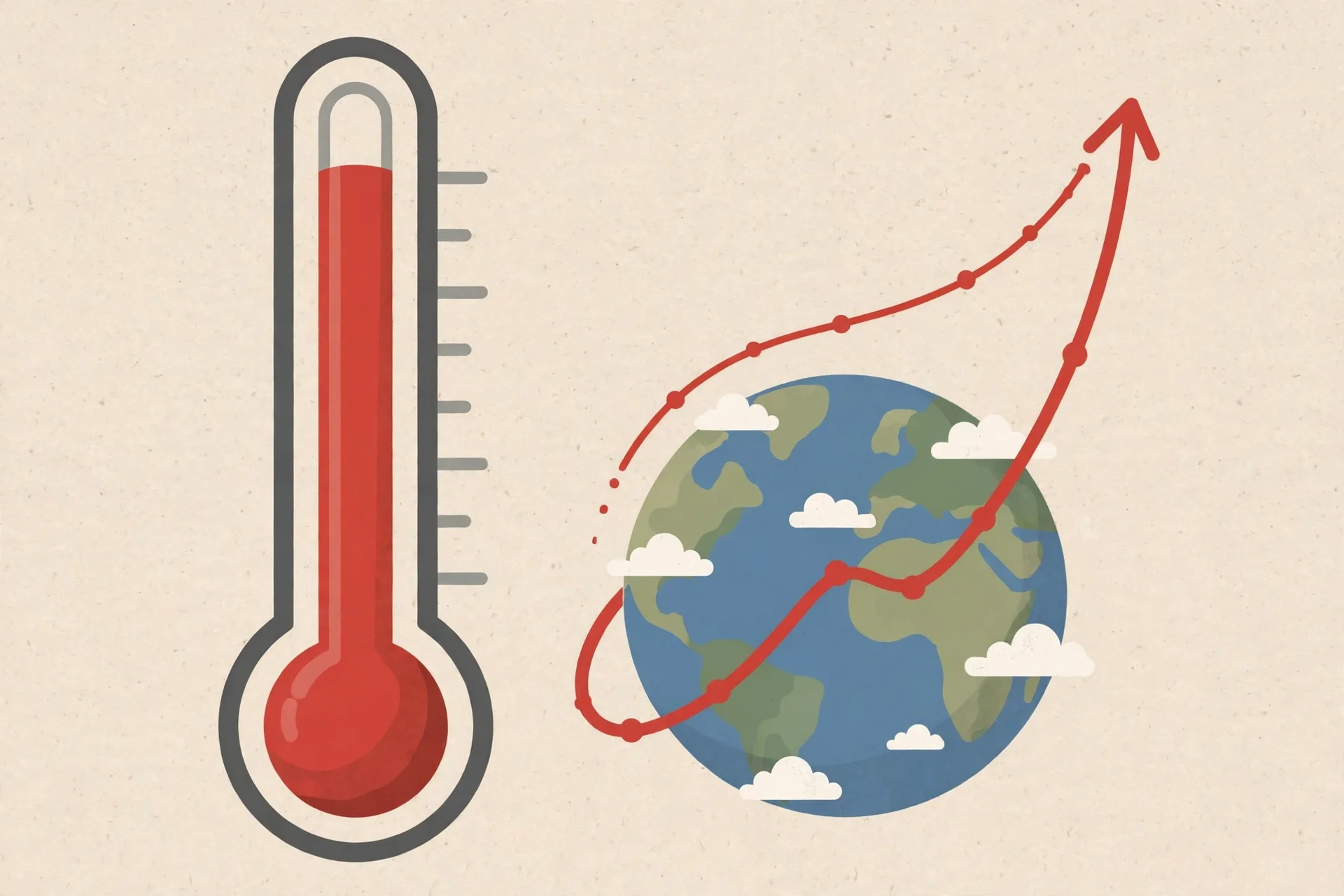
Imagen alusiva al sobrepaso de 1.5°C y a la ruta de regreso planteada en el informe sobre la brecha de emisiones. · Imagen generada para EPM
Warming will pass 1.5°C, but deep cuts can bring it back down
The UN Environment Programme warns that warming will breach 1.5°C, with a peak of 1.7 to 1.8°C by mid-century in the best scenario.
Passing 1.5°C is not surrender: a path back still exists now
The Emissions Gap Report 2026 states that warming will breach 1.5°C and that, in the best scenario, the peak will be 1.7 to 1.8°C by mid-century.
--- The context --- The Paris Agreement, adopted in 2015, set the goal of keeping warming to 1.5°C. Since then renewable energy has boomed, supply from coal and oil has grown slower than projected and climate policies have cut emissions in many places.
The UN Environment Programme published the Emissions Gap Report 2026: The Point of Return on Wednesday. It outlines the lowest possible overshoot scenario, with peak warming limited to 1.7 to 1.8°C by roughly mid-century.
--- The facts --- That scenario requires slashing emissions by 18% by the end of the decade, 45% by 2035 and 69% five years later, compared with 2025 levels.
If current policies continue, warming could reach 2.8°C within this century and increase thereafter. Even if all national climate action plans are delivered, warming will be limited to 2.6°C.
Those outcomes are worse than last year's projections, due to the United States withdrawing from the climate deal and revised estimates of historical emissions. New national plans have hardly made a difference.
--- The positions --- UN Secretary-General António Guterres said in a message accompanying the report that overshoot is not surrender. He argued it can still be kept as small and as short as possible, with temperatures brought back below 1.5°C by the end of the century.
Inger Andersen, Executive Director of the UN Environment Programme, warned that every additional fraction of a degree and every additional year above 1.5°C increases impacts such as deadly floods, heatwaves and wildfires. She called for minimizing peak warming and returning to 1.5°C, stressing that it is possible.
--- What remains unknown --- The report calls for accelerating the goals of the first Global Stocktake, held from 2021 to 2023: tripling renewable energy capacity, doubling energy efficiency improvements by 2030, shifting away from fossil fuels, reducing non-CO2 emissions and reversing deforestation. Progress across most goals remains insufficient.
--- Unanswered questions --- Will countries turn those goals into real reductions before peak warming approaches 1.8°C in the coming decades? Will the second Global Stocktake, which begins next month at the COP31 climate conference in Antalya, Türkiye, set quantified goals for 2035 and 2040? How will the United States withdrawal be offset?
--- EPM analysis --- Reducing the share of coal, oil and gas in total energy supply by at least 55%, 15% and five per cent by 2035, relative to 2025, would be required. By 2040 the required reductions rise to 75%, 30% and 35%, a deep transformation of the energy system.
📌 EPM Take: In EPM's view, the importance of this report lies not in announcing that 1.5°C will be breached, but in showing with hard numbers that the size and length of the overshoot still depend on near-term choices. An 18% cut by the end of the decade does not guarantee the return, but without that first step the goals for 2035 and 2040 become rhetoric. The window is narrow yet open, and whether it is used will be measurable year after year in actual emissions.
--- The context --- The Paris Agreement, adopted in 2015, made 1.5°C the central reference of global climate policy. Since then renewable energy has boomed, supply from coal and oil has grown slower than projected and climate policies have cut emissions in many places. Even so, the diagnosis acknowledges that progress falls short.
The UN Environment Programme published the Emissions Gap Report 2026: The Point of Return on Wednesday. It proposes the lowest possible overshoot, with peak warming limited to 1.7 to 1.8°C by roughly mid-century and a return below 1.5°C by the end of the century.
--- The facts --- The condition is demanding and quantified: emissions must fall by 18% by the end of the decade, 45% by 2035 and 69% five years later, compared with 2025. These are deep reductions in a short period, proposed while progress across most agreed goals remains insufficient.
Under current policies, warming could reach 2.8°C within this century and increase thereafter. Even if every national climate action plan were delivered, the result would be 2.6°C. The gap between what was promised, what was implemented and what is required is exposed in the report's own figures.
The deterioration compared with last year is attributed to the United States withdrawing from the climate deal and to revised estimates of historical emissions. New national plans submitted since the last report have hardly made a difference.
--- The positions --- UN Secretary-General António Guterres stated in a message alongside the report that overshoot does not mean surrender. He argued it can still be kept as small and as short as possible, with temperatures returning below 1.5°C by the end of the century if action is stepped up.
Inger Andersen, Executive Director of the UN Environment Programme, warned that every additional fraction of a degree and every additional year above 1.5°C increases impacts such as deadly floods, heatwaves and wildfires. She called for minimizing peak warming and returning to 1.5°C, stressing that it is possible.
--- What remains unknown --- The report urges faster implementation of the goals from the first Global Stocktake, held from 2021 to 2023: tripling renewable capacity, doubling energy efficiency improvements by 2030, shifting away from fossil fuels, reducing non-CO2 emissions and reversing deforestation. Progress across most goals remains insufficient.
--- Unanswered questions --- What guarantees exist that goals now advancing insufficiently will be met when the required reductions become far larger in the next decade? Can the second Global Stocktake, which begins next month at the COP31 climate conference in Antalya, Türkiye, turn priorities into targets for 2035 and 2040? Who will answer if national plans return unchanged?
--- EPM analysis --- Reducing the share of coal, oil and gas by at least 55%, 15% and five per cent by 2035 relative to 2025, and by 75%, 30% and 35% by 2040, requires orderly and sustained energy decisions. Without that discipline, the return scenario risks remaining a well-calculated theoretical exercise never carried out.
📌 EPM Take: In EPM's view, the seriousness of this report lies in its refusal to hide its own central contradiction in plain sight: it demands the deepest reductions precisely while acknowledging that almost everything already agreed is advancing insufficiently in practice today. That candour requires concrete accountability, verifiable milestones and early corrections. The return below 1.5°C will only be credible if every deadline arrives with measured results, rather than with new promises stacked on top of the previous ones.
El calentamiento superará 1.5°C, pero aún puede volver a bajar
El Programa de la ONU para el Medio Ambiente advierte que el calentamiento superará 1.5°C, con un pico de 1.7 a 1.8°C hacia mitad de siglo en el mejor…
Superar 1.5°C no es rendirse: la ruta para bajar la temperatura
El informe Emissions Gap Report 2026 plantea que el calentamiento superará 1.5°C y que, en el mejor escenario, el pico será de 1.7 a 1.8°C hacia mitad de…
--- El contexto --- El Acuerdo de París, adoptado en 2015, fijó la meta de 1.5°C. Desde entonces la energía renovable ha crecido, el suministro de carbón y petróleo ha aumentado más despacio de lo proyectado y las políticas climáticas han recortado emisiones en muchos lugares.
El Programa de la ONU para el Medio Ambiente publicó el miércoles el informe Emissions Gap Report 2026: The Point of Return. Plantea el escenario de sobrepaso más bajo posible, con un pico de 1.7 a 1.8°C hacia mitad de siglo.
--- Los hechos --- Ese escenario exige recortar las emisiones un 18% al final de la década, un 45% en 2035 y un 69% cinco años después, frente a los niveles de 2025.
Con las políticas actuales, el calentamiento podría llegar a 2.8°C este siglo y seguir aumentando. Incluso cumpliendo todos los planes nacionales de acción climática, quedaría limitado a 2.6°C.
Las proyecciones son peores que las del año pasado por la retirada de Estados Unidos del acuerdo y las estimaciones revisadas de emisiones históricas. Los nuevos planes nacionales apenas han marcado diferencia.
--- Las posiciones --- El secretario general de la ONU, António Guterres, sostuvo en un mensaje junto al informe que el sobrepaso no es rendirse. Defendió mantenerlo lo más pequeño y breve posible y volver por debajo de 1.5°C a finales de siglo.
La directora ejecutiva del Programa de la ONU para el Medio Ambiente, Inger Andersen, advirtió que cada fracción adicional de grado y cada año por encima de 1.5°C aumentan impactos como inundaciones mortales, olas de calor e incendios. Defendió minimizar el pico y regresar a 1.5°C, porque lo considera posible.
--- Lo que falta saber --- El informe pide acelerar las metas del primer Global Stocktake, de 2021 a 2023: triplicar la capacidad renovable y duplicar la mejora de la eficiencia energética a 2030, alejarse de los fósiles, reducir emisiones distintas del dióxido de carbono y revertir la deforestación. El avance sigue siendo insuficiente.
--- Preguntas sin respuesta --- ¿Convertirán los países esas metas en reducciones reales antes de que el pico se acerque a 1.8°C? ¿Fijará el segundo Global Stocktake, que comienza el próximo mes en la COP31 en Antalya, Türkiye, objetivos hacia 2035 y 2040? ¿Cómo se compensará la retirada de Estados Unidos?
--- Análisis EPM --- La participación del carbón, el petróleo y el gas en el suministro total debería caer al menos un 55%, un 15% y un cinco por ciento en 2035 frente a 2025. En 2040 las reducciones requeridas serían de un 75%, un 30% y un 35%.
📌 Conclusion EPM: A juicio de EPM, lo decisivo de este informe no es anunciar que 1.5°C se superará, sino demostrar con cifras que el tamaño y la duración de ese sobrepaso todavía dependen de decisiones cercanas. Recortar un 18% al final de la década no garantiza el regreso, pero sin ese primer paso los objetivos de 2035 y 2040 se vuelven retórica. La ventana ya no es amplia, aunque sigue abierta, y cerrarla o aprovecharla será una elección política medible año tras año en emisiones reales.
--- El contexto --- El Acuerdo de París, adoptado en 2015, fijó la meta de 1.5°C. Desde entonces la energía renovable ha crecido, el suministro de carbón y petróleo ha aumentado más despacio de lo proyectado y las políticas climáticas han recortado emisiones en muchos lugares. Aun así, el diagnóstico reconoce que no alcanza.
El Programa de la ONU para el Medio Ambiente publicó el miércoles el informe Emissions Gap Report 2026: The Point of Return. Propone el sobrepaso más bajo posible, con un pico de 1.7 a 1.8°C hacia mitad de siglo y regreso por debajo de 1.5°C a finales de siglo.
--- Los hechos --- La condición está cuantificada: recortar las emisiones un 18% al final de la década, un 45% en 2035 y un 69% cinco años después, frente a 2025. Son reducciones profundas en poco tiempo, mientras el avance en la mayoría de las metas acordadas sigue siendo insuficiente.
Con las políticas actuales, el calentamiento podría alcanzar 2.8°C este siglo y seguir aumentando. Aun cumpliendo todos los planes nacionales de acción climática, el resultado sería 2.6°C. La brecha entre lo prometido, lo ejecutado y lo necesario queda expuesta en las propias cifras.
El empeoramiento frente al año pasado se atribuye a la retirada de Estados Unidos del acuerdo y a las estimaciones revisadas de emisiones históricas. Los nuevos planes nacionales presentados desde el informe anterior apenas han marcado diferencia.
--- Las posiciones --- El secretario general de la ONU, António Guterres, afirmó en un mensaje junto al informe que el sobrepaso no significa rendición. Sostuvo que puede mantenerse lo más pequeño y breve posible, con regreso por debajo de 1.5°C a finales de siglo si la acción se intensifica.
La directora ejecutiva del Programa de la ONU para el Medio Ambiente, Inger Andersen, advirtió que cada fracción adicional de grado y cada año por encima de 1.5°C aumentan impactos como inundaciones mortales, olas de calor e incendios. Pidió minimizar el pico y volver a 1.5°C, subrayando que lo considera posible.
--- Lo que falta saber --- El informe reclama acelerar las metas del primer Global Stocktake, de 2021 a 2023: triplicar la capacidad renovable, duplicar la mejora de la eficiencia energética a 2030, alejarse de los fósiles, reducir emisiones distintas del dióxido de carbono y revertir la deforestación. En la mayoría, el progreso es insuficiente.
--- Preguntas sin respuesta --- ¿Qué garantías hay de que metas que hoy avanzan de forma insuficiente se cumplan cuando las reducciones sean mayores? ¿Convertirá el segundo Global Stocktake, que comienza el próximo mes en la COP31 en Antalya, Türkiye, las prioridades en objetivos para 2035 y 2040? ¿Responderá alguien si los planes vuelven sin cambiar las proyecciones?
--- Análisis EPM --- Reducir la participación del carbón, el petróleo y el gas al menos un 55%, un 15% y un cinco por ciento en 2035 frente a 2025, y un 75%, un 30% y un 35% en 2040, exige decisiones energéticas ordenadas y sostenidas. Sin esa disciplina, el escenario de retorno quedará en un ejercicio teórico bien calculado.
📌 Conclusion EPM: A juicio de EPM, la seriedad de este informe está en que no esconde su propia contradicción interna y central: pide las reducciones más profundas justo cuando reconoce que casi todo lo acordado avanza de forma insuficiente en la práctica. Esa franqueza obliga a exigir cuentas concretas, hitos verificables y correcciones tempranas. El regreso por debajo de 1.5°C solo será creíble si cada plazo viene acompañado de resultados medidos, y no de nuevas promesas acumuladas sobre las anteriores.