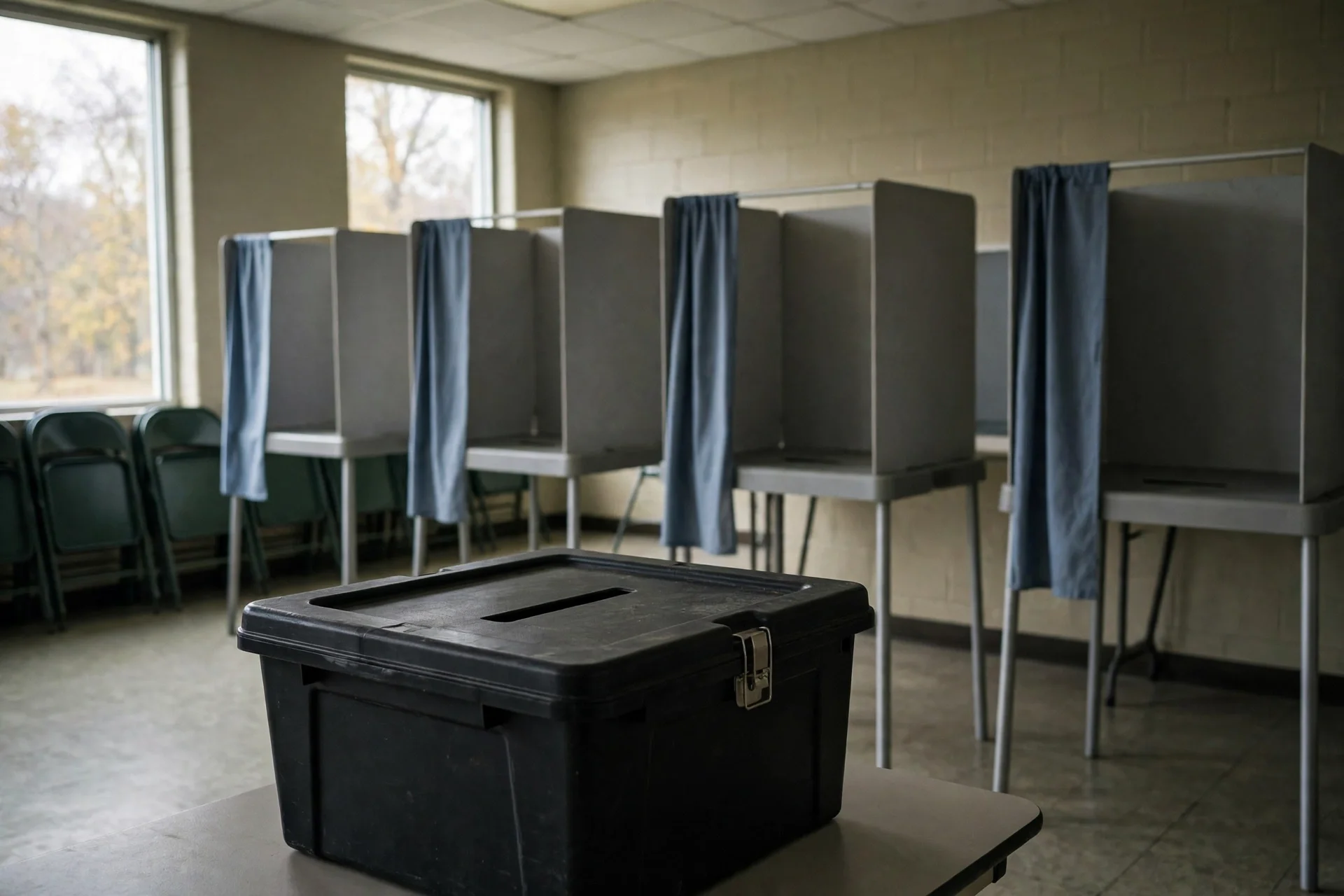
Imagen alusiva a un centro de votación en Kentucky. · Imagen generada para EPM
Canadian Citizen Charged With Illegal Voting in Federal Election
A grand jury charged Sandra Madeline Watson, a 59-year-old Canadian citizen living in Louisville, with illegally voting in a federal election knowing she was…
Federal Indictment in Kentucky Over Illegal Vote by Foreign National
A grand jury charged Sandra Madeline Watson, a 59-year-old Canadian citizen living in Louisville, with illegally voting in a federal election knowing she was…
--- The context ---
A federal indictment for illegal voting raises the balance between protecting electoral integrity and respecting the guarantees owed to an untried person.
--- The facts ---
A grand jury charged Canadian citizen Sandra Madeline Watson, 59, of Louisville, Kentucky, with illegal voting by an alien in a federal election, according to the announcement by the United States Attorney's Office for the Western District of Kentucky. According to the indictment, she voted for president, vice president, senator or representative knowing she was not a United States citizen, and she has appeared before a magistrate judge.
--- The positions ---
Prosecutors allege that the vote was cast knowingly without citizenship. But an indictment is merely an allegation, and every defendant is presumed innocent until proven guilty beyond a reasonable doubt.
--- What remains unknown ---
The source does not specify which election Watson voted in or in which year, nor does it provide a defense account or the schedule ahead.
--- Unanswered questions ---
In which election and in which year was that vote allegedly cast? What evidence will prosecutors present to show she acted knowing she was not a citizen? How will the defense respond before the court?
--- EPM analysis ---
The case is being investigated by Homeland Security Investigations of ICE and the FBI, with valuable assistance from USCIS. If convicted, Watson faces up to one year in prison; a federal judge will set any sentence under the guidelines and other statutory factors, with no federal parole.
📌 EPM Take: In EPM's view, this case should be read with a distinction between a charge and guilt, because the presumption of innocence protects every person while the process runs its course before the court. Holding to that guarantee does not prevent a rigorous examination of how the alleged vote was detected or which safeguards failed. Transparency on those points will strengthen public trust without turning an unproven allegation into an early conviction.
--- The context ---
Electoral integrity depends on only entitled citizens voting, and on every unlawful vote being investigated and, if proven, punished.
--- The facts ---
A grand jury charged Canadian citizen Sandra Madeline Watson, 59, of Louisville, Kentucky, with illegal voting by an alien in a federal election, according to the announcement by the United States Attorney's Office for the Western District of Kentucky. According to the indictment, she voted for president, vice president, senator or representative knowing she was not a United States citizen, and she has appeared before a magistrate judge.
--- The positions ---
Prosecutors present a claim: a federal vote cast by someone who knew she was not a citizen. Proving that claim falls to the court, where an indictment is merely an allegation and every defendant is presumed innocent.
--- What remains unknown ---
The source does not specify which election Watson voted in or in which year, nor does it detail how the vote was detected or the next steps.
--- Unanswered questions ---
In which election and in which year was that vote allegedly cast? What evidence did investigators gather that she voted knowing she was not a citizen? What measures will prevent its recurrence?
--- EPM analysis ---
The case is being investigated by Homeland Security Investigations of ICE and the FBI, with valuable assistance from USCIS. If convicted, Watson faces up to one year in prison; a federal judge will set any sentence under the guidelines and other statutory factors, with no federal parole.
📌 EPM Take: In EPM's view, protecting the vote requires firm action when an indictment alleges that a foreign national voted in a federal election knowing she was not a citizen, because each illegal vote weakens the equality of lawful votes. That firmness, however, must be exercised within the process and with evidence before the court. Only a resolution grounded in evidence will sustain confidence in the electoral system and in the application of the law.
Ciudadana canadiense acusada de votar ilegalmente en elección federal
Un gran jurado acusó a Sandra Madeline Watson, ciudadana canadiense de 59 años residente en Louisville, de votar ilegalmente en una elección federal sabiendo…
Acusación federal en Kentucky por voto ilegal de una extranjera
Un gran jurado acusó a Sandra Madeline Watson, ciudadana canadiense de 59 años residente en Louisville, de votar ilegalmente en una elección federal sabiendo…
--- El contexto ---
Una acusación federal por voto ilegal plantea el equilibrio entre proteger la integridad electoral y respetar las garantías de quien aún no ha sido juzgada.
--- Los hechos ---
Un gran jurado acusó a la canadiense Sandra Madeline Watson, de 59 años y residente en Louisville, Kentucky, por voto ilegal de una extranjera en una elección federal, según anunció la Fiscalía Federal del Distrito Oeste de Kentucky. Según la acusación, votó para elegir presidente, vicepresidente, senador o representante sabiendo que no era ciudadana estadounidense, y compareció ante un juez magistrado federal.
--- Las posiciones ---
La fiscalía sostiene que el voto se emitió a sabiendas de la falta de ciudadanía. Pero una acusación es solo una alegación y toda persona acusada se presume inocente hasta que se pruebe su culpabilidad más allá de duda razonable.
--- Lo que falta saber ---
La fuente no precisa en qué elección votó ni en qué año, ni aporta versión de la defensa ni calendario de próximas actuaciones.
--- Preguntas sin respuesta ---
¿En qué elección y en qué año se habría emitido ese voto? ¿Qué pruebas presentará la fiscalía para acreditar que actuó sabiendo que no era ciudadana? ¿Cómo responderá la defensa ante el tribunal?
--- Análisis EPM ---
Investigan Investigaciones de Seguridad Nacional de ICE y el FBI, con la valiosa asistencia de USCIS. Si es condenada, enfrenta hasta un año de prisión; un juez federal fijará la sentencia según las pautas y otros factores legales, sin libertad condicional federal.
📌 Conclusion EPM: A juicio de EPM, este caso debe leerse con una distinción entre acusación y culpabilidad, porque la presunción de inocencia protege a toda persona mientras el proceso sigue su curso ante el tribunal. Al mismo tiempo, sostener esa garantía no impide examinar con rigor cómo se detectó el voto ni qué controles fallaron. La transparencia sobre esos puntos fortalecerá la confianza sin convertir una alegación no probada en condena anticipada.
--- El contexto ---
La integridad de una elección federal depende de que solo voten quienes tienen derecho, y de que cada voto sin derecho sea investigado y, si se prueba, sancionado.
--- Los hechos ---
Un jurado acusó a la canadiense Sandra Madeline Watson, de 59 años y residente en Louisville, Kentucky, por voto ilegal de una extranjera en una elección federal, según anunció la Fiscalía Federal del Distrito Oeste de Kentucky. Según la acusación, votó para elegir presidente, vicepresidente, senador o representante sabiendo que no era ciudadana estadounidense, y compareció ante un juez magistrado federal.
--- Las posiciones ---
La fiscalía plantea un voto emitido por quien sabía que no era ciudadana. Acreditarlo corresponde al tribunal, donde una acusación es solo una alegación y toda persona acusada se presume inocente hasta probarse su culpabilidad.
--- Lo que falta saber ---
La fuente no precisa en qué elección votó ni en qué año, ni detalla cómo se detectó el voto ni los siguientes pasos.
--- Preguntas sin respuesta ---
¿En qué elección y en qué año se habría emitido el voto? ¿Qué evidencia reunieron los investigadores para sostener que votó a sabiendas de no ser ciudadana? ¿Qué medidas evitarán que un caso se repita?
--- Análisis EPM ---
Investigan Investigaciones de Seguridad Nacional de ICE y el FBI, con asistencia de USCIS. Si es condenada, enfrenta hasta un año de prisión; un juez federal fijará la sentencia según las pautas y otros factores legales, sin libertad condicional federal.
📌 Conclusion EPM: A juicio de EPM, proteger el voto exige actuar con firmeza cuando una acusación señala que una extranjera votó en una elección federal sabiendo que no era ciudadana, porque cada voto ilegal debilita la igualdad del voto legítimo. Esa firmeza, sin embargo, debe ejercerse dentro del proceso y con pruebas ante el tribunal. Solo una resolución fundada en evidencia sostendrá la confianza en el sistema electoral y en la aplicación igualitaria de la ley.