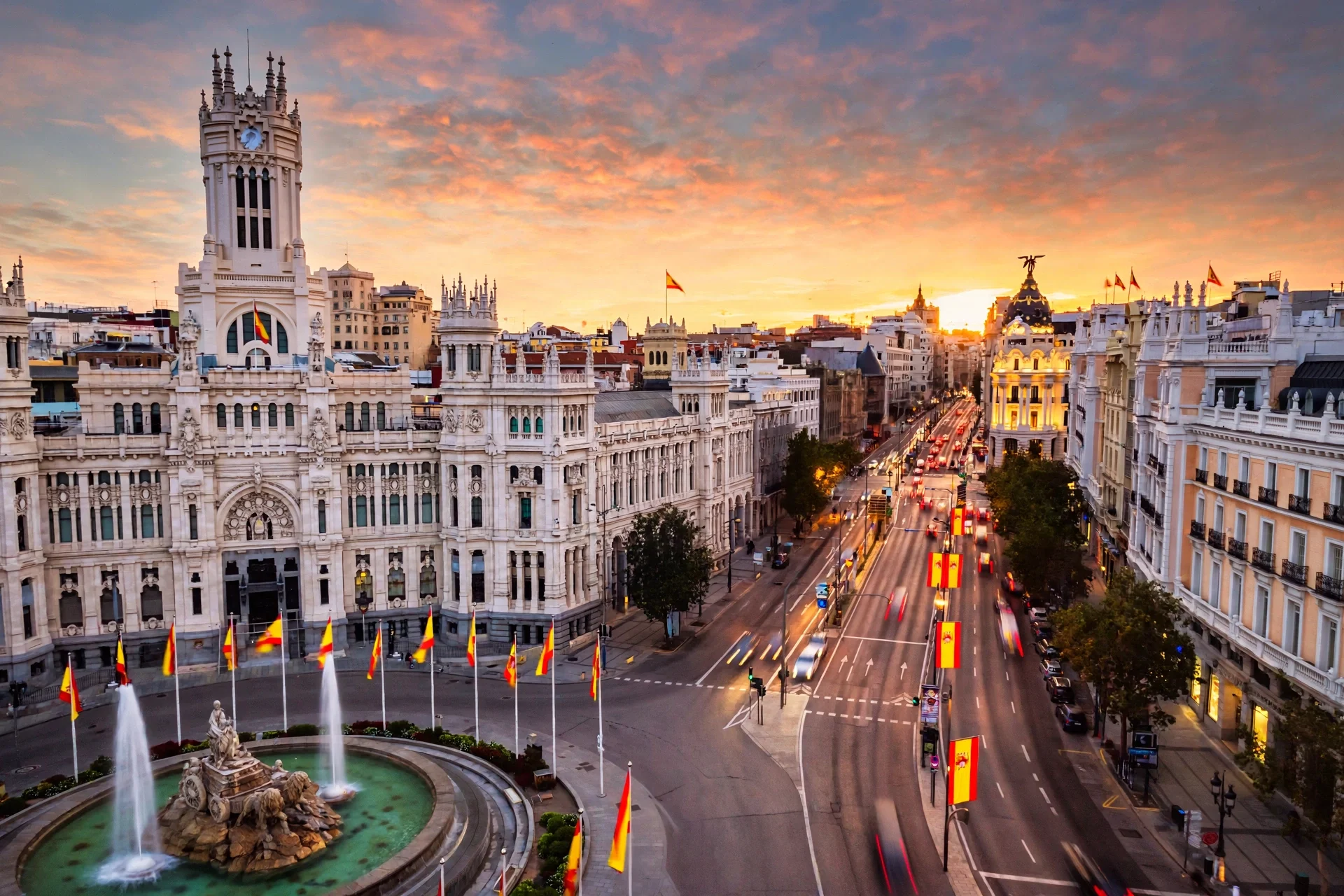
Vista del Palacio de Cibeles y la Gran Vía de Madrid al atardecer, con banderas de España. · Imagen generada para EPM
Albares asks that Spain be left alone during election period
Foreign Minister José Manuel Albares asked that Spain be left alone during the election period amid possible external interference, criticised the opposition…
Albares warns of interference but names no foreign forces
José Manuel Albares warned of external forces trying to divide Spaniards and Europeans but gave no names, citing the limits of his office.
--- The context ---
Spain is in an election period ahead of a vote on November 29 that the government itself presents as decisive for the country. In that atmosphere, any statement by a foreign leader about Spanish domestic affairs gains immediate resonance and feeds the debate between government and opposition.
The foreign minister spoke as Argentine President Javier Milei was visiting Spain and after United States President Donald Trump had again focused attention on the government handling of the Ceuta crisis.
--- The facts ---
Foreign Minister José Manuel Albares called in televised remarks for Spain and Spaniards to be left alone during the election period in the face of possible external interference. He argued that external forces are trying to divide Spaniards and Europeans, and that interference has been confirmed in all recent electoral processes.
Albares stressed that the decision will be taken sovereignly and exclusively by Spaniards, and he criticised the opposition for cheering on those who try to meddle in the vote. In his view, forces that lend themselves to allowing such interference should be punished at the ballot box, because that is not the democratic game.
--- The positions ---
On the Milei visit, the minister explained that it is private in nature and that, although Milei is probably the Ibero-American president who has visited Spain most often while in office, on no occasion has he met King Felipe VI or Prime Minister Pedro Sánchez. His presence at the Ibero-American Summit in Madrid on November 4 and 5 is not yet confirmed either.
Albares recalled that the Argentine leader has met leaders of the PP, mentioning the decoration awarded by the president of the Community of Madrid, Isabel Díaz Ayuso, and also leaders of Vox, with whom he shares an ideological agenda.
--- What remains unknown ---
Asked who those external forces are, Albares declined to give names because, he explained, as foreign minister he is limited in what he can say. He pointed to cases in Romania and in Germany, said Spain will not be the exception, and spoke of state actors and non-state actors.
--- Unanswered questions ---
Which specific external forces are trying to interfere in the Spanish vote according to the government? What evidence can be made public without compromising the position of the foreign minister? How will voters respond to the forces accused of lending themselves to such interference?
--- EPM analysis ---
The minister framed Trump criticism over Ceuta within an electoral context in the United States, where midterm elections will be held on November 3. Trump had denounced that the government did nothing after the influx of thousands of migrants at the end of July in Ceuta, and Albares said those words do not correspond with reality.
For Albares, what is concerning is the shared outlook among those who meet Milei in Spain, linked to cuts to the welfare state and to pensions. He described the vote as the most crucial in the history of Spain because, for the first time since the end of the Franco dictatorship, the far right could return to government in coalition.
📌 EPM Take: In EPM's view, the warning from Albares places the defence of electoral sovereignty at the centre of the campaign and turns every foreign gesture into a first-order domestic issue. The minister is right to recall that the decision belongs only to Spaniards, but his refusal to give names leaves the denunciation on ground that is difficult for voters to verify. Protecting the process will require clear evidence and sustained transparency from the government itself.
--- The context ---
Spain faces a vote on November 29 in a climate of high polarisation, where the government has placed possible external interference at the centre of public debate. In that context, words by foreign leaders about Spain are inevitably read in electoral terms by all sides.
Foreign Minister José Manuel Albares spoke in televised remarks as Argentine President Javier Milei was visiting Spain and after United States President Donald Trump spoke about the government handling of the Ceuta crisis.
--- The facts ---
Albares called for Spain to be left alone during the election period in the face of possible external interference, and he reproached the opposition for cheering on those who try to meddle in the vote. He said external forces are trying to divide Spaniards and Europeans, with interference confirmed in all recent electoral processes.
The minister stressed that the decision will be taken sovereignly and exclusively by Spaniards. He also argued that political forces that lend themselves to allowing interference and applauding it must be punished at the ballot box by Spaniards, because that is not the democratic game.
--- The positions ---
On Milei, the minister own account provides data that qualify the alarm: the visit is private in nature, includes no official meeting, and on none of his visits has the Argentine president met King Felipe VI or Prime Minister Pedro Sánchez. His presence at the Ibero-American Summit in Madrid on November 4 and 5 is not confirmed either.
Albares recalled Milei contacts with leaders of the PP, mentioning the decoration awarded by the president of the Community of Madrid, Isabel Díaz Ayuso, and his meetings with leaders of Vox, with whom he shares an ideological agenda. He described the elections as the most crucial in the history of Spain because, for the first time since the end of the Franco dictatorship, the far right could return to government in coalition.
--- What remains unknown ---
The weakest point of the denunciation is its specificity: asked for the names of the external forces, Albares declined to give them, saying that as foreign minister he is limited in what he can say. He cited cases in Romania and in Germany and spoke of state actors and non-state actors, without identifying any specific actor regarding Spain.
--- Unanswered questions ---
Which specific external actor has tried to interfere in the Spanish vote on November 29? Why does the government provide no names or evidence if it considers the threat so evident? How does a private visit without official meetings differ from effective electoral interference?
--- EPM analysis ---
On Ceuta, Trump denounced that the government did nothing after the influx of thousands of migrants at the end of July, and Albares framed that criticism within the electoral context in the United States, with midterm elections on November 3, saying it does not correspond with reality. That reading adds context, but it does not replace a detailed account of the crisis management.
A private visit by a foreign president and his meetings with Spanish parties belong to ordinary ideological debate, unless real and documented interference is proven.
📌 EPM Take: In EPM's view, defending that Spain alone should decide is an impeccable principle, but an accusation of interference without names or evidence risks functioning as a campaign argument rather than verifiable information for voters. The data provided by the minister himself show a private visit, without official meetings and without confirmed presence at the Madrid summit, which demands more precision before speaking of meddling. Criticism of any side requires concrete and verifiable facts.
Albares pide dejar tranquila a España en periodo electoral
El ministro José Manuel Albares pidió dejar tranquila a España en periodo electoral ante posibles injerencias externas, criticó que la oposición jalee a…
Albares alerta de injerencias sin dar nombres de fuerzas externas
José Manuel Albares alertó de fuerzas externas que intentan dividir a españoles y europeos, pero no dio nombres alegando límites de su cargo.
--- El contexto ---
España se encuentra en periodo electoral con unos comicios el 29 de noviembre que el propio Gobierno presenta como decisivos. Todo pronunciamiento extranjero se lee en clave electoral.
La intervención del ministro de Asuntos Exteriores se produjo coincidiendo con la visita a España del presidente argentino, Javier Milei, y después de que el presidente estadounidense, Donald Trump, volviera a poner el foco sobre la gestión del Gobierno en la crisis de Ceuta.
--- Los hechos ---
El ministro José Manuel Albares reclamó en declaraciones televisivas que se deje tranquila a España y a los españoles durante el periodo electoral ante las injerencias externas que puedan producirse. Sostuvo que hay fuerzas externas que intentan dividir a los españoles y a los europeos, y que se han constatado interferencias en todos los procesos electorales recientes.
Albares subrayó que la decisión la tomarán soberanamente y exclusivamente los españoles, y criticó que desde la oposición se jaleara a quienes tratan de inmiscuirse en los comicios. A su juicio, las fuerzas que se prestan a permitir esas injerencias deberían ser sancionadas en las urnas, porque ese no es el juego democrático.
--- Las posiciones ---
Sobre la visita de Milei, el ministro explicó que tiene carácter privado y que, aunque probablemente es el presidente iberoamericano que más veces ha visitado España en ejercicio, en ninguna ocasión ha mantenido encuentros ni con el Rey Felipe VI ni con el presidente del Gobierno, Pedro Sánchez. Tampoco está confirmada su presencia en la Cumbre Iberoamericana de Madrid del 4 y 5 de noviembre.
Albares recordó que el mandatario argentino se ha reunido con dirigentes del PP, mencionando la condecoración impuesta por la presidenta de la Comunidad de Madrid, Isabel Díaz Ayuso, y también con dirigentes de Vox, con quienes comparte agenda ideológica.
--- Lo que falta saber ---
Preguntado por quiénes son esas fuerzas externas, Albares no quiso dar nombres porque, según explicó, como ministro de Exteriores está limitado en lo que puede decir. Señaló casos en Rumanía y en Alemania, afirmó que España no va a ser la excepción y habló de actores estatales y actores no estatales.
--- Preguntas sin respuesta ---
¿Qué fuerzas externas concretas intentan interferir en los comicios españoles según el Gobierno? ¿Qué pruebas pueden hacerse públicas sin comprometer la posición del ministro? ¿Qué respuesta tendrán en las urnas las fuerzas señaladas por prestarse a esas injerencias?
--- Análisis EPM ---
El ministro enmarcó las críticas de Trump sobre Ceuta en un contexto electoral en Estados Unidos, donde el próximo 3 de noviembre se celebran elecciones de medio mandato. Trump había denunciado que el Gobierno no hizo nada tras la avalancha de miles de migrantes a finales de julio en Ceuta, y Albares aseguró que esas palabras no se compadecen con la realidad.
Para Albares, lo preocupante es el ideario compartido entre quienes se reúnen con Milei en España, vinculado al recorte del Estado del bienestar y de las pensiones. Calificó los comicios como los más cruciales de la historia de España porque, por primera vez desde el final de la dictadura franquista, la extrema derecha podría volver en coalición al Gobierno.
📌 Conclusion EPM: A juicio de EPM, la advertencia de Albares coloca la defensa de la soberanía electoral en el centro de la campaña y convierte cada gesto extranjero en un asunto interno de primer orden. El ministro acierta al recordar que la decisión corresponde solo a los españoles, pero su negativa a dar nombres deja la denuncia en un terreno difícil de verificar para el votante. Proteger el proceso exigirá pruebas y transparencia sostenida.
--- El contexto ---
España afronta unos comicios el 29 de noviembre en un clima de alta polarización, donde el Gobierno ha situado la posible injerencia externa como eje del debate público. En ese contexto, las palabras de líderes extranjeros sobre España se leen inevitablemente en clave electoral.
El ministro José Manuel Albares intervino en declaraciones televisivas coincidiendo con la visita a España del presidente argentino, Javier Milei, y tras las palabras del presidente estadounidense, Donald Trump, sobre la gestión del Gobierno en la crisis de Ceuta.
--- Los hechos ---
Albares reclamó que se deje tranquila a España en periodo electoral ante las injerencias externas que puedan producirse, y afeó que desde la oposición se jaleara a quienes tratan de inmiscuirse en los comicios. Afirmó que hay fuerzas externas que intentan dividir a españoles y europeos, con interferencias constatadas en todos los procesos electorales recientes.
El ministro recalcó que la decisión la tomarán soberanamente y exclusivamente los españoles. Defendió además que las fuerzas políticas que se prestan a permitir las injerencias y a jalearlas deben ser sancionadas en las urnas por los españoles, porque ese no es el juego democrático.
--- Las posiciones ---
Sobre Milei, la propia exposición del ministro aporta datos que matizan la alarma: la visita tiene carácter privado, no incluye ningún encuentro oficial y, en ninguna de sus visitas, el presidente argentino se ha reunido ni con el Rey Felipe VI ni con el presidente del Gobierno, Pedro Sánchez. Tampoco está confirmada su presencia en la Cumbre Iberoamericana de Madrid del 4 y 5 de noviembre.
Albares recordó los contactos de Milei con dirigentes del PP, mencionando la condecoración impuesta por la presidenta de la Comunidad de Madrid, Isabel Díaz Ayuso, y sus reuniones con Vox, con quienes comparte agenda ideológica. Calificó las elecciones como las más cruciales de la historia de España porque, por primera vez desde el final de la dictadura franquista, la extrema derecha podría volver en coalición al Gobierno.
--- Lo que falta saber ---
El punto más débil de la denuncia es su concreción: preguntado por los nombres de las fuerzas externas, Albares no quiso darlos alegando que como ministro está limitado en lo que puede decir. Citó casos en Rumanía y en Alemania y habló de actores estatales y no estatales, sin identificar ningún actor concreto respecto a España.
--- Preguntas sin respuesta ---
¿Qué actor externo concreto ha intentado interferir en los comicios españoles del 29 de noviembre? ¿Por qué el Gobierno no aporta nombres ni pruebas si considera la amenaza tan evidente? ¿En qué se diferencia una visita privada sin encuentros oficiales de una injerencia efectiva?
--- Análisis EPM ---
Respecto a Ceuta, Trump denunció que el Gobierno no hizo nada tras la avalancha de miles de migrantes a finales de julio, y Albares enmarcó esas críticas en el contexto electoral estadounidense, con elecciones de medio mandato el próximo 3 de noviembre, asegurando que no se compadecen con la realidad. Esa lectura aporta contexto, pero no sustituye una rendición de cuentas detallada.
La visita privada de un presidente extranjero y sus reuniones con partidos españoles pertenecen al debate ideológico ordinario, salvo que se acredite una interferencia real y documentada.
📌 Conclusion EPM: A juicio de EPM, defender que España decida sola es un principio impecable, pero una acusación de injerencia sin nombres ni pruebas corre el riesgo de funcionar como argumento de campaña antes que como información verificable. Los datos aportados por el propio ministro muestran una visita privada, sin encuentros oficiales y sin presencia confirmada en la cumbre de Madrid, lo que exige más precisión antes de hablar de inmiscusión. La crítica exige hechos concretos.