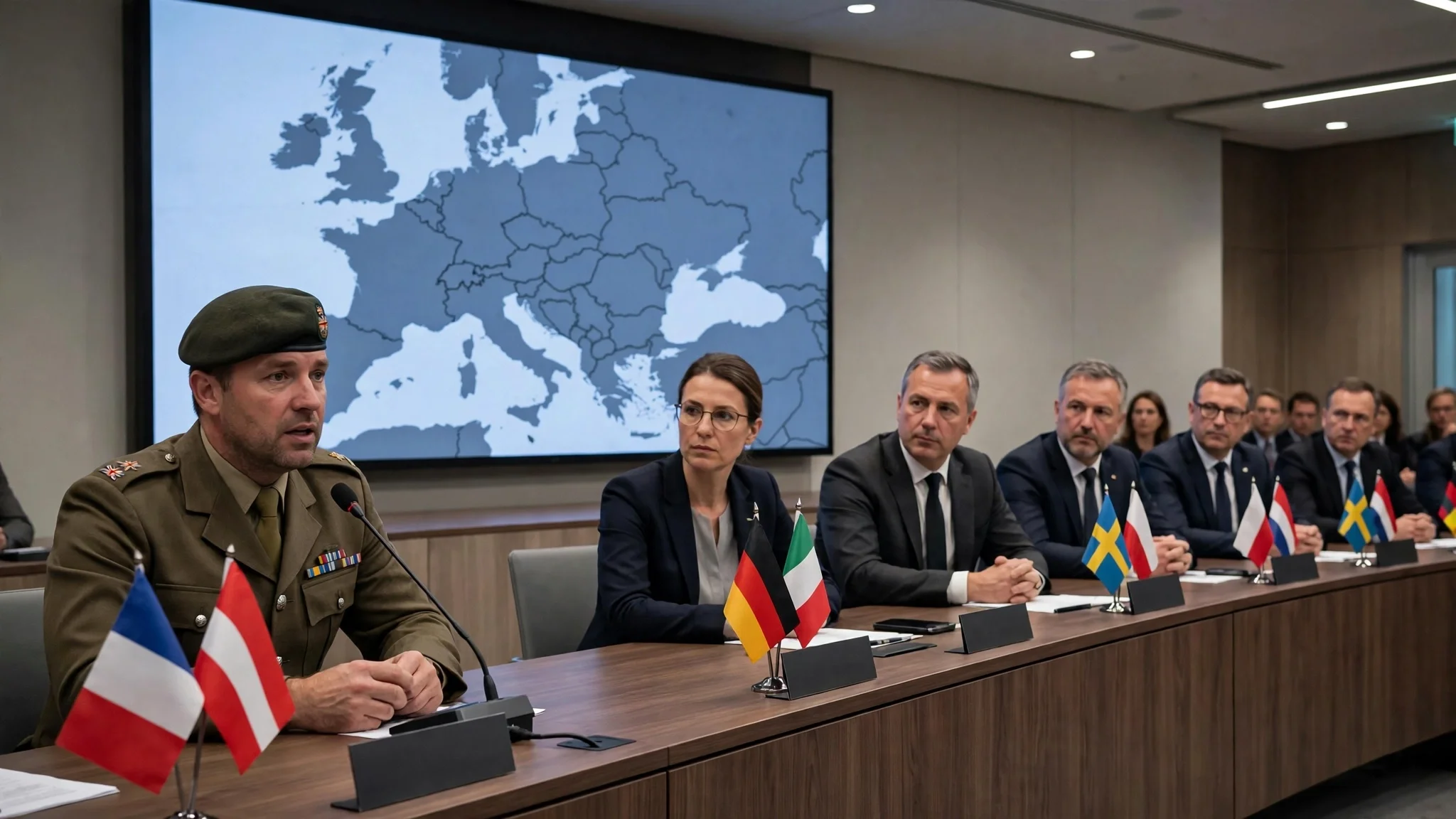
Sala de un foro diplomático multilateral en Europa, imagen alusiva a la declaración británica ante la OSCE. · Imagen generada para EPM
UK accuses Russia of exploiting foreign recruits at OSCE
The United Kingdom told the OSCE that Russia recruits foreigners through deception and coercion, citing Amnesty International and United States reporting, and…
London defends legality of foreign volunteers for Ukraine
The United Kingdom told the OSCE that foreigners enlisted in Ukraine are lawful combatants, challenged Russian recruitment as coercive and called for a full…
--- The context ---
The United Kingdom reaffirmed at the OSCE Forum its support for Ukraine's sovereignty and territorial integrity within its recognised borders, and for a just and lasting peace. Colonel Joby Rimmer, the British senior military adviser, delivered the statement and expressed solidarity with Romania after its F-16 aircraft shot down two Geran drones that entered its airspace on Saturday.
--- The facts ---
The intervention answered claims made last week by the Russian delegation, which said Ukraine recruits foreign mercenaries in violation of international law, that over 20,000 foreign nationals have fought for Ukraine and that strikes against them would continue. London replied that those foreigners are formally enlisted in the Armed Forces of Ukraine, that they are lawful combatants under international humanitarian law rather than mercenaries, and that they are exercising self-defence under Article 51 of the UN Charter.
Russia acknowledged that foreigners sign contracts with its Ministry of Defence and obtain Russian citizenship. Research by Amnesty International published in September, drawing on interviews with recruits from Brazil, Colombia, Cuba, Egypt, Sierra Leone, Somalia, South Africa and Sri Lanka, documented false promises of civilian work, contracts recruits could not read, confiscated passports, minimal training and threats, and assessed that in many cases this may amount to trafficking under the UN Palermo Protocol.
--- The positions ---
The British position describes the Russian model as coercive and exploitative, adding that migrants who had overstayed their visas or faced criminal charges were also offered military service as an alternative to detention or deportation. It cited the United States 2026 Trafficking in Persons Report, published this month, describing fraudulent recruitment of more than one thousand Kenyan men, warnings from Botswana and Kenya, and the ODIHR Ninth Interim Report identifying alleged predatory recruitment as a new finding.
--- What remains unknown ---
It remains unknown how many foreigners serve in Russia's Armed Forces or what safeguards ensure their consent. There is no public explanation for the increase in authorised strength ordered by Putin on 28 September, the fourth this year, and no verifiable information on contract comprehension or routes to leave service.
--- Unanswered questions ---
How many foreign nationals currently serve in Russia's Armed Forces? What measures guarantee free and informed consent and real understanding of the contracts they sign? Can they leave military service in accordance with the law? Will the Russian delegation answer these questions at the Forum?
--- EPM analysis ---
The contrast drawn by London is both legal and human. On one side stands formal enlistment presented as an exercise of self-defence; on the other, recruitment that, on the evidence cited, relies on migratory precarity and false promises. If sustained, that difference affects the protection owed to thousands of people far from home.
📌 EPM Take: In EPM's view, the British statement shifts the debate from the number of fighters toward the conditions under which each state incorporates them, and there the legal difference between formal enlistment and deceptive recruitment becomes decisive for assessing responsibility. If the patterns described by affected governments and international bodies are confirmed, the issue will cease to be only military and will move into the field of trafficking and protection of vulnerable migrants, with diplomatic consequences that Russia should face through verifiable answers rather than prolonged institutional silence today.
--- The context ---
The United Kingdom reaffirmed at the OSCE Forum its unwavering support for Ukraine's sovereignty, independence and territorial integrity within its recognised borders, and for a just and lasting peace. Colonel Joby Rimmer, the British senior military adviser, delivered the statement and expressed solidarity with Romania after its F-16 aircraft shot down two Geran drones that had intruded into its airspace on Saturday.
--- The facts ---
Last week the Russian delegation told the Forum that Ukraine actively recruits foreign mercenaries in violation of international law, claimed that over 20,000 foreign nationals have fought for Ukraine and said strikes against them would continue. London answered that those foreigners are formally enlisted in the Armed Forces of Ukraine, that under international humanitarian law they are lawful combatants and not mercenaries, and that they help Ukraine exercise its inherent right of self-defence under Article 51 of the UN Charter against a war Russia started.
Russia acknowledged that foreign citizens sign contracts with its Ministry of Defence and obtain Russian citizenship. Research by Amnesty International published in September, based on interviews with recruits from Brazil, Colombia, Cuba, Egypt, Sierra Leone, Somalia, South Africa and Sri Lanka, documented false promises of civilian work, unreadable contracts, confiscated passports, minimal training and threats, and assessed that in many cases this may constitute trafficking under the UN Palermo Protocol.
--- The positions ---
On that basis, the Russian model was described as coercive and exploitative, including the use of migrants who had overstayed visas or faced criminal charges and were offered military service as the alternative to detention or deportation. The statement also cited the United States 2026 Trafficking in Persons Report, published this month, on more than one thousand Kenyan men, Kenya's foreign minister, Botswana's warning and the ODIHR Ninth Interim Report, which identified alleged predatory recruitment as a new finding.
--- What remains unknown ---
Official Russian figures on foreigners in the ranks are still missing, as are public guarantees on consent, contract understanding and lawful departure from service. Nor was any public explanation offered when Putin increased the authorised strength of Russia's Armed Forces on 28 September for the fourth time this year.
--- Unanswered questions ---
How many foreign nationals currently serve in Russia's Armed Forces? What measures ensure they give free and informed consent and understand the contracts they sign? Are they able to leave military service in accordance with the law? Will Russia agree to a full, immediate and unconditional ceasefire as London demands?
--- EPM analysis ---
British firmness rests on an elementary distinction: serving under a regular command is not the same as being recruited through deception. Upholding that difference protects the legality of Ukraine's defence and the discipline required of any army. Without verifiable Russian answers, the charge of exploitation will continue to weigh on Moscow.
📌 EPM Take: In EPM's view, the British intervention defends a principle of order that should be preserved: those who serve under a regular chain of command, with formal enlistment and clear rules, cannot be equated with those recruited through deception or migratory pressure. Ukrainian sovereignty and European stability require that this distinction be upheld without ambiguity, and that Moscow respond with concrete data on consent and contracts, because the credibility of any armed force begins with the legality of its own internal recruitment practices and discipline.
Reino Unido acusa a Rusia de explotar a reclutas extranjeros
El Reino Unido denunció ante la OSCE que Rusia recluta extranjeros con engaños y coerción, citó informes de Amnistía Internacional y de Estados Unidos, y…
Londres defiende la legalidad de los voluntarios en Ucrania
El Reino Unido sostuvo ante la OSCE que los extranjeros alistados en Ucrania son combatientes legítimos, cuestionó el reclutamiento ruso por coercitivo y pidió…
--- El contexto ---
El Reino Unido reafirmó ante el Foro de la OSCE su apoyo a la soberanía e integridad territorial de Ucrania dentro de sus fronteras reconocidas. La declaración, del coronel Joby Rimmer, asesor militar sénior británico, expresó solidaridad con Rumanía, cuyos F-16 derribaron el sábado dos drones Geran que entraron en su espacio aéreo.
--- Los hechos ---
La intervención respondió a lo afirmado la semana pasada por la delegación rusa, que sostuvo que Ucrania recluta mercenarios extranjeros en violación del derecho internacional, que más de veinte mil extranjeros han luchado por Ucrania y que los ataques contra ellos continuarían. Londres replicó que esos extranjeros están formalmente alistados en las Fuerzas Armadas de Ucrania, que son combatientes legítimos según el derecho internacional humanitario y que ejercen la legítima defensa prevista en el Artículo 51 de la Carta de la ONU.
Frente a ello, la declaración señaló que Rusia reconoció que los extranjeros firman contratos con su Ministerio de Defensa y obtienen la ciudadanía rusa. Una investigación de Amnistía Internacional publicada en septiembre, con entrevistas a reclutas de Brasil, Colombia, Cuba, Egipto, Sierra Leona, Somalia, Sudáfrica y Sri Lanka, documentó falsas promesas de trabajo civil, contratos que no podían leer, pasaportes confiscados, entrenamiento mínimo y amenazas, y evaluó que en muchos casos podría tratarse de trata de personas según el Protocolo de Palermo.
--- Las posiciones ---
La posición británica califica el modelo ruso de coercitivo y explotador, y añade que se explotó a migrantes con visados vencidos o con cargos penales, a quienes se ofreció el servicio militar como alternativa a la detención o la deportación. Citó el Informe sobre Trata de Personas 2026 de Estados Unidos, publicado este mes, sobre más de mil kenianos reclutados con engaños, la advertencia de Botsuana y el Noveno Informe Provisional de la ODIHR.
--- Lo que falta saber ---
No se conoce cuántos extranjeros sirven hoy en Rusia ni qué controles garantizan su consentimiento. Tampoco hay explicación pública del aumento de dotación decretado por Putin el 28 de septiembre, la cuarta ampliación de este año, ni datos sobre comprensión de contratos o vías para dejar el servicio.
--- Preguntas sin respuesta ---
¿Cuántos extranjeros sirven hoy en las Fuerzas Armadas de Rusia? ¿Qué medidas garantizan que presten un consentimiento libre e informado y comprendan los contratos que firman? ¿Pueden dejar el servicio conforme a la ley cuando así lo deciden? ¿Responderá la delegación rusa a estas preguntas en el Foro?
--- Análisis EPM ---
El contraste de Londres es jurídico y humano. De un lado, un alistamiento formal presentado como legítima defensa; del otro, una captación que, según la evidencia citada, se apoya en la precariedad migratoria y en promesas falsas.
📌 Conclusion EPM: A juicio de EPM, la denuncia británica desplaza el debate desde el número de combatientes hacia las condiciones en que cada Estado los incorpora, y ahí la diferencia jurídica entre alistamiento formal y captación engañosa resulta decisiva para valorar responsabilidades. Si los patrones descritos por gobiernos afectados y organismos internacionales se confirman, el problema dejará de ser solo militar y pasará al terreno de la trata y la protección de migrantes vulnerables, con consecuencias diplomáticas que Rusia debería afrontar con respuestas verificables y no con silencio institucional prolongado.
--- El contexto ---
El Reino Unido reafirmó ante el Foro de la OSCE su respaldo a la soberanía e integridad territorial de Ucrania dentro de sus fronteras reconocidas, y defendió una paz justa y duradera. La declaración la pronunció el coronel Joby Rimmer, asesor militar sénior británico, quien expresó solidaridad con Rumanía después de que sus F-16 derribaran el sábado dos drones Geran intrusos.
--- Los hechos ---
La semana pasada, la delegación rusa afirmó que Ucrania recluta mercenarios extranjeros en violación del derecho internacional, que más de veinte mil extranjeros han luchado por Ucrania y que los ataques contra ellos continuarían. Londres respondió que esos extranjeros están formalmente alistados en las Fuerzas Armadas de Ucrania, que son combatientes legítimos según el derecho internacional humanitario, no mercenarios, y que ejercen la legítima defensa del Artículo 51 de la Carta de la ONU.
La declaración recordó que Rusia reconoció que los extranjeros firman contratos con su Ministerio de Defensa y obtienen la ciudadanía rusa. Una investigación de Amnistía Internacional publicada en septiembre, con entrevistas a reclutas de Brasil, Colombia, Cuba, Egipto, Sierra Leona, Somalia, Sudáfrica y Sri Lanka, documentó falsas promesas de trabajo civil, contratos que no podían leer, pasaportes confiscados, entrenamiento mínimo y amenazas, y evaluó que en muchos casos podría haber trata según el Protocolo de Palermo.
--- Las posiciones ---
El modelo ruso fue calificado de coercitivo y explotador, también por el uso de migrantes con visados vencidos o con cargos penales, a quienes se ofreció el servicio militar como alternativa a la detención o la deportación. Se sumó el Informe sobre Trata de Personas 2026 de Estados Unidos, publicado este mes, sobre más de mil kenianos reclutados con engaños, la postura del ministro de Exteriores de Kenia, la advertencia de Botsuana y el hallazgo de la ODIHR en su Noveno Informe Provisional.
--- Lo que falta saber ---
Faltan cifras rusas sobre extranjeros en filas y garantías públicas sobre consentimiento, lectura de contratos y salida legal del servicio. Tampoco se explicó por qué Putin aumentó el 28 de septiembre, por cuarta vez este año, la dotación autorizada de las Fuerzas Armadas rusas.
--- Preguntas sin respuesta ---
¿Cuántos extranjeros sirven hoy en las Fuerzas Armadas de Rusia? ¿Qué medidas aseguran su consentimiento libre e informado y la comprensión real de sus contratos? ¿Pueden abandonar el servicio conforme a la ley? ¿Aceptará Rusia un alto el fuego completo, inmediato e incondicional como pide Londres?
--- Análisis EPM ---
La firmeza británica se apoya en una distinción elemental: servir bajo mando regular no equivale a ser captado mediante engaño. Defender esa diferencia protege la legalidad de la defensa ucraniana y la disciplina exigible a cualquier ejército. Sin respuestas rusas verificables, la acusación seguirá pesando sobre Moscú.
📌 Conclusion EPM: A juicio de EPM, la intervención británica defiende un principio de orden que conviene preservar: quien sirve bajo una cadena de mando regular, con alistamiento formal y reglas claras, no puede equipararse a quien es captado con engaños o bajo presión migratoria. La soberanía ucraniana y la estabilidad europea exigen que esa distinción se sostenga sin ambigüedades, y que Moscú responda con datos concretos sobre consentimiento y contratos, porque la credibilidad de cualquier fuerza armada empieza por la legalidad de su propio reclutamiento interno.