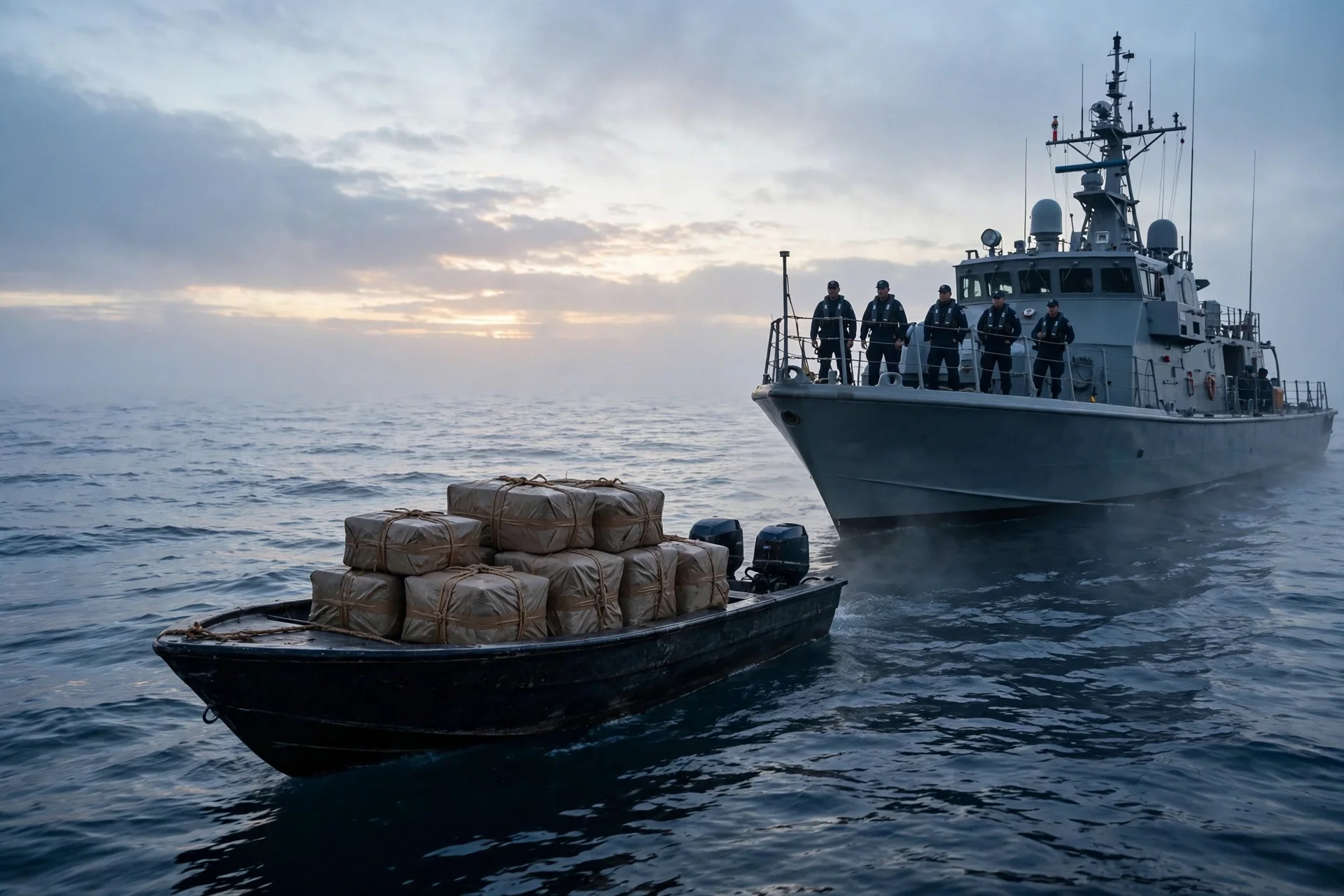
Intercepción naval de una lancha con paquetes incautados en el Pacífico. · Imagen generada por EPM
Nicaragua seizes 499 cocaine packages from a boat off Pochomil
Nicaragua's Naval Force intercepted the boat Nazareth off Pochomil and seized 499 rectangular packages of cocaine and three fuel barrels.
Naval patrol stops boat carrying 499 cocaine packages in the Pacific
Nicaraguan naval and police troops intercepted the boat Nazareth off Pochomil on October 20 after warning shots.
--- The context ---
Nicaragua's Pacific coastline, off the department of Managua, was the scene of an operation against maritime drug transport. The boat was traveling from south to north when surface units detected it during naval patrols near Pochomil, in the municipality of San Rafael del Sur.
There was a large seizure and one arrest, but also two occupants beyond the reach of the authorities and basic questions left unresolved by the official statement.
--- The facts ---
The action took place on October 20 in an operation by troops of the Pacific Naval District and the Second Battalion of Naval Troops of the Naval Force, together with National Police officers. The boat, named Nazareth, was detected 1.5 nautical miles west of Pochomil.
Noticing the naval presence, the boat tried to flee and the troops fired warning shots near Salamina beach. The military detained Segundo U., aged 59; the other two occupants threw themselves into the sea and abandoned the boat. Inspectors found 499 rectangular packages of cocaine and three fuel barrels, at a point 15 nautical miles northwest of Masachapa.
--- The positions ---
According to the Army's official version, this was an interception carried out during naval patrols, and the detainee, the drugs, the boat and the other seized items were placed at the disposal of the competent authorities. The information released includes no statements by the detainee.
--- What remains unknown ---
The official text did not state the total weight or whether there was laboratory testing. It also did not establish the boat's point of departure or its possible destination, or whether a search was deployed for the two occupants who escaped.
--- Unanswered questions ---
Was a search deployed at sea to locate the two occupants who jumped into the water? What is the total weight and purity of the cocaine contained in the 499 packages? Which institution took over the investigation, and was a case file opened over the incident?
--- EPM analysis ---
The seizure shows detection capacity along the coast, but transparency is an inseparable part of the result. Without a reported weight, without confirmed laboratory tests and without data on the search for the fugitives, citizens receive a striking figure and very little accountability.
📌 EPM Take: In EPM's view, intercepting a boat carrying 499 packages deserves operational recognition, but also an immediate obligation of verifiable transparency. The authorities should publish the total weight, the laboratory results, the judicial destination of the detainee Segundo U. and the real scope of the search for the two fugitives. A seizure is judged by the drugs removed, but also by the information the state delivers afterwards: without those data, the success remains incomplete and public trust is weakened.
--- The context ---
Nicaragua's Pacific coast is a sensitive route for the maritime movement of drugs, and guarding it demands constant naval presence. Off the department of Managua, in waters of San Rafael del Sur, a boat traveling from south to north was detected by surface units on patrol, near Pochomil and Masachapa.
The operation struck that route: the boat ended up in the authorities' hands, its cargo was seized and one occupant was detained, although two others escaped by throwing themselves into the sea.
--- The facts ---
The action took place on October 20 and brought together troops of the Pacific Naval District and the Second Battalion of Naval Troops of the Naval Force, together with National Police officers. The boat, named Nazareth, was detected 1.5 nautical miles west of Pochomil.
Noticing the patrols, the boat tried to flee. The troops fired warning shots near Salamina beach and detained Segundo U., aged 59; the other two occupants threw themselves into the sea and abandoned the boat. Inspectors found 499 rectangular packages of cocaine and three fuel barrels, at a point 15 nautical miles northwest of Masachapa.
--- The positions ---
The Army presented the action as an interception achieved during its naval patrols and stated that the detainee, the drugs, the boat and the other seized items were placed at the disposal of the competent authorities. The official information did not disclose the identities of the two occupants who escaped.
--- What remains unknown ---
The statement did not give the total weight or whether there was laboratory testing. It also did not establish the boat's point of departure or its possible destination, any links between the cargo and a drug trafficking structure, or its estimated value.
--- Unanswered questions ---
Is the search still active for the two occupants who escaped by jumping into the sea? Will there be firm judicial consequences for the detainee Segundo U., aged 59? Will permanent surveillance be reinforced along the stretch between Pochomil and Masachapa after this interception?
--- EPM analysis ---
When a boat flees a patrol and stops only after warning shots, the firm response of the naval force is what protects the coastline. Seizing 499 packages and three fuel barrels reduces the movement capacity of those who use that route and signals state presence along the shore.
📌 EPM Take: In EPM's view, this operation shows that constant surveillance and a determined reaction work: a route was interrupted, a cargo of 499 packages was taken out of circulation and a detainee was placed at the disposal of the competent authorities. What must follow is sustaining that firmness with permanent patrols in the Pacific, pursuing the two escaped occupants without pause and applying the full weight of the law to the detainee. Coastal security is defended with presence, authority and repeated results.
Nicaragua incauta 499 paquetes de cocaína en una lancha frente a Pochomil
La Fuerza Naval de Nicaragua interceptó la embarcación Nazareth frente a Pochomil y decomisó 499 paquetes rectangulares de cocaína y tres barriles de…
La Fuerza Naval detiene una lancha con 499 paquetes de cocaína en el Pacífico
Tropas navales y policiales de Nicaragua interceptaron el 20 de octubre la lancha Nazareth frente a Pochomil tras disparos de advertencia.
--- El contexto ---
El litoral del Pacífico nicaragüense, frente al departamento de Managua, fue escenario de un operativo contra el transporte marítimo de droga. La embarcación navegaba de sur a norte cuando las unidades de superficie la detectaron cerca de Pochomil, en el municipio de San Rafael del Sur.
Hubo un decomiso cuantioso y un detenido, pero también dos ocupantes fuera del alcance de las autoridades y preguntas básicas sin resolver.
--- Los hechos ---
La acción ocurrió el 20 de octubre en un operativo de tropas del Distrito Naval Pacífico y del Segundo Batallón de Tropas Navales de la Fuerza Naval, junto con efectivos de la Policía Nacional. La embarcación, llamada Nazareth, fue detectada a 1,5 millas náuticas al oeste de Pochomil.
Al advertir la presencia naval, la lancha intentó huir y las tropas efectuaron disparos de advertencia frente a playa Salamina. Los militares detuvieron a Segundo U., de 59 años; los otros dos ocupantes se lanzaron al mar y abandonaron la embarcación. La inspección halló 499 paquetes rectangulares de cocaína y tres barriles de combustible, a 15 millas náuticas al noroeste de Masachapa.
--- Las posiciones ---
Según la versión oficial del Ejército, se trató de una intercepción durante patrullajes navales, y el detenido, la droga, la lancha y los demás elementos ocupados quedaron a disposición de las autoridades competentes. No constan declaraciones del detenido ni pronunciamientos adicionales de otras instituciones.
--- Lo que falta saber ---
El texto oficial no indicó el peso total ni si hubo pruebas de laboratorio. Tampoco estableció el punto de partida de la embarcación ni su posible destino, ni si se desplegó una búsqueda de los dos ocupantes que escaparon.
--- Preguntas sin respuesta ---
¿Se desplegó una búsqueda en el mar para localizar a los dos ocupantes que se lanzaron al agua? ¿Cuál es el peso total y la pureza de la cocaína contenida en los 499 paquetes? ¿Qué institución asumió la investigación y se abrió un expediente por el caso?
--- Análisis EPM ---
El decomiso muestra capacidad de detección en el litoral, pero la transparencia es parte inseparable del resultado. Sin peso, sin pruebas confirmadas y sin datos sobre la búsqueda de los fugados, la ciudadanía recibe una cifra llamativa y muy poca rendición de cuentas.
📌 Conclusion EPM: A juicio de EPM, interceptar una lancha con 499 paquetes merece reconocimiento operativo, pero también una obligación inmediata de transparencia verificable. Las autoridades deben publicar el peso total, los resultados de laboratorio, el destino judicial del detenido Segundo U. y el alcance real de la búsqueda de los dos fugados. Un decomiso se juzga por la droga retirada, pero también por la información que el Estado entrega después: sin esos datos, el éxito queda incompleto y la confianza pública, debilitada.
--- El contexto ---
Las costas del Pacífico de Nicaragua son una ruta sensible para el movimiento marítimo de droga, y vigilarla exige presencia naval constante. Frente al departamento de Managua, en aguas de San Rafael del Sur, una embarcación que navegaba de sur a norte fue detectada en pleno patrullaje, cerca de Pochomil y Masachapa.
El operativo golpeó esa ruta: la embarcación quedó en manos de las autoridades, el cargamento fue decomisado y un ocupante fue detenido, aunque otros dos escaparon lanzándose al mar.
--- Los hechos ---
La acción ocurrió el 20 de octubre y reunió a tropas del Distrito Naval Pacífico y del Segundo Batallón de Tropas Navales de la Fuerza Naval, junto con efectivos de la Policía Nacional. La embarcación, llamada Nazareth, fue detectada a 1,5 millas náuticas al oeste de Pochomil.
Al advertir los patrullajes, la lancha intentó huir. Las tropas efectuaron disparos de advertencia frente a playa Salamina y detuvieron a Segundo U., de 59 años; los otros dos ocupantes se lanzaron al mar y abandonaron la embarcación. La inspección encontró 499 paquetes rectangulares de cocaína y tres barriles de combustible, a 15 millas náuticas al noroeste de Masachapa.
--- Las posiciones ---
El Ejército presentó la acción como una intercepción lograda durante sus patrullajes navales y señaló que el detenido, la droga, la lancha y los demás elementos ocupados quedaron a disposición de las autoridades competentes. La información oficial no divulgó las identidades de los dos ocupantes que escaparon.
--- Lo que falta saber ---
El comunicado no indicó el peso total ni si hubo pruebas de laboratorio. Tampoco estableció el punto de partida de la embarcación ni su posible destino, ni eventuales vínculos del cargamento con una estructura de narcotráfico o su valor estimado.
--- Preguntas sin respuesta ---
¿Se mantiene la búsqueda de los dos ocupantes que escaparon lanzándose al mar? ¿Habrá consecuencias judiciales firmes y ejemplares para el detenido Segundo U., de 59 años? ¿Se reforzará la vigilancia permanente en el tramo entre Pochomil y Masachapa tras esta intercepción?
--- Análisis EPM ---
Cuando una lancha huye de un patrullaje y solo se detiene tras disparos de advertencia, la respuesta firme de la fuerza naval es lo que protege las costas. El decomiso de 499 paquetes y de tres barriles de combustible reduce la capacidad de movimiento de quienes usan esa ruta.
📌 Conclusion EPM: A juicio de EPM, este operativo demuestra que la vigilancia constante y la reacción decidida funcionan: una ruta quedó interrumpida, un cargamento de 499 paquetes salió de circulación y un detenido quedó a disposición de las autoridades competentes. Ahora corresponde sostener esa firmeza con patrullajes permanentes en el Pacífico, perseguir sin pausa a los dos ocupantes fugados y aplicar al detenido todo el peso de la ley. La seguridad de las costas se defiende con presencia, autoridad y resultados repetidos.