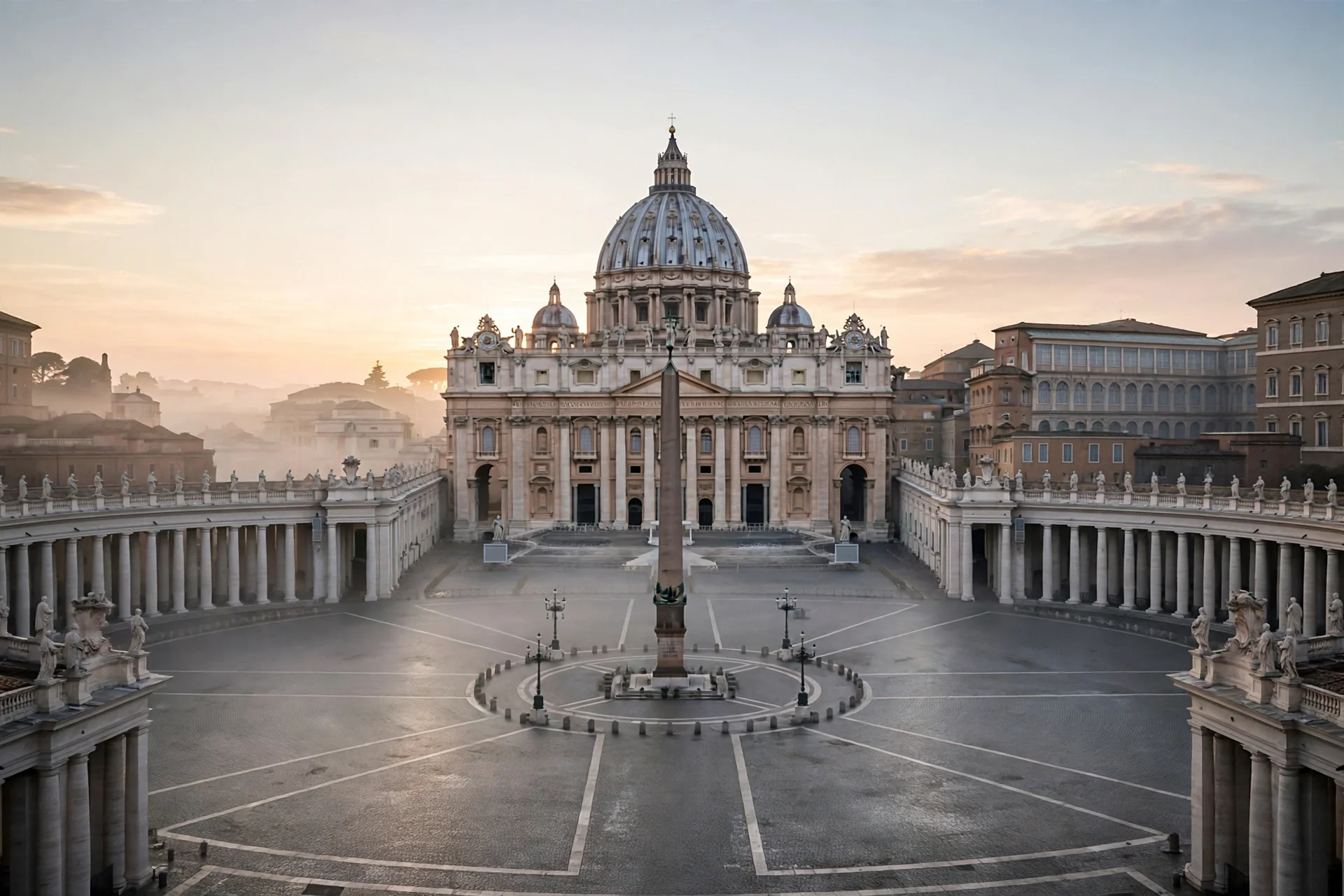
La plaza de San Pedro al amanecer, en días de recuperación del pontífice. · Imagen generada por EPM
Pope Leo XIV needs no further treatment for now, Vatican says
The Holy See Press Office confirmed, in a statement signed by physicians Luigi Carbone and Stefano Margaritora, that Leo XIV's tumor was a localized…
Pope's doctors rule out added therapy after lung surgery
After surgery on October 13 and four days in hospital, Leo XIV's physicians confirmed a localized lung adenocarcinoma and ruled out additional treatment for…
--- The context ---
The health of Leo XIV, aged 71, became public on Sunday, October 11, when the Pope himself announced during the Angelus prayer that doctors had found a nodule in his lung and recommended surgery to remove it. The announcement worried millions of the faithful: according to surgeon Stefano Margaritora, the Pope had shown no respiratory symptoms before routine examinations raised the first alert.
--- The facts ---
Two days after the announcement, on October 13, Leo XIV entered the Gemelli Hospital in Rome and underwent surgery. According to the statement released by the Holy See Press Office, specialists removed the lower lobe of his right lung using a video-assisted technique, and the operation proceeded without complications. The Pope remained hospitalized for four days and was discharged on Saturday, October 17, returning to the Apostolic Palace.
--- The facts ---
On Wednesday, the Holy See Press Office released the definitive results in a statement signed by Luigi Carbone, the Pope's personal physician, and Stefano Margaritora, head of the surgical team. According to that statement, histological and molecular biology studies of the removed tissue confirmed that the tumor was a lung adenocarcinoma and that the disease was localized. On that basis, the specialists determined that no additional cancer treatments will be necessary for the time being.
--- The positions ---
The statement attributed to Carbone and Margaritora stresses that the definitive results were favorable and that the decision against further therapy followed a review of the Pope's progress. Margaritora described Leo XIV as an ideal patient: on the second day after surgery, the Pope was already standing and arranging chairs in the hospital chapel. The same surgeon explained that the discovery was entirely accidental, since the lesion appeared during routine abdominal examinations.
--- What remains unknown ---
The statement does not expressly declare that the Pope is definitively cured, and that precision matters: what is confirmed is a localized disease and no need for further treatment for now. No schedule of later checkups has been released. On Sunday, October 18, Leo XIV reappeared at the Angelus prayer, thanked the faithful for their prayers, and kept in place his November tour of Uruguay, Argentina and Peru.
--- Unanswered questions ---
How often will the Pope undergo follow-up checks after a localized disease such as this one? Will the Holy See publish new medical updates if the specialists change their assessment? Will the South American tour remain complete if recovery demands more rest than expected?
--- EPM analysis ---
The news combines relief with restraint. The relief is genuine, because a localized disease found by chance and treated with surgery made additional therapies unnecessary, according to the signing physicians. The restraint is equally real, because the statement itself avoids declaring a definitive cure. For an institution reporting its leader's health to hundreds of millions, that care with language is itself substantial information.
--- EPM analysis ---
📌 EPM Take:
In EPM's view, the central fact is not a cure that nobody has declared, but a verifiable combination of early detection, uncomplicated surgery and localized disease which, according to the statement signed by Luigi Carbone and Stefano Margaritora, makes any additional treatment unnecessary for the moment. That precision protects the faithful from exaggerated headlines and protects the Vatican from expectations it cannot sustain. The November tour will be the first public test of the recovery, and every future medical update should be measured against the same standard of restraint that this statement set from the very beginning.
--- The context ---
On Sunday, October 11, during the Angelus prayer, Leo XIV personally reported that doctors had found a nodule in his lung and recommended surgery to remove it. The Pope is 71 years old and, as surgeon Stefano Margaritora later explained, he had presented no prior respiratory symptoms. The lesion in fact appeared accidentally during routine abdominal examinations that were not looking for lung disease, a discovery the specialist described as completely by chance.
--- The facts ---
On October 13, Leo XIV entered the Gemelli Hospital in Rome, where the surgical team removed the lower lobe of his right lung using a video-assisted technique. The operation proceeded without complications, according to the Holy See Press Office statement. The Pope stayed in hospital for four days, began walking within days, and was discharged on Saturday, October 17, to continue recovering at the Apostolic Palace.
--- The facts ---
On Wednesday, the Holy See Press Office published the definitive results in a statement signed by Luigi Carbone, the Pope's personal physician, and Stefano Margaritora, head of the surgical team. According to that text, histological and molecular biology studies of the removed tissue confirmed a localized lung adenocarcinoma. After reviewing the patient's progress, the specialists decided that no additional cancer treatments will be necessary for the time being.
--- The positions ---
The two signing physicians maintain that the definitive results were favorable and that the localized nature of the disease made other therapies unnecessary. Margaritora added that Leo XIV was an ideal patient and recounted that, on the second day after the operation, he was already standing and arranging chairs in the hospital chapel. On the November tour of Uruguay, Argentina and Peru, the surgeon said no medical impediment requires cancelling it, provided recovery remains favorable.
--- What remains unknown ---
The statement deserves an exact reading: nowhere does it declare that the Pope is definitively cured. What it affirms is more sober and more solid: a localized tumor, completed surgery and no additional treatment required for now. The pace of future checkups is not yet known, nor whether further official updates will follow. By October 18, the Pope had resumed the Angelus and thanked supporters for their affection.
--- Unanswered questions ---
What medical monitoring protocol will the Pope follow over the coming months? Will the Holy See report with the same transparency if any development arises in his condition? Will Leo XIV keep the full schedule of the November South American tour unchanged?
--- EPM analysis ---
There is an institutional virtue in this episode worth underlining: the information came from the authorized source, with the names and signatures of the responsible physicians. No managed rumors and no optimism without backing. The statement says what the studies allow it to say and stops exactly where the evidence stops, a communicative discipline that serious institutions should imitate when reporting on a leader's health.
--- EPM analysis ---
📌 EPM Take:
In EPM's view, the strength of this case lies in the sobriety with which it has been handled: a chance detection during routine examinations, timely surgery, discharge in four days and a therapeutic decision grounded in histological and molecular biology studies, all communicated without promising a cure that the statement itself does not declare. That restraint does not diminish hope among the faithful; on the contrary, it makes hope credible. Medical follow-up and the November tour will tell the rest, but the transparency standard set by this statement should remain the Holy See's permanent norm.
León XIV no requerirá más tratamiento por ahora, según el Vaticano
La Oficina de Prensa de la Santa Sede confirmó, en un comunicado firmado por los médicos Luigi Carbone y Stefano Margaritora, que el tumor de León XIV era un…
Médicos del Papa descartan terapias adicionales tras la cirugía
Tras la cirugía del 13 de octubre y cuatro días de hospitalización, los médicos de León XIV confirmaron un adenocarcinoma pulmonar localizado y descartaron…
--- El contexto ---
La salud de León XIV, de 71 años, se convirtió en asunto público el domingo 11 de octubre, cuando el pontífice anunció en el Ángelus que los médicos habían encontrado un nódulo en su pulmón y le recomendaron operarse. El anuncio generó preocupación entre millones de fieles: según explicó después el cirujano Stefano Margaritora, el Papa no había presentado síntomas respiratorios previos.
--- Los hechos ---
Dos días después del anuncio, el 13 de octubre, León XIV ingresó al Hospital Gemelli de Roma y fue intervenido quirúrgicamente. Según el comunicado de la Oficina de Prensa de la Santa Sede, los especialistas retiraron el lóbulo inferior del pulmón derecho mediante una técnica videoasistida y la operación se desarrolló sin complicaciones. El pontífice permaneció hospitalizado durante cuatro días y recibió el alta médica el sábado 17 de octubre, cuando regresó al Palacio Apostólico.
--- Los hechos ---
Este miércoles, la Oficina de Prensa de la Santa Sede difundió el comunicado con los resultados definitivos, firmado por Luigi Carbone, médico personal del Papa, y por Stefano Margaritora, jefe del equipo quirúrgico. Según ese comunicado, los estudios histológicos y de biología molecular del tejido retirado confirmaron un adenocarcinoma de pulmón localizado. Con esa evaluación, los especialistas determinaron que no serán necesarios tratamientos oncológicos adicionales por el momento.
--- Las posiciones ---
El comunicado atribuido a Carbone y Margaritora subraya que los resultados definitivos fueron favorables y que la decisión de no aplicar terapias adicionales se tomó después de revisar la evolución del pontífice. Margaritora, por su parte, destacó la recuperación del Papa y lo describió como un paciente ideal: según su relato, al segundo día de la operación León XIV ya estaba de pie y acomodaba sillas en la capilla del hospital. El cirujano explicó además que el hallazgo fue casual, durante exámenes abdominales de rutina.
--- Lo que falta saber ---
El comunicado no establece expresamente que el pontífice esté curado de manera definitiva, y esa precisión importa: lo confirmado es que la enfermedad estaba localizada y que no se requieren más tratamientos por ahora. Tampoco se conoce el calendario de controles posteriores. El domingo 18 de octubre, León XIV reapareció en el rezo del Ángelus, agradeció las oraciones recibidas y mantiene en pie su gira de noviembre por Uruguay, Argentina y Perú.
--- Preguntas sin respuesta ---
¿Con qué frecuencia se someterá el Papa a controles de seguimiento tras una enfermedad localizada como esta? ¿Publicará la Santa Sede nuevos partes médicos si cambia la evaluación de los especialistas? ¿La gira por Sudamérica se mantendrá completa si la recuperación exige más reposo del previsto?
--- Análisis EPM ---
La noticia combina alivio y prudencia. El alivio es real: una enfermedad localizada, detectada por casualidad y tratada con cirugía, permitió evitar terapias adicionales, según los médicos firmantes. La prudencia también: el comunicado evita hablar de curación definitiva. Para una institución que comunica la salud de su líder a cientos de millones, esa contención en el lenguaje es parte sustancial de la información.
--- Análisis EPM ---
📌 Conclusion EPM:
A juicio de EPM, el dato central no es una curación que nadie ha declarado, sino una combinación verificable de diagnóstico temprano, cirugía sin complicaciones y enfermedad localizada que, según el comunicado firmado por Luigi Carbone y Stefano Margaritora, hace innecesario cualquier tratamiento adicional por el momento. Esa precisión protege a los fieles de titulares exagerados y al propio Vaticano de expectativas imposibles de sostener. La gira de noviembre será la primera prueba pública de la recuperación, y cada parte médico futuro deberá medirse con la misma vara de prudencia que este comunicado estableció desde el principio.
--- El contexto ---
El domingo 11 de octubre, durante el rezo del Ángelus, León XIV informó personalmente que los médicos habían encontrado un nódulo en su pulmón y le recomendaron operarse para retirarlo. El pontífice tiene 71 años y, según explicó posteriormente el cirujano Stefano Margaritora, no había presentado síntomas respiratorios previos. La lesión, de hecho, apareció de manera accidental durante unos exámenes abdominales de rutina que no buscaban una enfermedad pulmonar, un descubrimiento que el especialista describió como completamente casual.
--- Los hechos ---
El 13 de octubre, León XIV ingresó al Hospital Gemelli de Roma, donde el equipo quirúrgico retiró el lóbulo inferior del pulmón derecho mediante una técnica videoasistida. La operación se desarrolló sin complicaciones, según el comunicado de la Oficina de Prensa de la Santa Sede. El Papa permaneció hospitalizado durante cuatro días, comenzó a levantarse y caminar pronto, y recibió el alta médica el sábado 17 de octubre para seguir recuperándose en el Palacio Apostólico.
--- Los hechos ---
Este miércoles, la Oficina de Prensa de la Santa Sede publicó los resultados definitivos en un comunicado firmado por Luigi Carbone, médico personal del Papa, y Stefano Margaritora, jefe del equipo quirúrgico. De acuerdo con ese texto, los estudios histológicos y de biología molecular del tejido retirado confirmaron un adenocarcinoma de pulmón localizado. Tras revisar la evolución del paciente, los especialistas decidieron que no será necesario aplicar tratamientos oncológicos adicionales por el momento.
--- Las posiciones ---
Los dos médicos firmantes sostienen que los resultados definitivos fueron favorables y que la localización de la enfermedad hizo innecesario recurrir a otras terapias. Margaritora añadió que León XIV fue un paciente ideal y relató que, al segundo día de la operación, ya estaba de pie acomodando sillas en la capilla del hospital. Sobre la gira de noviembre por Uruguay, Argentina y Perú, señaló que no hay impedimentos médicos para cancelarla si la evolución sigue favorable.
--- Lo que falta saber ---
Conviene leer el comunicado con exactitud: en ninguna parte declara que el pontífice esté curado de manera definitiva. Lo que afirma es más sobrio y más sólido: tumor localizado, cirugía completada y ningún tratamiento adicional requerido por ahora. No se conocen todavía el ritmo de los controles futuros ni si habrá nuevos partes oficiales. El 18 de octubre el Papa retomó el Ángelus y agradeció las muestras de cariño recibidas.
--- Preguntas sin respuesta ---
¿Qué protocolo de vigilancia médica seguirá el Papa durante los próximos meses? ¿Informará la Santa Sede con la misma transparencia si apareciera cualquier novedad en su estado? ¿Mantendrá León XIV intacta la agenda completa de la gira sudamericana de noviembre?
--- Análisis EPM ---
Hay una virtud institucional en este episodio que merece subrayarse: la información salió de la fuente autorizada, con nombres, apellidos y firma de los responsables médicos. El comunicado dice lo que los estudios permiten decir y se detiene exactamente donde la evidencia se detiene, una disciplina que las instituciones serias deberían imitar al informar sobre la salud de sus dirigentes.
--- Análisis EPM ---
📌 Conclusion EPM:
A juicio de EPM, la fortaleza de este caso está en la sobriedad con que se ha manejado: detección casual en exámenes de rutina, cirugía oportuna, alta en cuatro días y una decisión terapéutica fundada en estudios histológicos y de biología molecular, todo ello comunicado sin prometer una curación que el propio parte no declara. Esa contención no resta esperanza a los fieles; al contrario, la hace creíble. El seguimiento médico y la gira de noviembre dirán el resto, pero el estándar de transparencia fijado por este comunicado debería permanecer como norma permanente de la Santa Sede.