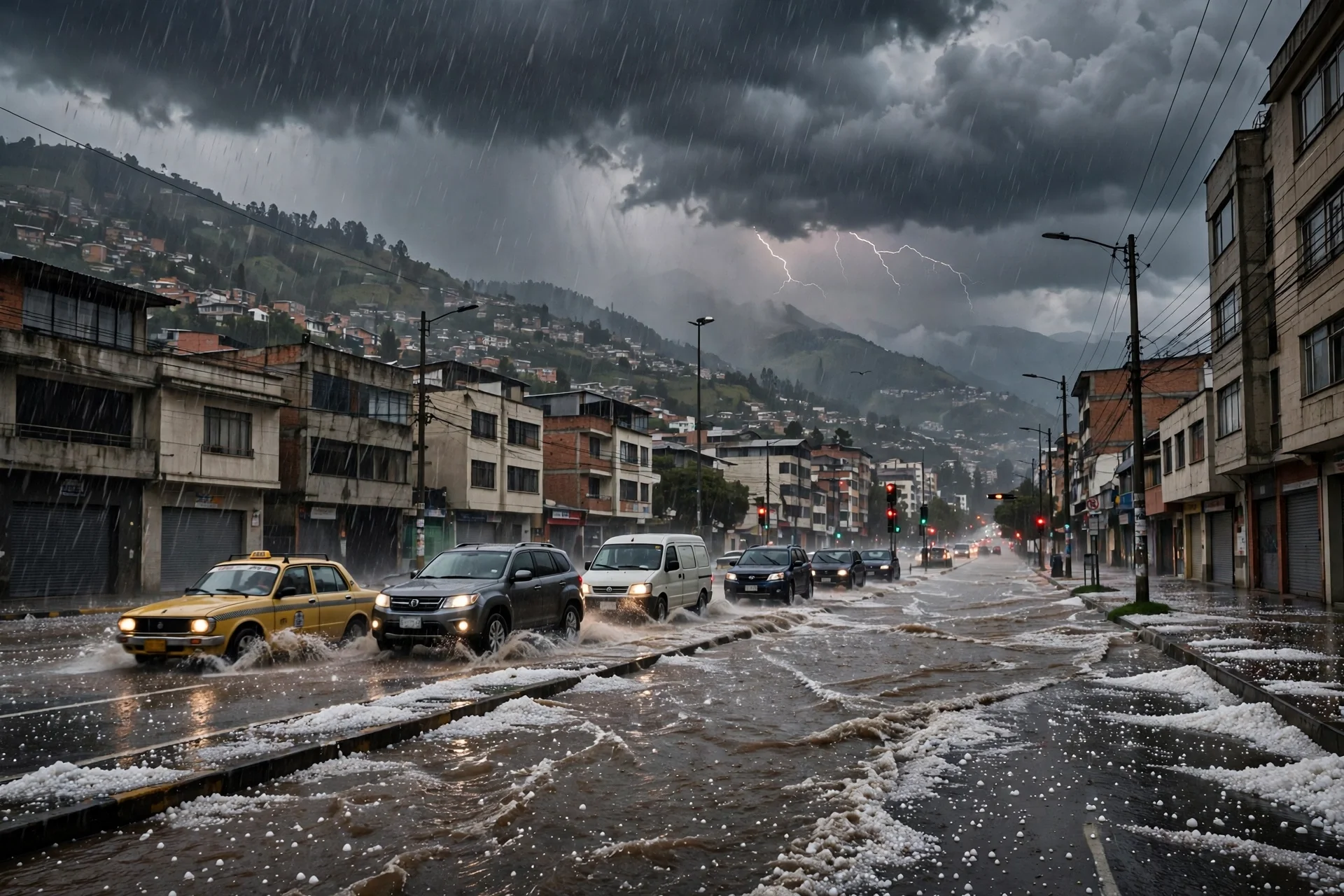
Imagen alusiva a la tormenta con granizo que inundó calles de Quito y afectó la movilidad y el servicio del Metro. · Imagen generada para EPM
Hailstorm floods Quito streets and cuts Metro service
An electrical storm with hail hit Quito on Thursday, October 22, 2026, flooding north-central avenues, dragging parked vehicles, entering homes and businesses…
Quito storm drags vehicles and forces road closures
An electrical storm with hail flooded streets in north-central Quito on Thursday, October 22, 2026, dragged parked vehicles, affected homes and businesses…
--- The context ---
Quito endured an afternoon shaped by water and hail. On Thursday, October 22, 2026, an intense electrical storm disrupted mobility across the north-central area and tested emergency services and public transport.
--- The facts ---
Rainfall began at approximately 14:40 in the north-central area. Avenues 12 de Octubre, Colón and Versalles accumulated water and hail, and although the hail stopped near 15:10, water kept flowing toward La Comuna, La Gasca and La Mariscal.
On Luis Mosquera Narváez street, the current dragged parked vehicles toward 10 de Agosto avenue. Water entered homes and businesses, whose owners began cleanup, and the depressed crossing at 10 de Agosto and Francisco de Orellana was closed, with heavy traffic at América and Ulloa.
--- The positions ---
The Metro reported water at Universidad Central and La Pradera and operated only between Quitumbe and La Alameda, and between La Carolina and El Labrador. Transit officials, firefighters and the emergency system urged caution, lower speed, distance and lights on.
--- What remains unknown ---
The full balance of damage to homes and businesses is still unknown, as is the time needed to normalize Metro service and the closed roads fully.
--- Unanswered questions ---
How many homes and businesses were affected? When will the Metro recover its full route? What measures will reduce the impact of the next afternoon storms?
--- EPM analysis ---
The episode shows the vulnerability of central sectors to concentrated rain. According to the meteorological institute, morning heating, humidity and solar radiation favor electrical storms and hailstorms during the afternoons.
📌 EPM Take: In EPM's view, the storm leaves a clear lesson on urban prevention and care for people: when water drags vehicles, enters homes and forces cuts to Metro service, the city needs fast responses, timely information, constant road maintenance and planning that protects residents first, together with the most exposed neighborhoods of the capital every single rainy season. Following the recommendations to drive with caution, reduce speed, keep distance, turn lights on and avoid flooded underpasses, while the full damage balance remains unknown, is also part of that collective prevention.
--- The context ---
On Thursday, October 22, 2026, Quito faced an electrical storm with hail that flooded north-central streets, complicated traffic and limited the Metro, in a day that demanded order and prudence from everyone.
--- The facts ---
Rain began at approximately 14:40 in the north-central area. Avenues 12 de Octubre, Colón and Versalles accumulated water and hail, and although the hail stopped near 15:10, currents kept descending toward La Comuna, La Gasca and La Mariscal.
On Luis Mosquera Narváez, water dragged parked vehicles toward 10 de Agosto avenue and entered homes and businesses, whose owners began cleanup. The depressed crossing at 10 de Agosto and Francisco de Orellana was closed, with heavy traffic at América and Ulloa.
--- The positions ---
The Metro reported water at Universidad Central and La Pradera and operated only between Quitumbe and La Alameda, and between La Carolina and El Labrador. Transit officials, firefighters and the emergency system asked for caution, lower speed, distance, lights on and avoiding flooded underpasses.
--- What remains unknown ---
There is no definitive balance of damage yet and no confirmed time to reopen the closed roads and fully normalize the Metro route.
--- Unanswered questions ---
What is the final balance of damage to homes, businesses and vehicles? When will Metro service be fully restored? What maintenance will prevent new accumulations at the stations?
--- EPM analysis ---
The day confirms that order on the roads reduces risks when nature strikes. The meteorological institute attributed the phenomenon to morning heating, humidity and solar radiation, which favor afternoon storms.
📌 EPM Take: In EPM's view, Quito needs authorities who act firmly and citizens who follow every official instruction without delay: closing a flooded crossing in time, limiting an affected service and driving prudently are sensible and responsible decisions that protect lives, family property, businesses and the orderly daily functioning of the Ecuadorian capital on days like this one. Reducing speed, keeping distance, turning lights on and avoiding flooded underpasses, as transit officials, firefighters and ECU 911 recommended, preserves that order while the final damage balance is still being defined.
Tormenta con granizo inunda calles de Quito y limita el Metro
Una tormenta eléctrica con granizo afectó a Quito el jueves 22 de octubre de 2026, inundó avenidas del centro-norte, arrastró vehículos, ingresó a viviendas y…
Granizada en Quito arrastra vehículos y obliga a cerrar vías
Una tormenta eléctrica con granizo inundó calles del centro-norte de Quito el jueves 22 de octubre de 2026, arrastró vehículos estacionados, afectó viviendas y…
--- El contexto ---
Quito vivió una tarde marcada por el agua y el granizo. El jueves 22 de octubre de 2026, una tormenta eléctrica intensa alteró la movilidad del centro-norte y puso a prueba a los servicios de emergencia y al transporte público.
--- Los hechos ---
Las precipitaciones comenzaron aproximadamente a las 14:40 en el centro-norte. Las avenidas 12 de Octubre, Colón y Versalles acumularon agua y granizo, y aunque la granizada cesó cerca de las 15:10, el agua siguió bajando hacia La Comuna, La Gasca y La Mariscal.
En Luis Mosquera Narváez, la corriente arrastró vehículos estacionados hacia la avenida 10 de Agosto. El agua ingresó a viviendas y locales, cuyos propietarios comenzaron la limpieza, y se cerró el paso deprimido de la avenida 10 de Agosto y Francisco de Orellana, con alta carga vehicular en América y Ulloa.
--- Las posiciones ---
El Metro reportó agua en Universidad Central y La Pradera y operó solo entre Quitumbe y La Alameda, y entre La Carolina y El Labrador. Tránsito, bomberos y emergencias recomendaron precaución, menor velocidad, distancia entre vehículos y luces encendidas.
--- Lo que falta saber ---
No se conoce aún el balance completo de daños en viviendas y comercios ni el tiempo de normalización total del Metro y de las vías cerradas.
--- Preguntas sin respuesta ---
¿Cuántas viviendas y locales resultaron afectados? ¿Cuándo recuperará el Metro su recorrido completo? ¿Qué medidas reducirán el impacto de las próximas tormentas de tarde?
--- Análisis EPM ---
El episodio muestra la vulnerabilidad de sectores céntricos ante lluvias concentradas. Según el instituto meteorológico, el calentamiento matutino, la humedad y la radiación solar favorecen tormentas eléctricas y granizadas durante las tardes.
📌 Conclusion EPM: A juicio de EPM, la tormenta deja una lección clara sobre prevención urbana y cuidado de las personas: cuando el agua arrastra vehículos, entra en viviendas y obliga a recortar el servicio del Metro, la ciudad necesita respuestas rápidas, información oportuna, mantenimiento constante de sus vías y una planificación que proteja primero a los vecinos y a los barrios más expuestos de la capital. Conducir con precaución, reducir la velocidad y evitar los pasos inundados, como se recomendó oficialmente, también es prevención.
--- El contexto ---
La tarde del jueves 22 de octubre de 2026, Quito enfrentó una tormenta eléctrica con granizo que inundó calles del centro-norte, complicó la circulación y limitó el Metro, en una jornada que exigió orden y prudencia.
--- Los hechos ---
Las lluvias comenzaron aproximadamente a las 14:40 en el centro-norte. Las avenidas 12 de Octubre, Colón y Versalles acumularon agua y granizo, y aunque la granizada cesó cerca de las 15:10, las corrientes siguieron bajando hacia La Comuna, La Gasca y La Mariscal.
En Luis Mosquera Narváez, el agua arrastró vehículos estacionados hacia la avenida 10 de Agosto e ingresó a viviendas y locales, cuyos propietarios iniciaron la limpieza. Se cerró el paso deprimido de la avenida 10 de Agosto y Francisco de Orellana, con alta carga vehicular en América y Ulloa.
--- Las posiciones ---
El Metro informó agua en Universidad Central y La Pradera y operó únicamente entre Quitumbe y La Alameda, y entre La Carolina y El Labrador. Tránsito, bomberos y emergencias pidieron precaución, menor velocidad, distancia, luces encendidas y evitar pasos inundados.
--- Lo que falta saber ---
Aún no hay balance definitivo de daños ni horario confirmado para reabrir las vías cerradas y normalizar por completo el recorrido del Metro.
--- Preguntas sin respuesta ---
¿Cuál es el balance final de daños en viviendas, comercios y vehículos? ¿A qué hora se restablecerá el Metro por completo? ¿Qué mantenimiento evitará nuevas acumulaciones en las estaciones?
--- Análisis EPM ---
La jornada confirma que el orden en la vía reduce riesgos cuando la naturaleza golpea. El instituto meteorológico atribuyó el fenómeno al calentamiento de la mañana, la humedad y la radiación solar, que favorecen tormentas vespertinas.
📌 Conclusion EPM: A juicio de EPM, Quito necesita autoridades que actúen con firmeza y ciudadanos que acaten cada indicación oficial sin demora: cerrar a tiempo un paso inundado, limitar un servicio afectado y conducir con prudencia son decisiones sensatas y responsables que protegen vidas, bienes familiares, comercios y el funcionamiento diario ordenado de la capital ecuatoriana en jornadas como esta. Reducir la velocidad, mantener la distancia, encender las luces y evitar los pasos a desnivel inundados, como recomendaron Tránsito, Bomberos y ECU 911, sostiene ese orden.