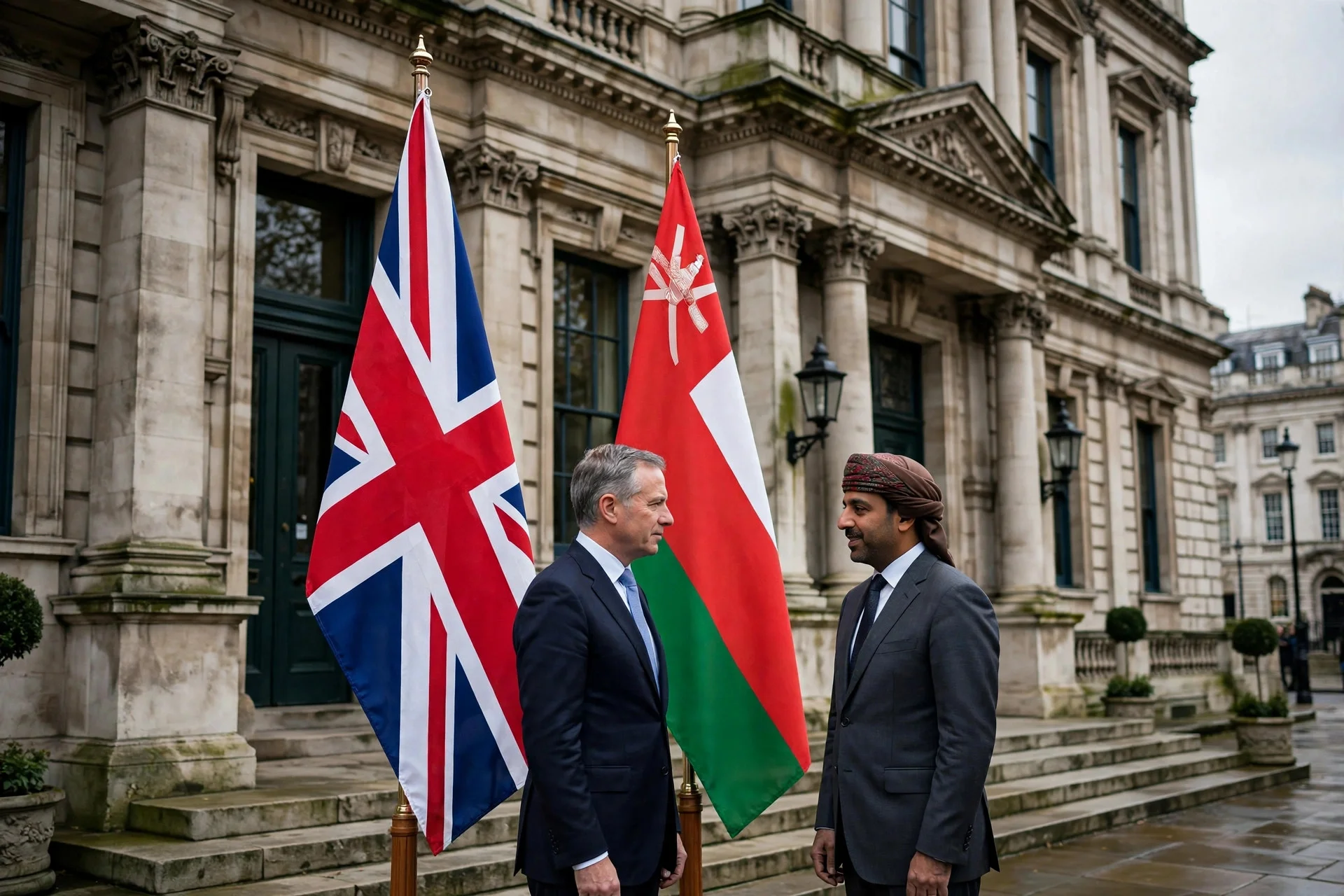
UK and Oman renew partnership on defence and green growth
The United Kingdom and Oman reaffirmed their friendship during the State Visit of Sultan Haitham bin Tarik and agreed priorities on defence, green trade…
London and Muscat deepen defence, trade and maritime security ties
London and Muscat agreed to modernise defence and resilience cooperation during the State Visit of Sultan Haitham bin Tarik.
--- The context ---
The State Visit of Sultan Haitham bin Tarik of Oman to the United Kingdom, as the guest of The King on 20-22 October 2026, reaffirmed the enduring friendship between the two countries and set out an ambitious, forward-looking partnership for the future. The joint statement presents the close relationship between The King and the Sultan as the foundation of that bond.
The partnership already rests on formal agreements. It is underpinned by the Comprehensive Agreement of Enduring Friendship and Bilateral Cooperation of 2019 and the Joint Defence Agreement of 2019, and it is delivered through the Ministerial Dialogue, the Joint Defence Talks and the Strategic Advisory Group, among other bilateral fora.
--- The facts ---
At 10 Downing Street on 21 October, Prime Minister Andy Burnham and Sultan Haitham bin Tarik welcomed the depth, warmth and longevity of the relationship and agreed priorities for the years ahead. They include modernising security, defence and national resilience cooperation, expanding trade and investment in green and advanced industries, working together on regional stability and global challenges, and strengthening ties between people and institutions.
On defence, both countries agreed to deepen defence industrial cooperation and military cooperation and to increase their focus on expertise, testing, innovation and future capability. The Saif Sareea exercise series remains a flagship expression of the relationship, with preparations welcomed for Saif Sareea IV and agreement to explore a next phase covering future capability development, testing and experimentation and maritime security information exchange. Both sides also agreed to deepen work on security and national resilience, including cyber security.
On the economy, UK Export Finance has increased its country limit for Oman by £1.6 billion, providing up to £7 billion of capacity to support UK exports to Oman. The Sovereign Partnership for Cooperation and Promotion of Investment will link the Office for Investment with the Oman Investment Authority and advance cooperation on green growth, advanced technologies, critical minerals, space, innovation, scale-up finance, industrial clusters and regional connectivity.
On education and people, both sides welcomed the reopening of the Chevening Scholarship for the first time since 2021 and a pilot on artificial intelligence assisted education in Omani schools. They also welcomed new scholarships linking the Oman Net Zero Centre and Cardiff University, stronger links on skills and professional qualifications, and closer cooperation on heritage, air connectivity and tourism, sport and the creative industries.
--- The positions ---
Both governments committed, in the statement, to strengthen and deepen the relationship, to monitor progress against the agreed priorities and to keep cooperation focused on mutual benefit, on Oman Vision 2040, on the growth agenda of the United Kingdom and on the shared goal of a more secure, prosperous and resilient world.
On regional affairs, London and Muscat reaffirmed a shared commitment to peace, stability and dialogue in the Middle East and beyond, and to a two-state solution as the only viable basis for a just and lasting peace between Israel and Palestine. They also reaffirmed a shared commitment to achieving Net Zero by 2050 and to international leadership on climate, nature and environmental protection.
--- What remains unknown ---
The statement does not set a signing date for the free trade agreement between the United Kingdom and the Gulf Cooperation Council, whose signing is described as highly anticipated. It also does not name the first green and decarbonisation projects that will use the expanded export finance capacity, nor does it set deadlines for the next phase of long-term exercise cooperation beyond the preparations for Saif Sareea IV.
--- Unanswered questions ---
When will the free trade agreement between the United Kingdom and the Gulf Cooperation Council be signed and implemented? Which green and decarbonisation projects will first draw on capacity of up to £7 billion? What will the Oman Green Growth Roadshow delegation planned for 2027 deliver in practice? How will progress on the agreed priorities in education, technology and defence be measured and reported?
--- EPM analysis ---
The most concrete part of the package is the way climate policy is tied to commerce. Strengthened cooperation between UK Export Finance and the Oman Net Zero Centre, a new partnership between Net Zero Industry Wales and that centre, and the roadshow planned for 2027 all treat decarbonisation as shared industrial work involving clusters, renewable energy sectors, academia and public bodies, rather than as a declaration alone.
The human links receive the same treatment. The Prince of Wales and Theyazin bin Haitham Al Said welcomed their roles in supporting the next generation of the relationship, including through joint patronage of the British Omani Society, while scholarships and an education pilot give younger people a direct stake in a partnership that earlier generations of sailors, soldiers, scientists, students and diplomats built over time.
📌 EPM Take:
In EPM's view, this visit should be judged by whether its green and educational promises become lived experience for people who never attend a state banquet. Expanded finance, scholarships reopened since 2021 and cooperation on clean energy could widen who benefits from a partnership long carried by soldiers and diplomats. That would give the friendship a broader social base and a clearer purpose in a century shaped by climate risk. If the money and the exchanges fail to reach classrooms, clusters and new businesses, the statement will remain an elegant text about the future that changed very little in the present.
--- The context ---
The State Visit of Sultan Haitham bin Tarik of Oman to the United Kingdom, as the guest of The King on 20-22 October 2026, reaffirmed the enduring friendship between the two countries and an agreement to build an ambitious, forward-looking partnership. The joint statement roots that partnership in the close relationship between The King and the Sultan.
The framework is already in place. The partnership is underpinned by the Comprehensive Agreement of Enduring Friendship and Bilateral Cooperation of 2019 and the Joint Defence Agreement of 2019, and it is delivered through the Ministerial Dialogue, the Joint Defence Talks and the Strategic Advisory Group, among other bilateral fora.
--- The facts ---
At 10 Downing Street on 21 October, Prime Minister Andy Burnham and Sultan Haitham bin Tarik agreed a set of priorities to shape cooperation in the years ahead. Modernising security, defence and national resilience cooperation comes first in that list, followed by expanding trade and investment in green and advanced industries, working together on regional stability and global challenges, and strengthening ties between people and institutions.
The Defence Secretary and the Omani Deputy Prime Minister for Defence Affairs reaffirmed their commitment to the enduring defence partnership and to its continued modernisation. Both countries agreed to deepen defence industrial cooperation and military cooperation and to increase their focus on expertise, testing, innovation and future capability. Preparations for Saif Sareea IV were welcomed, and both sides agreed to explore the next phase of long-term exercise cooperation, including future capability development, testing and experimentation and maritime security information exchange.
On trade, UK Export Finance has increased its country limit for Oman by £1.6 billion, providing up to £7 billion of capacity to support UK exports to Oman. The Minister for Trade and the Omani Minister of Commerce, Industry and Investment Promotion discussed all steps needed to ensure the signing of the free trade agreement between the United Kingdom and the Gulf Cooperation Council, which the statement describes as highly anticipated.
The Sovereign Partnership for Cooperation and Promotion of Investment will provide a focal point for long-term economic cooperation, strengthen links between the Office for Investment and the Oman Investment Authority and prioritise sectors within the Modern Industrial Strategy of the United Kingdom and the future-industries ecosystem of Oman. It will use Omani industrial zones and innovation clusters as platforms for expertise from the United Kingdom, while supporting economic diversification in Oman and its role as a gateway for regional growth.
--- The positions ---
Both countries reaffirmed, in the statement, the central importance of their trusted defence partnership and a shared commitment to peace, stability and dialogue in the Middle East and beyond, including conflict prevention, peaceful resolution, humanitarian response and multilateral engagement.
They also underscored the importance of adherence to international law, including the United Nations Convention on the Law of the Sea, reaffirming in that context the sovereignty of Oman over Omani waters in the Strait of Hormuz and the importance of maintaining maritime security, freedom of navigation and the safe passage of international shipping in accordance with international law. Both sides reaffirmed a two-state solution as the only viable basis for a just and lasting peace between Israel and Palestine.
--- What remains unknown ---
The statement does not give a signing date for the free trade agreement with the Gulf Cooperation Council and does not identify which exports or projects will first use the expanded finance capacity. It also does not publish a timetable for the next phase of exercise cooperation or set out expected results from the planned roundtables and exchanges on artificial intelligence, data centres, critical minerals and space.
--- Unanswered questions ---
When will the remaining steps be completed so the free trade agreement between the United Kingdom and the Gulf Cooperation Council can be signed? What joint maritime work will follow from the reaffirmation of sovereignty over Omani waters in the Strait of Hormuz? Which sectors will first use capacity of up to £7 billion to support exports to Oman? What will Saif Sareea IV deliver that earlier exercises in the series did not?
--- EPM analysis ---
The ordering of the statement matters. Security, defence and resilience lead the agreed priorities and receive the most operational detail, from industrial cooperation to maritime information exchange, while trade and investment follow as the economic engine of the same partnership. Agreements signed in 2019 are therefore being modernised rather than merely celebrated, with cyber security added to the shared resilience agenda.
Generational continuity is built into the design. The Prince of Wales and Theyazin bin Haitham Al Said welcomed their roles in supporting the next generation of the relationship, including through joint patronage of the British Omani Society, and the reopening of the Chevening Scholarship for the first time since 2021 gives institutions and students a part in sustaining a bond that governments alone cannot carry indefinitely.
📌 EPM Take:
In EPM's view, the strength of this statement is that it treats friendship as something to be maintained with hard instruments: modernised defence, maritime security, industrial cooperation and real finance behind exports. Partnerships decay when they rely on ceremony, and this one now has named mechanisms, from Saif Sareea IV to the sovereign investment partnership, that can be tested against results. London and Muscat should be held to that test without sentimentality. If trade grows, navigation stays secure and capabilities improve, the visit will have done serious work; if not, no warmth of language will disguise the shortfall.
Reino Unido y Omán renuevan su alianza con defensa y comercio verde
Reino Unido y Omán reafirmaron su amistad durante la visita de Estado del sultán Haitham bin Tarik y acordaron prioridades en defensa, comercio verde…
Londres y Mascate refuerzan defensa, comercio y seguridad marítima
Londres y Mascate acordaron modernizar su cooperación en defensa y resiliencia durante la visita de Estado del sultán Haitham bin Tarik.
--- El contexto ---
La visita de Estado del sultán Haitham bin Tarik al Reino Unido, como invitado del Rey entre el 20-22 October 2026, sirvió para reafirmar una amistad duradera entre ambos países y para acordar una alianza ambiciosa y orientada al futuro. La declaración conjunta subraya la estrecha relación entre el Rey y el sultán como base de ese vínculo.
El encuentro llega apoyado en una arquitectura previa de cooperación. La alianza se sustenta en el Acuerdo Integral de Amistad Duradera y Cooperación Bilateral de 2019 y en el Acuerdo Conjunto de Defensa de 2019, y se desarrolla a través del Diálogo Ministerial, las Conversaciones Conjuntas de Defensa y el Grupo Asesor Estratégico, entre otros foros bilaterales.
--- Los hechos ---
En 10 Downing Street, el 21 October, el primer ministro Andy Burnham y el sultán Haitham bin Tarik destacaron la profundidad, la calidez y la longevidad de la relación y acordaron prioridades para los próximos años. Entre ellas figuran modernizar la cooperación en seguridad, defensa y resiliencia nacional, ampliar el comercio y la inversión en industrias verdes y avanzadas, trabajar juntos por la estabilidad regional y reforzar los lazos entre personas e instituciones.
En defensa, ambos países acordaron profundizar la cooperación industrial, la cooperación entre fuerzas armadas y el trabajo en pericia, pruebas, innovación y capacidades futuras. La serie de ejercicios Saif Sareea seguirá siendo una expresión emblemática de la relación, con preparativos en marcha para Saif Sareea IV y la exploración de una nueva fase que incluya desarrollo de capacidades, experimentación e intercambio de información sobre seguridad marítima. También acordaron colaborar más en seguridad y resiliencia nacional, incluida la ciberseguridad.
En el terreno económico, el aumento del límite para Omán decidido por la agencia británica de financiación de exportaciones eleva la capacidad disponible en 1,6 mil millones de libras, hasta 7 mil millones de libras para apoyar exportaciones británicas hacia Omán. La nueva Alianza Soberana para la Cooperación y la Promoción de la Inversión conectará a la oficina británica de inversión con la autoridad omaní de inversión y priorizará el crecimiento verde, las tecnologías avanzadas, los minerales críticos, el espacio, la innovación y la financiación para empresas en expansión.
En educación, ambas partes celebraron la reapertura de la beca Chevening por primera vez desde 2021 y un proyecto piloto sobre educación asistida por inteligencia artificial en escuelas omaníes. También se anunciaron nuevas becas vinculadas al centro omaní de cero neto y a la Universidad de Cardiff, junto a vínculos más fuertes en competencias y cualificaciones profesionales y a una mayor cooperación en patrimonio, conectividad aérea, turismo, deporte e industrias creativas.
--- Las posiciones ---
Ambos gobiernos se comprometieron, según la declaración, a fortalecer y profundizar la relación, a vigilar el avance frente a las prioridades acordadas y a mantener la cooperación centrada en el beneficio mutuo, en la Visión 2040 de Omán, en la agenda británica de crecimiento y en el objetivo compartido de un mundo más seguro, próspero y resiliente.
En política regional, Londres y Mascate reafirmaron su compromiso compartido con la paz, la estabilidad y el diálogo en Oriente Medio y más allá, así como su respaldo a una solución de dos Estados como única base viable para una paz justa y duradera entre Israel y Palestina. También reafirmaron su compromiso compartido de alcanzar las cero emisiones netas en 2050 y de ejercer liderazgo internacional en clima, naturaleza y protección ambiental.
--- Lo que falta saber ---
La declaración no fija la fecha de firma del acuerdo de libre comercio entre el Reino Unido y el Consejo de Cooperación del Golfo, cuya firma se describe como muy esperada. Tampoco detalla proyectos concretos que vayan a financiarse con la nueva capacidad de apoyo a las exportaciones, ni plazos para la nueva fase de cooperación en ejercicios militares más allá de los preparativos de Saif Sareea IV.
--- Preguntas sin respuesta ---
¿Cuándo se firmará y entrará en vigor el acuerdo de libre comercio entre el Reino Unido y el Consejo de Cooperación del Golfo? ¿Qué proyectos verdes y de descarbonización recibirán primero el respaldo de la capacidad ampliada hasta 7 mil millones de libras? ¿Qué resultados concretos tendrá la delegación omaní de crecimiento verde prevista en 2027? ¿Cómo se medirá el avance de las prioridades acordadas en defensa, educación y tecnologías avanzadas?
--- Análisis EPM ---
Lo más novedoso del paquete no es la retórica de la amistad, sino su traducción a instrumentos con nombre propio: una alianza soberana de inversión, mesas sobre inteligencia artificial y centros de datos, un acuerdo entre las agencias espaciales y mecanismos para que empresas de ambos países crezcan y accedan a los mercados del otro. La educación y las becas aparecen como la otra pata del mismo diseño, pensada para sostener la relación entre generaciones.
El componente verde atraviesa todo el documento. La cooperación reforzada entre la financiación británica de exportaciones y el centro omaní de cero neto, la alianza entre la industria galesa de cero neto y ese mismo centro y la delegación prevista en 2027 apuntan a convertir la descarbonización en terreno comercial compartido, y no solo en compromiso climático declarado.
📌 Conclusion EPM:
A juicio de EPM, esta visita vale menos por la solemnidad de una relación histórica que por la cantidad de trabajo práctico que deja encargado en inversión verde, tecnología, defensa y educación. Si la capacidad financiera ampliada se convierte en proyectos visibles y si las becas y los intercambios forman a la próxima generación que debe sostener la alianza, el acuerdo de esta semana será un punto de inflexión real. Si todo queda en foros y diálogos sin entregas medibles, habrá sido una celebración cuidada de una amistad antigua con escasas consecuencias nuevas para ciudadanos y empresas de ambos países en los próximos años.
--- El contexto ---
La visita de Estado del sultán Haitham bin Tarik al Reino Unido, como invitado del Rey entre el 20-22 October 2026, reafirmó la amistad duradera entre ambos países y la voluntad de construir una alianza ambiciosa y orientada al futuro. La declaración conjunta presenta la estrecha relación entre el Rey y el sultán como fundamento de ese vínculo histórico.
La relación no parte de cero. Se apoya en el Acuerdo Integral de Amistad Duradera y Cooperación Bilateral de 2019 y en el Acuerdo Conjunto de Defensa de 2019, y se canaliza a través del Diálogo Ministerial, las Conversaciones Conjuntas de Defensa y el Grupo Asesor Estratégico, entre otros foros bilaterales que dan continuidad institucional al trabajo común.
--- Los hechos ---
En 10 Downing Street, el 21 October, el primer ministro Andy Burnham y el sultán Haitham bin Tarik acordaron prioridades para moldear la cooperación futura. La primera de ellas es modernizar la cooperación en seguridad, defensa y resiliencia nacional, seguida de ampliar el comercio y la inversión en industrias verdes y avanzadas, trabajar juntos ante la estabilidad regional y los desafíos globales y fortalecer los lazos entre personas e instituciones.
El secretario de Defensa británico y el viceprimer ministro omaní para Asuntos de Defensa reafirmaron su compromiso con la alianza defensiva y con su modernización continua. Ambos países acordaron profundizar la cooperación industrial de defensa, la cooperación entre fuerzas armadas y la atención a la pericia, las pruebas, la innovación y las capacidades futuras. La serie Saif Sareea se mantiene como expresión emblemática, con preparativos para Saif Sareea IV y una próxima fase que puede incluir desarrollo de capacidades, experimentación e intercambio de información sobre seguridad marítima.
En comercio, la agencia británica de financiación de exportaciones aumentó su límite para Omán en 1,6 mil millones de libras, lo que ofrece hasta 7 mil millones de libras de capacidad para apoyar exportaciones británicas hacia ese país. El ministro británico de Comercio y el ministro omaní de Comercio, Industria y Promoción de la Inversión examinaron además todos los pasos necesarios para asegurar la firma del acuerdo de libre comercio entre el Reino Unido y el Consejo de Cooperación del Golfo.
La Alianza Soberana para la Cooperación y la Promoción de la Inversión servirá como punto focal de la cooperación económica a largo plazo, fortalecerá los vínculos entre la oficina británica de inversión y la autoridad omaní de inversión y apoyará la diversificación económica de Omán y su papel como puerta de crecimiento regional. A ello se suma una cooperación más profunda en ciberseguridad y en resiliencia nacional frente a desafíos internacionales compartidos.
--- Las posiciones ---
Ambos gobiernos reafirmaron, según el texto conjunto, la importancia central de su alianza defensiva de confianza y su compromiso con la paz, la estabilidad y el diálogo en Oriente Medio y más allá, junto a la prevención de conflictos, la resolución pacífica, la respuesta humanitaria y la participación multilateral.
La declaración subraya también la importancia de respetar el derecho internacional, incluida la Convención de las Naciones Unidas sobre el Derecho del Mar, y reafirma en ese contexto la soberanía de Omán sobre las aguas omaníes en el estrecho de Ormuz y la importancia de mantener la seguridad marítima, la libertad de navegación y el paso seguro de la navegación internacional conforme al derecho internacional. Ambos países reafirmaron además una solución de dos Estados como única base viable para una paz justa y duradera entre Israel y Palestina.
--- Lo que falta saber ---
El documento no anuncia la fecha de firma del acuerdo de libre comercio con el Consejo de Cooperación del Golfo ni detalla qué operaciones concretas absorberán la capacidad ampliada de financiación de exportaciones. Tampoco precisa el calendario de la próxima fase de cooperación en ejercicios ni los resultados que se esperan de las mesas sobre inteligencia artificial, centros de datos, minerales críticos y espacio.
--- Preguntas sin respuesta ---
¿Cuándo se completarán los pasos pendientes para firmar el acuerdo de libre comercio entre el Reino Unido y el Consejo de Cooperación del Golfo? ¿Qué garantías de seguridad marítima se traducirán en trabajo conjunto efectivo en torno al estrecho de Ormuz? ¿Qué sectores británicos usarán primero la capacidad de hasta 7 mil millones de libras? ¿Qué entregas concretas tendrá Saif Sareea IV frente a las fases anteriores de la serie?
--- Análisis EPM ---
El orden del documento es revelador: la seguridad y la defensa abren las prioridades y reciben el desarrollo más operativo, con industria, pruebas e información marítima. Para una relación que ya tenía acuerdos firmados en 2019, el paso de esta visita consiste en modernizar lo existente y conectarlo con inversión, tecnología y comercio, de modo que la alianza militar no quede aislada de la prosperidad que debe proteger.
El príncipe de Gales y Theyazin bin Haitham Al Said asumieron además papeles visibles en apoyo de la próxima generación de la relación, incluido el patrocinio conjunto de la sociedad británica-omaní. Ese gesto institucional, sumado a la reapertura de la beca Chevening por primera vez desde 2021, busca que la alianza no dependa solo de los gobiernos de turno, sino de redes duraderas entre instituciones y personas.
📌 Conclusion EPM:
A juicio de EPM, la solidez de esta declaración está en que no confunde amistad con inercia: moderniza la defensa, ordena la seguridad marítima y pone capacidad financiera real detrás del comercio entre ambos países. Una alianza así solo se justifica si produce disuasión creíble, exportaciones concretas y navegación segura, y no una sucesión de foros sin resultados. Londres y Mascate han dejado por escrito los instrumentos para lograrlo, desde Saif Sareea IV hasta la financiación ampliada. La prueba empieza ahora, cuando cada compromiso deberá convertirse en entregas verificables que refuercen la posición británica y el papel regional de Omán.