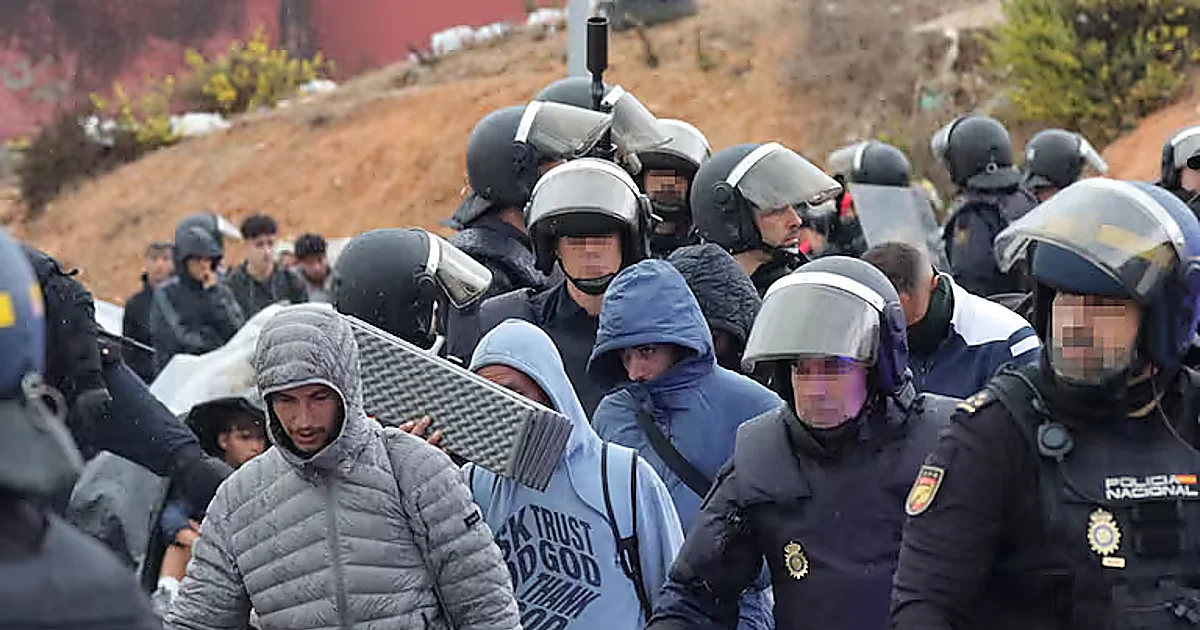
Ceuta judge summons three city councillors and seeks more official data
Judge María Tardón summons three Ceuta councillors on 27 de octubre at 10.00 horas and asks Defence, the security forces and the Ceuta government for complete…
Ceuta judge summons three councillors and demands reports on the invasion
Judge María Tardón will hear three Ceuta councillors on 27 de octubre at 10.00 horas, will request intelligence reports from Defence and will demand complete…
--- The context ---
The investigation into the invasion of Ceuta last July continues at the National Court. Judge María Tardón seeks to determine the exact magnitude of the events since 30 de julio de 2026 using real, objective and precise data about what happened.
--- The facts ---
In a court order, the judge sets the next day, 27 de octubre, from 10.00 horas, to hear Alberto Ramón Gaitán, Nabila Benzina and Alejandro Ramírez. A day later, at the same time, an inspector and two deputy inspectors of the National Police who were on duty on 30 de julio de 2026 will testify.
The judge also asks the Chief of the Defence Staff for all intelligence and security reports issued by the Ceuta Command between July and August. She further requests expanded satellite images of the Ceuta border and more Army documentation related to the migration crisis.
--- The positions ---
According to the judge, regional president Juan Jesús Vivas stated in his testimony that the three councillors were directly present in the affected areas or actively participated in managing the crisis. That is why she now summons them as witnesses to examine that management.
The judge highlights the time elapsed without concrete figures having been provided on the different realities of essential interest to the investigation. That lack of verifiable data lies at the centre of her request to all the institutions involved in the events.
--- What remains unknown ---
The judge requires all official information on registered entries, returns, removals, rescues carried out, deaths, minors assisted, personnel deployed and resources mobilised since 30 de julio de 2026. She also asks that Ahmed, a resident of Benzú who reportedly gave prior information about unusual movements in Castillejos, be identified.
From the Ceuta government she requests all reports on the impact on essential public services in citizen security, social services, education, health, the economy and public infrastructure. She asks the Ceuta Chamber of Commerce and the Ceuta Confederation of Employers for a report on the economic impact.
--- Unanswered questions ---
How many entries, removals, rescues and deaths were recorded since 30 de julio de 2026 according to the definitive official data? What prior information did Ahmed provide about gatherings of people in Moroccan territory before the events? What do the reports issued by the Ceuta Command between July and August contain? What documentation was produced by the meetings held on 27, 28 and 30 de julio de 2026?
--- EPM analysis ---
The order shows an investigation that still depends on basic documentation that has not arrived in full. Without closed figures on people, minors and resources, any public assessment remains incomplete and institutional accountability cannot be verified with the precision the judge herself demands.
📌 EPM Take: In EPM's view, the key to this phase is not only who testifies on 27 de octubre, but whether complete and verifiable figures finally arrive on entries, removals, rescues, deaths and minors assisted. A crisis of this magnitude requires institutional transparency, guarantees in every action and a documented reconstruction of the decisions taken. Only with complete reports from Defence, the security forces and the Ceuta government can justice determine the facts and citizens learn what really happened in Ceuta.
--- The context ---
The National Court is investigating the invasion of Ceuta last July, a mass irregular entry that tested the border and the services of the autonomous city. Judge María Tardón leads the inquiry into the events that began on 30 de julio de 2026.
--- The facts ---
The judge sets the next day, 27 de octubre, from 10.00 horas, to hear Alberto Ramón Gaitán, Nabila Benzina and Alejandro Ramírez. A day later, at the same time, an inspector and two deputy inspectors of the National Police who witnessed the events while on duty on 30 de julio de 2026 will testify.
The judge requests from the Chief of the Defence Staff all intelligence and security reports issued by the Ceuta Command between July and August. She also asks for expanded satellite images of the border and for the Army to provide more documentation on the migration crisis.
--- The positions ---
The judge explains that regional president Juan Jesús Vivas stated that the three councillors were directly present in the affected areas or actively participated in managing the crisis. Their testimony must clarify how the city responded when pressure reached the border.
The judge highlights the time elapsed without concrete figures having been provided so far. For a city that endured the emergency on the front line, knowing the personnel deployed, the resources mobilised and the damage suffered is not a formality, but the basis for demanding accountability and strengthening border defence.
--- What remains unknown ---
All official information is required on registered entries, returns, removals, rescues carried out, deaths, minors assisted, personnel deployed and resources mobilised since 30 de julio de 2026. Identification is also sought of Ahmed, a resident of Benzú who reportedly reported unusual movements in Castillejos and gatherings in Moroccan territory.
The Ceuta government must send reports on the impact on citizen security, social services, education, health, the economy and public infrastructure, including the economic damage report cited by Juan Jesús Vivas. The Ceuta Chamber of Commerce and the Ceuta Confederation of Employers must report on the economic impact.
--- Unanswered questions ---
How many personnel and resources were really mobilised to contain the invasion from 30 de julio de 2026? What prior warnings arrived about unusual movements in Castillejos and who received them in Ceuta? What do the satellite images and the Ceuta Command intelligence reports between July and August show? What records remain of the meetings held on 27, 28 and 30 de julio de 2026?
--- EPM analysis ---
The investigation is advancing on the ground that matters most to Ceuta: what was known beforehand, how action was taken at the border and what cost the city paid. The testimony of councillors and officers on duty that day, together with military documentation, should help secure the future response.
📌 EPM Take: In EPM's view, Ceuta needs the complete truth and a firm border, and this investigation must deliver both without delay. Intelligence reports, figures on entries and removals and the economic cost must arrive in full so that responsibilities can be established and those who defended the city on 30 de julio de 2026 can be supported. Without precise data there can be no firmness and no guarantee that such an invasion will not happen again under the same conditions.
La jueza de Ceuta cita a tres consejeros y pide más datos oficiales
La magistrada María Tardón cita el 27 de octubre a las 10.00 horas a tres consejeros ceutíes y pide a Defensa, a las fuerzas de seguridad y al gobierno ceutí…
Ceuta: la jueza cita a tres consejeros y exige informes sobre la invasión
La jueza María Tardón escuchará el 27 de octubre a las 10.00 horas a tres consejeros ceutíes, reclamará informes de inteligencia a Defensa y exigirá cifras…
--- El contexto ---
La investigación sobre la invasión de Ceuta del pasado mes de julio continúa en la Audiencia Nacional. La magistrada María Tardón busca determinar la magnitud exacta de los hechos desde el 30 de julio de 2026 con datos reales, objetivos y precisos.
--- Los hechos ---
En un auto, la jueza fija el próximo día 27 de octubre a partir de las 10.00 horas para escuchar a Alberto Ramón Gaitán, Nabila Benzina y Alejandro Ramírez. Un día después, a la misma hora, declararán un inspector y dos subinspectores de la Policía Nacional que estaban de servicio el día 30 de julio de 2026.
La instructora también pide al jefe del Estado Mayor de la Defensa todos los informes de inteligencia y seguridad emitidos por la Comandancia de Ceuta entre julio y agosto. Solicita además ampliar las imágenes satelitales sobre la frontera y más documentación del Ejército relacionada con la crisis migratoria.
--- Las posiciones ---
Según la magistrada, el presidente autonómico Juan Jesús Vivas señaló en su testifical que los tres consejeros tuvieron presencia directa en las zonas afectadas o participación activa en la gestión de la crisis. Por eso los cita ahora como testigos para contrastar aquella gestión.
La jueza subraya el tiempo transcurrido sin que se hayan aportado cifras concretas sobre las distintas realidades de interés para la investigación. Esa falta de datos verificables es el centro de su requerimiento a todas las instituciones implicadas en los hechos.
--- Lo que falta saber ---
La instructora requiere toda la información oficial sobre entradas registradas, retornos, devoluciones, rescates efectuados, fallecimientos, menores atendidos, efectivos desplegados y recursos movilizados desde el 30 de julio de 2026. También pide identificar a Ahmed, residente en Benzú, que habría dado información previa sobre movimientos inusuales en Castillejos.
Al gobierno ceutí le reclama los informes sobre la afectación a los servicios públicos esenciales en seguridad ciudadana, servicios sociales, educación, sanidad, economía e infraestructuras públicas. A la Cámara de Comercio de Ceuta y a la Confederación de Empresarios de Ceuta les pide un informe sobre el impacto económico.
--- Preguntas sin respuesta ---
¿Cuántas entradas, devoluciones, rescates y fallecimientos se registraron desde el 30 de julio de 2026 según los datos oficiales definitivos? ¿Qué información previa proporcionó Ahmed sobre concentraciones de personas en territorio marroquí antes de los acontecimientos? ¿Qué recogen los informes emitidos por la Comandancia de Ceuta entre julio y agosto? ¿Qué documentación dejaron las reuniones celebradas los días 27, 28 y 30 de julio de 2026?
--- Análisis EPM ---
El auto muestra una investigación que todavía depende de documentación básica que no ha llegado completa. Sin cifras cerradas sobre personas, menores y recursos, cualquier balance público queda incompleto y la rendición de cuentas institucional no puede verificarse con la precisión que la propia jueza exige.
📌 Conclusion EPM: A juicio de EPM, la clave de esta fase no es solo quién declara el 27 de octubre, sino si por fin llegan cifras completas y verificables sobre entradas, devoluciones, rescates, fallecimientos y menores atendidos. Una crisis de esta magnitud exige transparencia institucional, garantías en cada actuación y una reconstrucción documentada de las decisiones adoptadas. Solo con informes íntegros de Defensa, de las fuerzas de seguridad y del gobierno ceutí podrá la justicia determinar los hechos y la ciudadanía conocer qué ocurrió realmente en Ceuta.
--- El contexto ---
La Audiencia Nacional investiga la invasión de Ceuta del pasado mes de julio, una entrada masiva irregular que puso a prueba la frontera y los servicios de la ciudad autónoma. La magistrada María Tardón dirige las pesquisas sobre los hechos iniciados el 30 de julio de 2026.
--- Los hechos ---
La jueza fija el próximo día 27 de octubre a partir de las 10.00 horas para escuchar a Alberto Ramón Gaitán, Nabila Benzina y Alejandro Ramírez. Un día después, a la misma hora, declararán un inspector y dos subinspectores de la Policía Nacional que presenciaron los hechos estando de servicio el día 30 de julio de 2026.
La instructora reclama al jefe del Estado Mayor de la Defensa todos los informes de inteligencia y seguridad emitidos por la Comandancia de Ceuta entre julio y agosto. También pide ampliar las imágenes satelitales sobre la frontera y que el Ejército aporte más documentación sobre la crisis migratoria.
--- Las posiciones ---
La magistrada explica que el presidente autonómico Juan Jesús Vivas señaló que los tres consejeros tuvieron presencia directa en las zonas afectadas o participación activa en la gestión de la crisis. Sus testimonios deben aclarar cómo respondió la ciudad cuando la presión llegó a la frontera.
La jueza destaca el tiempo transcurrido sin cifras concretas aportadas hasta el momento. Para una ciudad que soportó la emergencia en primera línea, conocer efectivos desplegados, recursos movilizados y daños sufridos no es un trámite, sino la base para exigir responsabilidades y reforzar la defensa fronteriza.
--- Lo que falta saber ---
Se requiere toda la información oficial sobre entradas registradas, retornos, devoluciones, rescates efectuados, fallecimientos, menores atendidos, efectivos desplegados y recursos movilizados desde el 30 de julio de 2026. También se pide identificar a Ahmed, residente en Benzú, que habría informado sobre movimientos inusuales en Castillejos y concentraciones en territorio marroquí.
El gobierno ceutí debe remitir los informes sobre la afectación a seguridad ciudadana, servicios sociales, educación, sanidad, economía e infraestructuras públicas, incluido el informe de daños económicos citado por Juan Jesús Vivas. La Cámara de Comercio de Ceuta y la Confederación de Empresarios de Ceuta deben informar del impacto económico.
--- Preguntas sin respuesta ---
¿Cuántos efectivos y recursos se movilizaron realmente para contener la invasión desde el 30 de julio de 2026? ¿Qué avisos previos llegaron sobre movimientos inusuales en Castillejos y quién los recibió en Ceuta? ¿Qué muestran las imágenes satelitales y los informes de inteligencia de la Comandancia de Ceuta entre julio y agosto? ¿Qué acuerdos constan de las reuniones celebradas los días 27, 28 y 30 de julio de 2026?
--- Análisis EPM ---
La investigación avanza sobre el terreno que más importa a Ceuta: qué se sabía antes, cómo se actuó en la frontera y qué coste pagó la ciudad. Los testimonios de consejeros y policías de servicio aquel día, junto a la documentación militar, deben servir para blindar la respuesta futura.
📌 Conclusion EPM: A juicio de EPM, Ceuta necesita verdad completa y frontera firme, y esta investigación debe aportarle ambas cosas sin demora. Los informes de inteligencia, las cifras de entradas y devoluciones y el coste económico tienen que llegar íntegros para que se depuren responsabilidades y se respalde a quienes defendieron la ciudad el 30 de julio de 2026. Sin datos precisos no hay firmeza posible ni garantía de que una invasión así no vuelva a repetirse en las mismas condiciones.