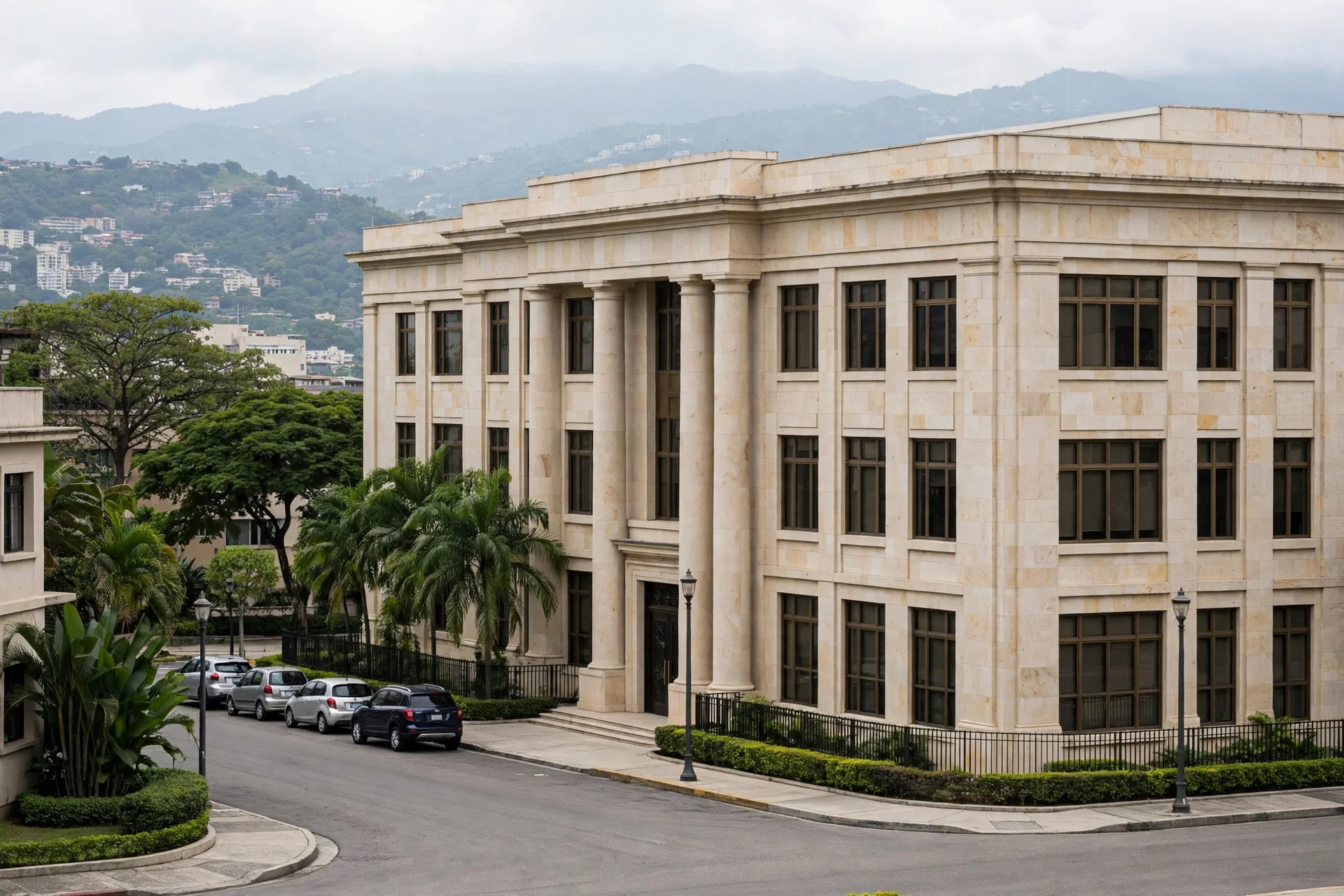
Imagen alusiva de una sede institucional en Caracas, en un ambiente sobrio y diurno. · Erick Prometeo Media
A full embassy in Caracas reopens a path to elections
All United States Embassy staff now work from Caracas and provide the full range of services.
Full staff in Caracas still needs proof before trust
The Caracas mission now operates at full strength and oil cooperation in Zulia showed 115,000 barrels, yet sanctions relief already granted raises a prior…
--- The context ---
The break in 2019 left people who needed paperwork, urgent assistance or a direct channel without a nearby mission to turn to. Relations resumed on March 30 began repairing that institutional gap, in a landscape already changed by the arrest of Nicolás Maduro in January during a United States military operation in the capital.
--- The facts ---
The missing confirmation arrived this Saturday. John M. Barrett, the chargé d'affaires and Washington's senior diplomatic representative in the country, announced that the entire team now operates from Caracas. No member of staff remains deployed outside the mission.
Coverage for United States citizens once again spans the complete catalogue, and it will continue to expand, according to the announcement. Working on the ground also enables daily contact with Venezuelans that did not exist before.
--- The positions ---
For Barrett, restoring the presence is not an administrative end in itself. He tied the recovered mission to reaching the third phase of the plan advanced by the Donald Trump Administration, the stretch designed to open the way to free and fair elections and, through them, to a lasting democracy.
In his account, that path includes reconciliation led by Venezuelans themselves between the ruling movement and the opposition. Together with partners, it also seeks to underpin stability and rebuild the electricity grid and health care.
--- What remains unknown ---
What has been announced still includes no electoral timetable and does not describe the mechanisms that will establish whether the eventual vote meets shared guarantees. Without that verification architecture, the road to the ballot box is stated but not yet secured.
On Friday, Barrett toured a field in Zulia, in the northwest next to Colombia, with acting president Delcy Rodríguez to review the August pact granting Washington access to a quarter of reserves. Output there reached 115,000 barrels that day, with 120,000 barrels per day projected for December, while Rodríguez argued that production should translate into wages, hospitals, schools and services.
--- Unanswered questions ---
Who will be able to take part, and under what guarantees, in the reconciliation that should precede the vote? Which body will verify that an election is genuinely free and fair? In which specific services and places will the promised consular expansion be felt first? Will electricity and health improve at the same pace as oil output grows?
--- EPM analysis ---
Reopening an embassy protects people before it projects symbols: it brings procedures closer, hears grievances and creates an observable channel. Its democratic value, however, will depend on turning presence into checkable political rights, under known rules and scrutiny that no single party controls alone.
📌 EPM Take: In EPM's view, a complete mission in Caracas matters most if it shortens the distance between citizens and their rights: effective consular care, services that return, and an electoral route that can be audited step by step. Reconciliation led by Venezuelans gains meaning when it includes the ruling movement and the opposition under equivalent guarantees. If the third phase sets dates, rules and credible verification, normalisation will stop being a diplomatic gesture and become a real chance for the lasting democracy promised to the Venezuelan population.
--- The context ---
Before discussing ballots, the ledger of what has already been handed over deserves attention. Following the rupture in 2019 and the capture of Nicolás Maduro in January, Washington eased restrictions tied to oil and mining and lifted those weighing on the acting president and on her brother Jorge Rodríguez, who heads the National Assembly. Every relief granted ahead of any electoral outcome calls, prudently, for a checkable counterpart.
--- The facts ---
The first evidence displayed was not consular but oil related. On Friday, Delcy Rodríguez and John M. Barrett visited a field in Zulia, in the northwest bordering Colombia, to showcase progress under the August understanding that reserves Washington access to a quarter of crude reserves. The acting president put that day at 115,000 barrels and set a target of 120,000 barrels per day for December.
Only this Saturday did the mission confirm that no official is missing in Caracas. Barrett, the chargé d'affaires and his country's principal representative, said the whole range of services for United States citizens is already handled and that coverage will keep widening, a reopening that also restores risks and duties of protection over personnel.
--- The positions ---
The Donald Trump Administration's scheme ranks priorities without shortcuts: stabilise first, revive the economy next, and leave the electoral definition to the third phase. In the second stage, the arrival of United States companies investing and creating quality jobs is already being highlighted, within arrangements covering oil, gold and mining.
Rodríguez, for her part, presented production as a lever of development chained to other engines and promised reflections in daily life, from wages to hospitals, schools, roads and public services. Those statements describe an intention; they do not yet prove delivery.
--- What remains unknown ---
Neither intervention specified measurable thresholds for authorising the jump to the electoral phase, nor what would happen if those thresholds are missed. Reciprocity, security standards for the reinstalled staff and hard mechanisms to certify production and progress were likewise left undetailed.
--- Unanswered questions ---
Which concrete results, rather than declarations alone, will unlock the move to the third phase? What consequence will follow non compliance: do relief measures stop, or is the timetable renegotiated? Who will independently audit whether December's 120,000 barrels per day are real and sustained? What effective protection and reciprocal treatment cover the personnel already working in full in Caracas?
--- EPM analysis ---
Sequencing can be a virtue when it works as a lock rather than as an indefinite wait. Granting crude access, relaxing restrictions and normalising interlocutors before any vote reverses the usual incentive: practical legitimacy arrives first, while the democratic test comes last.
📌 EPM Take: In EPM's view, no further concession should be treated as settled without a dated and verifiable counterpart. Full staffing and the Zulia figures are facts, not guarantees: what matters is to demand security for personnel, explicit reciprocity and measurable results before recognising the outcome as legitimate. If the third phase slips without cost, caution will have failed; if it arrives with a free and fair vote under rigorous scrutiny, the sequence can be defended as discipline rather than indulgence.
Con la embajada completa, Caracas retoma la ruta electoral
Todo el personal de la Embajada de Estados Unidos ya trabaja desde Caracas y brinda la gama completa de servicios.
Personal completo en Caracas, legitimidad aún condicionada
La sede en Caracas ya opera con dotación entera y la cooperación petrolera en Zulia exhibió 115.000 barriles, pero los alivios de sanciones ya concedidos…
--- El contexto ---
Cuando las relaciones se rompieron en 2019, quien necesitaba un trámite o una asistencia urgente quedó sin una sede cercana. La reapertura acordada el 30 de marzo pasado empezó a reparar el vacío institucional, en un escenario ya distinto tras la detención de Nicolás Maduro en enero, durante una operación militar estadounidense en la capital.
--- Los hechos ---
Este sábado llegó la confirmación que faltaba para cerrar esa etapa: John M. Barrett, encargado de negocios y máxima autoridad diplomática de Washington en el país, comunicó que la dotación al completo opera desde Caracas. Nadie del equipo permanece desplegado fuera de la sede.
La atención a ciudadanos estadounidenses cubre nuevamente todo el catálogo previsto y, según lo anunciado, continuará creciendo. A la vez, trabajar sobre el terreno habilita un contacto cotidiano con la población venezolana que antes no existía.
--- Las posiciones ---
Para Barrett, restablecer la presencia no constituye un fin administrativo. El diplomático vinculó la sede recuperada con la llegada a la tercera fase del plan impulsado por la Administración de Donald Trump, tramo pensado para abrir paso a comicios libres y justos y, con ellos, a una democracia duradera.
Ese recorrido incluye, en su planteamiento, una reconciliación conducida por los propios venezolanos entre chavismo y oposición. También contempla, junto a socios, apuntalar la estabilidad y recuperar la red eléctrica y la salud.
--- Lo que falta saber ---
Lo anunciado no incluye un calendario electoral ni describe con qué mecanismos se comprobará que la votación final reúne garantías compartidas. Sin esa arquitectura de verificación, la ruta hacia las urnas permanece enunciada, pero no cerrada.
El viernes, Barrett recorrió con la presidenta encargada Delcy Rodríguez un campo de Zulia, al noroeste y junto a Colombia, para revisar el pacto de agosto que otorga a Washington acceso a la cuarta parte de las reservas. Allí se alcanzaron 115.000 barriles ese día y se proyectan 120.000 barriles diarios en diciembre, mientras Rodríguez defendió que la producción se traduzca en salarios, hospitales, escuelas y servicios.
--- Preguntas sin respuesta ---
¿Quiénes podrán participar y con qué garantías en la reconciliación que debe preceder a la votación? ¿Qué instancia verificará que unos comicios sean efectivamente libres y justos? ¿En qué servicios concretos y en qué lugares se notará primero la ampliación consular prometida? ¿Llegarán la electricidad y la salud a mejorar al mismo ritmo que crece la producción petrolera?
--- Análisis EPM ---
Reabrir una embajada protege personas antes que símbolos: acerca trámites y crea un canal observable. Su valor democrático, sin embargo, dependerá de convertir la presencia en derechos políticos comprobables, con reglas conocidas y una comprobación que ninguna de las partes controle en solitario.
📌 Conclusion EPM: A juicio de EPM, una sede completa en Caracas vale sobre todo si acorta la distancia entre el ciudadano y sus derechos: atención consular efectiva, servicios que vuelven y una vía electoral que pueda auditarse paso a paso. La reconciliación liderada por venezolanos gana sentido cuando incluye a chavismo y oposición bajo garantías equivalentes. Si la tercera fase fija fechas, reglas y verificación creíble, la normalización dejará de ser un gesto diplomático y se volverá una oportunidad real de democracia duradera para la población venezolana.
--- El contexto ---
Antes de hablar de urnas conviene revisar lo ya entregado. Tras la ruptura de 2019 y la captura de Nicolás Maduro en enero, Washington aflojó sanciones vinculadas al petróleo y a la minería y retiró las que pesaban sobre la presidenta encargada y sobre su hermano Jorge Rodríguez, presidente de la Asamblea Nacional. Cada alivio otorgado sin un resultado electoral previo exige, por prudencia, una contrapartida comprobable.
--- Los hechos ---
La primera prueba exhibida no fue consular, sino petrolera. El viernes, Delcy Rodríguez y John M. Barrett recorrieron un campo de Zulia, en el noroeste fronterizo con Colombia, para mostrar avances del entendimiento de agosto que reserva a Washington acceso a la cuarta parte de las reservas de crudo. La mandataria encargada cifró la jornada en 115.000 barriles y fijó como meta 120.000 barriles diarios en diciembre.
Este sábado la sede confirmó que ningún funcionario falta en Caracas. Barrett, encargado de negocios y principal representante de su país, aseguró que ya se atiende todo el abanico de servicios para ciudadanos estadounidenses y que esa cobertura seguirá ampliándose, una reapertura que también repone riesgos y obligaciones de custodia sobre el personal.
--- Las posiciones ---
El esquema de la Administración de Donald Trump ordena las prioridades sin atajos: estabilizar primero, reactivar la economía después y dejar la definición electoral para la tercera fase. En la segunda etapa ya se destaca la llegada de compañías estadounidenses que invierten y generan empleos de calidad, dentro de convenios de petróleo, oro y minería.
Por su parte, Rodríguez presentó la producción como palanca de desarrollo y prometió reflejos en la vida diaria, desde salarios hasta hospitales, escuelas, vialidad y servicios públicos. Son afirmaciones que describen una intención; todavía no acreditan un cumplimiento.
--- Lo que falta saber ---
Ninguna de las intervenciones precisó umbrales medibles para autorizar el salto a la fase electoral, ni qué ocurriría si esos umbrales no se alcanzan. Tampoco se detallaron reciprocidad, seguridad para la dotación reinstalada ni mecanismos duros para certificar producción y avances.
--- Preguntas sin respuesta ---
¿Qué resultados concretos, y no solo declaraciones, habilitarán el paso a la tercera fase? ¿Qué consecuencia tendrá un incumplimiento: se detienen los alivios o se renegocia el calendario? ¿Quién auditará con independencia que los 120.000 barriles diarios de diciembre sean reales y sostenidos? ¿Qué protección efectiva y qué trato recíproco amparan al personal que ya trabaja entero en Caracas?
--- Análisis EPM ---
El orden puede ser una virtud si funciona como candado y no como espera indefinida. Conceder acceso al crudo, aliviar restricciones y normalizar interlocutores antes de votar invierte el incentivo habitual: la legitimidad práctica llega primero y la prueba democrática queda para el final.
📌 Conclusion EPM: A juicio de EPM, ninguna concesión adicional debería darse por consolidada sin una contrapartida fechada y verificable. La dotación completa y las cifras de Zulia son hechos, no garantías: lo decisivo será exigir seguridad para el personal, reciprocidad explícita y resultados medibles antes de reconocer como legítimo el desenlace. Si la tercera fase se retrasa sin costo, la cautela habrá fallado; si llega con votación libre y justa bajo control riguroso, la secuencia podrá defenderse como disciplina y no como indulgencia.