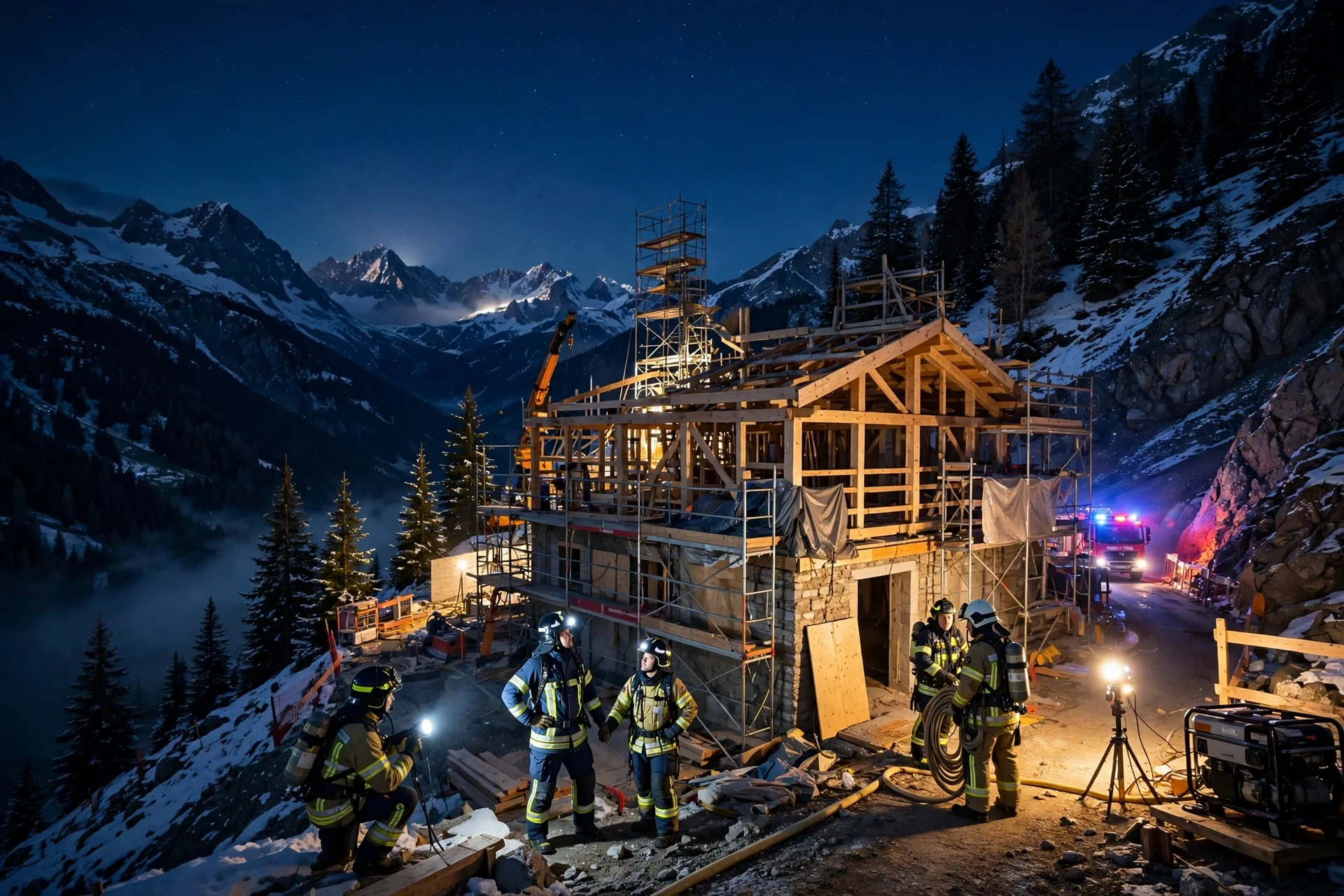
Fire largely destroys the Eagle's Nest in Bavaria, one man detained
A fire during Friday night largely destroyed the Kehlsteinhaus, the Eagle's Nest, in the Bavarian Alps.
Historic Kehlsteinhaus badly damaged by overnight fire in Bavaria
The Kehlsteinhaus, a Bavarian historic monument at 1,834 meters in the Alps, was gravely damaged by an overnight fire that destroyed much of the building.
--- The context ---
The Kehlsteinhaus, known as the Eagle's Nest, stands at 1,834 meters above sea level in the Bavarian Alps . Built in 1938 as a diplomatic representation complex during the Third Reich, it served as a reception center for dignitaries and foreign guests of the Nazi regime.
After the Second World War and the denazification driven by the Allies, the property passed to the federal state of Bavaria as a historic monument of pedagogical memory. Since 1952 it had operated as a restaurant, a summer lodge and a place of learning about the crimes of National Socialism, with a permanent exhibition on the abuses of totalitarianism.
--- The facts ---
During Friday night, a fire consumed the building and largely destroyed it, as confirmed by the police of the federal state of Bavaria. The emergency service received the first fire alert at around 21:15 local time, 19:15 GMT.
The abrupt topography and the difficult access to the summit hindered the extinguishing effort, which required the deployment of more than 200 firefighters and rescue personnel. Preliminary information confirms that no victims or injuries were recorded among the custodial staff.
--- The positions ---
The police headquarters of Upper Bavaria South reported in a statement that a suspect had been provisionally detained and that the Traunstein Criminal Police had taken over the investigations into the cause of the fire. The detention is provisional and the cause remains under investigation.
Spokespersons for the security forces admitted to local media that the structure has been gravely damaged and that the chances of recovering the building are minimal. Judicial authorities are trying to determine whether what happened responds to ideological or vandalistic motivations, and only the investigation can clarify it with evidence.
--- What remains unknown ---
The cause of the fire is not yet known, nor is there a definitive assessment of the damage. The identity of the detained person has not been reported either.
--- Unanswered questions ---
What started the fire that consumed the Kehlsteinhaus during Friday night? What connection, if any, does the provisionally detained person have with the start of the fire? Will Bavaria recover a building that the security forces consider almost lost?
--- EPM analysis ---
The value of the Kehlsteinhaus lay not in its architecture but in its function: an uncomfortable place preserved so memory would have a physical address. When such a site burns, a classroom about what happened and why it must not be repeated is also lost.
📌 EPM Take:
In EPM's view, prudence is essential in this case: there is a provisional detention and an open investigation, but no established cause, and turning suspicion into a verdict would mean judging without evidence. The urgent task is twofold: to establish the origin of the fire with rigor and to decide transparently what will happen to a space of pedagogical memory that Germany maintained for decades so the past would become a documented warning, not oblivion.
--- The context ---
At 1,834 meters above sea level in the Bavarian Alps stands the Kehlsteinhaus, the Eagle's Nest, a building erected in 1938 as a diplomatic representation complex during the Third Reich. It functioned as a reception center for dignitaries and foreign guests of the Nazi regime, and that burden shaped everything afterward.
After the Second World War and the denazification driven by the Allies, the property passed to the federal state of Bavaria as a historic monument of pedagogical memory. Since 1952 it had operated as a restaurant, a summer lodge and a place of learning about the crimes of National Socialism, with a permanent exhibition on the abuses of totalitarianism.
--- The facts ---
A fire recorded during Friday night largely destroyed the building, as confirmed by the police of the federal state of Bavaria. The emergency service received the first fire alert at around 21:15 local time, 19:15 GMT.
The abrupt topography hindered the extinguishing maneuvers and required the deployment of more than 200 firefighters and rescue personnel. According to preliminary information, there were no victims or injuries among the custodial staff.
--- The positions ---
In a statement, the police headquarters of Upper Bavaria South indicated that a suspect had been provisionally detained and that the Traunstein Criminal Police had taken over the investigations into the cause of the fire. The cause of the fire has not been established by any authority.
Spokespersons for the security forces admitted to local media that the structure has been gravely damaged and that the chances of recovering the building are minimal. Judicial authorities are trying to determine whether what happened responds to ideological or vandalistic motivations, and only the investigation can clarify it.
--- What remains unknown ---
There is still no official report on the origin of the fire nor a complete damage assessment. The detained person's identity is unknown, as is whether formal charges will follow.
--- Unanswered questions ---
What was the cause of the fire that largely destroyed the Kehlsteinhaus? What evidence, if any, links the detained person to the origin of the fire? What will Bavaria decide about a monument that security teams consider unrecoverable?
--- EPM analysis ---
Order and memory are not enemies: Bavaria kept this building under public control with a clear educational function. The law must act without spectacle, with the Traunstein investigation setting the pace.
📌 EPM Take:
In EPM's view, this case demands institutional firmness and informational restraint in equal measure: firmness to investigate to the end, protect what remains of the site and decide its future as a historic monument with criteria of memory and security, and restraint not to assign blame in advance while the cause remains unestablished. A serious state does not turn a provisional detention into an anticipated conviction, nor does it let a symbol of historical warning disappear without a well-founded response.
Incendio destruye el Nido del Águila en Baviera y deja un detenido
Un incendio durante la noche del viernes destruyó en gran parte el Kehlsteinhaus, el Nido del Águila, en los Alpes bávaros.
El Kehlsteinhaus queda gravemente dañado tras un incendio nocturno
El Kehlsteinhaus, monumento histórico de Baviera situado a 1.834 metros en los Alpes, quedó gravemente dañado por un incendio nocturno que destruyó gran parte…
--- El contexto ---
El Kehlsteinhaus, conocido como el Nido del Águila, se levanta a 1.834 metros de altitud en los Alpes bávaros. Construido en 1938 como complejo de representación diplomática durante el III Reich, sirvió como centro de recepción para dignatarios e invitados extranjeros del régimen nazi.
Tras la Segunda Guerra Mundial y la desnazificación impulsada por los Aliados, la propiedad pasó al estado federado de Baviera como monumento histórico de memoria pedagógica. Desde 1952 operaba como restaurante, albergue veraniego y punto de aprendizaje sobre los crímenes del nacionalsocialismo, con una exposición permanente sobre los abusos del totalitarismo.
--- Los hechos ---
Durante la noche del viernes, un incendio consumió el inmueble y lo destruyó en gran parte, según confirmó la Policía de Baviera. El servicio de emergencias recibió el primer aviso de fuego hacia las 21:15 hora local, las 19:15 GMT.
La abrupta topografía y el difícil acceso a la cumbre dificultaron las maniobras de extinción, con el despliegue de más de 200 bomberos y efectivos de rescate. Las informaciones preliminares confirman que no se registraron víctimas ni heridos entre el personal de custodia.
--- Las posiciones ---
La jefatura policial de Baviera Superior Sur informó en un comunicado que una persona sospechosa había sido detenida de forma provisional y que la Policía Criminal de Traunstein había asumido las investigaciones sobre la causa del incendio. La detención es provisional y la causa sigue bajo investigación.
Portavoces de los cuerpos de seguridad admitieron ante medios locales que la estructura ha quedado gravemente dañada y que las probabilidades de recuperación del edificio son mínimas. Las autoridades judiciales intentan determinar si lo ocurrido responde a motivaciones ideológicas o vandálicas, y solo la investigación lo aclarará con pruebas.
--- Lo que falta saber ---
Aún no se conoce la causa del incendio ni el balance definitivo de daños a la estructura y la exposición permanente. Tampoco se conoce la identidad de la persona detenida.
--- Preguntas sin respuesta ---
¿Qué originó el fuego que consumió el Kehlsteinhaus durante la noche del viernes? ¿Qué relación, si la hay, tiene la persona detenida de forma provisional con el inicio del incendio? ¿Podrá Baviera recuperar un edificio que los cuerpos de seguridad consideran casi perdido?
--- Análisis EPM ---
El valor del Kehlsteinhaus no estaba en su arquitectura sino en su función: un lugar incómodo conservado para que la memoria tuviera una dirección física. Cuando un sitio así arde, se pierde también un aula sobre lo que ocurrió y por qué no debe repetirse.
📌 Conclusion EPM:
A juicio de EPM, la prudencia manda en este caso: hay un detenido provisional y una investigación abierta, pero ninguna causa establecida, y convertir la sospecha en veredicto sería juzgar sin pruebas. Lo urgente es doble: esclarecer el origen del fuego con rigor y decidir con transparencia qué ocurrirá con un espacio de memoria pedagógica que Alemania mantuvo durante décadas para que el pasado no se volviera olvido, sino advertencia documentada.
--- El contexto ---
A 1.834 metros de altitud en los Alpes bávaros se alza el Kehlsteinhaus, el Nido del Águila, edificación construida en 1938 como complejo de representación diplomática durante el III Reich. Funcionó como centro de recepción para dignatarios e invitados extranjeros del régimen nazi, y esa carga marcó su destino posterior.
Tras la Segunda Guerra Mundial y la desnazificación impulsada por los Aliados, la propiedad pasó al estado federado de Baviera como monumento histórico de memoria pedagógica. Desde 1952 operaba como restaurante, albergue veraniego y punto de aprendizaje sobre los crímenes del nacionalsocialismo, con una exposición permanente sobre los abusos del totalitarismo.
--- Los hechos ---
Un incendio registrado durante la noche del viernes destruyó en gran parte el inmueble, según confirmó la Policía del estado federado de Baviera. El servicio de emergencias recibió el primer aviso de fuego hacia las 21:15 hora local, las 19:15 GMT.
La abrupta topografía dificultó las maniobras de extinción y obligó a desplegar a más de 200 efectivos de bomberos y cuerpos de rescate. Según las informaciones preliminares, no hubo víctimas ni heridos entre el personal de custodia.
--- Las posiciones ---
En un comunicado, la jefatura policial de Baviera Superior Sur señaló que una persona sospechosa había sido detenida de forma provisional y que la Policía Criminal de Traunstein había asumido las investigaciones sobre la causa del incendio. La causa del fuego no ha sido establecida por ninguna autoridad.
Portavoces de los cuerpos de seguridad admitieron ante medios locales que la estructura ha quedado gravemente dañada y que las probabilidades de recuperación del edificio son mínimas. Las autoridades judiciales intentan determinar si lo sucedido responde a motivaciones ideológicas o vandálicas, y solo la investigación lo aclarará.
--- Lo que falta saber ---
Aún no hay informe oficial sobre el origen del fuego ni evaluación completa de los daños. Tampoco se conoce la identidad de la persona detenida ni si habrá cargos formales.
--- Preguntas sin respuesta ---
¿Cuál fue la causa del incendio que destruyó en gran parte el Kehlsteinhaus? ¿Qué elementos vinculan, si es que los hay, a la persona detenida con el origen del fuego? ¿Qué decidirá Baviera sobre un monumento que los equipos de seguridad dan por irrecuperable?
--- Análisis EPM ---
Orden y memoria no son enemigos: Baviera conservó este edificio bajo control público con una función educativa clara. La ley debe actuar sin espectáculo, con la investigación de Traunstein marcando los tiempos.
📌 Conclusion EPM:
A juicio de EPM, este caso exige firmeza institucional y contención informativa a partes iguales: firmeza para investigar hasta el final, proteger lo que quede del sitio y decidir su futuro como monumento histórico con criterios de memoria y de seguridad, y contención para no adelantar culpas mientras la causa sigue sin establecerse. Un Estado serio no convierte una detención provisional en condena anticipada ni deja desaparecer un símbolo de advertencia histórica sin respuesta fundamentada.