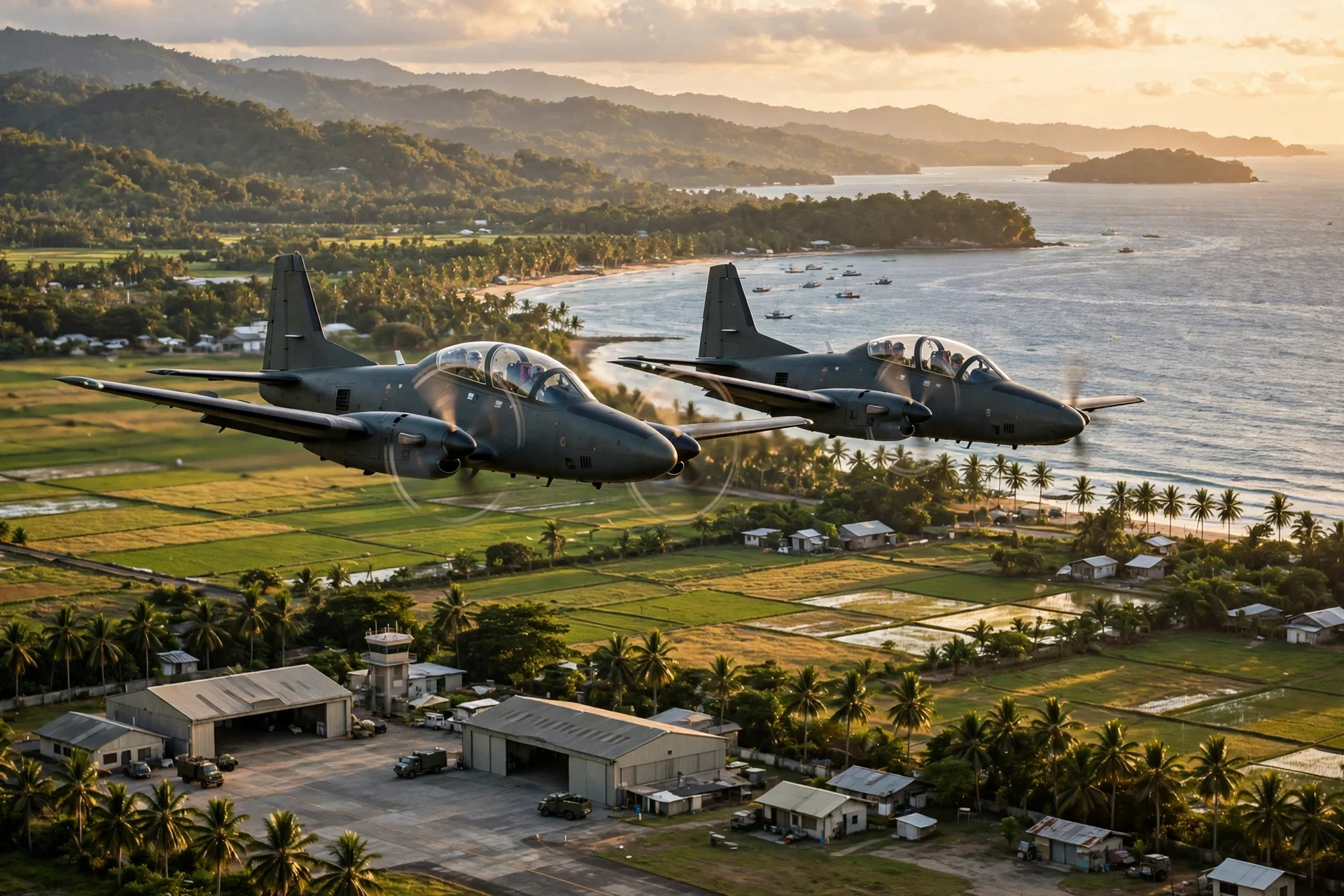
Four Philippine pilots die after two military aircraft collide in training
Four Philippine Air Force pilots died on Friday after two SF-260 aircraft collided in midair during training over Fernando Air Base in Lipa, Batangas.
Philippines grounds fleet after fatal midair collision in Batangas
Two Philippine Air Force SF-260 aircraft collided on Friday during training at Fernando Air Base in Lipa, Batangas, killing the four crew members on board.
--- The context ---
The Philippines trains its military pilots with a fleet that has remained in service for years. That daily routine is the setting of the accident that has now left its Air Force in mourning and renewed attention on the conditions under which its crews prepare.
Fernando Air Base, in Lipa, in the coastal province of Batangas south of Manila, regularly hosts low-altitude practice flights. It was there, on Friday afternoon, that two aircraft in a training maneuver collided in midair while completing instruction routines.
--- The facts ---
According to military sources, the collision involved two SF-260 aircraft flying at low altitude over the base. After the impact, both units fell inside the perimeter of the military installation, and one of them came down near the area of the personnel quarters.
The Air Force confirmed the instant death of the four crew members on board. Because the fall occurred inside the military grounds, there were no additional victims among civilians in nearby areas, according to official reports.
--- The positions ---
The institution announced the preventive grounding of the remaining SF-260 fleet while a technical commission carries out the examinations needed to clarify the factors that caused the collision. That is the main official measure communicated so far.
The official account also places the accident within a broader problem, noting that the crash exposes the operational and budgetary limitations the Armed Forces face in modernizing their air, maritime and land capabilities.
--- What remains unknown ---
The factors that caused the collision during the training maneuver are still unknown. The technical commission will have to determine what happened during those low-altitude flights and whether the condition of the Italian-made fleet played any role.
--- Unanswered questions ---
What factors caused the collision between the two aircraft during the instruction routine on Friday? How long will the remaining SF-260 fleet stay grounded while the examinations continue? What changes will follow in cadet training after another fatal accident involving this same aircraft model in recent years?
--- EPM analysis ---
The recent record makes the case harder to treat as isolated, because last May two airmen died when another unit crashed in Benguet, and in 2023 two service members died when a similar aircraft fell onto a rice field in Bataan. The pattern questions the continued use of this model.
📌 EPM Take:
In EPM's view, the Batangas tragedy requires more than an official statement and demands verifiable answers about the real condition of a fleet that continues to train pilots despite its recent fatal record. Protecting the lives of those who train to defend the country calls for transparent examinations, prompt decisions on the SF-260 fleet and a modernization effort that stops being a pending announcement and becomes an effective, demonstrable priority in daily practice.
--- The context ---
Pilot training is central to the defense of the Philippines, whose aviation and navy maintain constant deployments to safeguard its sovereignty. That daily preparation is the setting in which the fatal collision in Batangas took place.
The events occurred over Fernando Air Base, in Lipa, in the coastal province of Batangas, south of Manila. Two aircraft were flying at low altitude on Friday afternoon while their pilots completed regular instruction routines.
--- The facts ---
According to the official reports of the military institution, the two SF-260 aircraft collided in the air during the maneuver. After the midair impact, both units fell inside the perimeter of the military installation, and one of them came down near the area of the personnel quarters at the base.
The Air Force confirmed the instant death of the four crew members and noted that the fall inside the grounds avoided additional victims among nearby civilians. Four pilots thus lost their lives during an ordinary day of training.
--- The positions ---
As an immediate response, the Air Force announced the preventive grounding of the remaining fleet of SF-260 aircraft, of Italian manufacture, while a technical commission carries out the corresponding examinations to clarify the factors that caused the collision between the two aircraft during the training flights.
The official report also frames the crash within the regional challenges facing the country, with growing tensions with Beijing in the South China Sea, where Philippine aviation and navy maintain a constant presence against Chinese incursions.
--- What remains unknown ---
It has not yet been reported what factors caused the collision or how long the grounding will last. The technical investigation will have to clarify what happened during that routine and provide certainty about the remaining aircraft.
--- Unanswered questions ---
What will the technical commission determine about the causes of the collision over the Fernando Air Base? How will the grounding of the SF-260 fleet affect the continuity of training for new pilots? What response capacity does the Air Force retain while its instruction fleet remains on the ground?
--- EPM analysis ---
The aircraft goes beyond flight instruction, because, despite its primary use in training cadets, this two-seat model performed tactical air attack roles in operations against terrorist groups linked to the Islamic State in Marawi in 2017. Losing aircraft and pilots of that profile weakens a capability already used in real combat.
📌 EPM Take:
In EPM's view, the Philippines cannot allow the preparation of its pilots to claim more lives or its training capacity to remain paused without a clear plan for replacement and reinforcement. The preventive grounding was necessary, but the response must come with a rigorous investigation and with decisions that return to the Air Force a safe, available fleet equal to the sovereignty challenges the country faces every single day and to the families awaiting clear answers.
Cuatro pilotos mueren en Filipinas tras colisión de dos aviones militares
Cuatro pilotos de la Fuerza Aérea de Filipinas murieron el viernes tras la colisión en el aire de dos aviones SF-260 durante un entrenamiento sobre la Base…
Filipinas inmoviliza su flota tras choque aéreo mortal en Batangas
Dos aviones SF-260 de la Fuerza Aérea de Filipinas colisionaron el viernes durante un entrenamiento en la Base Aérea Fernando, en Lipa, Batangas, y murieron…
--- El contexto ---
Filipinas forma a sus pilotos militares con una flota de entrenamiento que lleva años en servicio. En ese marco de instrucción se produjo el accidente que hoy enluta a su Fuerza Aérea y que vuelve a poner el foco sobre las condiciones materiales con las que se entrena.
La Base Aérea Fernando, en la ciudad de Lipa, provincia de Batangas, al sur de Manila, es un punto habitual de vuelos de práctica a baja altitud. Allí, durante la tarde del viernes, dos aeronaves que participaban en una maniobra de instrucción colisionaron en pleno vuelo.
--- Los hechos ---
Según informaron fuentes militares, el choque involucró a dos aviones modelo SF-260 que realizaban vuelos a baja altitud sobre la base. Tras el impacto, ambas unidades se precipitaron dentro del perímetro de la instalación militar, y una de ellas cayó cerca del área de pabellones del personal.
La Fuerza Aérea confirmó la muerte instantánea de los cuatro tripulantes a bordo. Que la caída ocurriera dentro del recinto militar evitó víctimas adicionales entre la población civil de las zonas aledañas, según los reportes oficiales.
--- Las posiciones ---
La institución castrense anunció la inmovilización preventiva de la flota remanente de aviones SF-260 mientras una comisión técnica realiza las pericias para esclarecer los factores que provocaron la colisión. Esa es, hasta ahora, la medida oficial comunicada tras el siniestro.
El relato oficial sitúa el accidente en un problema más amplio, al señalar que pone en evidencia las limitaciones operativas y presupuestarias para modernizar las capacidades aéreas, marítimas y terrestres.
--- Lo que falta saber ---
Todavía no se conocen los factores que provocaron la colisión durante la maniobra. La comisión técnica deberá determinar qué ocurrió en esos vuelos a baja altitud y si el estado de la flota, de fabricación italiana, jugó algún papel.
--- Preguntas sin respuesta ---
¿Qué factores provocaron la colisión entre los dos aviones durante la rutina de instrucción del viernes? ¿Cuánto tiempo permanecerá inmovilizada la flota remanente de SF-260 mientras avanzan las pericias? ¿Qué cambios seguirá en la formación de cadetes tras un nuevo accidente mortal con este mismo modelo?
--- Análisis EPM ---
El historial reciente agrava la lectura del caso, porque en mayo pasado dos aviadores fallecieron al estrellarse otra unidad en Benguet, y en 2023 dos militares murieron cuando una aeronave similar cayó sobre un arrozal en Bataan. No es un episodio aislado, sino una serie que interpela la continuidad del modelo.
📌 Conclusion EPM:
A juicio de EPM, la tragedia de Batangas obliga a mirar más allá del parte oficial y a exigir respuestas verificables sobre el estado real de una flota que sigue formando pilotos pese a sus antecedentes mortales recientes. Proteger la vida de quienes se entrenan para defender al país exige pericias transparentes, decisiones prontas sobre los SF-260 y una modernización que deje de ser un anuncio pendiente para convertirse en una prioridad efectiva y comprobable en la práctica diaria.
--- El contexto ---
La formación de pilotos es central para la defensa de Filipinas, que mantiene despliegues constantes de su aviación y su marina para resguardar su soberanía. Ese esfuerzo diario de preparación es el escenario en el que se produjo la colisión mortal de Batangas.
Los hechos ocurrieron sobre la Base Aérea Fernando, en Lipa, provincia costera de Batangas, al sur de Manila. Dos aeronaves realizaban vuelos a baja altitud en la tarde del viernes, mientras los pilotos completaban rutinas de instrucción.
--- Los hechos ---
De acuerdo con los reportes oficiales de la institución castrense, los dos aviones modelo SF-260 colisionaron en el aire durante la maniobra. Tras el impacto en pleno vuelo, ambas unidades se precipitaron dentro del perímetro de la instalación militar, y una de ellas cayó cerca del área de pabellones del personal.
La Fuerza Aérea confirmó la muerte instantánea de los cuatro tripulantes y señaló que la caída dentro del recinto evitó víctimas adicionales entre la población civil aledaña. Cuatro pilotos perdieron así la vida en una jornada ordinaria de entrenamiento.
--- Las posiciones ---
La Fuerza Aérea anunció la inmovilización preventiva de la flota remanente de SF-260, de fabricación italiana, mientras una comisión técnica realiza las pericias para esclarecer los factores de la colisión.
El reporte oficial enmarca el siniestro en los desafíos regionales del país, con crecientes tensiones con Pekín en el mar de la China Meridional, donde la aviación y la marina filipina sostienen presencia constante frente a incursiones chinas.
--- Lo que falta saber ---
Aún no se ha informado qué factores causaron el choque ni cuánto durará la inmovilización. La investigación técnica deberá esclarecer lo ocurrido en aquella rutina y aportar certezas sobre la seguridad de las aeronaves restantes.
--- Preguntas sin respuesta ---
¿Qué determinará la comisión técnica sobre las causas de la colisión ocurrida sobre la Base Aérea Fernando? ¿Cómo afectará la inmovilización de los SF-260 a la continuidad del entrenamiento de los nuevos pilotos? ¿Qué capacidad de respuesta conserva la Fuerza Aérea mientras su flota de instrucción permanece en tierra?
--- Análisis EPM ---
El modelo siniestrado va más allá del aula de vuelo, porque, pese a su uso primario en la formación de cadetes, este biplaza desempeñó roles tácticos de ataque aéreo en las operaciones contra grupos terroristas vinculados al Estado Islámico en Marawi, en 2017. Perder aeronaves y pilotos de ese perfil debilita una capacidad ya empleada en combate real.
📌 Conclusion EPM:
A juicio de EPM, Filipinas no puede permitirse que la preparación de sus pilotos se cobre más vidas ni que su capacidad de instrucción quede en pausa sin un plan claro de reemplazo y de refuerzo. La inmovilización preventiva era necesaria, pero la respuesta debe ir acompañada de una investigación rigurosa y de decisiones que devuelvan a la Fuerza Aérea una flota segura, disponible y a la altura de los desafíos de soberanía que el país enfrenta a diario.