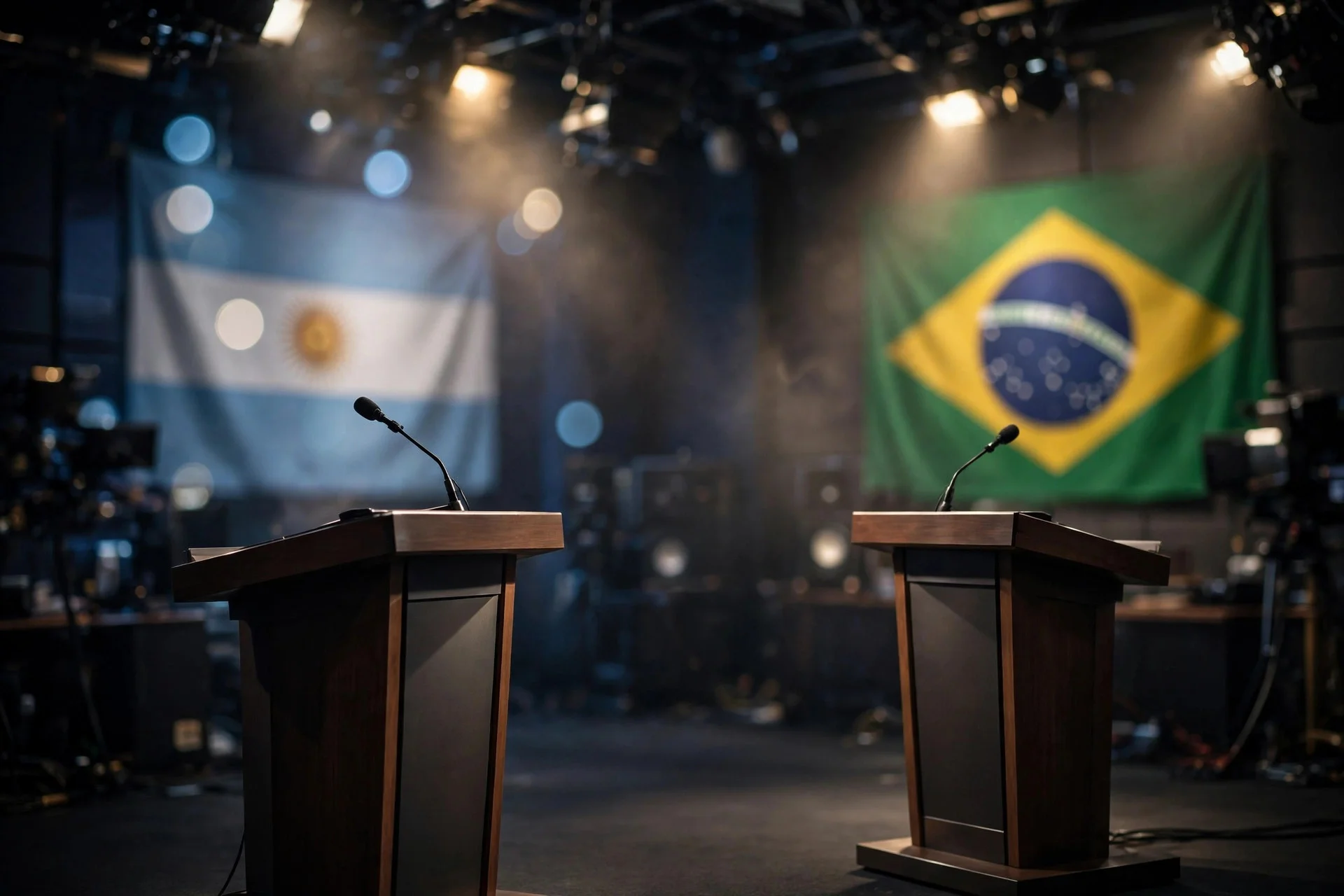
Javier Milei called Luiz Inácio Lula da Silva a thief and a liar on X, replying to Lula's claim in the debate with Flávio Bolsonaro that Argentine poverty had…
Milei answers Lula and defends Argentina's record
Javier Milei replied on X to Luiz Inácio Lula da Silva, called him a thief and a liar and accused his team of fabricating data, after the debate with Flávio…
--- The context ---
Argentina and Brazil reach the Brazilian runoff with their presidents clashing in public. Javier Milei keeps a distant relationship with Luiz Inácio Lula da Silva and has expressed strong public backing for Flávio Bolsonaro throughout the campaign. Lula is seeking a fourth non-consecutive term and Bolsonaro, the Liberal Party candidate, is challenging him in a race that polls describe as open.
--- The facts ---
On Friday, October 23, 2026, in the last televised debate before the runoff, Lula said that poverty in Argentina had reached 40% and that people are eating donkey meat, and he reproached Bolsonaro for wanting a model just like Milei's. Milei replied on X by reposting a message from economist Antonio Aracre, who transcribed those remarks and included a meat consumption chart.
In his own text, Milei called Lula a thief and a liar and accused his circle of having a negative campaign team dedicated to creating lies about adversaries, which he blamed for fabricating the data used in the debate. The chart shared by Aracre, attributed to the Food and Agriculture Organization of the United Nations, records annual beef consumption of 46,9 kilos per capita in Argentina against 35,4 kilos in Brazil, and includes figures for Uruguay, Paraguay and Chile.
--- The positions ---
Lula used the Argentine situation as an electoral warning against the model that, in his view, Bolsonaro wants to import. Milei defended his administration, rejected the data attributed to the Brazilian president and aligned his reply with his public support for Bolsonaro. Aracre supplied the consumption figure as a counterweight to the donkey meat claim. In the first round of voting, on October 4, Bolsonaro obtained 47,03% of the vote against 45,16% for Lula, with neither reaching the majority needed to avoid a runoff.
--- What remains unknown ---
The source provides no independent verification of the 40% poverty claim or of the alleged donkey meat consumption, and it does not record a later response from Lula or his campaign to Milei's message. The new post adds to other clashes this week, in which Milei accused Lula of authoritarianism and of possible maneuvers over the election result, and called him a leftist thief again.
--- Unanswered questions ---
What official and comparable data back the claim that Argentine poverty reached 40%? Will Lula or his campaign answer Milei's accusation before tomorrow's vote? Will this clash between presidents weigh on Brazilian voters who have not yet decided? How will the runoff result affect the relationship between the two governments?
--- EPM analysis ---
The episode turns Argentina into a central argument of the Brazilian campaign and raises the tone between two heads of state who already kept a distant relationship. The dispute mixes sensitive social data, personal disqualifications and an election with an open outcome. Its immediate impact will be measured in tomorrow's vote, but the diplomatic cost of the verbal escalation may outlast the campaign.
📌 EPM Take: In EPM's view, the clash reveals a problem larger than the insult: two heads of state are arguing with figures that lack immediate public verification on the eve of a decisive election. Argentine poverty deserves debate grounded in comparable official data, not crossed campaign slogans. When disqualification replaces evidence, the bilateral relationship pays the price and voters receive noise instead of clarity. An institutional, verifiable response would protect both countries better than an escalation of grievances on social media.
--- The context ---
The Brazilian campaign has entered its decisive stretch with Argentina turned into a debating topic. Javier Milei follows the process closely, publicly backs Flávio Bolsonaro and keeps a distant relationship with Luiz Inácio Lula da Silva, who is seeking a fourth non-consecutive term. The Liberal Party candidate and the sitting president will face each other again tomorrow in a runoff that polls present as open.
--- The facts ---
During the televised debate on Friday, October 23, 2026, the last one before the runoff, Lula maintained that poverty in Argentina had reached 40% and that people are eating donkey meat, and he told Bolsonaro that he wants a model just like Milei's. The reply came on X: Milei reposted a message from economist Antonio Aracre with a transcription of those remarks and a meat consumption chart, and added a text of his own.
In that text, Milei called Lula a thief and a liar and said that his negative campaign team, dedicated in his account to creating lies about adversaries, should suggest not using the false data they themselves invent. The chart shared by Aracre, attributed to the Food and Agriculture Organization of the United Nations, assigns Argentina annual beef consumption of 46,9 kilos per capita, against 35,4 kilos in Brazil, and includes figures for Uruguay, Paraguay and Chile.
--- The positions ---
For Lula, Argentina works as an example of what, in his judgment, Brazil must not follow if Bolsonaro wins. For Milei, the debate claim is part of a negative campaign built on fabricated data, and his reply defends his government's record with the consumption figure shared by Aracre. In the first round, on October 4, Bolsonaro gathered 47,03% of the vote and Lula 45,16%, without a sufficient majority to avoid the runoff.
--- What remains unknown ---
The source does not show documentary backing for the 40% figure or for the alleged donkey meat consumption, and it records no later reply from Lula or his team to the Argentine post. The clash is not isolated: this week Milei also accused Lula of authoritarianism and of possible maneuvers over the election result, and called him a leftist thief again.
--- Unanswered questions ---
Will Lula's campaign present documentary backing for the 40% poverty claim? Will Milei keep up his active support for Bolsonaro until tomorrow's voting closes? Will either government seek to lower the tone once the result is known? What concrete consequences will the runoff have for the bilateral relationship?
--- EPM analysis ---
The firmness of the reply is explained by the setting: a serious claim about poverty and about what Argentines eat, made in the final debate of an open election. The consumption data attributed to the FAO contradicts the portrayal spread in the debate and sustains the rebuttal. It remains to be seen whether, once the election passes, both governments separate the campaign dispute from the relationship between two countries that need each other.
📌 EPM Take: In EPM's view, Milei reacted to a serious claim made in a decisive debate: attributing 40% poverty and donkey meat consumption to Argentina required documentary backing that was not shown. The consumption figure circulated, attributed to the FAO, contradicts Lula's portrayal and explains the harshness of the reply. Defending one's own record against a negative campaign is legitimate; even so, public precision and institutional calm should accompany firmness so that the defense is not lost in the noise.
Milei llama ladrón y mentiroso a Lula en víspera del balotaje
Javier Milei llamó ladrón y mentiroso a Luiz Inácio Lula da Silva en X, en respuesta a la afirmación de Lula en el debate con Flávio Bolsonaro de que la…
Milei responde a Lula y defiende los datos de Argentina
Javier Milei respondió en X a Luiz Inácio Lula da Silva, lo llamó ladrón y mentiroso y acusó a su equipo de fabricar datos, tras el debate con Flávio Bolsonaro…
--- El contexto ---
Argentina y Brasil llegan a la segunda vuelta brasileña con sus presidentes enfrentados. Javier Milei mantiene una relación distante con Luiz Inácio Lula da Silva y ha expresado un contundente respaldo a Flávio Bolsonaro en la campaña. Lula busca un cuarto mandato no consecutivo y Bolsonaro, candidato del Partido Liberal, lo desafía en un escenario abierto según las encuestas.
--- Los hechos ---
El viernes 23 de octubre de 2026, en el último debate televisivo antes de la segunda vuelta, Lula afirmó que en Argentina la pobreza llegó al 40% y que el pueblo está comiendo carne de burro, y le reprochó a Bolsonaro querer un modelo igual al de Milei. Milei respondió en X republicando un mensaje del economista Antonio Aracre, que transcribió esos dichos e incluyó un cuadro de consumo de carne.
En su propio texto, Milei llamó ladrón y mentiroso a Lula y acusó a su entorno de contar con un equipo de campaña negativa dedicado a crear mentiras sobre adversarios, al que atribuyó la fabricación de los datos usados en el debate. El cuadro difundido por Aracre, atribuido a la Organización de las Naciones Unidas para la Alimentación y la Agricultura, registra un consumo anual de carne bovina de 46,9 kilos per cápita en Argentina frente a 35,4 kilos en Brasil, e incluye cifras de Uruguay, Paraguay y Chile.
--- Las posiciones ---
Lula utilizó la situación argentina como advertencia electoral contra el modelo que, según él, Bolsonaro quiere importar. Milei defendió su gestión, rechazó los datos atribuidos al presidente brasileño y alineó su respuesta con su respaldo público a Bolsonaro. Aracre aportó el dato de consumo como contrapeso a la afirmación sobre la carne de burro. En la primera votación, el 4 de octubre, Bolsonaro obtuvo 47,03% de los votos frente a 45,16% de Lula, sin que ninguno alcanzara la mayoría para evitar el balotaje.
--- Lo que falta saber ---
La fuente no aporta una verificación independiente de la afirmación del 40% de pobreza ni del supuesto consumo de carne de burro, y tampoco recoge una respuesta posterior de Lula al mensaje de Milei. El nuevo posteo se suma a otros cruces de esta semana, en los que Milei acusó a Lula de autoritarismo y de maniobras sobre el resultado electoral, y volvió a llamarlo zurdo ladrón.
--- Preguntas sin respuesta ---
¿Qué datos oficiales y comparables respaldan la afirmación de que la pobreza argentina llegó al 40%? ¿Responderá Lula o su campaña a la acusación de Milei antes de la votación de mañana? ¿Pesará este cruce entre presidentes en los votantes brasileños que aún no definieron su voto? ¿Cómo afectará el resultado del balotaje a la relación entre ambos gobiernos?
--- Análisis EPM ---
El episodio convierte a Argentina en argumento de la campaña brasileña y eleva el tono entre dos jefes de Estado que mantenían una relación distante. La disputa mezcla datos sociales sensibles, descalificaciones personales y una elección de resultado abierto. Su impacto inmediato se medirá en la votación de mañana, pero el costo diplomático de la escalada verbal puede durar más que la campaña.
📌 Conclusion EPM: A juicio de EPM, el cruce revela un problema mayor que el insulto: dos jefes de Estado disputan con cifras sin verificación pública inmediata en la víspera de una elección decisiva. La pobreza argentina merece debate con datos oficiales comparables, no consignas de campaña cruzada. Cuando la descalificación sustituye a la evidencia, la relación bilateral paga el costo y los votantes reciben ruido en lugar de claridad. Una respuesta institucional y verificable protegería mejor a ambos países que una escalada de agravios en redes sociales.
--- El contexto ---
La campaña brasileña entró en su tramo decisivo con Argentina convertida en tema de debate. Javier Milei sigue el proceso con atención, respalda públicamente a Flávio Bolsonaro y mantiene una relación distante con Luiz Inácio Lula da Silva, que busca un cuarto mandato no consecutivo. El candidato del Partido Liberal y el actual presidente volverán a enfrentarse mañana en una segunda vuelta de resultado abierto según las encuestas.
--- Los hechos ---
Durante el debate del viernes 23 de octubre de 2026, el último antes del balotaje, Lula sostuvo que en Argentina la pobreza llegó al 40% y que el pueblo está comiendo carne de burro, y le dijo a Bolsonaro que quiere un modelo igual al de Milei. La respuesta llegó en X: Milei republicó un mensaje del economista Antonio Aracre con la transcripción de esos dichos y un cuadro de consumo, y sumó un texto propio.
En ese texto, Milei llamó ladrón y mentiroso a Lula y señaló que su equipo de armado de campaña negativa, dedicado según él a crear mentiras sobre adversarios, le tendría que sugerir no usar los datos falsos que ellos mismos inventan. El cuadro compartido por Aracre, atribuido a la Organización de las Naciones Unidas para la Alimentación y la Agricultura, asigna a Argentina un consumo anual de carne bovina de 46,9 kilos per cápita, frente a 35,4 kilos de Brasil, e incluye cifras de Uruguay, Paraguay y Chile.
--- Las posiciones ---
Para Lula, Argentina funciona como ejemplo de lo que, a su juicio, no debe seguir Brasil si gana Bolsonaro. Para Milei, la afirmación del debate forma parte de una campaña negativa con datos fabricados, y su respuesta defiende el registro con el dato de consumo difundido por Aracre. En la primera votación, el 4 de octubre, Bolsonaro reunió 47,03% de los votos y Lula 45,16%, sin mayoría suficiente para evitar la segunda vuelta.
--- Lo que falta saber ---
La fuente no muestra el respaldo documental de la cifra del 40% ni del supuesto consumo de carne de burro, y no registra una réplica posterior de Lula al posteo argentino. El cruce no es aislado: esta semana Milei también acusó a Lula de autoritarismo y de posibles maniobras sobre el resultado electoral, y volvió a llamarlo zurdo ladrón.
--- Preguntas sin respuesta ---
¿Presentará la campaña de Lula el respaldo documental de la afirmación del 40% de pobreza? ¿Mantendrá Milei su respaldo activo a Bolsonaro hasta el cierre de la votación de mañana? ¿Buscará alguno de los dos gobiernos bajar el tono tras conocerse el resultado? ¿Qué consecuencias concretas tendrá el balotaje para el vínculo bilateral?
--- Análisis EPM ---
La firmeza de la respuesta se explica por el escenario: una afirmación grave sobre la pobreza y la mesa de los argentinos, lanzada en el debate de una elección abierta. El dato de consumo atribuido a la FAO contradice el retrato del debate y sostiene la réplica. Queda por ver si, pasada la elección, ambos gobiernos separan la disputa de campaña de la relación entre dos países que se necesitan.
📌 Conclusion EPM: A juicio de EPM, Milei reaccionó ante una afirmación grave lanzada en un debate decisivo: atribuir a Argentina un 40% de pobreza y consumo de carne de burro exigía un respaldo documental que no se exhibió. El dato de consumo difundido, atribuido a la FAO, contradice el retrato de Lula y explica la dureza de la respuesta. Defender el registro propio frente a una campaña negativa es legítimo; aun así, la precisión pública y la serenidad institucional deben acompañar la firmeza para que la defensa no se pierda en el ruido.