Italy contains protest day: calm streets and alleged promoter detained
The protest day in Italy passed without major incidents, with authorized demonstrations, a large police deployment and the detention in Milan of the alleged…
Order in Italy: preventive deployment and a day without riots in cities
Italy lived a calm day after a broad preventive deployment, with 150 prior searches, authorized demonstrations without incidents and the detention of the…
--- The context ---
Italy entered this Saturday in fear after the serious riots and looting in Milan last weekend. The movement called 17 de Octubre, whose promoters remain unknown, had threatened a mobilization in eight cities, and the expectation was whether that episode would stay isolated or be repeated. In that climate, many cities held peaceful and authorized demonstrations against the war, the cost of living and the Government of Giorgia Meloni. The day passed, in general terms, calmly and without major incidents, with no violent groups or looting during the daytime hours.
Only at the end of the day were there moments of tension and police charges at improvised marches in Rome, Turin, Bologna and Florence. In the capital, some young people managed to enter the Colosseum, although they were repelled by the security staff of the venue.
--- The facts ---
At nine in the evening, the Interior Ministry reported that 4,292 people had been identified across Italy, of whom 371 were taken to a police station. Of them, 110 were minors and 69 were foreigners. Afterwards, nine were arrested and 87 were reported. Police actions began in the early hours, with 150 searches in 20 localities, mainly in Milan, Monza and municipalities in the north of the country, at the homes of suspects and of people detained last weekend.
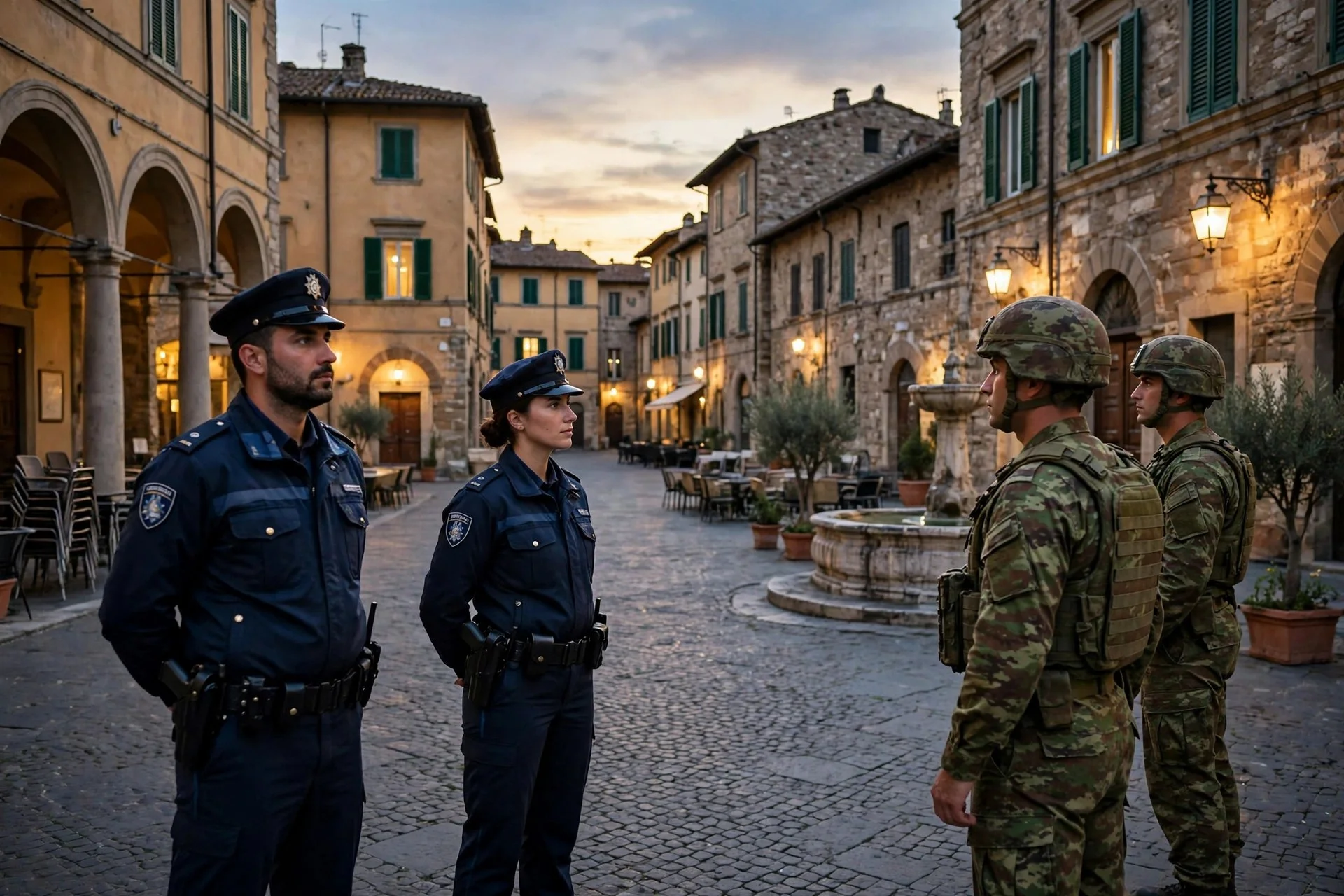
In Milan this Saturday there were 1,000 police officers and 500 military personnel who shielded the city and watched in a dissuasive way the stations of the outlying municipalities, from where the groups that burst into the city centre started last week. In Rome, where 1,500 police officers were deployed, two authorized student demonstrations of opposite sign were held without incidents: one in the morning by far-right young people with about 1,500 people, and another at two thirty by another 4,000 against the war. In Rome 96 young people were arrested, under the new decree approved this week that allows preventive arrest of suspects before public demonstrations.
The two unauthorized calls that caused most concern never materialized. The one by the 17 de Octubre Movement, planned for three in the afternoon, was cancelled late on Friday with the argument of preventing the police response, and the calls in seven other cities were also cancelled. Of the Noi Siamo il Popolo gathering, called for three at Piazza del Popolo, nothing more was ever heard and nobody appeared.
--- The positions ---
Defence Minister Guido Crosetto indirectly held that the alleged organizer was not a marginalized person, noting that he had a wide network of contacts and many more job opportunities and collaborations than most of his contemporaries, and that he mixed with the elite of the Italian intelligentsia. Police attribute to Youssef Siher, a 30-year-old freelance journalist and analyst and an Italian of Moroccan origin detained in Milan, the role of ideologue and organizer of the 17 de Octubre Movement, accused of incitement to crime with aggravating factors of terrorist purpose and use of computer means, and also attribute to him the authorship of the messages spread on social media. The research institute where Siher collaborated clarified that he was only an intern in 2024.
--- What remains unknown ---
Full details of the police operation and the complete reach of the network that would be behind the calls are not yet known. It also remains to be known how the situations of the arrested and reported people will be resolved, and whether the improvised marches at the end of the day will continue in future calls.
--- Unanswered questions ---
Will it be confirmed in court that the detention of the alleged organizer alone explains the calm of the day? What concrete evidence links the social media messages with the organization of last weekend riots? Will mobilizations be called again in the eight announced cities or has the movement been dismantled?
--- EPM analysis ---
The day shows two coexisting planes. On one side, the authorized demonstrations developed normally and gathered thousands of people without relevant incidents, which distinguishes the right to protest from the previous violent episode. On the other, the enormous deployment in Rome, Milan and Turin and the prior searches changed the scenario for any attempt to repeat the looting. The confusion of the calls ended up emptying the threat of a coordinated action.
📌 EPM Take: In EPM's view, the calm of this Saturday should not be read as an end point, but as the combined result of prevention, deployment and disorganization of those who threatened to repeat the violence. The central fact is that protesting remained possible in authorized and well-attended demonstrations, while the attempt to impose disorder found neither space nor an effective call. The pending task for institutions is to sustain that distinction with transparency, verifiable evidence and proportionality, because only in that way does the containment of one day become lasting trust for the cities that lived in fear during the whole week before this day.
--- The context ---
Italy faced this Saturday under strong prevention after the serious riots and looting in Milan last weekend. The movement called 17 de Octubre had threatened to spread to eight cities, and the underlying question was whether public order would withstand a second wave. The State response was to act in advance with searches, deployments and territorial control. In the end, the day passed calmly and without major incidents, with peaceful and authorized demonstrations against the war, the cost of living and the Government of Giorgia Meloni, and with no trace of violent groups or looting during the day.
Only at the close of the day were there moments of tension and police charges at improvised marches in Rome, Turin, Bologna and Florence. In the capital, some young people managed to enter the Colosseum and were repelled by the security staff of the venue.
--- The facts ---
At nine in the evening, the Interior Ministry reported that 4,292 people had been identified across Italy, of whom 371 were taken to a police station. Of them, 110 were minors and 69 were foreigners. Afterwards, nine were arrested and 87 were reported. Before that, during the night between Friday and Saturday, police had carried out 150 searches in 20 localities, mainly in Milan, Monza and municipalities in the north, at the homes of suspects and of people detained last weekend.
In Milan this Saturday there were 1,000 police officers and 500 military personnel who shielded the city and watched the stations of the outlying municipalities to prevent groups like those of last week from reaching the centre. In Rome 1,500 police officers were deployed and 96 young people were arrested, under the new decree approved this week that allows preventive arrest of suspects before public demonstrations, for example if they carry balaclavas, pepper sprays and dangerous objects. In the capital two authorized student demonstrations of opposite sign were held without incidents, one by far-right young people with about 1,500 people and another against the war with another 4,000 people.
The unauthorized calls that caused most concern did not materialize. The one by the 17 de Octubre Movement, planned for three in the afternoon, was cancelled late on Friday with the argument of preventing the police response, and the calls in seven other cities were also cancelled. The Noi Siamo il Popolo gathering, at three at Piazza del Popolo, was left without attendees and without further news during the rest of the day.
--- The positions ---
Defence Minister Guido Crosetto indirectly stressed that the detained man was not a marginalized person, stating that he had a wide network of contacts and many more job opportunities and collaborations than most of his contemporaries, from newspapers to public institutions, and that he mixed with the elite of the Italian intelligentsia. Police attribute to Youssef Siher, a 30-year-old freelance journalist and analyst and an Italian of Moroccan origin detained in Milan, the role of ideologue and organizer of the 17 de Octubre Movement, with an accusation of incitement to crime and aggravating factors of terrorist purpose and use of computer means, in addition to the authorship of the messages on social media. The institute where he collaborated specified that he was only an intern in 2024,
--- What remains unknown ---
Complete details of the police operation and of the evidence supporting the accusation against the alleged organizer are still missing. The judicial evolution of the arrested and reported people remains to be known, and whether the preventive arrest decree will be applied in a stable way on future protest days in the country.
--- Unanswered questions ---
What real reach did the network of contacts attributed to the alleged organizer have and what part of it took part in the calls? Will the Government maintain the same level of preventive deployment if new calls arise in the coming weeks? How will preventive arrest be balanced in practice with the normal holding of authorized demonstrations like those of this Saturday?
--- EPM analysis ---
The operation of this Saturday rested on three verifiable elements: prior intelligence with searches in 20 localities, dissuasive presence at stations and urban centres, and a new legal framework that enables actions before demonstrations. Added to that was the disorganization of the promoters, whose meeting points were never published.
📌 EPM Take: In EPM's view, the balance of this Saturday supports a simple idea: when the State acts beforehand, with searches, visible presence and clear rules, violence loses the initiative and peaceful protest keeps its space. Milan did not repeat the looting, Rome held two opposing demonstrations without incidents and the clandestine calls faded without gathering anyone. The challenge now is to turn that timely effectiveness into a stable criterion, with accountability for each detention and each report, so that security does not depend on an exceptional deployment, but on a permanent capacity for anticipation across the whole Italian territory.
Italia contiene la protesta: jornada tranquila y presunto promotor detenido
La jornada de protestas en Italia transcurrió sin grandes incidentes, con manifestaciones autorizadas, un amplio despliegue policial y la detención en Milán…
Orden en Italia: despliegue preventivo y jornada sin disturbios en las ciudades
Italia vivió una jornada tranquila tras un amplio despliegue preventivo, con 150 registros previos, manifestaciones autorizadas sin incidentes y la detención…
--- El contexto ---
Italia llegó a este sábado con temor tras los graves disturbios y saqueos del fin de semana pasado en Milán. El movimiento llamado 17 de Octubre, de promotores desconocidos, había amenazado con una movilización en ocho ciudades y la expectativa era si aquel episodio quedaría aislado o se repetiría. En ese clima, muchas ciudades acogieron manifestaciones pacíficas y autorizadas contra la guerra, el coste de la vida y el Gobierno de Giorgia Meloni. La jornada terminó, en términos generales, con tranquilidad y sin grandes incidentes, sin grupos violentos ni saqueos durante el día.
Solo al final del día se registraron momentos de tensión y cargas policiales en marchas improvisadas en Roma, Turín, Bolonia y Florencia. En la capital, algunos jóvenes llegaron a entrar en el Coliseo, aunque fueron repelidos por el personal de seguridad del recinto.
--- Los hechos ---
A las nueve de la noche, el Ministerio de Interior informó de que en toda Italia habían sido identificadas 4.292 personas, de las cuales 371 fueron llevadas a comisaría. De ellas, 110 eran menores y 69, extranjeros. Después, nueve fueron arrestadas y 87, denunciadas. Las actuaciones comenzaron de madrugada, con 150 registros en 20 localidades, principalmente en Milán, Monza y municipios del norte, en domicilios de sospechosos y de personas detenidas el pasado fin de semana.
En Milán había este sábado 1.000 policías y 500 militares que blindaron la ciudad y vigilaron de forma disuasoria las estaciones de los municipios de las afueras, desde donde partieron la semana pasada los grupos que irrumpieron en el centro. En Roma, donde se desplegaron 1.500 policías, se celebraron sin incidentes dos manifestaciones de estudiantes autorizadas de signo contrario: una por la mañana, de jóvenes de extrema derecha con unas 1.500 personas, y otra a las dos y media, de otras 4.000 contra la guerra. En Roma fueron arrestados 96 jóvenes, en el marco del nuevo decreto aprobado esta semana que permite el arresto preventivo a personas sospechosas antes de manifestaciones públicas.
Las dos convocatorias no permitidas que más preocupaban nunca llegaron a concretarse. La del Movimiento 17 de Octubre, prevista a las tres de la tarde, fue anulada a última hora del viernes con el argumento de impedir la respuesta policial, y también quedaron cancelados los llamamientos en otras siete ciudades. De la cita de Noi Siamo il Popolo, convocada a las tres en Piazza del Popolo, nunca más se supo y no apareció nadie.
--- Las posiciones ---
El ministro de Defensa, Guido Crosetto, sostuvo de forma indirecta que el presunto organizador no era un marginado, al señalar que disponía de una amplia red de contactos y de más oportunidades laborales y colaboraciones que la mayoría de sus coetáneos, y que se relacionaba con la élite de la intelectualidad italiana. La policía, por su parte, atribuye a Youssef Siher, periodista freelance y analista de 30 años e italiano de origen marroquí detenido en Milán, la condición de ideólogo y organizador del Movimiento 17 de Octubre, acusado de instigación al delito con agravantes de finalidad terrorista y uso de medios informáticos, y le atribuye también la autoría de los mensajes difundidos en redes sociales. El instituto de investigación donde Siher colaboró aclaró que solo fue becario en 2024.
--- Lo que falta saber ---
Todavía no se conocen todos los detalles de la operación policial ni el alcance completo de la red que estaría detrás de los llamamientos. Falta saber además cómo se resolverán las situaciones de las personas arrestadas y denunciadas, y si las marchas improvisadas del final del día tendrán continuidad en próximas convocatorias.
--- Preguntas sin respuesta ---
¿Se confirmará en sede judicial que la detención del presunto organizador explica por sí sola la calma de la jornada? ¿Qué pruebas concretas vinculan los mensajes en redes con la organización de los disturbios del fin de semana pasado? ¿Volverán a convocarse movilizaciones en las ocho ciudades anunciadas o el movimiento ha quedado desarticulado?
--- Análisis EPM ---
La jornada muestra dos planos que conviven. Por un lado, las manifestaciones autorizadas se desarrollaron con normalidad y reunieron a miles de personas sin incidentes relevantes, lo que distingue el derecho a protestar del episodio violento anterior. Por otro, el enorme despliegue en Roma, Milán y Turín y los registros previos cambiaron el escenario para cualquier intento de repetir los saqueos. La confusión de los llamamientos terminó por vaciar la amenaza de una acción coordinada.
📌 Conclusion EPM: A juicio de EPM, la calma de este sábado no debe leerse como un punto final, sino como el resultado combinado de prevención, despliegue y desorganización de quienes amenazaban con repetir la violencia. El dato central es que protestar siguió siendo posible en manifestaciones autorizadas y concurridas, mientras el intento de imponer el desorden no encontró espacio ni convocatoria efectiva. La tarea pendiente para las instituciones es sostener esa distinción con transparencia, pruebas verificables y proporcionalidad, porque solo así la contención de un día se convierte en confianza duradera para las ciudades que vivieron el temor durante toda la semana previa a esta jornada.
--- El contexto ---
Italia afrontó este sábado bajo una fuerte prevención tras los graves disturbios y saqueos del fin de semana pasado en Milán. El movimiento llamado 17 de Octubre había amenazado con extenderse a ocho ciudades, y la pregunta de fondo era si el orden público resistiría una segunda oleada. La respuesta del Estado fue anticiparse con registros, despliegues y control territorial. Al final, la jornada transcurrió con tranquilidad y sin grandes incidentes, con manifestaciones pacíficas y autorizadas contra la guerra, el coste de la vida y el Gobierno de Giorgia Meloni, y sin rastro de grupos violentos ni saqueos durante el día.
Solo al cierre del día hubo momentos de tensión y cargas policiales en marchas improvisadas en Roma, Turín, Bolonia y Florencia. En la capital, algunos jóvenes llegaron a entrar en el Coliseo y fueron repelidos por el personal de seguridad del recinto.
--- Los hechos ---
A las nueve de la noche, el Ministerio de Interior informó de que en toda Italia habían sido identificadas 4.292 personas, de las cuales 371 fueron llevadas a comisaría. De ellas, 110 eran menores y 69, extranjeros. Después, nueve fueron arrestadas y 87, denunciadas. Antes, durante la noche entre el viernes y el sábado, la policía había realizado 150 registros en 20 localidades, principalmente en Milán, Monza y municipios del norte, en domicilios de sospechosos y de personas detenidas el pasado fin de semana.
En Milán había este sábado 1.000 policías y 500 militares que blindaron la ciudad y vigilaron las estaciones de los municipios de las afueras para impedir que grupos como los de la semana pasada llegaran al centro. En Roma se desplegaron 1.500 policías y fueron arrestados 96 jóvenes, al amparo del nuevo decreto aprobado esta semana que permite el arresto preventivo a personas sospechosas antes de manifestaciones públicas, por ejemplo si llevan pasamontañas, aerosoles de pimienta y objetos peligrosos. En la capital se celebraron sin incidentes dos manifestaciones de estudiantes autorizadas de signo contrario, una de jóvenes de extrema derecha con unas 1.500 personas y otra contra la guerra con otras 4.000 personas.
Las convocatorias no permitidas que más preocupaban no se concretaron. La del Movimiento 17 de Octubre, prevista a las tres de la tarde, fue anulada a última hora del viernes con el argumento de impedir la respuesta policial, y se cancelaron también los llamamientos en otras siete ciudades. La cita de Noi Siamo il Popolo, a las tres en Piazza del Popolo, quedó sin asistentes y sin más noticias durante el resto del día.
--- Las posiciones ---
El ministro de Defensa, Guido Crosetto, subrayó de forma indirecta que el detenido no era un marginado, al afirmar que contaba con una amplia red de contactos y con muchas más oportunidades laborales y colaboraciones que la mayoría de sus coetáneos, desde periódicos hasta instituciones públicas, y que se relacionaba con la élite de la intelectualidad italiana. La policía atribuye a Youssef Siher, periodista freelance y analista de 30 años e italiano de origen marroquí detenido en Milán, el papel de ideólogo y organizador del Movimiento 17 de Octubre, con acusación de instigación al delito y agravantes de finalidad terrorista y uso de medios informáticos, además de la autoría de los mensajes en redes sociales. El instituto donde colaboró precisó que solo fue becario en 2024,
--- Lo que falta saber ---
Aún faltan detalles completos de la operación policial y de las pruebas que sostienen la acusación contra el presunto organizador. Queda por conocer la evolución judicial de las personas arrestadas y denunciadas y si el decreto de arresto preventivo se aplicará de forma estable en futuras jornadas de protesta en el país.
--- Preguntas sin respuesta ---
¿Qué alcance real tenía la red de contactos atribuida al presunto organizador y qué parte de ella participó en los llamamientos? ¿Mantendrá el Gobierno el mismo nivel de despliegue preventivo si surgen nuevas convocatorias en las próximas semanas? ¿Cómo se equilibrará en la práctica el arresto preventivo con la celebración normal de manifestaciones autorizadas como las de este sábado?
--- Análisis EPM ---
El operativo de este sábado se apoyó en tres elementos verificables: inteligencia previa con registros en 20 localidades, presencia disuasoria en estaciones y centros urbanos, y un marco legal nuevo que habilita actuaciones antes de las manifestaciones. A ello se sumó la desorganización de los promotores, cuyos puntos de encuentro nunca llegaron a publicarse.
📌 Conclusion EPM: A juicio de EPM, el balance de este sábado respalda una idea sencilla: cuando el Estado actúa antes, con registros, presencia visible y reglas claras, la violencia pierde la iniciativa y la protesta pacífica conserva su espacio. Milán no repitió los saqueos, Roma celebró dos manifestaciones opuestas sin incidentes y las convocatorias clandestinas se apagaron sin reunir a nadie. El reto ahora es convertir esa eficacia puntual en un criterio estable, con rendición de cuentas sobre cada detención y cada denuncia, para que la seguridad no dependa de un despliegue excepcional, sino de una capacidad permanente de anticipación en todo el territorio italiano.