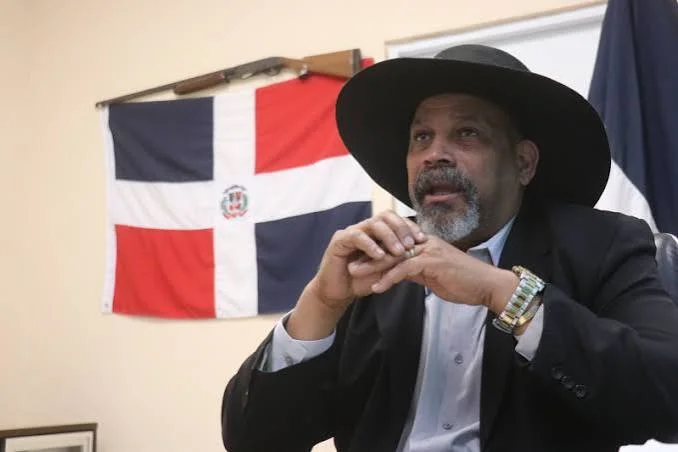
Riverón warns Bukele of the risk of sending troops to Haiti
The mayor of Dajabón, Santiago Riverón, warned Nayib Bukele that sending more Salvadoran soldiers to Haiti would not guarantee success against the gangs and…
Dajabón warns: Haitian terrain, a challenge for any troop deployment
The mayor of Dajabón, Santiago Riverón, warned that Haitian territory would complicate any foreign military operation against the gangs, while Haiti…
--- The context ---
The mayor of Dajabón, Santiago Riverón, warned El Salvador's president, Nayib Bukele, about the dangers Salvadoran soldiers would face if they were sent to fight gangs in Haiti. Dajabón is a Dominican border town, and its mayor spoke from that closeness to the Haitian crisis.
--- The facts ---
The statements come amid the search for four Salvadoran soldiers whose alleged kidnapping in Haiti has caused concern. Bukele demanded that the four soldiers be handed over safe and sound, amid uncertainty about their situation.
Riverón said that conditions in Haitian territory represent a complex scenario for any military operation and argued that armed groups could cause numerous casualties among foreign troops.
--- The positions ---
The mayor stated that sending a larger number of Salvadoran soldiers to Haiti would not guarantee the success of an operation against the gangs. In his words, Bukele could send half of El Salvador's army and they would be killed in Haiti, an assessment by the border official that is not a verified military evaluation.
The Haitian government said it considers the release of the soldiers a priority and that it maintains security efforts aimed at clarifying their situation, with high-level meetings to evaluate the operations.
--- What remains unknown ---
For the moment, no new Salvadoran military operation in response to this incident has been officially confirmed. The outcome of the search for the four soldiers and their exact situation are also unknown.
--- Unanswered questions ---
Where are the four Salvadoran soldiers and what is their situation? Will El Salvador respond with a new military operation in Haiti? How much weight will the warning of a border mayor who knows the terrain carry in that decision?
--- EPM analysis ---
Riverón's warning focuses on the human cost of any intervention: soldiers sent into a territory they do not know, facing armed groups that operate in it. His insistence that the number of troops does not guarantee success shifts the discussion from troop counts to the risk assumed by the people deployed.
📌 EPM Take: In EPM's view, the Dajabón mayor's warning should be read as a call for prudence rather than a challenge. Santiago Riverón speaks from the border and stresses the essential point: behind every troop figure there are soldiers whose lives would be exposed in a complex territory, facing gangs that know it. That sending more soldiers does not guarantee success forces any step to be measured by its human cost and not only by its symbolic force. First, the safe release of the four soldiers; then, any decision taken with the terrain, and not just the map, on the table.
--- The context ---
The security crisis in Haiti, with armed groups maintaining a strong presence in certain areas, continues to cause concern in the region. In that setting, the mayor of Dajabón, Santiago Riverón, issued a warning to Salvadoran president Nayib Bukele about a possible intervention by his soldiers against Haitian gangs.
--- The facts ---
The statements arise amid the search for four Salvadoran soldiers in Haiti, whose situation has prompted pronouncements by Haitian and Salvadoran authorities. Bukele demanded that the four be handed over safe and sound.
Haitian authorities announced high-level meetings to evaluate the operations and coordinate measures with the forces tasked with confronting the gangs.
--- The positions ---
Riverón argued that the characteristics of Haitian territory must be taken into consideration before undertaking any larger military operation, because the complexity of the terrain could hinder the operations of foreign soldiers regardless of the number of troops sent.
The Haitian government said it considers the release of the soldiers a priority and maintains security efforts to clarify their situation. Riverón, in turn, considered that the case could attract greater international attention, especially from the United States, to the Haitian crisis.
--- What remains unknown ---
No new Salvadoran military operation in response to this incident has been officially confirmed. Expectations of greater international participation are the mayor's appreciations and do not confirm official decisions by Washington or multilateral organizations.
--- Unanswered questions ---
Will the forces operating in Haiti be able to regain control of the territories dominated by gangs? Will a broader international response be coordinated after the case of the four soldiers? What security and terrain-knowledge conditions would any new deployment require?
--- EPM analysis ---
Riverón's point is, at bottom, a tactical reminder: without control of the terrain or coordination, numerical superiority does not translate into results against entrenched criminal organizations. Haiti's security, and that of its regional environment, depends on planned operations, with intelligence and clear objectives, not on improvised deployments.
📌 EPM Take: In EPM's view, Santiago Riverón's warning does not weaken the cause of confronting Haiti's gangs: it orders it. The criminal organizations that dominate areas of Haiti are a real threat to the region, and responding to them requires operations with knowledge of the terrain, coordination among forces and international backing, such as the mayor himself foresees could arrive. Nayib Bukele's demand that his four soldiers be handed over safe and sound marks the immediate priority. After that, any action will be stronger if it is born of planning and not reaction: order is also imposed with strategy.
Riverón advierte a Bukele del riesgo de enviar tropas a Haití
El alcalde de Dajabón, Santiago Riverón, advirtió a Nayib Bukele que enviar más militares salvadoreños a Haití no garantizaría el éxito contra las pandillas y…
Dajabón alerta: el terreno haitiano, un desafío para cualquier tropa
El alcalde de Dajabón, Santiago Riverón, advirtió que el territorio haitiano complicaría cualquier operación militar extranjera contra las pandillas, mientras…
--- El contexto ---
El alcalde de Dajabón, Santiago Riverón, advirtió al presidente de El Salvador, Nayib Bukele, sobre los peligros que enfrentarían los militares salvadoreños si fueran enviados a combatir a las pandillas en Haití. Dajabón es una localidad fronteriza dominicana, y su alcalde habló desde esa cercanía con la crisis haitiana.
--- Los hechos ---
Las declaraciones se producen en medio de la búsqueda de cuatro soldados salvadoreños cuyo presunto secuestro en Haití ha generado preocupación. Bukele exigió que los cuatro militares fueran entregados sanos y salvos, en medio de la incertidumbre sobre su situación.
Riverón expresó que las condiciones del territorio haitiano representan un escenario complejo para cualquier operación militar y sostuvo que los grupos armados podrían causar numerosas bajas entre las tropas extranjeras.
--- Las posiciones ---
El alcalde afirmó que enviar un mayor número de militares salvadoreños a Haití no garantizaría el éxito de una operación contra las pandillas. En sus palabras, Bukele «puede mandar a medio ejército de El Salvador y se lo van a matar como pollos en Haití», una valoración del funcionario fronterizo que no constituye una evaluación militar verificada.
El Gobierno haitiano informó que considera prioritaria la liberación de los militares y que mantiene esfuerzos de seguridad dirigidos a esclarecer su situación, con reuniones de alto nivel para evaluar las operaciones.
--- Lo que falta saber ---
Por el momento no se ha confirmado oficialmente una nueva operación militar salvadoreña en respuesta a este incidente. Tampoco se conoce el desenlace de la búsqueda de los cuatro soldados ni su situación exacta.
--- Preguntas sin respuesta ---
¿Dónde están los cuatro soldados salvadoreños y cuál es su situación? ¿Responderá El Salvador con una nueva operación militar en Haití? ¿Qué peso tendrá la advertencia de un alcalde fronterizo que conoce el terreno en esa decisión?
--- Análisis EPM ---
La advertencia de Riverón pone el foco en el costo humano de cualquier intervención: los soldados enviados a un territorio que no conocen, frente a grupos armados que operan en él. Su insistencia en que la cantidad de efectivos no garantiza el éxito traslada la discusión del número de tropas al riesgo que asumirían las personas desplegadas.
📌 Conclusion EPM: A juicio de EPM, la advertencia del alcalde de Dajabón debe leerse como llamada de prudencia, no como desafío. Santiago Riverón habla desde la frontera y subraya lo esencial: detrás de cada cifra de efectivos hay soldados cuyas vidas quedarían expuestas en un territorio complejo, frente a pandillas que lo conocen. Que enviar más militares no garantice el éxito obliga a medir cualquier paso por su costo humano y no solo por su fuerza simbólica. Primero, la liberación de los cuatro militares; después, cualquier decisión tomada con el terreno, y no solo el mapa, sobre la mesa.
--- El contexto ---
La crisis de seguridad en Haití, con grupos armados que mantienen una fuerte presencia en determinadas zonas, sigue generando inquietud en la región. En ese escenario, el alcalde de Dajabón, Santiago Riverón, lanzó una advertencia al presidente salvadoreño, Nayib Bukele, sobre una eventual intervención de sus militares contra las pandillas haitianas.
--- Los hechos ---
Las declaraciones surgen en medio de la búsqueda de cuatro soldados salvadoreños en Haití, cuya situación ha provocado pronunciamientos de las autoridades haitianas y salvadoreñas. Bukele exigió que los cuatro fueran entregados sanos y salvos.
Las autoridades haitianas anunciaron reuniones de alto nivel para evaluar las operaciones y coordinar medidas con las fuerzas encargadas de enfrentar a las pandillas.
--- Las posiciones ---
Riverón sostuvo que las características del territorio haitiano deben tomarse en consideración antes de emprender cualquier operación militar de mayor alcance, porque la complejidad del terreno podría dificultar las operaciones de los militares extranjeros independientemente de la cantidad de efectivos enviados.
El Gobierno haitiano informó que considera prioritaria la liberación de los militares y que mantiene esfuerzos de seguridad para esclarecer su situación. Riverón, a su vez, consideró que el caso podría atraer una mayor atención internacional, especialmente de Estados Unidos, sobre la crisis haitiana.
--- Lo que falta saber ---
No se ha confirmado oficialmente una nueva operación militar salvadoreña como respuesta a este incidente. Las expectativas de una mayor participación internacional son apreciaciones del alcalde y no confirman decisiones oficiales de Washington ni de organismos multilaterales.
--- Preguntas sin respuesta ---
¿Podrán las fuerzas que operan en Haití recuperar el control de los territorios dominados por las pandillas? ¿Se coordinará una respuesta internacional más amplia tras el caso de los cuatro soldados? ¿Qué condiciones de seguridad y de conocimiento del terreno exigiría cualquier despliegue nuevo?
--- Análisis EPM ---
El planteamiento de Riverón es, en el fondo, un recordatorio táctico: sin control del terreno ni coordinación, la superioridad numérica no se traduce en resultados frente a organizaciones criminales atrincheradas. La seguridad de Haití y de su entorno regional depende de operaciones planificadas, con inteligencia y objetivos claros, y no de despliegues improvisados.
📌 Conclusion EPM: A juicio de EPM, la advertencia de Santiago Riverón no debilita la causa de enfrentar a las pandillas haitianas: la ordena. Las organizaciones criminales que dominan zonas de Haití son una amenaza real, y responderles exige operaciones con conocimiento del terreno, coordinación entre las fuerzas y respaldo internacional, como el que el propio alcalde prevé que podría llegar. La exigencia de Bukele de que sus soldados sean entregados sanos y salvos marca la prioridad inmediata. Después, cualquier acción será más fuerte si nace de la planificación y no de la reacción: el orden también se impone con estrategia.