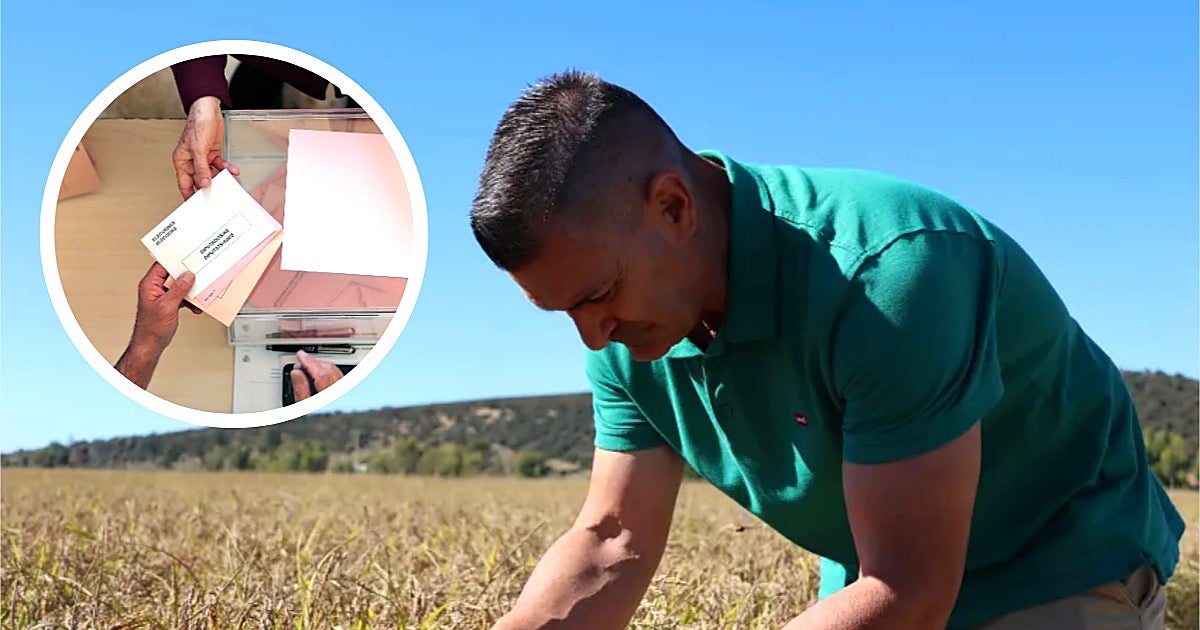
El voto del campo para el 29N: entre agricultores y ganaderos, el PP obtendría un 43,8%, Vox un 18,8% y el PSOE un 5,1%. · ABC
Farmers would give PP 43,8% and leave PSOE on 5,1% on 29N
If only farmers and livestock breeders voted, PP would win with 43,8%, Vox would be second with 18,8% and PSOE would fall to 5,1%, according to study 3852…
Countryside fed up: PP 43,8%, Vox 18,8% and PSOE sunk on 5,1%
Study 3852 reverses the general order in the countryside: PP 43,8%, Vox 18,8% and PSOE only 5,1% among farmers and livestock breeders, with 22,3% undecided and…
--- The context ---
The 29N elections are getting ever closer and the pre-campaign is making ever more noise. Issues such as the situation in Ceuta or the housing crisis, which can shift the vote in the remaining weeks, form part of the setting of the early election.
The Centro de Investigaciones Sociológicas published a few days ago study 3852, 'Barómetro de octubre de 2026', with a prediction of what will happen on 29 November and with the vote by profession.
--- The facts ---
Overall, the study forecast a PSOE victory over PP by almost 11,8 points: from 25,3 for the socialist party to 14,7 for those of Núñez Feijóo.
If only the countryside voted, the order changes completely. Among farmers, agricultural workers, forestry workers and fishermen (group 35), PP would win with 43,8% of the votes.
PSOE would not even be second. That position is for Vox, with 18,8%, and after that would come the formation of Pedro Sánchez, with only 5,1%, very close to Podemos (4%) or Sumar (3,4%).
The undecided margin is still wide: some 22,3% say they still do not know where they would cast their ballot. Some 1,9% have decided not to vote and 0,6% would vote blank.
--- The positions ---
Alberto Núñez Feijóo and Santiago Abascal present measures and build bridges to visualise a coalition of change in government. Pedro Sánchez embraces the dance and his wife, Begoña Gómez, while the left-wing forces battle inside and outside the Frente Amplio.
The discontent of the sector has concrete causes: farmers and livestock breeders feel mistreated by the rise in costs, the unfair competition from foreign products, the loss of certain subsidies and the excess of bureaucracy that makes their tasks harder.
--- What remains unknown ---
It is not known where that undecided 22,3% will move, nor whether it can alter the order between 43,8%, 18,8% and 5,1%. Nor is it stated which measures would answer each demand of the countryside before 29 November.
--- Unanswered questions ---
Where will the 22,3% who still do not know what to vote lean? Can PSOE recover ground in the countryside from 5,1% before 29 November? What answers will costs, foreign competition, lost subsidies and bureaucracy receive? Will PP stay on 43,8% within group 35 on 29N?
--- EPM analysis ---
The contrast is the central fact: the same study that gives PSOE 25,3 against 14,7 for PP leaves the socialists on 5,1% in a numerous sector with much social strength, above all in rural environments.
📌 EPM Take: In EPM's view, a 5,1% among farmers and livestock breeders is not explained by a bad survey alone, because behind it there are demands named one by one: costs, foreign competition, lost subsidies and bureaucracy. The 22,3% who still do not know what to vote leave a door open, but walking through it requires answering those concrete complaints before 29 November. Without that answer, the countryside will keep voting as study 3852 already announces, with PP on 43,8% and Vox ahead of PSOE.
--- The context ---
The 29N elections are getting ever closer and the pre-campaign is making ever more noise. The leaders are locked in their battles, in an early election also marked by the situation in Ceuta or the housing crisis.
The Centro de Investigaciones Sociológicas published a few days ago study 3852, 'Barómetro de octubre de 2026', the first CIS study after the electoral call of 5 October, with the prediction for 29 November and the vote by profession.
--- The facts ---
In the general prediction, the study forecast an easy PSOE victory over PP by almost 11,8 points: from 25,3 for the socialist party to 14,7 for those of Núñez Feijóo.
Among farmers and livestock breeders, the order is reversed. Among farmers, agricultural workers, forestry workers and fishermen (group 35), PP would win with a broad majority, with 43,8% of the votes.
PSOE would not even be the second force. That position is for Vox, with 18,8%, and after that would come the formation of Pedro Sánchez, with only 5,1%, very close to Podemos (4%) or Sumar (3,4%), in a historic defeat.
There remains a margin to be decided: some 22,3% say they still do not know where they would cast their ballot. Some 1,9% have decided not to vote and 0,6% would vote blank.
--- The positions ---
Alberto Núñez Feijóo and Santiago Abascal present measures and build bridges to visualise a coalition of change in government. Facing them, the left-wing forces battle both inside and outside the Frente Amplio.
The fed-up feeling has listed causes: the sector feels mistreated by the rise in costs, the unfair competition from foreign products, the loss of certain subsidies and the excess of bureaucracy. It is a numerous sector with much social strength, above all in rural environments.
--- What remains unknown ---
It is not established whether the undecided 22,3% will lean towards some force or swell the 1,9% who will not vote. Nor is it known whether the measures of Feijóo and Abascal will suffice to sustain 43,8% and 18,8% within group 35.
--- Unanswered questions ---
Will 29N confirm a 43,8% for PP and an 18,8% for Vox among farmers and livestock breeders? Where will the 22,3% who still do not know what to vote go? Can PSOE climb out of 5,1% in a sector that feels mistreated? Will Feijóo and Abascal visualise the coalition of change they are trying to present in the pre-campaign?
--- EPM analysis ---
The fact that sums up the study is not the general advantage of PSOE, but its collapse where discontent is most concrete: a 5,1%, behind Vox and close to Podemos and Sumar, against a 43,8% and an 18,8% for the bloc of change.
📌 EPM Take: In EPM's view, the countryside has already delivered its verdict on the Government: a 5,1% for PSOE, behind the 18,8% of Vox and at an enormous distance from the 43,8% of PP, is a historic defeat in a numerous sector with social strength. The causes are listed and they are material: costs, unfair competition, lost subsidies and bureaucracy. The undecided 22,3% do not erase that sentence, because those who feel mistreated over two legislatures do not change their vote with gestures, but only with a real change of policies.
El campo daría al PP un 43,8% y dejaría al PSOE con un 5,1% el 29N
Si solo votasen agricultores y ganaderos, el PP ganaría con un 43,8%, Vox sería segundo con un 18,8% y el PSOE caería a un 5,1%, según el estudio 3852, con un…
Hartazgo del campo: PP 43,8%, Vox 18,8% y PSOE hundido en un 5,1%
El estudio 3852 invierte el orden general en el campo: PP 43,8%, Vox 18,8% y PSOE solo 5,1% entre agricultores y ganaderos, con un 22,3% indeciso y un hartazgo…
--- El contexto ---
Las elecciones del 29N están cada vez más cerca y la precampaña hace cada vez más ruido. Asuntos como la situación de Ceuta o la crisis de la vivienda, que pueden hacer virar el voto en las semanas que restan, forman parte del escenario del adelanto electoral.
El Centro de Investigaciones Sociológicas publicó hace unos días el estudio 3852, 'Barómetro de octubre de 2026', con una predicción de lo que ocurrirá el próximo 29 de noviembre y con el voto según la profesión.
--- Los hechos ---
En el conjunto, el estudio vaticinaba una victoria del PSOE sobre el PP por casi 11,8 puntos: de los 25,3 del partido socialista al 14,7 de los de Núñez Feijóo.
Si solo votase el campo, el orden cambia por completo. Entre agricultores, trabajadores agropecuarios, forestales y pesqueros (grupo 35), ganaría el PP con un 43,8% de los votos.
El PSOE ni siquiera sería segundo. Esa posición es para Vox, con el 18,8%, y después se situaría la formación de Pedro Sánchez, con solo el 5,1%, muy cerca de Podemos (4%) o Sumar (3,4%).
El margen indeciso sigue siendo amplio: un 22,3% asegura que todavía no sabe a dónde echaría su papeleta. El 1,9% tiene decidido no votar y el 0,6% lo haría en blanco.
--- Las posiciones ---
Alberto Núñez Feijóo y Santiago Abascal presentan medidas y tienden puentes para visualizar una coalición de cambio en el gobierno. Pedro Sánchez se abraza al baile y a su mujer, Begoña Gómez, mientras las izquierdas batallan dentro y fuera del Frente Amplio.
El malestar del sector tiene causas concretas: agricultores y ganaderos se sienten maltratados por la subida de los costes, la competencia desleal de productos extranjeros, la pérdida de ciertas subvenciones y el exceso de burocracia que dificulta sus labores.
--- Lo que falta saber ---
No se sabe hacia dónde se moverá ese 22,3% indeciso, ni si puede alterar el orden entre el 43,8%, el 18,8% y el 5,1%. Tampoco consta qué medidas responderían a cada reivindicación del campo antes del 29 de noviembre.
--- Preguntas sin respuesta ---
¿Hacia dónde se inclinará el 22,3% que todavía no sabe qué votar? ¿Puede el PSOE recuperar terreno en el campo desde un 5,1% antes del 29 de noviembre? ¿Qué respuestas recibirán los costes, la competencia extranjera, las subvenciones perdidas y la burocracia? ¿Se mantendrá el PP en un 43,8% dentro del grupo 35 el 29N?
--- Análisis EPM ---
El contraste es el dato central: el mismo estudio que da al PSOE un 25,3 frente a un 14,7 del PP deja a los socialistas en un 5,1% en un sector numeroso y con mucha fuerza social, sobre todo en entornos rurales.
📌 Conclusion EPM: A juicio de EPM, un 5,1% entre agricultores y ganaderos no se explica solo con una mala encuesta, porque detrás hay reivindicaciones nombradas una a una: costes, competencia extranjera, subvenciones perdidas y burocracia. El 22,3% que todavía no sabe qué votar deja una puerta abierta, pero recorrerla exige responder a esas quejas concretas antes del 29 de noviembre. Sin esa respuesta, el campo seguirá votando como ya anuncia el estudio 3852, con el PP en un 43,8% y Vox por delante del PSOE.
--- El contexto ---
Las elecciones del 29N están cada vez más cerca y la precampaña hace cada vez más ruido. Los líderes están enfrascados en sus batallas, en un adelanto marcado también por la situación de Ceuta o la crisis de la vivienda.
El Centro de Investigaciones Sociológicas publicó hace unos días el estudio 3852, 'Barómetro de octubre de 2026', el primer estudio del CIS tras la convocatoria electoral del pasado 5 de octubre, con la predicción para el 29 de noviembre y el voto según la profesión.
--- Los hechos ---
En la predicción general, el estudio vaticinaba una victoria fácil del PSOE sobre el PP por casi 11,8 puntos: de los 25,3 del partido socialista al 14,7 de los de Núñez Feijóo.
Entre agricultores y ganaderos, el orden se invierte. Entre agricultores, trabajadores agropecuarios, forestales y pesqueros (grupo 35), ganaría el PP con amplia mayoría, con un 43,8% de los votos.
El PSOE ni siquiera sería la segunda fuerza. Esa posición es para Vox, con el 18,8%, y después quedaría la formación de Pedro Sánchez, con solo el 5,1%, muy cerca de Podemos (4%) o Sumar (3,4%), en una derrota histórica.
Queda un margen por decidir: un 22,3% asegura que todavía no sabe a dónde echaría su papeleta. El 1,9% tiene decidido no votar y el 0,6% lo haría en blanco.
--- Las posiciones ---
Alberto Núñez Feijóo y Santiago Abascal presentan medidas y tienden puentes para visualizar una coalición de cambio en el gobierno. Frente a ellos, las fuerzas de izquierdas batallan tanto dentro como fuera del Frente Amplio.
El hartazgo tiene causas enumeradas: el sector se siente maltratado por la subida de los costes, la competencia desleal de productos extranjeros, la pérdida de ciertas subvenciones y el exceso de burocracia. Es un sector numeroso y con mucha fuerza social, sobre todo en entornos rurales.
--- Lo que falta saber ---
No consta si el 22,3% indeciso se inclinará por alguna fuerza o engrosará el 1,9% que no votará. Tampoco se sabe si las medidas de Feijóo y Abascal bastarán para sostener el 43,8% y el 18,8% dentro del grupo 35.
--- Preguntas sin respuesta ---
¿Confirmará el 29N un 43,8% del PP y un 18,8% de Vox entre agricultores y ganaderos? ¿A dónde irá el 22,3% que todavía no sabe qué votar? ¿Podrá el PSOE salir del 5,1% en un sector que se siente maltratado? ¿Visualizarán Feijóo y Abascal la coalición de cambio que intentan presentar en precampaña?
--- Análisis EPM ---
El dato que resume el estudio no es la ventaja general del PSOE, sino su desplome donde el malestar es más concreto: un 5,1%, por detrás de Vox y cerca de Podemos y Sumar, frente a un 43,8% y un 18,8% del bloque del cambio.
📌 Conclusion EPM: A juicio de EPM, el campo ha emitido ya su veredicto sobre el Gobierno: un 5,1% para el PSOE, por detrás del 18,8% de Vox y a distancia enorme del 43,8% del PP, es una derrota histórica en un sector numeroso y con fuerza social. Las causas están enumeradas y son materiales: costes, competencia desleal, subvenciones perdidas y burocracia. El 22,3% indeciso no borra esa sentencia, porque quien se siente maltratado durante dos legislaturas no cambia su voto con gestos, sino solo con un cambio real de políticas.