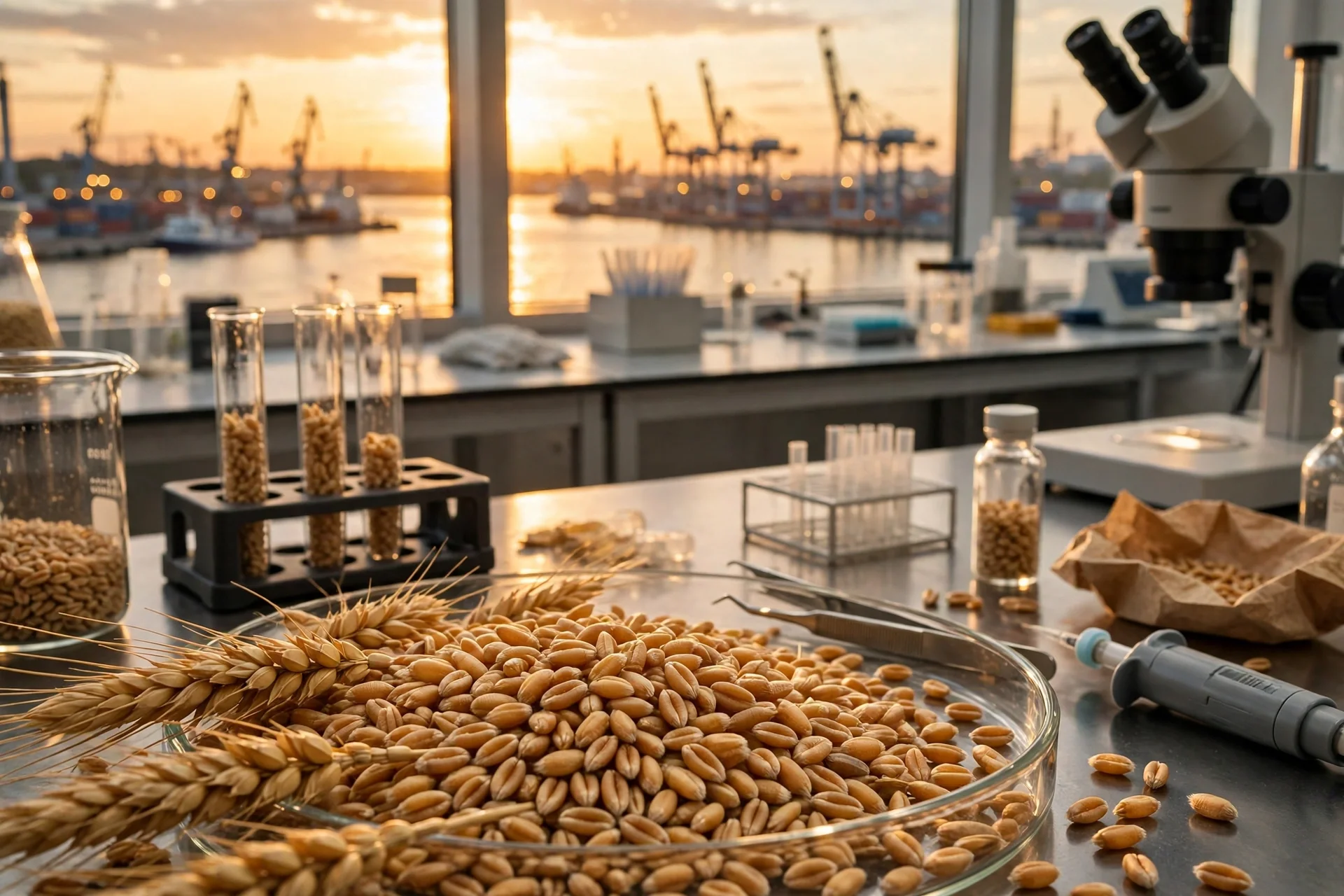
Muestras de grano de trigo bajo análisis en un laboratorio con vistas a un puerto báltico al atardecer, imagen alusiva a la verificación científica del origen del grano. · Imagen generada por EPM
UK, Ukraine and Latvia widen the net against stolen grain
The UK, Ukraine and Latvia signed a memorandum extending the Grain Verification Scheme, which uses chemical fingerprints and nearly 3,400 reference points to…
Latvia joins the science-led guard against stolen Ukrainian grain
The UK, Ukraine and Latvia extended the Grain Verification Scheme, developed on behalf of the G7, pairing isotope analysis and legal frameworks to identify…
--- The context ---
The fight over stolen Ukrainian grain is a central front in the response to Russia's illegal invasion. Ukraine says agricultural produce from Russian-occupied areas has been sold on the international market, while legitimate Black Sea exports face ongoing disruption. Identifying each shipment's origin is now an economic and legal defence tool.
--- The facts ---
The UK, Ukraine and Latvia have signed a Memorandum of Understanding to extend the Grain Verification Scheme, building on the UK's landmark 100-year partnership with Ukraine. Trade Minister Baroness Hayman signed it this week with counterparts from Ukraine and Latvia, extending access beyond Lithuania and Ukraine, which have used the scheme since January 2025.
The scheme uses cutting-edge science to identify grain's geographic origin and track produce stolen from Russian-occupied areas. It combines physical samples with machine learning and techniques including stable isotope ratio analysis and trace element analysis, to build a chemical fingerprint.
That fingerprint is compared against a reference database of nearly 3,400 geolocated points across Ukraine and neighbouring countries, allowing an assessment of likely origin. The scheme was handed over to Ukraine and Lithuania in March 2025; Lithuania has since built a legal framework for sampling and testing, and its authorities now gather and analyse samples.
--- The positions ---
Defra Minister Baroness Hayman said, according to the announcement, that the UK continues to stand shoulder to shoulder with Ukraine against Russia's illegal invasion. Extending the scheme to Latvia, she argued, widens the net against those profiting from stolen grain and protects global food markets.
For Ukraine, Latvia's participation expands the network able to use the scheme, strengthens Baltic cooperation and supports its response to agricultural theft from occupied territories. Kyiv also seeks support from European partners on the Baltic Sea to prevent grain of Russian origin transiting through Baltic ports.
--- What remains unknown ---
The announcement gives no timetable for Latvia to complete its legal framework for sampling, nor the number of consignments to be tested. It also leaves open what consequences will follow when analysis points to a likely origin in occupied territory, and how disputes over scientific findings would be resolved.
--- Unanswered questions ---
When will Latvia begin gathering and analysing samples regularly under the extended scheme? What measures will Baltic ports apply when a chemical fingerprint points to stolen grain? Will the wider network deter sales of looted grain or mainly document them more precisely?
--- EPM analysis ---
Latvia's entry turns a scientific tool into a regional control network across the Baltic. Every additional country able to match chemical fingerprints shrinks the space in which stolen produce can enter formal trade undetected.
Its strength, developed by the UK on behalf of the G7, lies in pairing science with legal frameworks that let authorities act; without that step, evidence risks remaining a diagnosis without consequences.
📌 EPM Take:
In EPM's view, extending grain verification to Latvia is a practical step that targets the economic profit behind agricultural theft in the occupied territories and defends the credibility of food markets. The science supplies the fingerprint and the Baltic network supplies the coverage, but the real impact will depend on each country turning analysis into swift port and legal decisions. If that chain works, stealing Ukrainian grain will stop being a quiet business and become a provable risk at every port that receives it.
--- The context ---
Defending property and lawful trade is a basic obligation when an invader seizes another country's harvest. Ukraine has denounced the theft of agricultural produce from Russian-occupied territories and its sale internationally, while its legitimate Black Sea exports suffer ongoing disruption. The response rests on verifiable evidence and clear rules.
--- The facts ---
The UK, Ukraine and Latvia have signed a Memorandum of Understanding to extend the Grain Verification Scheme. Trade Minister Baroness Hayman signed it this week with counterparts from Ukraine and Latvia, opening access beyond Lithuania and Ukraine, which have used the scheme since the first memorandum in January 2025.
The system identifies grain's geographic origin with proven methods: stable isotope ratio analysis and trace element analysis, combined with physical samples and machine learning to build a chemical fingerprint. That fingerprint is checked against a reference database of nearly 3,400 geolocated points across Ukraine and neighbouring countries.
Developed by the UK on behalf of the G7, the scheme was handed over to Ukraine and Lithuania in March 2025. Lithuania then built a legal framework for sampling and testing relevant consignments, and its authorities are now gathering and analysing samples.
--- The positions ---
Defra Minister Baroness Hayman said, according to the official announcement, that the UK stands shoulder to shoulder with Ukraine against Russia's illegal invasion. Extending the scheme to Latvia, she added, widens the net against those profiting from stolen grain and protects global food markets.
Ukraine seeks support from European partners on the Baltic Sea to prevent grain of Russian origin transiting through Baltic ports. Latvia's participation expands the network able to use the scheme and strengthens Baltic cooperation against agricultural theft.
--- What remains unknown ---
The timetable for Latvia to adopt its own legal framework for sampling and testing remains undisclosed, as does the volume of consignments it can examine. Nor is it clear what sanctions or blockages will follow a result indicating origin in occupied territory, a decisive point if verification is to carry real deterrent weight.
--- Unanswered questions ---
Will Latvia adopt a legal framework as operational as Lithuania's, and how quickly? What consequences will a shipment face when its chemical fingerprint points to occupied territory? Will more European countries join the network and close the remaining routes for stolen grain?
--- EPM analysis ---
The Lithuanian case shows the right sequence: scientific capacity first, then a legal rule empowering authorities to act on it. That pairing turns a suspicion into an administrative decision defensible before traders, courts and partners.
Latvia's extension also signals order to the market: grain without a provable origin will meet more checks around the Baltic, and verifiable traceability protects prices, contracts and reputation for legitimate operators.
📌 EPM Take:
In EPM's view, expanding the scheme to Latvia is the right move because it joins verifiable science, a legal framework and allied cooperation, three conditions for defending Ukrainian property without relying on accusations that cannot be proved. The Lithuanian precedent shows the system can operate with clear rules and defensible results. The challenge now is execution: constant sampling, swift decisions and real consequences for stolen grain. Only then will verification cease to be a diplomatic announcement and become an effective barrier against plunder.
Reino Unido, Ucrania y Letonia amplían el cerco al grano robado
El Reino Unido, Ucrania y Letonia firmaron un memorando para extender el Esquema de Verificación de Grano, que usa huellas químicas y una base de casi tres mil…
Letonia se suma al control científico contra el saqueo de grano
Reino Unido, Ucrania y Letonia extendieron el Esquema de Verificación de Grano, desarrollado en nombre del G7, que combina isótopos, elementos traza y marcos…
--- El contexto ---
El grano ucraniano robado es un frente central de la respuesta a la invasión ilegal de Rusia. Ucrania sostiene que producción de territorios ocupados ha sido sustraída y vendida en el mercado internacional, mientras sus exportaciones legítimas por el mar Negro siguen interrumpidas. Verificar su origen es una herramienta de defensa económica y alimentaria.
--- Los hechos ---
El Reino Unido, Ucrania y Letonia firmaron un Memorando de Entendimiento para extender el Esquema de Verificación de Grano. Baroness Hayman lo firmó esta semana con sus homólogos de Ucrania y Letonia, ampliando el acceso más allá de Lituania y Ucrania, que lo usan desde enero de 2025.
El esquema identifica el origen geográfico del grano y rastrea productos robados de zonas ocupadas por Rusia. Combina muestras físicas con aprendizaje automático y técnicas como el análisis de isótopos estables y de elementos traza, para construir una huella química.
Esa huella se compara con una base de casi tres mil cuatrocientos puntos georreferenciados en Ucrania y países vecinos, para evaluar el origen probable. Tras su entrega a Ucrania y Lituania en marzo de 2025, Lituania estableció un marco legal de muestreo y análisis; sus autoridades ya recogen y analizan muestras.
--- Las posiciones ---
Baroness Hayman afirmó, según el anuncio, que el Reino Unido sigue junto a Ucrania frente a la invasión ilegal rusa y que extender el esquema a Letonia amplía la red contra quienes se benefician del grano robado y protege los mercados mundiales de alimentos.
Ucrania busca además apoyo de socios europeos del mar Báltico para impedir que grano de origen ruso transite por puertos bálticos, y la participación letona fortalece la cooperación báltica contra ese robo.
--- Lo que falta saber ---
El anuncio no detalla plazos para que Letonia complete su marco legal de muestreo ni cuántos cargamentos se analizarán. Tampoco precisa qué consecuencias enfrentará un cargamento cuando el análisis señale origen probable en territorio ocupado, ni cómo se resolverán las disputas sobre resultados científicos.
--- Preguntas sin respuesta ---
¿Cuándo empezará Letonia a recoger y analizar muestras con regularidad? ¿Qué medidas aplicarán los puertos bálticos cuando una huella química apunte a grano robado? ¿Logrará la red internacional disuadir las ventas de grano sustraído o solo documentarlas mejor?
--- Análisis EPM ---
La extensión a Letonia convierte una herramienta científica en una red regional de control: cada país capaz de contrastar huellas químicas reduce los espacios por donde el grano robado entra sin ser detectado al comercio formal.
Su valor, respaldado por el G7, está en unir tecnología y marcos legales que permitan actuar sobre los cargamentos; sin ese paso, la evidencia queda en diagnóstico sin sanción.
📌 Conclusion EPM:
A juicio de EPM, extender la verificación del grano a Letonia es una medida práctica que ataca el beneficio económico del robo agrícola en los territorios ocupados y protege la credibilidad de los mercados de alimentos. La ciencia aporta la huella y la red báltica aporta la cobertura, pero el impacto real dependerá de que cada país convierta los análisis en decisiones portuarias y legales rápidas. Si esa cadena funciona, robar grano ucraniano dejará de ser un negocio discreto para convertirse en un riesgo comprobable en cada puerto que lo reciba.
--- El contexto ---
Proteger la propiedad y el comercio legítimo es básico cuando un invasor se apropia de la cosecha ajena. Ucrania denuncia el robo de productos agrícolas en territorios ocupados por Rusia y su venta internacional, mientras sus exportaciones legítimas por el mar Negro enfrentan interrupciones.
--- Los hechos ---
El Reino Unido, Ucrania y Letonia firmaron un Memorando de Entendimiento para extender el Esquema de Verificación de Grano, en el marco de la alianza de cien años entre el Reino Unido y Ucrania. Baroness Hayman lo firmó esta semana con sus homólogos ucraniano y letón, ampliando el acceso más allá de Lituania y Ucrania, usuarios desde enero de 2025.
El sistema identifica el origen geográfico del grano con métodos probados: análisis de isótopos estables y de elementos traza, combinados con muestras físicas y aprendizaje automático para construir una huella química. Esa huella se contrasta con una base de casi tres mil cuatrocientos puntos georreferenciados en Ucrania y países vecinos.
Desarrollado por el Reino Unido en nombre del G7, el esquema fue entregado a Ucrania y Lituania en marzo de 2025. Desde entonces Lituania creó un marco legal para muestrear y analizar cargamentos, y sus autoridades ya recogen y analizan muestras.
--- Las posiciones ---
Baroness Hayman sostuvo, según el anuncio, que el Reino Unido permanece junto a Ucrania contra la invasión ilegal de Rusia. Añadió que llevar el esquema a Letonia amplía la red contra quienes lucran con grano robado y protege los mercados mundiales de alimentos.
Ucrania busca respaldo de socios europeos del mar Báltico para impedir que grano de origen ruso transite por puertos bálticos. La participación letona expande la red capaz de usar el esquema y refuerza la cooperación báltica contra el robo agrícola.
--- Lo que falta saber ---
Queda por conocerse el calendario del marco legal letón de muestreo y el volumen de cargamentos examinables. Tampoco se detalló qué sanciones seguirán a un resultado de origen en territorio ocupado, punto decisivo para la fuerza disuasoria de la verificación.
--- Preguntas sin respuesta ---
¿Adoptará Letonia un marco legal tan operativo como el lituano y en qué plazo? ¿Qué consecuencias enfrentará un cargamento señalado por la huella química como procedente de territorio ocupado? ¿Se sumarán más países europeos para cerrar las rutas del grano robado?
--- Análisis EPM ---
El caso lituano muestra la secuencia correcta: primero la capacidad científica, después la norma que habilita a actuar sobre ella. Esa combinación convierte una sospecha en una decisión administrativa defendible ante comerciantes, tribunales y socios.
La extensión señala además orden al mercado: el grano sin origen comprobable encontrará más controles en el Báltico, protegiendo precios y reputación de los operadores legítimos.
📌 Conclusion EPM:
A juicio de EPM, la ampliación del esquema a Letonia acierta porque une ciencia verificable, marco legal y cooperación entre aliados, tres condiciones para defender la propiedad ucraniana sin recurrir a acusaciones imposibles de probar. El precedente lituano demuestra que el sistema puede operar con reglas claras y resultados defendibles. El desafío ahora es la ejecución: muestreos constantes, decisiones rápidas y consecuencias reales para el grano robado. Solo así la verificación dejará de ser un anuncio diplomático y se convertirá en un cerco efectivo contra el saqueo.