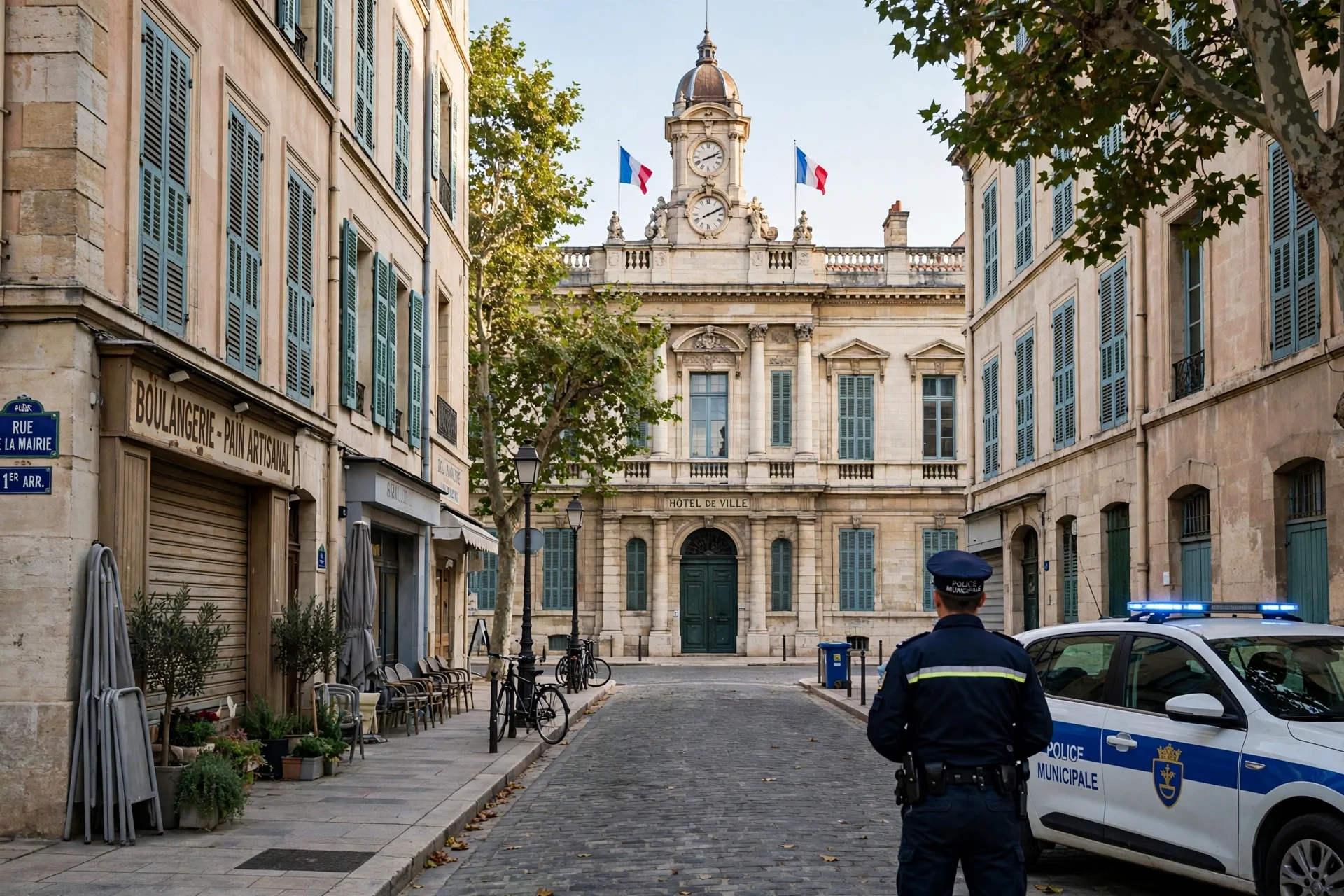
Calle en calma frente a un ayuntamiento en Francia, con presencia de la policía municipal. · Erick Prometeo Media
Macron urges calm in France and holds off on emergency for now
Emmanuel Macron called for calm ahead of the protests planned for October 31 in France, ruled out declaring a state of emergency for now, and announced…
France: Macron puts order first without declaring emergency yet
Emmanuel Macron called for calm ahead of the October 31 protests in France, kept the state of emergency undeclared, reinforced security with routes outside…
--- The context ---
France heads into the October 31 protests with economic and student grievances in the background, six months before the presidential elections. The cost of living and study conditions are fueling mobilizations called by unions and yellow vests after the unrest of October 17.
--- The facts ---
President Emmanuel Macron called for calm over the risk of further unrest and said the country needs democratic debate, not an escalation of violence. He ruled out declaring a state of emergency for now, while making clear the possibility has not been excluded, and said the Government will maintain the necessary security arrangements.
Macron spoke during a Monday visit to Marseille, where he met Mayor Benoît Payan and toured City Hall, partially vandalized during the October 17 unrest. He warned that the risk of incidents on Saturday remains high and asked that the earlier scenes of chaos not be repeated.
--- The positions ---
The president defended demonstrating as a right and distinguished it from vandalism. He rejected looting, attacks on institutions and violence, thanked the security forces for their deployment, and said the State will maintain its commitment to restoring order.
Macron acknowledged legitimate demands at the root of the movement and said he had asked the Government to respond. Prime Minister Sébastien Lecornu met student representatives over purchasing power and public services, and meetings with unions and businesses are planned.
--- What remains unknown ---
The Government will maintain its arrangements, is working on routes outside urban centers, and has already imposed partial curfews in some localities. The concrete scope of the promised economic measures is not yet known.
--- Unanswered questions ---
Will the meetings with students, unions and businesses lower tensions before October 31? What concrete measures will address the cost of living and study conditions? Will Saturday's risk remain high despite the arrangements announced by the Government for the protests?
--- EPM analysis ---
The official response combines police containment with a negotiating opening that acknowledges the social origin of the protest. That dual track will only work if dialogue soon becomes verifiable relief, because the discontent does not stem from an isolated incident, but from living and study conditions the protesters themselves have been pointing to.
📌 EPM Take: In EPM's view, the decisive element of this crisis is not only order on Saturday, but the Government's capacity to turn its acknowledgment of legitimate demands into concrete and rapid measures on the cost of living, study conditions and public services. Macron buys time by not declaring an emergency, but that time is only worth something if negotiation advances at the same pace as the security deployment on French streets over the coming days.
--- The context ---
France faces the October 31 protests with an immediate precedent: the October 17 unrest, with municipal facilities vandalized and shops looted or closed. Six months before the presidential elections, the Government is trying to stop disorder from again overriding normal activity.
--- The facts ---
President Emmanuel Macron called for calm over the risk of further unrest and warned that the risk of incidents on Saturday remains high. He ruled out declaring a state of emergency for now, while making clear the possibility has not been excluded, and said the necessary security arrangements will be maintained to protect residents.
Macron traveled to Marseille on Monday, where he met Mayor Benoît Payan and toured City Hall, partially vandalized on October 17. The Government is working on routes outside urban centers, and partial curfews have already been imposed in some localities.
--- The positions ---
The head of state defended the right to demonstrate, but drew a clear line against vandalism and rejected looting, attacks on institutions and violence. He thanked the security forces for their deployment and acknowledged to officers that the situation is not yet under control.
The Government announced support for affected traders: an assistance fund with local administrations and the private sector, and work with insurers and banks to speed up compensation and financing for new orders. Prime Minister Sébastien Lecornu met student representatives, and meetings with unions and businesses are planned.
--- What remains unknown ---
It is not known whether the routes and partial curfews will suffice on a day of high risk. Nor is it known when the assistance fund will operate or how quickly compensation will reach the businesses harmed.
--- Unanswered questions ---
Will the announced arrangements be enough to prevent further unrest on October 31? When will affected traders receive the promised compensation and financing? At what point would the Government reconsider declaring the state of emergency it has only not excluded?
--- EPM analysis ---
The presidential message orders priorities clearly: first guarantee security and economic activity, then negotiate. Firmness against vandalism and backing for officers answer a basic requirement of any State. The risk is that Saturday's containment works while the later negotiation fades without closing the protest cycle.
📌 EPM Take: In EPM's view, the decision not to declare an emergency yet will only hold if the arrangements, the routes away from city centers and the partial curfews prove on Saturday that order can be maintained without extraordinary measures. The backing for the security forces and the fund for traders point in the right direction, but the test will be practical: protected streets, open businesses and no repetition of the earlier chaos in France.
Macron pide calma en Francia y descarta por ahora la emergencia
Emmanuel Macron pidió calma ante las protestas previstas para el 31 de octubre en Francia, descartó por ahora declarar el estado de emergencia y anunció…
Francia: Macron prioriza el orden sin declarar aún la emergencia
Emmanuel Macron pidió calma ante las protestas del 31 de octubre en Francia, mantuvo sin declarar el estado de emergencia, reforzó los dispositivos de…
--- El contexto ---
Francia llega a las protestas del 31 de octubre con el malestar económico y estudiantil como telón de fondo, a seis meses de las elecciones presidenciales. El coste de la vida y las condiciones de estudio alimentan unas movilizaciones convocadas por sindicatos y chalecos amarillos tras los disturbios del 17 de octubre.
--- Los hechos ---
El presidente Emmanuel Macron pidió calma ante el riesgo de nuevos disturbios y dijo que el país necesita debate democrático y no una escalada de violencia. Descartó por ahora declarar el estado de emergencia, aunque aclaró que esa posibilidad no está excluida, y aseguró que el Gobierno mantendrá los dispositivos de seguridad necesarios.
Macron habló durante una visita del lunes a Marsella, donde se reunió con el alcalde, Benoît Payan, y recorrió el Ayuntamiento, parcialmente vandalizado en los disturbios del 17 de octubre. Advirtió que el riesgo de incidentes el sábado sigue elevado y pidió evitar las escenas de caos anteriores.
--- Las posiciones ---
El presidente defendió manifestarse como un derecho y distinguió esa práctica del vandalismo. Rechazó los saqueos, los ataques contra las instituciones y la violencia, agradeció el despliegue de las fuerzas de seguridad y aseguró que el Estado mantendrá su compromiso con el restablecimiento del orden.
Macron reconoció demandas legítimas en la raíz del movimiento y afirmó que pidió al Gobierno responder a ellas. El primer ministro, Sébastien Lecornu, se reunió con representantes estudiantiles por el poder adquisitivo y los servicios públicos, y habrá reuniones con sindicatos y empresas.
--- Lo que falta saber ---
El Gobierno mantendrá los dispositivos, trabaja itinerarios fuera de los centros urbanos y ya impuso toques de queda parciales en algunas localidades. No se conoce aún el alcance concreto de las medidas económicas prometidas.
--- Preguntas sin respuesta ---
¿Rebajarán las reuniones con estudiantes, sindicatos y empresas la tensión antes del 31 de octubre? ¿Qué medidas concretas habrá frente al coste de la vida y las condiciones de estudio? ¿Se mantendrá el riesgo el sábado pese a los dispositivos?
--- Análisis EPM ---
La respuesta oficial combina contención policial con una apertura negociadora que reconoce el origen social de la protesta. Esa doble vía solo funcionará si el diálogo se traduce pronto en alivios verificables, porque el malestar no nace de un incidente aislado, sino de condiciones de vida y de estudio señaladas por los propios manifestantes.
📌 Conclusion EPM: A juicio de EPM, el elemento decisivo de esta crisis no es solo el orden del sábado, sino la capacidad del Gobierno para convertir el reconocimiento de las demandas legítimas en medidas concretas y rápidas sobre el coste de la vida, el estudio y los servicios públicos. Macron gana tiempo al no declarar la emergencia, pero ese tiempo vale únicamente si la negociación avanza al mismo ritmo que el despliegue de seguridad en las calles francesas durante los próximos días.
--- El contexto ---
Francia afronta las protestas del 31 de octubre con un antecedente inmediato: los disturbios del 17 de octubre, con instalaciones municipales vandalizadas y comercios saqueados o cerrados. A seis meses de las presidenciales, el Gobierno intenta impedir que el desorden vuelva a imponerse sobre la actividad normal.
--- Los hechos ---
El presidente Emmanuel Macron pidió calma ante el riesgo de nuevos disturbios y advirtió que el riesgo de incidentes el sábado continúa elevado. Descartó por ahora declarar el estado de emergencia, aunque aclaró que esa posibilidad no está excluida, y aseguró que se mantendrán los dispositivos de seguridad necesarios para proteger a los residentes.
Macron se desplazó el lunes a Marsella, donde se reunió con el alcalde, Benoît Payan, y recorrió el Ayuntamiento, parcialmente vandalizado el 17 de octubre. El Gobierno trabaja itinerarios fuera de los centros urbanos y ya se impusieron toques de queda parciales en algunas localidades.
--- Las posiciones ---
El jefe de Estado defendió el derecho a manifestarse, pero trazó una línea clara frente al vandalismo y rechazó saqueos, ataques contra instituciones y violencia. Agradeció el despliegue de las fuerzas de seguridad y reconoció ante los agentes que la situación todavía no está controlada.
El Ejecutivo anunció apoyo a los comerciantes afectados: un fondo de asistencia con administraciones locales y sector privado, y trabajo con aseguradoras y bancos para acelerar indemnizaciones y financiación de nuevos pedidos. El primer ministro, Sébastien Lecornu, se reunió con estudiantes y habrá reuniones con sindicatos y empresas.
--- Lo que falta saber ---
No se sabe si los itinerarios y los toques de queda bastarán en una jornada de riesgo elevado. Tampoco cuándo operará el fondo de asistencia ni con qué rapidez llegarán las indemnizaciones a los negocios perjudicados.
--- Preguntas sin respuesta ---
¿Serán suficientes los dispositivos para evitar nuevos disturbios el 31 de octubre? ¿Cuándo recibirán los comerciantes las indemnizaciones y la financiación prometidas? ¿En qué punto reconsideraría el Gobierno declarar el estado de emergencia hoy solo no excluido?
--- Análisis EPM ---
El mensaje presidencial ordena prioridades con claridad: primero garantizar la seguridad y la actividad económica, después negociar. La firmeza frente al vandalismo y el respaldo a los agentes responden a una exigencia básica del Estado. El riesgo es que la contención del sábado funcione y la negociación posterior se diluya sin cerrar el ciclo.
📌 Conclusion EPM: A juicio de EPM, la decisión de no declarar todavía la emergencia solo se sostendrá si los dispositivos, los itinerarios alejados de los centros y los toques de queda parciales demuestran el sábado que el orden puede mantenerse sin medidas extraordinarias. El respaldo a las fuerzas de seguridad y el fondo para los comerciantes apuntan en la dirección correcta, pero la prueba será práctica: calles protegidas, negocios abiertos y ninguna repetición del caos anterior en Francia.