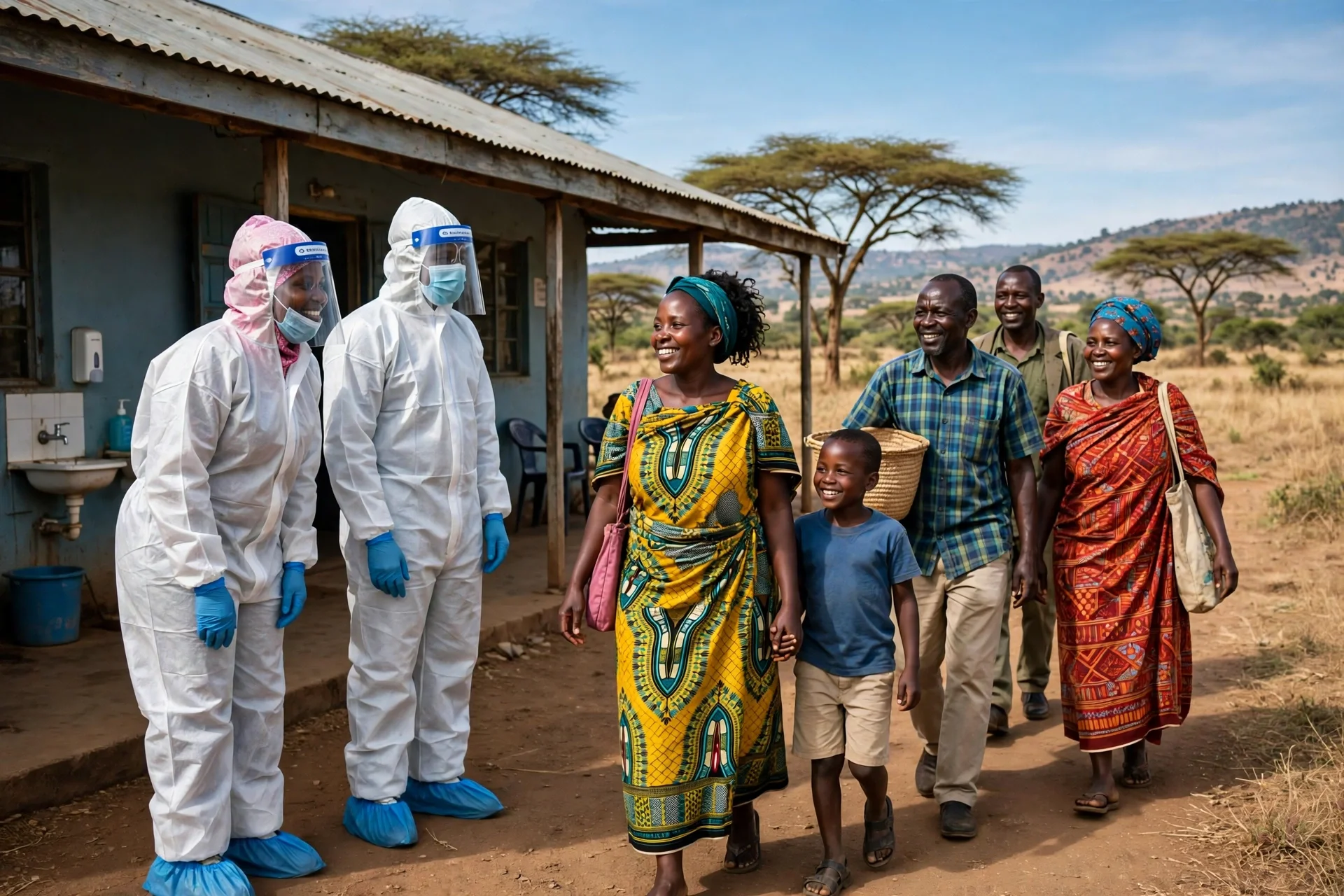
Kenya releases twenty Ebola contacts after 21 days in quarantine
Twenty contacts of Kenya's first Ebola case left quarantine after 21 days without symptoms, while 98 remain under monitoring and the country reports nine…
Twenty Ebola contacts return home in Kenya after quarantine
Kenya discharged twenty contacts after they completed 21 days of quarantine without symptoms, keeps 98 people under monitoring and reports nine confirmed cases…
--- The context ---
Kenya is responding to its first case of Ebola Bundibugyo virus disease with contact tracing and mandatory quarantine as its central tools. The Democratic Republic of the Congo declared the outbreak on 15 May, and the World Health Organization has since been assisting the Kenyan authorities with preparedness against the disease.
--- The facts ---
Twenty people linked to the first case were released from quarantine on Monday after completing 21 days of mandatory monitoring, and they were reunited with their families. They remained without symptoms throughout, and before release they received a final health assessment, counselling on precautions after discharge and follow-up where required. Another 98 contacts remain in quarantine.
Kenya confirmed its first case on 6 October, involving a Kenyan man who had been working in the Democratic Republic of the Congo. He flew back via Uganda on 3 October and died two days later in a Nairobi hospital. Tracing covered family members, airline passengers and crew, airport workers and medical personnel, and by 22 October all contacts had been traced and placed in quarantine, in Kenya and abroad.
--- The positions ---
Kenya's director general for health, Patrick Amoth, asked in attributed remarks for communities to welcome those returning home warmly, holding that after 21 days without symptoms they pose no risk of infection to anyone. The World Health Organization representative to Kenya, Neema Rusibamayila Kimambo, echoed that message, said completing quarantine helps protect families, communities and the whole country, and praised the swift Kenyan response.
--- What remains unknown ---
By Monday, eight contacts had developed symptoms and tested positive, and they were immediately transferred to the treatment centre in Nairobi. In total, Kenya has reported nine confirmed cases and two deaths, all within one connected group and with no evidence of spread to the community. What happens next with the 98 contacts still in quarantine and with the patients under treatment remains open.
--- Unanswered questions ---
How will the patients transferred to the Nairobi treatment centre progress? Will the 98 contacts still in quarantine complete their monitoring without symptoms? Will the outbreak stay contained within the group already identified, with no sign of wider community spread?
--- EPM analysis ---
The orderly release of the first group shows a surveillance system able to follow each contact through the full monitoring period. The official message against social rejection also matters, because people who are welcomed back are more likely to accept isolation when they are asked to do so.
The World Health Organization continues to support coordination, disease surveillance, contact tracing, laboratory testing, case management, infection prevention and control, screening at points of entry and risk communication. There is no licensed vaccine or specific treatment for Bundibugyo, but early detection and supportive care improve the chances of recovery.
📌 EPM Take: In EPM's view, the release of these twenty contacts is welcome news that should be read calmly and without stigma, because every quarantine completed without symptoms reduces uncertainty and shows that follow-up works when it is sustained in full, with a final assessment and support, and because welcoming back those who have complied also protects future cooperation from families and communities, which is the basis for detecting any new case early and keeping the outbreak contained in Kenya.
--- The context ---
Kenya's response to its first case of Ebola Bundibugyo virus disease rests on classic containment measures: trace every contact, keep each one in quarantine for 21 days and verify their health before authorising their return. The Democratic Republic of the Congo declared the outbreak on 15 May, and the World Health Organization has assisted the Kenyan authorities since then.
--- The facts ---
On Monday, twenty contacts completed the mandatory monitoring period and were discharged to reunite with their families. All of them remained without symptoms during quarantine and followed the standard protocols, including a final health assessment, counselling on precautions after discharge and follow-up where required. Another 98 people remain in quarantine under the same supervision.
The first case was confirmed on 6 October and involved a Kenyan man who had been working in the Democratic Republic of the Congo. He flew back via Uganda on 3 October and died two days later in a Nairobi hospital. The Ministry of Health traced family members, airline passengers and crew, airport workers and medical personnel, and by 22 October all contacts were traced and placed in quarantine.
--- The positions ---
Patrick Amoth, Kenya's director general for health, held in attributed remarks that people who complete 21 days without symptoms pose no risk of infection and should be welcomed home warmly. Neema Rusibamayila Kimambo, the World Health Organization representative in the country, backed that position, stressed the value of completing quarantine and commended the rapid work of national and county health teams.
--- What remains unknown ---
Caution is still warranted. By Monday, eight contacts had developed symptoms and tested positive, and they were immediately transferred to the treatment centre in Nairobi. Kenya has recorded nine confirmed cases and two deaths, all in one connected group and with no evidence of community spread, but the outcome of the active cases and of the 98 quarantines still under way is not yet settled.
--- Unanswered questions ---
Will the patients admitted to the Nairobi treatment centre recover? Will the 98 people still in isolation finish their monitoring without testing positive? Can Kenya close this episode without cases appearing outside the group already identified and fully traced?
--- EPM analysis ---
The central fact is one of order and compliance: nobody left early and nobody left without a final check. In a health emergency, respecting the full quarantine period and documenting each discharge is what separates verifiable containment from a simple declaration of reassurance.
World Health Organization support covers coordination, surveillance, contact tracing, laboratory testing, case management, infection prevention and control, screening at points of entry and risk communication. With no licensed vaccine and no specific treatment for Bundibugyo, discipline in early detection and supportive care remains the tool available to the authorities.
📌 EPM Take: In EPM's view, Kenya is right not to shorten quarantine by a single day and to state clearly that those who complete it without symptoms are not a threat, because public trust is earned through rules that apply equally to everyone, verifiable final checks and firm messages against stigma, and that orderly firmness is what protects families, sustains contact tracing and allows the outbreak to be closed without improvisation or unnecessary alarm across the country.
Kenia libera a veinte contactos de ébola tras cumplir la cuarentena
Veinte contactos del primer caso de ébola en Kenia salieron de cuarentena tras 21 días sin síntomas, mientras otros 98 siguen en vigilancia y el país suma…
Veinte contactos de ébola vuelven a casa en Kenia tras la cuarentena
Kenia dio el alta a veinte contactos tras completar 21 días de cuarentena sin síntomas, mantiene a 98 personas en vigilancia y reporta nueve casos confirmados…
--- El contexto ---
Kenia afronta su primer caso de enfermedad por virus del Ébola Bundibugyo con una respuesta centrada en el rastreo de contactos y la cuarentena obligatoria. La República Democrática del Congo declaró el brote el 15 de mayo, y desde entonces la Organización Mundial de la Salud apoya a las autoridades kenianas en la preparación frente a la enfermedad.
--- Los hechos ---
Veinte personas vinculadas al primer caso salieron de cuarentena el lunes tras completar 21 días de monitoreo obligatorio y se reunieron con sus familias. Durante ese periodo permanecieron sin síntomas y, antes de salir, pasaron una evaluación final de salud, recibieron consejería sobre precauciones posteriores y quedaron con seguimiento cuando fue necesario. Otras 98 personas continúan todavía en cuarentena.
Kenia confirmó su primer caso el 6 de octubre: un keniano que trabajaba en la República Democrática del Congo, regresó en avión vía Uganda el 3 de octubre y murió dos días después en un hospital de Nairobi. El rastreo abarcó a familiares, pasajeros y tripulación del vuelo, trabajadores del aeropuerto y personal médico, y al 22 de octubre todos los contactos estaban localizados y en cuarentena, dentro y fuera del país.
--- Las posiciones ---
El director general de salud de Kenia, Patrick Amoth, pidió en términos atribuidos que las comunidades reciban con calidez a quienes vuelven a casa, al considerar que, tras 21 días sin síntomas, no representan riesgo de infección para nadie. La representante de la Organización Mundial de la Salud en Kenia, Neema Rusibamayila Kimambo, respaldó ese mensaje, valoró que completar la cuarentena protege a las familias y al país, y elogió la rapidez de la respuesta sanitaria keniana.
--- Lo que falta saber ---
Hasta el lunes, ocho contactos habían desarrollado síntomas y dado positivo, y fueron trasladados de inmediato al centro de tratamiento de Nairobi. En total, Kenia suma nueve casos confirmados y dos muertes, todos dentro de un mismo grupo conectado y sin evidencia de propagación comunitaria. La situación de las 98 personas que siguen en cuarentena y la evolución de los pacientes trasladados siguen abiertas.
--- Preguntas sin respuesta ---
¿Cómo evolucionarán los pacientes trasladados al centro de tratamiento de Nairobi? ¿Completarán las 98 personas restantes su cuarentena sin desarrollar síntomas? ¿Se mantendrá el brote contenido dentro del grupo ya identificado, sin señales de propagación en la comunidad?
--- Análisis EPM ---
La salida ordenada de los primeros contactos muestra un sistema de vigilancia capaz de seguir cada caso durante todo el periodo de monitoreo. El mensaje oficial contra el rechazo social también importa: si quienes cumplen la cuarentena son bien recibidos, más personas aceptarán aislarse cuando se les pida.
La Organización Mundial de la Salud mantiene su apoyo en coordinación, vigilancia, rastreo, laboratorio, manejo de casos, control de infecciones, cribado en puntos de entrada y comunicación de riesgos. No hay vacuna licenciada ni tratamiento específico contra Bundibugyo, pero la detección temprana y los cuidados de apoyo mejoran las posibilidades de recuperación.
📌 Conclusion EPM: A juicio de EPM, la liberación de estos veinte contactos es una buena noticia que debe leerse con calma y sin estigma, porque cada cuarentena completada sin síntomas reduce la incertidumbre y demuestra que el seguimiento funciona cuando se sostiene completo, con evaluación final y acompañamiento, y porque acoger sin miedo a quienes ya cumplieron protege también la cooperación futura de familias y comunidades, que es la base para detectar pronto cualquier nuevo caso y mantener el brote contenido en Kenia.
--- El contexto ---
La respuesta keniana al primer caso de enfermedad por virus del Ébola Bundibugyo se apoya en medidas clásicas de contención: localizar a cada contacto, mantenerlo en cuarentena durante 21 días y verificar su estado antes de autorizar su regreso. La República Democrática del Congo declaró el brote el 15 de mayo y la Organización Mundial de la Salud asiste desde entonces a las autoridades de Kenia.
--- Los hechos ---
El lunes, veinte contactos completaron el periodo obligatorio de monitoreo y fueron dados de alta para reunirse con sus familias. Todos permanecieron sin síntomas durante la cuarentena y cumplieron los protocolos previstos, con evaluación final de salud, consejería sobre precauciones tras el alta y seguimiento cuando correspondió. Otras 98 personas permanecen aún en cuarentena bajo la misma vigilancia.
El primer caso se confirmó el 6 de octubre y correspondió a un keniano que trabajaba en la República Democrática del Congo. Voló de regreso vía Uganda el 3 de octubre y falleció dos días después en un hospital de Nairobi. El Ministerio de Salud rastreó a familiares, pasajeros y tripulación, trabajadores del aeropuerto y personal médico, y al 22 de octubre todos los contactos estaban localizados y en cuarentena.
--- Las posiciones ---
Patrick Amoth, director general de salud de Kenia, sostuvo en declaraciones atribuidas que quienes completaron 21 días sin síntomas no suponen riesgo de infección y pidió que sean recibidos con calidez en sus comunidades. Neema Rusibamayila Kimambo, representante de la Organización Mundial de la Salud en el país, apoyó ese planteamiento, destacó el valor de completar la cuarentena y reconoció la respuesta rápida de los equipos sanitarios nacionales y locales.
--- Lo que falta saber ---
La prudencia sigue siendo necesaria. Hasta el lunes, ocho contactos presentaron síntomas y dieron positivo, con traslado inmediato al centro de tratamiento de Nairobi. Kenia acumula nueve casos confirmados y dos muertes, todos en un mismo grupo conectado y sin evidencia de propagación comunitaria, pero el desenlace de los casos activos y de las 98 cuarentenas en curso todavía no está cerrado.
--- Preguntas sin respuesta ---
¿Se recuperarán los pacientes ingresados en el centro de tratamiento de Nairobi? ¿Darán negativo al final de su vigilancia las 98 personas que siguen aisladas? ¿Podrá Kenia cerrar este episodio sin que aparezcan casos fuera del grupo ya identificado?
--- Análisis EPM ---
El dato central es de orden y cumplimiento: nadie salió antes de tiempo ni sin control final. En una emergencia sanitaria, respetar el plazo completo de cuarentena y documentar cada alta es lo que separa una contención verificable de una simple declaración de tranquilidad.
El respaldo de la Organización Mundial de la Salud cubre coordinación, vigilancia, rastreo de contactos, pruebas de laboratorio, manejo de casos, control de infecciones, cribado en puntos de entrada y comunicación de riesgos. Sin vacuna licenciada ni tratamiento específico contra Bundibugyo, la disciplina en la detección temprana y los cuidados de apoyo sigue siendo la herramienta disponible.
📌 Conclusion EPM: A juicio de EPM, Kenia hace bien en no acortar ni un día la cuarentena y en decir con claridad que quien la completa sin síntomas no es una amenaza, porque la confianza pública se gana con reglas iguales para todos, controles finales comprobables y mensajes firmes contra el estigma, y esa firmeza ordenada es la que permite proteger a las familias, sostener el rastreo de contactos y cerrar el brote sin improvisaciones ni alarmas innecesarias en el país.