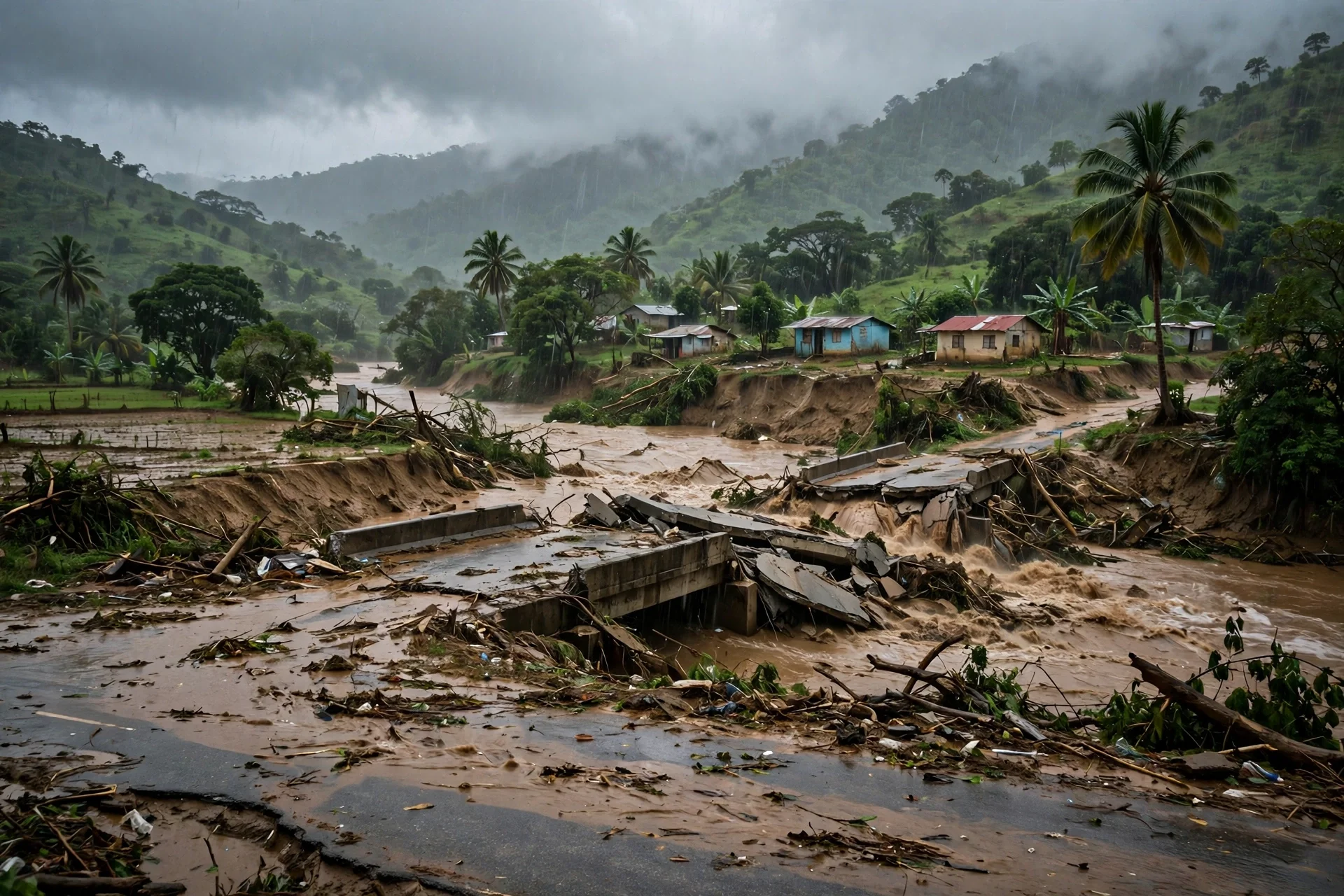
Imagen alusiva a los daños de la vaguada: puentes caídos y comunidades incomunicadas. · Erick Prometeo Media
Trough puts 18 provinces on alert and knocks out 28 aqueducts
The COE raised to 18 the provinces under alert over a trough, with 412 people affected, 105 homes flooded, 28 aqueducts out of service and 30 communities cut…
COE reports 412 people affected and 30 communities cut off by rains
Situation report number three from the COE counts 412 people affected, 105 homes flooded and 28 aqueducts out of service, with 18 provinces under alert and the…
--- The context ---
A trough continues to affect several regions of the Dominican Republic, bringing flooding and extensive damage to basic infrastructure. On Tuesday, the Emergency Operations Center raised to 18 the number of provinces under weather alert levels, according to its situation report number three, presented that morning by the agency.
--- The facts ---
The official balance counts 412 people affected, 105 homes flooded and 28 aqueducts out of service because of turbidity and swollen rivers. The report also records 30 communities left cut off by overflowing tributaries, six citizens moved to safe areas and two roads damaged.
Twelve areas remain under a yellow alert: Pedernales, Bahoruco, Independencia, Barahona, Azua, San José de Ocoa, San Juan, Monte Plata, Distrito Nacional, Santo Domingo, San Cristóbal and Peravia. Under a green alert are La Vega, San Pedro de Macorís, Monseñor Nouel, Sánchez Ramírez, Dajabón and Elías Piña, amid forecasts of heavy downpours and electrical storms.
--- The positions ---
Civil protection agencies reminded the public that bathing resorts and pools are prohibited in the provinces under alert and urged people to avoid reckless crossings of swollen rivers and fords. In Monte Plata, the swollen Ozama River collapsed the ford bridge structure at Don Juan and cut direct transit with Yamasá.
--- What remains unknown ---
The report does not say when the 28 aqueducts out of service will return to operation or when transit will be restored to the 30 communities cut off. It also gives no timetable for repairing the collapsed bridge at Don Juan or the two damaged roads.
--- Unanswered questions ---
When will water service return to the communities served by the 28 aqueducts out of service? What immediate support will the 412 people affected and the families in the 105 flooded homes receive? How long will it take to restore passage between Don Juan and Yamasá after the bridge collapse? Will the alerts remain or expand if the heavy downpours continue?
--- EPM analysis ---
The social dimension of the episode lies in the isolation figures: communities in Guayabal were cut off by the swollen Las Cuevas River, among them Arroyo Corozo, Las Guamas and Las Avispas,. Without aqueduct water and without road access, recovery depends on the speed of the official response.
📌 EPM Take: In EPM's view, the immediate priority must be the people who are isolated and without water service, because 30 communities cut off and 28 aqueducts out of service turn a weather alert into a daily problem of access, health and supply. The official balance orders the emergency with clear figures, but the response will be measured by the speed of restoring water, reopening closed routes and assisting the 412 people affected without leaving behind the rural communities named in the report.
--- The context ---
The Emergency Operations Center raised to 18 on Tuesday the number of provinces under weather alert levels because of the continued impact of a trough that has caused flooding and extensive damage to basic infrastructure. The information comes from situation report number three of the relief agency.
--- The facts ---
The official balance counts 412 people affected, 105 homes flooded and 28 aqueducts out of service because of turbidity and swollen rivers. The report also records 30 communities left cut off by overflowing tributaries, six citizens moved to safe areas and two roads damaged, a picture that calls for order and prudence.
Twelve areas remain under a yellow alert: Pedernales, Bahoruco, Independencia, Barahona, Azua, San José de Ocoa, San Juan, Monte Plata, Distrito Nacional, Santo Domingo, San Cristóbal and Peravia. Under a green alert are La Vega, San Pedro de Macorís, Monseñor Nouel, Sánchez Ramírez, Dajabón and Elías Piña, amid forecasts of heavy downpours and electrical storms.
--- The positions ---
Civil protection agencies reminded the public bathing resorts and pools are prohibited in the provinces under alert and urged people to avoid reckless crossings of swollen rivers and fords. In Monte Plata, the swollen Ozama River caused the collapse of the ford bridge structure at Don Juan, cutting direct transit with Yamasá.
--- What remains unknown ---
The report sets no timetable for restoring the aqueducts or reopening the interrupted routes in the 30 communities cut off. In the south, runoff provisionally flooded sections of the Sánchez road between Azua and Baní, near Playa Biyeya, and in Guayabal the swollen Las Cuevas River cut off Arroyo Corozo, Las Guamas and Las Avispas.
--- Unanswered questions ---
When will the 28 aqueducts out of service and transit toward the cut-off communities be restored? What timetable do the authorities have for repairing the ford bridge at Don Juan? Will public discipline hold regarding the prohibition on bathing resorts and pools? Will the agency expand the alerts if the forecast heavy downpours and electrical storms persist?
--- EPM analysis ---
In San José de Ocoa, similar situations of isolation were recorded because of the Arroyo La Piedra River, although the authorities report no fatalities and no destroyed houses. That fact contains the severity of the episode, but it does not reduce the scale of the damage: flooded homes, damaged roads and isolated communities require orderly recovery management.
📌 EPM Take: In EPM's view, situation report number three serves its purpose by setting out precisely the scope of the emergency and the conduct the public must avoid, starting with reckless crossings of swollen rivers and fords. The task now is to sustain that order through recovery: restoring the aqueducts, repairing the damaged roads and reopening passage at Don Juan, with timely information on each advance for the 18 provinces under alert.
Vaguada deja 18 provincias en alerta y 28 acueductos fuera de servicio
El COE elevó a 18 las provincias bajo alerta por una vaguada, con 412 personas afectadas, 105 viviendas anegadas, 28 acueductos fuera de servicio y 30…
COE reporta 412 afectados y 30 localidades incomunicadas por lluvias
El informe de situación número tres del COE contabiliza 412 personas afectadas, 105 viviendas anegadas y 28 acueductos fuera de servicio, con 18 provincias…
--- El contexto ---
Una vaguada mantiene su impacto continuado, con inundaciones y daños cuantiosos en la infraestructura básica. Este martes, el Centro de Operaciones de Emergencias elevó a 18 las provincias bajo niveles de alerta meteorológica, según su informe de situación número tres.
--- Los hechos ---
El balance oficial contabiliza 412 personas afectadas, 105 viviendas anegadas y 28 acueductos fuera de servicio debido a la turbidez y las crecidas fluviales. El reporte registra además 30 localidades que han quedado incomunicadas por el desbordamiento de afluentes, seis ciudadanos movilizados hacia áreas seguras y dos carreteras perjudicadas.
Doce demarcaciones permanecen en alerta amarilla: Pedernales, Bahoruco, Independencia, Barahona, Azua, San José de Ocoa, San Juan, Monte Plata, Distrito Nacional, Santo Domingo, San Cristóbal y Peravia. En alerta verde continúan La Vega, San Pedro de Macorís, Monseñor Nouel, Sánchez Ramírez, Dajabón y Elías Piña, ante pronósticos de aguaceros fuertes y tormentas eléctricas.
--- Las posiciones ---
Las autoridades de protección civil recordaron la prohibición de utilizar balnearios y pozas en las provincias alertadas y exhortaron a evitar cruces temerarios en ríos y badenes crecidos. En Monte Plata, la crecida del río Ozama colapsó el puente de paso de badén en Don Juan y cortó el tránsito directo con Yamasá, mientras los ríos Ozama y Guanuma aislaron varios parajes.
--- Lo que falta saber ---
El informe no precisa cuándo se restablecerán los 28 acueductos fuera de servicio ni cuándo recuperarán el tránsito las 30 localidades incomunicadas. Tampoco detalla plazos para reparar el puente colapsado en Don Juan ni las dos carreteras perjudicadas.
--- Preguntas sin respuesta ---
¿Cuándo volverá el servicio de agua a las comunidades atendidas por los 28 acueductos fuera de servicio? ¿Qué atención inmediata recibirán las 412 personas afectadas y las familias de las 105 viviendas anegadas? ¿Cuánto tardará restablecerse el paso entre Don Juan y Yamasá tras el colapso del puente? ¿Se mantendrán o ampliarán las alertas si continúan los aguaceros fuertes?
--- Análisis EPM ---
La dimensión social del episodio está en las cifras de aislamiento: comunidades de Guayabal quedaron incomunicadas por la crecida del río Las Cuevas, entre ellas Arroyo Corozo, Las Guamas y Las Avispas,. Sin agua de acueducto y sin paso por carretera, la recuperación depende de la rapidez de la respuesta oficial.
📌 Conclusion EPM: A juicio de EPM, la prioridad inmediata debe ser la gente aislada y sin servicio de agua, porque 30 localidades incomunicadas y 28 acueductos fuera de servicio convierten una alerta meteorológica en un problema diario de acceso, salud y abastecimiento. El balance oficial ordena la emergencia con cifras claras, pero la respuesta se medirá en la velocidad para restablecer el agua, reabrir los pasos cerrados y atender a las 412 personas afectadas sin dejar atrás a las comunidades rurales mencionadas en el informe.
--- El contexto ---
El Centro de Operaciones de Emergencias elevó este martes a 18 las provincias bajo niveles de alerta meteorológica por el impacto continuado de una vaguada que ha generado inundaciones y daños cuantiosos en la infraestructura básica. La información procede del informe de situación número tres, presentado en la mañana.
--- Los hechos ---
El balance oficial contabiliza 412 personas afectadas, 105 viviendas anegadas y 28 acueductos fuera de servicio debido a la turbidez y las crecidas fluviales. El reporte registra además 30 localidades incomunicadas por el desbordamiento de afluentes, seis ciudadanos movilizados hacia áreas seguras y dos carreteras perjudicadas, un cuadro que exige orden y prudencia.
Doce demarcaciones permanecen en alerta amarilla: Pedernales, Bahoruco, Independencia, Barahona, Azua, San José de Ocoa, San Juan, Monte Plata, Distrito Nacional, Santo Domingo, San Cristóbal y Peravia. En alerta verde continúan La Vega, San Pedro de Macorís, Monseñor Nouel, Sánchez Ramírez, Dajabón y Elías Piña, ante pronósticos de aguaceros fuertes y tormentas eléctricas.
--- Las posiciones ---
Los organismos de protección civil recordaron la prohibición de utilizar balnearios y pozas en las provincias alertadas y exhortaron a evitar cruces temerarios en ríos y badenes crecidos. En Monte Plata, la crecida del río Ozama provocó el colapso del puente de paso de badén en Don Juan, cortando el tránsito directo con Yamasá,.
--- Lo que falta saber ---
El informe no establece plazos para restablecer los acueductos ni para reabrir los pasos interrumpidos en las 30 localidades incomunicadas. En el sur, las escorrentías inundaron de forma provisional tramos de la carretera Sánchez entre Azua y Baní, a la altura de playa Biyeya,.
--- Preguntas sin respuesta ---
¿Cuándo se restablecerán los 28 acueductos fuera de servicio y el tránsito hacia las localidades incomunicadas? ¿Qué plazo manejan las autoridades para reparar el puente de paso de badén en Don Juan? ¿Se mantendrá la disciplina ciudadana ante esa prohibición? ¿Ampliará el organismo las alertas si persisten los aguaceros fuertes y las tormentas eléctricas pronosticadas?
--- Análisis EPM ---
En San José de Ocoa se registraron situaciones similares de aislamiento temporal por el río Arroyo La Piedra, aunque las autoridades no reportan víctimas mortales ni casas destruidas. Ese dato contiene la gravedad del episodio dentro de lo conocido, pero no reduce la magnitud de los daños: viviendas anegadas, carreteras perjudicadas y comunidades aisladas requieren una gestión ordenada de la recuperación.
📌 Conclusion EPM: A juicio de EPM, el informe de situación número tres cumple su función al fijar con precisión el alcance de la emergencia y las conductas que la ciudadanía debe evitar, empezando por los cruces temerarios en ríos y badenes crecidos. Ahora corresponde sostener ese orden en la recuperación: restablecer los acueductos, reparar las carreteras perjudicadas y reabrir el paso en Don Juan, con información puntual sobre cada avance para las 18 provincias bajo alerta.