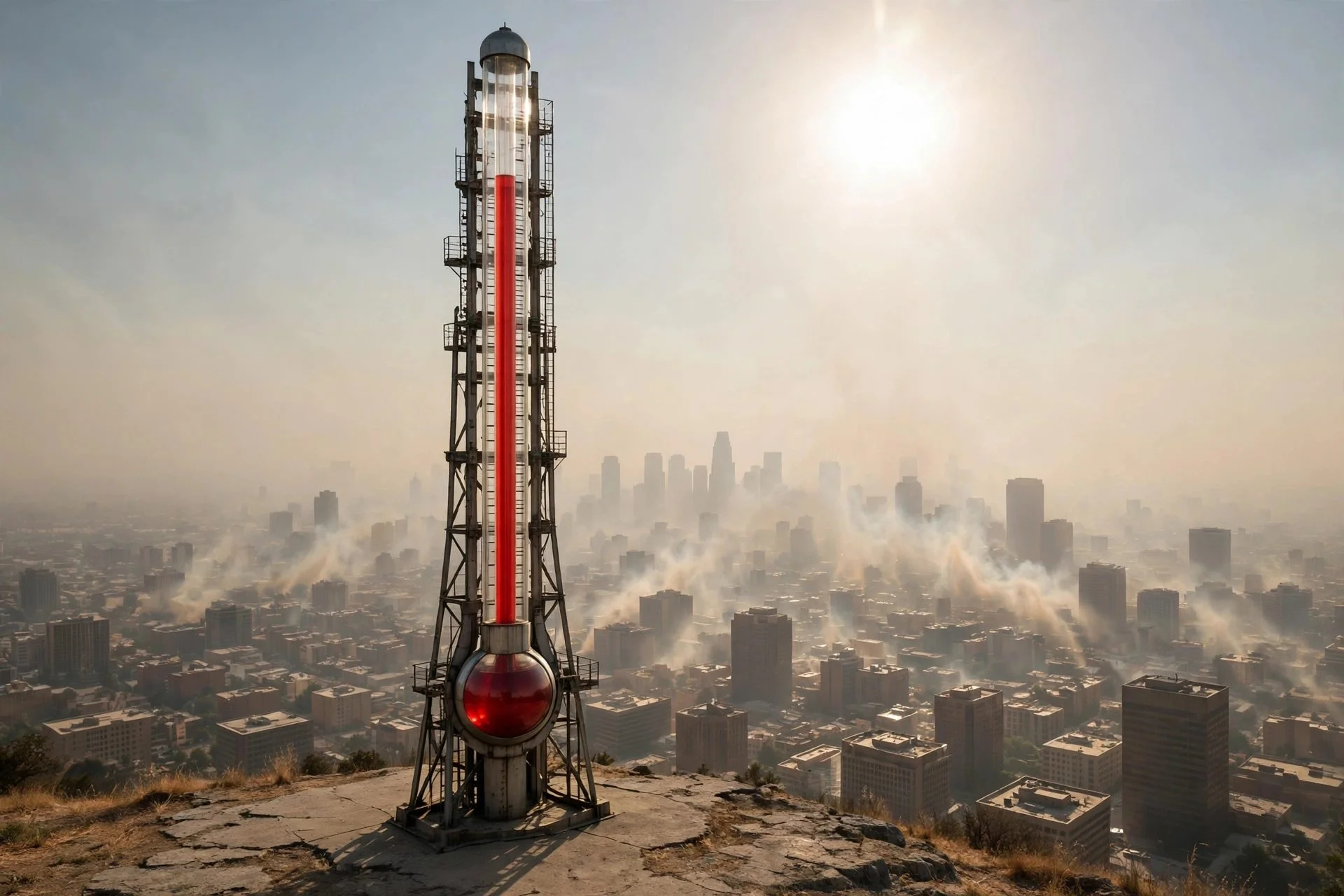
El calor extremo y la niebla térmica sobre una ciudad, en una imagen alusiva al aumento de los riesgos sanitarios ligados al clima. · Imagen generada — Erick Prometeo Media
Heat and drought deepen the global health emergency
The Lancet Countdown report, in association with WHO, finds that health harms from climate change are accelerating, with rising heat-related deaths, expanding…
Heat costs demand stronger and more practical health action
The Lancet Countdown report, in association with WHO, puts heat-related work losses at 573 billion hours in 2025 and records rising heat deaths and drought…
--- The context ---
The Lancet Countdown report, produced in association with the World Health Organization, finds that health harms from climate change are accelerating. Its authors state that heat-related deaths, drought and other climate-related risks are increasing faster than a decade ago, while expanded fossil fuel extraction holds back progress and threatens health risks described as catastrophic, even as clean energy investment and climate action begin to deliver health benefits.
--- The facts ---
Heat exposure caused the loss of 573 billion potential work hours in 2025, costed at $1.07 trillion. Heat-related deaths increased by nearly 36 per cent in the years following the 2015 Paris Agreement compared with the previous decade, and the global area affected by extreme drought grew more than 700 per cent faster than in 2006–2015, with droughts affecting 51.8 per cent of land on earth for at least one month in 2025.
The analysis, led by University College London with researchers and institutions worldwide, tracks 54 indicators linking climate change and health. Conditions suitable for dengue transmission by Aedes albopictus mosquitoes increased by 24 per cent between 1981-90 and 2016-25, while suitability for Aedes aegypti rose by seven per cent. At the same time, cleaner air is preventing an estimated 323,000 deaths a year in 70 countries where fossil fuel air pollution has fallen.
--- The positions ---
The authors maintain that climate change should be formally recognized as a global health emergency, in support of stronger health-centred action ahead of the UN COP31 conference in Antalya, Türkiye. WHO responds through surveillance, early warning systems, health adaptation planning, technical guidance and emergency response teams, closely follows the expected health impacts of the ongoing El Niño event, and oversees ATACH, the network of health ministries building climate-resilient, low-carbon health systems. Priorities include faster emissions cuts, more adaptation support and stronger health system resilience.
--- What remains unknown ---
The report does not specify how much of the record $2.1 trillion global investment in clean energy last year reached countries with the fewest climate and health laws. It also leaves open the timetable for extending national health adaptation plans to every country and how that expansion would be financed. The legal gap is stark in the figures the analysis itself provides for 2025.
--- Unanswered questions ---
Will climate change be formally recognized as a global health emergency before COP31? How will the gap between 55 per cent of laws in wealthy nations and two per cent in developing countries be closed? What concrete steps will follow the adaptation plans already adopted? Will the largest oil and gas companies revise plans to produce 150 per cent more fossil fuels by 2040 than is compatible with keeping warming to 1.5°C?
--- EPM analysis ---
A progressive reading of these findings stresses inequality: the countries with the fewest laws and resources face growing risks from heat, drought and dengue. Progress is real, with clean energy jobs growing 2.3 per cent in 2024 and climate and health laws rising roughly 50-fold since the year 2000, yet it coexists with fossil fuel plans running far beyond what a 1.5°C path allows, up from 138 per cent a year earlier to 150 per cent.
📌 EPM Take:
In EPM's view, health must move to the centre of climate policy with real funding for adaptation, early warning systems and resilient health services in the most exposed countries. The evidence shows clear gains when air pollution falls and clean energy grows, alongside an unfair gap in laws and protection. Recognition without resources would be an empty gesture; the response should be measured in lives protected, work hours saved and communities able to withstand the next extreme episode.
--- The context ---
The Lancet Countdown report, produced in association with the World Health Organization, finds that health harms from climate change are accelerating. Its authors state that heat-related deaths, drought and other climate-related risks are increasing faster than a decade ago, while clean energy investments and climate action begin to deliver health benefits, even though expanded fossil fuel extraction is holding back progress and threatening health risks described as catastrophic.
--- The facts ---
Heat exposure caused the loss of 573 billion potential work hours in 2025, costed at $1.07 trillion, and heat-related deaths increased by nearly 36 per cent in the years following the 2015 Paris Agreement compared with the previous decade. Extreme drought expanded more than 700 per cent faster than in 2006–2015 and affected 51.8 per cent of land on earth for at least one month in 2025, across an analysis of 54 indicators linking climate change and health.
The report also records measurable gains: clean energy jobs grew 2.3 per cent in 2024, almost twice direct fossil fuel employment, and cleaner air is preventing an estimated 323,000 deaths a year in 70 countries where fossil fuel air pollution has fallen. Conditions suitable for dengue transmission by Aedes albopictus mosquitoes increased by 24 per cent between 1981-90 and 2016-25, while suitability for Aedes aegypti transmission rose by seven per cent.
--- The positions ---
The authors maintain that climate change should be formally recognized as a global health emergency ahead of the UN COP31 conference in Antalya, Türkiye. WHO responds through surveillance, early warning systems, health adaptation planning, technical guidance and emergency response teams, follows the expected health impacts of the ongoing El Niño event through a global incident management team, and oversees ATACH. The stated priorities are accelerating emissions reductions, increasing adaptation support and expanding investment in health system resilience.
--- What remains unknown ---
What remains unclear is the comparative cost and effectiveness of each adaptation measure and the timetable for extending national plans. Around one in four countries now have a national plan for adapting health services, up from just 14 WHO Member States in 2015, and 47 have separately completed a vulnerability assessment. The report also notes that greenhouse gas levels reached record highs in 2025, without detailing how efforts will be shared among countries with very different capacities.
--- Unanswered questions ---
Which adaptation measures deliver the most protection for each resource invested? When will every country have a working national health adaptation plan in place? How will governments test whether early warning systems actually reduce heat-related deaths? Will the 100 largest oil and gas companies adjust plans to produce 150 per cent more fossil fuels by 2040 than is compatible with keeping warming to 1.5°C?
--- EPM analysis ---
From a conservative standpoint, the value of this report lies in its costs and its verifiable results: work hours lost, deaths avoided through cleaner air and health systems that prepare more effectively. Climate and health laws have risen roughly 50-fold since the year 2000, yet wealthy nations accounted for 55 per cent of them in 2025 against two per cent in developing countries, which calls for effective management rather than declarations alone.
📌 EPM Take:
In EPM's view, the sensible response combines practical adaptation, early warning systems and resilient health services, with clear accounting of cost and results in each country. Gains in cleaner air and clean energy show that measurable progress protects lives, and that should be the standard for judging every new policy. Declaring emergencies without execution, orderly financing and rigorous evaluation will not prevent a single heat-related death or recover a single lost work hour.
El calor y la sequía agravan la crisis de salud global
El informe Lancet Countdown, en asociación con la OMS, encuentra que los daños a la salud por el cambio climático se aceleran, con más muertes por calor…
Los costes del calor exigen respuestas sanitarias eficaces
El informe Lancet Countdown, en asociación con la OMS, cifra en 573 mil millones las horas de trabajo perdidas por el calor en 2025 y registra más muertes por…
--- El contexto ---
El informe Lancet Countdown, elaborado en asociación con la Organización Mundial de la Salud, sostiene que los daños a la salud vinculados al cambio climático se aceleran. Según sus autores, las muertes relacionadas con el calor, la sequía y otros riesgos climáticos aumentan más rápido que hace una década, mientras la expansión de la extracción de combustibles fósiles frena el progreso y plantea riesgos descritos como catastróficos.
--- Los hechos ---
La exposición al calor causó la pérdida de 573 mil millones de horas potenciales de trabajo en 2025, con un coste estimado de 1,07 billones de dólares. Las muertes relacionadas con el calor aumentaron casi un 36 por ciento en los años posteriores al Acuerdo de París de 2015 frente a la década anterior, y la superficie mundial afectada por sequía extrema creció más de un 700 por ciento más rápido que en 2006–2015, con sequías sobre el 51,8 por ciento de la tierra durante al menos un mes en 2025.
El análisis, dirigido por University College London con investigadores de todo el mundo, sigue 54 indicadores. Las condiciones aptas para la transmisión del dengue por Aedes albopictus aumentaron un 24 por ciento entre 1981-90 y 2016-25, y las aptas para Aedes aegypti subieron un siete por ciento. A la vez, el aire más limpio evita unas 323,000 muertes al año en 70 países donde bajó la contaminación por combustibles fósiles.
--- Las posiciones ---
Los autores defienden reconocer formalmente el cambio climático como emergencia mundial de salud y piden acción climática centrada en la salud antes de la conferencia COP31 en Antalya, Türkiye. La OMS responde con vigilancia, alertas tempranas, planificación de adaptación, orientación técnica y equipos de emergencia, sigue los efectos esperados de El Niño y supervisa la red ATACH de ministerios de salud. Las prioridades señaladas son reducir emisiones, apoyar la adaptación y reforzar la resiliencia sanitaria.
--- Lo que falta saber ---
El informe no precisa cuánto de la inversión récord de 2,1 billones de dólares en energía limpia del año pasado llegó a los países con menos leyes de clima y salud. Tampoco detalla plazos para que los planes nacionales de adaptación cubran a todos los países ni cómo se financiará esa expansión. La brecha legal se ve en los datos de 2025 del análisis.
--- Preguntas sin respuesta ---
¿Se reconocerá el cambio climático como emergencia mundial de salud antes de la COP31? ¿Cómo se cerrará la brecha entre el 55 por ciento de leyes en países ricos y el dos por ciento en países en desarrollo? ¿Qué medidas concretas seguirán a los planes de adaptación ya adoptados? ¿Reducirán las grandes petroleras unos planes que superan lo compatible con 1,5°C?
--- Análisis EPM ---
La lectura progresista de estos datos pone el acento en la desigualdad: quienes menos leyes y menos recursos tienen enfrentan riesgos crecientes de calor, sequía y dengue. El progreso existe, con empleo de energía limpia creciendo un 2,3 por ciento en 2024 y leyes multiplicadas por 50 desde el año 2000, pero convive con planes fósiles que apuntan a producir un 150 por ciento más de lo compatible con 1,5°C hacia 2040.
📌 Conclusion EPM:
A juicio de EPM, la salud debe pasar al centro de la política climática con financiación real para adaptación, alertas tempranas y sistemas sanitarios resilientes en los países más expuestos. Los datos muestran beneficios claros cuando baja la contaminación y crece la energía limpia, pero también una brecha injusta en leyes y protección. Reconocer la emergencia sin recursos sería un gesto vacío; la respuesta debe medirse en vidas protegidas, horas de trabajo salvadas y comunidades capaces de resistir el próximo episodio extremo.
--- El contexto ---
El informe Lancet Countdown, elaborado en asociación con la Organización Mundial de la Salud, encuentra que los daños a la salud derivados del cambio climático se aceleran. Sus autores señalan que las muertes relacionadas con el calor, la sequía y otros riesgos aumentan más rápido que hace una década, al tiempo que la inversión en energía limpia y la acción climática empiezan a rendir beneficios sanitarios, aunque la extracción fósil frena el avance.
--- Los hechos ---
La exposición al calor causó la pérdida de 573 mil millones de horas potenciales de trabajo en 2025, valoradas en 1,07 billones de dólares, y las muertes relacionadas con el calor subieron casi un 36 por ciento tras el Acuerdo de París de 2015 frente a la década anterior. La sequía extrema se expandió más de un 700 por ciento más rápido que en 2006–2015 y afectó al 51,8 por ciento de la tierra durante al menos un mes en 2025, en 54 indicadores.
El informe registra avances medibles: el empleo en energía limpia creció un 2,3 por ciento en 2024, casi el doble del empleo directo en combustibles fósiles, y el aire más limpio evita unas 323,000 muertes al año en 70 países. Las condiciones para la transmisión del dengue por Aedes albopictus aumentaron un 24 por ciento entre 1981-90 y 2016-25, mientras las de Aedes aegypti subieron un siete por ciento.
--- Las posiciones ---
Los autores piden reconocer el cambio climático como emergencia mundial de salud y reforzar la acción antes de la COP31 en Antalya, Türkiye. La OMS actúa mediante vigilancia, sistemas de alerta temprana, planificación de adaptación, orientación técnica y equipos de respuesta, sigue los efectos esperados de El Niño mediante un equipo mundial de gestión y supervisa la red ATACH. Las prioridades son recortar emisiones, apoyar la adaptación y fortalecer la resiliencia de los sistemas de salud.
--- Lo que falta saber ---
Queda por aclarar el coste y la eficacia comparada de cada medida de adaptación, así como el calendario para extender los planes nacionales. Alrededor de uno de cada cuatro países tiene un plan nacional de adaptación sanitaria, frente a solo 14 Estados miembros de la OMS en 2015, y 47 completaron una evaluación de vulnerabilidad. El informe tampoco detalla cómo se repartirán los esfuerzos entre países con capacidades distintas.
--- Preguntas sin respuesta ---
¿Qué medidas de adaptación ofrecen mayor protección por cada recurso invertido? ¿Cuándo tendrán todos los países un plan nacional de adaptación sanitaria operativo? ¿Cómo se evaluará si las alertas tempranas reducen de verdad las muertes por calor? ¿Ajustarán las 100 mayores petroleras unos planes que prevén un 150 por ciento más de producción fósil de lo compatible con 1,5°C hacia 2040?
--- Análisis EPM ---
Desde una mirada conservadora, el valor del informe está en sus costes y sus resultados verificables: horas de trabajo perdidas, muertes evitables con aire más limpio y sistemas que se preparan mejor. Las leyes de clima y salud se multiplicaron por 50 desde el año 2000, pero en 2025 el 55 por ciento estaba en países ricos frente al dos por ciento en países en desarrollo, lo que exige gestión eficaz y no solo declaraciones.
📌 Conclusion EPM:
A juicio de EPM, la respuesta sensata combina adaptación práctica, alertas tempranas y sistemas de salud resilientes, con cuentas claras sobre coste y resultados en cada país. Los avances en aire limpio y energía limpia muestran que el progreso medible protege vidas, y ese debe ser el criterio para juzgar cada política nueva. Declarar emergencias sin ejecución, financiación ordenada y evaluación rigurosa no reducirá ni una muerte por calor ni una hora de trabajo perdida.