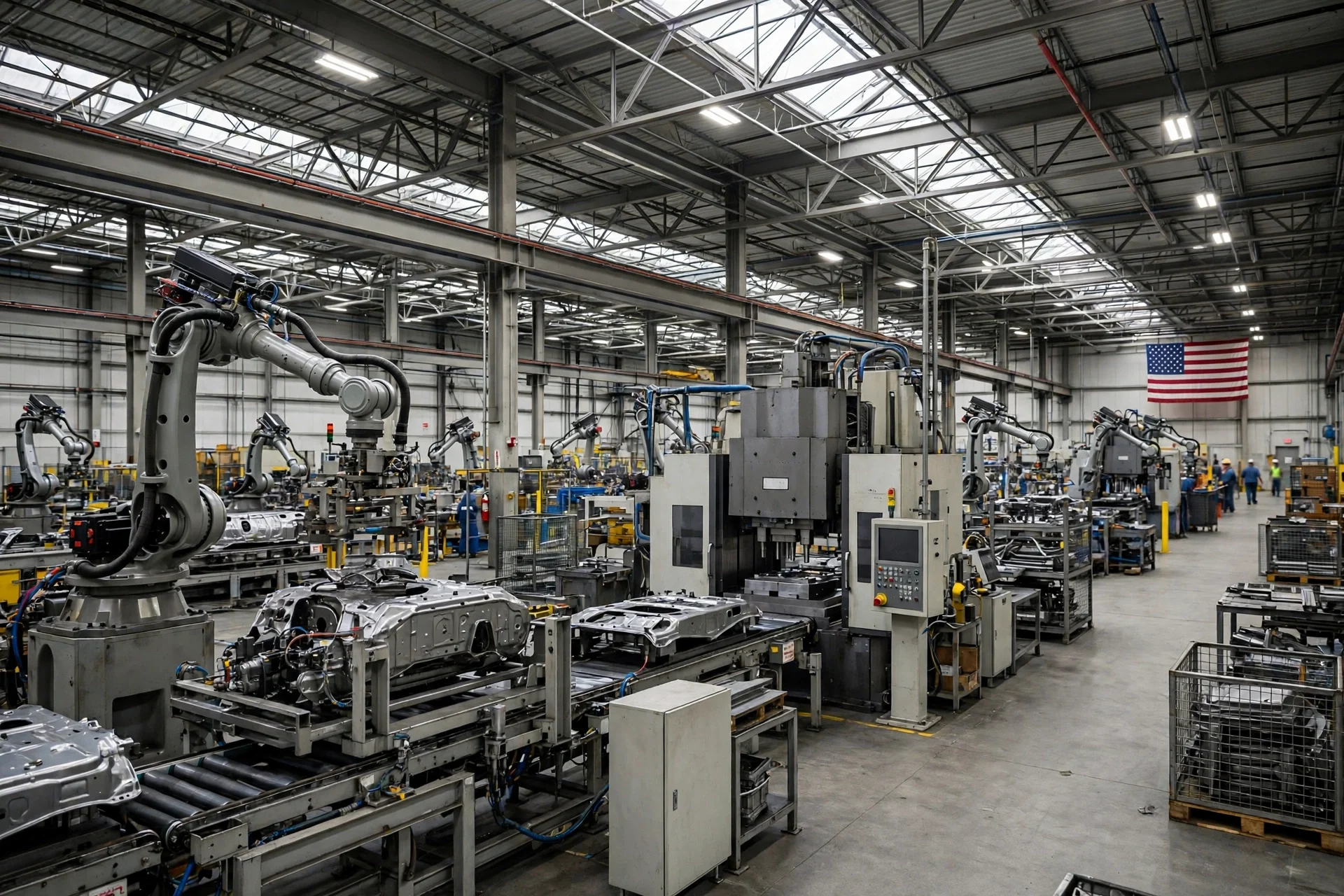
Línea de producción con brazos robóticos y maquinaria industrial en una planta de manufactura en Estados Unidos. · Imagen generada para EPM
Trump Orders Talks on Imported Robotics and Industrial Machinery
President Donald J. Trump signed a Section 232 proclamation addressing the national security threat from imports of robotics, industrial machinery, and…
Trump Uses Section 232 to Cut Dependence on Imported Robotics
The proclamation signed by Donald J. Trump directs negotiations on imports of robotics and industrial machinery from any country, with Commerce follow-up and…
--- The context ---
The White House presents robotics and industrial machinery as indispensable to virtually all modern manufacturing, including defense, commercial, and dual-use purposes. Because of that centrality, its origin is framed as a national security matter, not only a trade question.
The document also acknowledges an internal weakness. Although there has been a recent surge in investments in manufacturing facilities, the United States produces less robotics and industrial equipment than it consumes, lacks the capacity to satisfy increasing demand, and relies on foreign imports for most types of that equipment.
--- The facts ---
Upon signing the proclamation, President Donald J. Trump acted under Section 232 of the Trade Expansion Act of 1962 to address the threatened impairment of national security from imports of robotics, industrial machinery, and their parts and components. The proclamation directs the Secretary of Commerce and the Trade Representative to jointly negotiate agreements with trading partners on imports from any country.
The Secretary of Commerce will inform the president of circumstances that might indicate the need for further action under Section 232 on these products. The president may take other actions he deems necessary to adjust those imports and eliminate the threat to national security.
--- The positions ---
Without a robust domestic ecosystem, the White House warns, the industrial base will continue to rely on foreign imports, at risk to national security and the long-term competitiveness of a key industrial sector. Nearly all modern defense systems and critical infrastructure sectors, moreover, require robotics or industrial machinery.
In his first term, the document notes, the president used Section 232 against trade policies that weakened steel and aluminum. Since returning to office, he has applied that authority and tariffs to steel, aluminum, copper, automobiles, trucks, timber and lumber, semiconductors, pharmaceuticals, polysilicon, and drones, and claims to have secured trillions in private and foreign investment through negotiations and tariffs.
--- What remains unknown ---
The source does not detail the concrete agreements that will be sought with each partner, or deadlines, or which circumstances would trigger further action, or which measures the president could adopt if he considers that the threat persists after the agreements.
--- Unanswered questions ---
Which specific agreements will Commerce and the Trade Representative negotiate with trading partners? Which circumstances would trigger a recommendation for further action under Section 232? Which other measures would the president adopt if import dependence continues afterward?
--- EPM analysis ---
The practical value of the measure will depend on verifiable agreements and on domestic capacity growing at the pace of the demand described. The document combines a trade tool with a defense argument, and requires measuring results by the real autonomy the industrial base gains.
📌 EPM Take: In EPM's view, the proclamation is right to place dependence at the center of the debate, because a country that does not produce the machinery it consumes remains exposed in defense, critical infrastructure, and competitiveness. Its real value will depend on facts still absent: concrete agreements, clear criteria for escalating action, and enough domestic capacity to meet growing demand. Without those verifiable elements, the measure will remain a statement of intent rather than a structural correction of the vulnerability described.
--- The context ---
The United States relies on foreign imports for most types of robotics, industrial machinery, and their parts and components. That dependence is the starting point of the proclamation signed by President Donald J. Trump, as a national security problem.
According to the document, that equipment is indispensable to virtually all modern manufacturing, including defense, commercial, and dual-use purposes, and the country produces less than it consumes and lacks the capacity to satisfy increasing demand.
--- The facts ---
Upon signing the proclamation, the president acted under Section 232 of the Trade Expansion Act of 1962 to address the threatened impairment of national security from imports of robotics, industrial machinery, and their parts and components. The order directs the Secretary of Commerce and the Trade Representative to jointly negotiate agreements with trading partners on imports from any country.
The Secretary of Commerce will inform the president of circumstances that might indicate the need for further action under Section 232. The president may take other actions he deems necessary to adjust imports of these products and eliminate the threat to national security.
--- The positions ---
The White House warns that, without a robust domestic ecosystem, the industrial base will continue to rely on foreign imports. That continuity, it argues, threatens national security and the long-term competitiveness of one of the most important industrial sectors in the country.
The document offers an earlier record as backing. In his first term, the president turned to Section 232 against policies that weakened steel and aluminum. Since returning to office, he has applied that authority and tariffs to steel, aluminum, copper, automobiles, trucks, timber and lumber, semiconductors, pharmaceuticals, polysilicon, and drones, and claims to have secured trillions in private and foreign investment through negotiations and tariffs.
--- What remains unknown ---
The source does not specify the content of the agreements to be negotiated, or deadlines or priority partners. It also does not detail which circumstances would lead to a recommendation for further action or which additional measures the president would adopt if negotiations do not eliminate the threat described.
--- Unanswered questions ---
What terms will the United States seek in agreements with trading partners on this equipment? Which circumstances will Commerce report as a sign that further action is needed? What additional measures would the president apply if dependence persists?
--- EPM analysis ---
The proclamation treats industrial capacity as a direct component of defense and uses negotiation as the first tool, before possible greater adjustments. Its strength lies in the clarity of the diagnosis. Its limit lies in what it does not yet demonstrate: that agreements and investment will create a domestic ecosystem capable of sustaining demand.
📌 EPM Take: In EPM's view, protecting the capacity to produce robotics and industrial machinery is a matter of national security and not only of trade, because defense and critical infrastructure depend on that equipment. The proclamation uses the right path by ordering negotiations first and reserving additional action if the threat continues. Now measurable results should be required: known agreements, transparent follow-up by Commerce, and real growth in domestic production, so that proclaimed independence becomes effective capacity.
Trump ordena negociar acuerdos sobre robótica y maquinaria industrial importada
El presidente Donald J. Trump firmó una proclamación bajo la Sección 232 para atender la amenaza a la seguridad nacional por las importaciones de robótica…
Trump actúa bajo la Sección 232 para reducir la dependencia en robótica importada
La proclamación firmada por Donald J. Trump instruye negociar acuerdos sobre importaciones de robótica y maquinaria industrial de cualquier país, con…
--- El contexto ---
La Casa Blanca presenta la robótica y la maquinaria industrial como indispensables para casi toda la manufactura moderna, incluidos fines de defensa, comerciales y de doble uso. Por esa centralidad, el origen de esos equipos se plantea como un asunto de seguridad nacional y no solo comercial.
El documento reconoce además una debilidad interna. Aunque hubo un aumento reciente de inversiones en instalaciones de manufactura en numerosas industrias, Estados Unidos produce menos equipo de robótica e industrial del que consume, carece de capacidad para satisfacer la demanda creciente y depende de importaciones extranjeras para la mayoría de los tipos.
--- Los hechos ---
Con la firma de la proclamación, el presidente Donald J. Trump actuó bajo la Sección 232 de la Ley de Expansión Comercial de 1962 para atender la amenaza a la seguridad nacional por importaciones de robótica, maquinaria industrial y sus partes y componentes. La proclamación ordena al secretario de Comercio y al representante comercial negociar conjuntamente acuerdos con socios comerciales sobre importaciones procedentes de cualquier país.
El secretario de Comercio informará al presidente de circunstancias que indiquen la necesidad de más acción bajo la Sección 232 sobre estos productos. El presidente podrá tomar otras acciones que considere necesarias para ajustar esas importaciones y eliminar la amenaza a la seguridad nacional.
--- Las posiciones ---
Sin un ecosistema doméstico robusto, advierte la Casa Blanca, la base industrial seguirá dependiendo de importaciones extranjeras, con riesgo para la seguridad nacional y la competitividad a largo plazo de un sector industrial clave.
En su primer mandato, señala el documento, el presidente usó la Sección 232 frente a políticas comerciales que debilitaron el acero y el aluminio. Desde su regreso ha aplicado esa autoridad y aranceles a acero, aluminio, cobre, automóviles, camiones, madera, semiconductores, productos farmacéuticos, polisilicio y drones, y afirma haber asegurado billones en inversión privada y extranjera mediante negociaciones y aranceles.
--- Lo que falta saber ---
La fuente no detalla los acuerdos concretos que se buscarán, ni plazos, ni qué circunstancias activarían más acción, ni qué medidas adicionales podría adoptar el presidente si considera que la amenaza persiste tras los acuerdos.
--- Preguntas sin respuesta ---
¿Qué acuerdos específicos negociarán Comercio y el representante comercial con los socios comerciales? ¿Qué circunstancias activarían una recomendación de más acción bajo la Sección 232? ¿Qué otras medidas adoptaría el presidente si la dependencia importadora continúa?
--- Análisis EPM ---
El valor práctico de la medida dependerá de acuerdos verificables y de que la capacidad doméstica crezca al ritmo de la demanda descrita. El documento combina una herramienta comercial con un argumento de defensa, y obliga a medir resultados por la autonomía real que gane la base industrial.
📌 Conclusion EPM: A juicio de EPM, la proclamación acierta al poner la dependencia en el centro del debate, porque un país que no produce la maquinaria que consume queda expuesto en defensa, infraestructura crítica y competitividad. Su valor real dependerá de hechos todavía ausentes: acuerdos concretos, criterios claros para escalar la acción y capacidad doméstica suficiente para cubrir la demanda creciente. Sin esos elementos verificables, la medida quedará como declaración de intención y no como corrección estructural de la vulnerabilidad descrita.
--- El contexto ---
Estados Unidos depende de importaciones extranjeras para la mayoría de los tipos de robótica, maquinaria industrial y sus partes y componentes. Esa dependencia es el punto de partida de la proclamación firmada por el presidente Donald J. Trump, como problema de seguridad nacional.
Según el documento, esos equipos son indispensables para casi toda la manufactura moderna, incluidos fines de defensa, comerciales y de doble uso, y el país produce menos de lo que consume y carece de capacidad para satisfacer la demanda creciente.
--- Los hechos ---
Al firmar la proclamación, el presidente actuó bajo la Sección 232 de la Ley de Expansión Comercial de 1962 para atender la amenaza a la seguridad nacional por las importaciones de robótica, maquinaria industrial y sus partes y componentes. La orden instruye al secretario de Comercio y al representante comercial a negociar conjuntamente acuerdos con socios comerciales sobre importaciones de cualquier país.
El secretario de Comercio informará al presidente de circunstancias que indiquen la necesidad de más acción bajo la Sección 232. El presidente podrá tomar otras acciones que considere necesarias para ajustar las importaciones de estos productos y eliminar la amenaza a la seguridad nacional.
--- Las posiciones ---
La Casa Blanca advierte que, sin un ecosistema doméstico robusto, la base industrial seguirá dependiendo de importaciones extranjeras. Esa continuidad, sostiene, amenaza la seguridad nacional y la competitividad a largo plazo de uno de los sectores industriales más importantes del país.
El documento presenta antecedentes como respaldo. En su primer mandato, el presidente recurrió a la Sección 232 frente a políticas que debilitaron el acero y el aluminio. Desde su regreso ha aplicado esa autoridad y aranceles a acero, aluminio, cobre, automóviles, camiones, madera, semiconductores, productos farmacéuticos, polisilicio y drones, y afirma haber asegurado billones en inversión privada y extranjera mediante negociaciones y aranceles.
--- Lo que falta saber ---
La fuente no especifica los acuerdos a negociar, ni plazos ni socios prioritarios. Tampoco detalla qué circunstancias llevarían a recomendar más acción ni qué medidas adicionales adoptaría el presidente si las negociaciones no eliminan la amenaza descrita.
--- Preguntas sin respuesta ---
¿Qué términos buscará Estados Unidos en los acuerdos con sus socios comerciales sobre estos equipos? ¿Qué circunstancias comunicará Comercio como señal de que hace falta más acción? ¿Qué medidas adicionales aplicaría el presidente si la dependencia persiste?
--- Análisis EPM ---
La proclamación trata la capacidad industrial como componente directo de la defensa y usa la negociación como primera herramienta, antes de eventuales ajustes mayores. Su fortaleza está en la claridad del diagnóstico. Su límite está en lo que aún no demuestra: que acuerdos e inversión creen un ecosistema doméstico capaz de sostener la demanda.
📌 Conclusion EPM: A juicio de EPM, proteger la capacidad de producir robótica y maquinaria industrial es una cuestión de seguridad nacional y no solo de comercio, porque de esos equipos dependen la defensa y la infraestructura crítica. La proclamación usa la vía correcta al ordenar negociar primero y reservar acción adicional si la amenaza continúa. Ahora corresponde exigir resultados medibles: acuerdos conocidos, seguimiento transparente de Comercio y crecimiento real de la producción doméstica, para que la independencia proclamada sea capacidad efectiva.