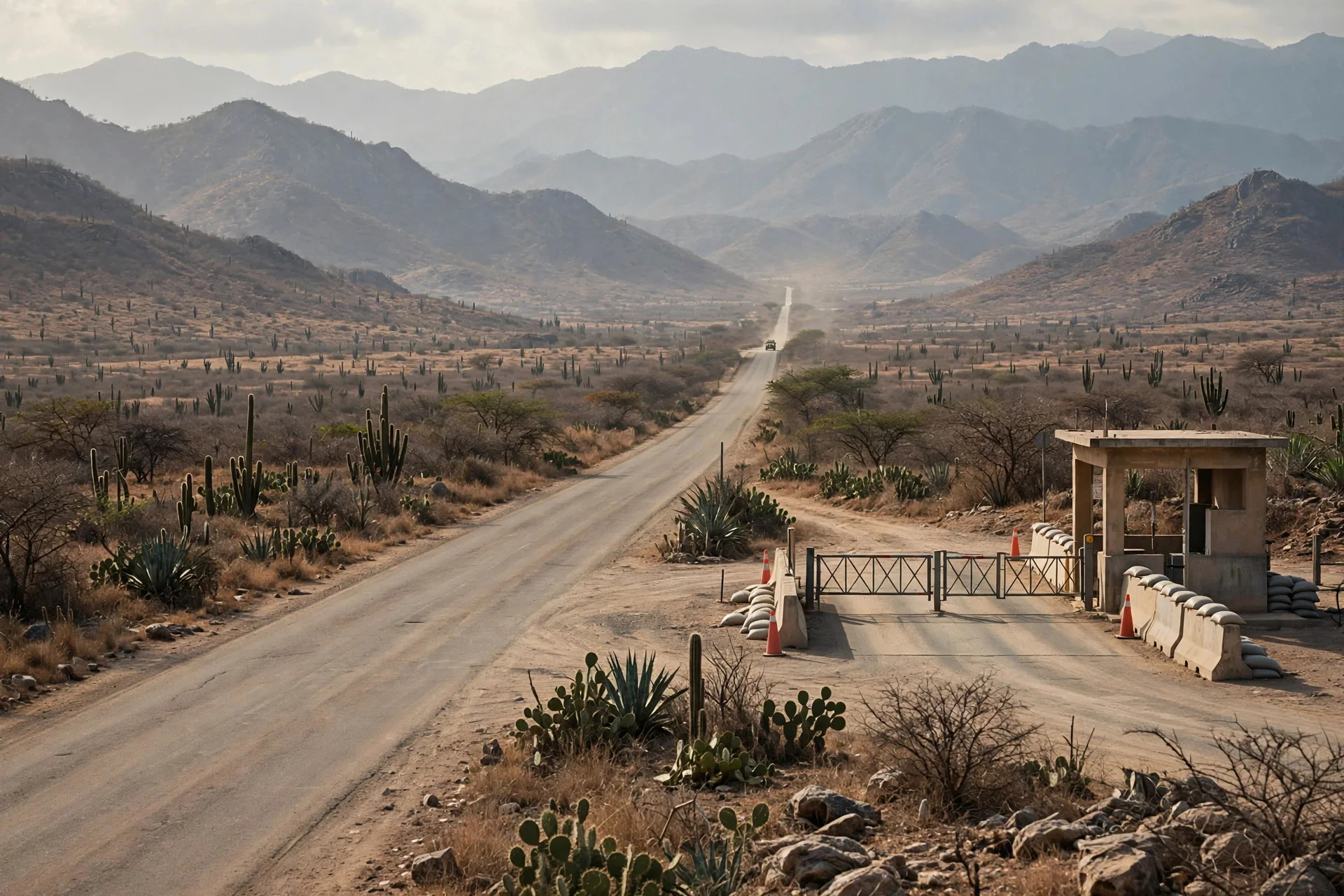
Frontera entre República Dominicana y Haití · Imagen generada por EPM
Abinader sets security perimeter 20 kilometres from border
President Luis Abinader said on 26 October that Dominican security begins about 20 kilometres from the border, on the Haitian side, and that gangs will not be…
Dominican Republic will not tolerate gangs near its border
Luis Abinader said on 26 October that gangs will not be tolerated within 20 kilometres of the Dominican border.
--- The context ---
The Dominican-Haitian border is again at the centre of debate. According to the Dominican government, Haitian gangs are extending their influence over strategic routes in Haiti, with no direct approach confirmed to the main crossings.
--- The facts ---
On Monday 26 October, on a Dominican television programme, during an exchange with the minister of defence, Lieutenant General Carlos Antonio Fernández Onofre, President Luis Abinader said, in attributed indirect terms, that Dominican security does not begin at the border but about 20 kilometres from it, on the Haitian side.
Abinader added that he will not allow gangs at that distance because it concerns the country's security level, that action would be taken in coordination with the Haitian government, and that gangs will not be tolerated within 20 kilometres.
--- The positions ---
Abinader set out a preventive position on the territorial expansion of criminal organisations in Haiti. Fernández Onofre said armed groups have remained away from Dominican entry points and have not advanced towards the border.
The minister pointed to national route 8, linking Jimaní with Port-au-Prince, and route 305, linking Elías Piña with Belladère, Lascahobas and Mirebalais. Gangs control some sections, with no indications at crossings and no presence detected near Dajabón, Pedernales and other trade points.
--- What remains unknown ---
Abinader did not specify what measures would be taken if gangs settled inside that perimeter or what coordination mechanisms with Haiti are envisaged. No Haitian response to this definition was included either.
--- Unanswered questions ---
What measures would the Dominican Republic apply if a gang settled within 20 kilometres? What coordination mechanisms with Haiti are already agreed? How will Dajabón, Pedernales and border trade be protected if the situation on routes 8 and 305 changes?
--- EPM analysis ---
The statement combines prevention and coordination: it sets a clear threshold without announcing immediate action, because no presence at crossings is confirmed today. Its value will depend on verifiable procedures and public follow-up.
📌 EPM Take: In EPM's view, setting the threshold at 20 kilometres provides preventive clarity, but that clarity only gains value if it is accompanied by explained coordination mechanisms, public criteria for action and constant attention to routes 8 and 305 and to trade points. Without those details, the position risks creating expectation without offering verifiable guarantees to border communities, which need effective security, protected trade and decisions taken with shared responsibility between both countries and with transparency towards the population affected on each side.
--- The context ---
Border security requires anticipation. According to the government, Haitian gangs are expanding their influence on strategic routes in Haiti, although no direct approach to the main Dominican crossings has been confirmed, which does not remove the need for permanent vigilance.
--- The facts ---
On Monday 26 October, on a Dominican television programme, in an exchange with the minister of defence, Lieutenant General Carlos Antonio Fernández Onofre, President Luis Abinader said, in attributed indirect terms, that Dominican security does not begin at the border but about 20 kilometres from it, on the Haitian side.
According to the statement, he will not allow gangs at that distance because it concerns the national security level, action would be taken in coordination with the Haitian government, and gangs will not be tolerated within 20 kilometres.
--- The positions ---
Abinader's position is preventive and firm: set the perimeter before the problem reaches the entry points. Fernández Onofre said armed groups have remained away from Dominican entry points and have not advanced towards the border.
The minister identified national route 8, between Jimaní and Port-au-Prince, and route 305, between Elías Piña and Belladère, Lascahobas and Mirebalais. Gangs control some sections, with no indications at crossings and no presence detected near Dajabón, Pedernales and other trade points.
--- What remains unknown ---
It remains to be specified what measures would be adopted if gangs entered the perimeter and what coordination mechanisms with Haiti would apply. Those definitions were not detailed.
--- Unanswered questions ---
What response will the Dominican state apply if a gang takes positions within 20 kilometres? What concrete coordination with Haiti supports the perimeter today? Will vigilance on routes 8 and 305 be reinforced before gang control of sections moves closer to the crossings?
--- EPM analysis ---
Defining the perimeter in advance is order and deterrence: waiting until gangs are on the border line means acting too late. No presence at crossings is confirmed today, giving room to prepare calmly without improvisation.
📌 EPM Take: In EPM's view, Abinader's firmness in not tolerating gangs within 20 kilometres protects sovereignty and sends a necessary deterrent message, provided the perimeter is sustained with real vigilance on the routes identified and effective coordination with Haiti. Border security is not defended with isolated statements, but with presence, anticipation and strict enforcement of the threshold set, so that Dajabón, Pedernales and the other exchange points remain free from pressure by Haitian criminal organisations.
Abinader fija perímetro de seguridad a 20 kilómetros de la frontera
El presidente Luis Abinader afirmó el 26 de octubre que la seguridad dominicana comienza a unos 20 kilómetros de la frontera, del lado haitiano, y que no…
República Dominicana no tolerará bandas cerca de su frontera
Luis Abinader sostuvo el 26 de octubre que no se tolerarán bandas a menos de 20 kilómetros de la frontera dominicana.
--- El contexto ---
La frontera dominico-haitiana vuelve al centro del debate. Según el Gobierno dominicano, las bandas haitianas extienden su influencia en ejes estratégicos de Haití, sin aproximación directa constatada a los principales pasos dominicanos.
--- Los hechos ---
El lunes 26 de octubre, en un programa televisivo dominicano, en un intercambio con el ministro de Defensa, teniente general Carlos Antonio Fernández Onofre, el presidente Luis Abinader sostuvo, en indirecto atribuido, que la seguridad dominicana no comienza en la frontera, sino a unos 20 kilómetros de ella, del lado haitiano.
Abinader añadió que no permitirá bandas a esa distancia, que se actuaría en coordinación con Haití y que no se tolerarán bandas a menos de 20 kilómetros.
--- Las posiciones ---
Abinader definió una posición preventiva ante la expansión territorial de las organizaciones criminales en Haití. Fernández Onofre afirmó que los grupos armados se han mantenido alejados de los puntos de entrada dominicanos y sin avanzar hacia la frontera.
El ministro señaló la ruta nacional 8, que une Jimaní con Puerto Príncipe, y la ruta 305, que une Elías Piña con Belladère, Lascahobas y Mirebalais. Las bandas controlan algunos tramos, sin indicios en los pasos, ni presencia cerca de Dajabón, Pedernales y otros puntos comerciales.
--- Lo que falta saber ---
Abinader no precisó qué medidas se tomarían si las bandas se instalaran en ese perímetro ni qué mecanismos de coordinación con Haití están previstos. Tampoco consta una respuesta haitiana a esta definición.
--- Preguntas sin respuesta ---
¿Qué medidas aplicaría República Dominicana si una banda se instala a menos de 20 kilómetros? ¿Qué mecanismos de coordinación con Haití están ya acordados? ¿Cómo se protegerán Dajabón, Pedernales y el comercio fronterizo si cambia la situación en las rutas 8 y 305?
--- Análisis EPM ---
La declaración combina prevención y coordinación: fija un umbral claro sin anunciar acción inmediata, porque hoy no se constata presencia en los pasos. Su valor dependerá de procedimientos verificables.
📌 Conclusion EPM: A juicio de EPM, fijar el umbral en 20 kilómetros aporta claridad preventiva, pero esa claridad solo gana valor si viene acompañada de mecanismos de coordinación explicados, criterios públicos de actuación y atención constante a las rutas 8 y 305 y a los puntos comerciales. Sin esos detalles, la posición corre el riesgo de generar expectativa sin ofrecer garantías comprobables a las comunidades fronterizas, que necesitan seguridad efectiva, comercio protegido y decisiones adoptadas con responsabilidad compartida entre ambos países y con transparencia hacia la población afectada.
--- El contexto ---
La seguridad fronteriza exige anticipación. Según el Gobierno, las bandas amplían su influencia en ejes estratégicos de Haití, sin aproximación directa constatada a los principales pasos dominicanos, lo que no elimina la vigilancia permanente.
--- Los hechos ---
El lunes 26 de octubre, en un programa televisivo dominicano, en un intercambio con el ministro de Defensa, teniente general Carlos Antonio Fernández Onofre, el presidente Luis Abinader afirmó, en indirecto atribuido, que la seguridad dominicana no comienza en la frontera, sino a unos 20 kilómetros de ella, del lado haitiano.
Según lo declarado, no permitirá bandas a esa distancia, se actuaría en coordinación con Haití y no se tolerarán bandas a menos de 20 kilómetros.
--- Las posiciones ---
La posición de Abinader es preventiva y de firmeza: fijar el perímetro antes de que el problema llegue a los pasos. Fernández Onofre afirmó que los grupos armados se han mantenido alejados de los puntos de entrada y sin avanzar hacia la frontera.
El ministro identificó la ruta nacional 8, entre Jimaní y Puerto Príncipe, y la ruta 305, entre Elías Piña y Belladère, Lascahobas y Mirebalais. Hay control de algunos tramos, sin indicios en los pasos ni presencia cerca de Dajabón, Pedernales y otros puntos comerciales.
--- Lo que falta saber ---
Queda por precisar qué medidas se adoptarían si las bandas entraran en el perímetro y qué mecanismos de coordinación con Haití se aplicarían. No fueron detalladas.
--- Preguntas sin respuesta ---
¿Qué respuesta aplicará el Estado si una banda ocupa posiciones a menos de 20 kilómetros? ¿Qué coordinación con Haití respalda hoy el perímetro? ¿Se reforzará la vigilancia en las rutas 8 y 305 antes de que el control de tramos se acerque a los pasos?
--- Análisis EPM ---
Definir el perímetro antes es orden y disuasión: esperar a tener a las bandas en la línea fronteriza es actuar tarde. Hoy no hay presencia en los pasos: hay margen para preparar la respuesta.
📌 Conclusion EPM: A juicio de EPM, la firmeza de Abinader al no tolerar bandas a menos de 20 kilómetros protege la soberanía y envía un mensaje disuasorio necesario, siempre que el perímetro se sostenga con vigilancia real en las rutas señaladas y coordinación efectiva con Haití. La seguridad fronteriza no se defiende con declaraciones aisladas, sino con presencia, anticipación y cumplimiento estricto del umbral fijado, para que Dajabón, Pedernales y los demás puntos de intercambio sigan libres de la presión de las organizaciones criminales haitianas.