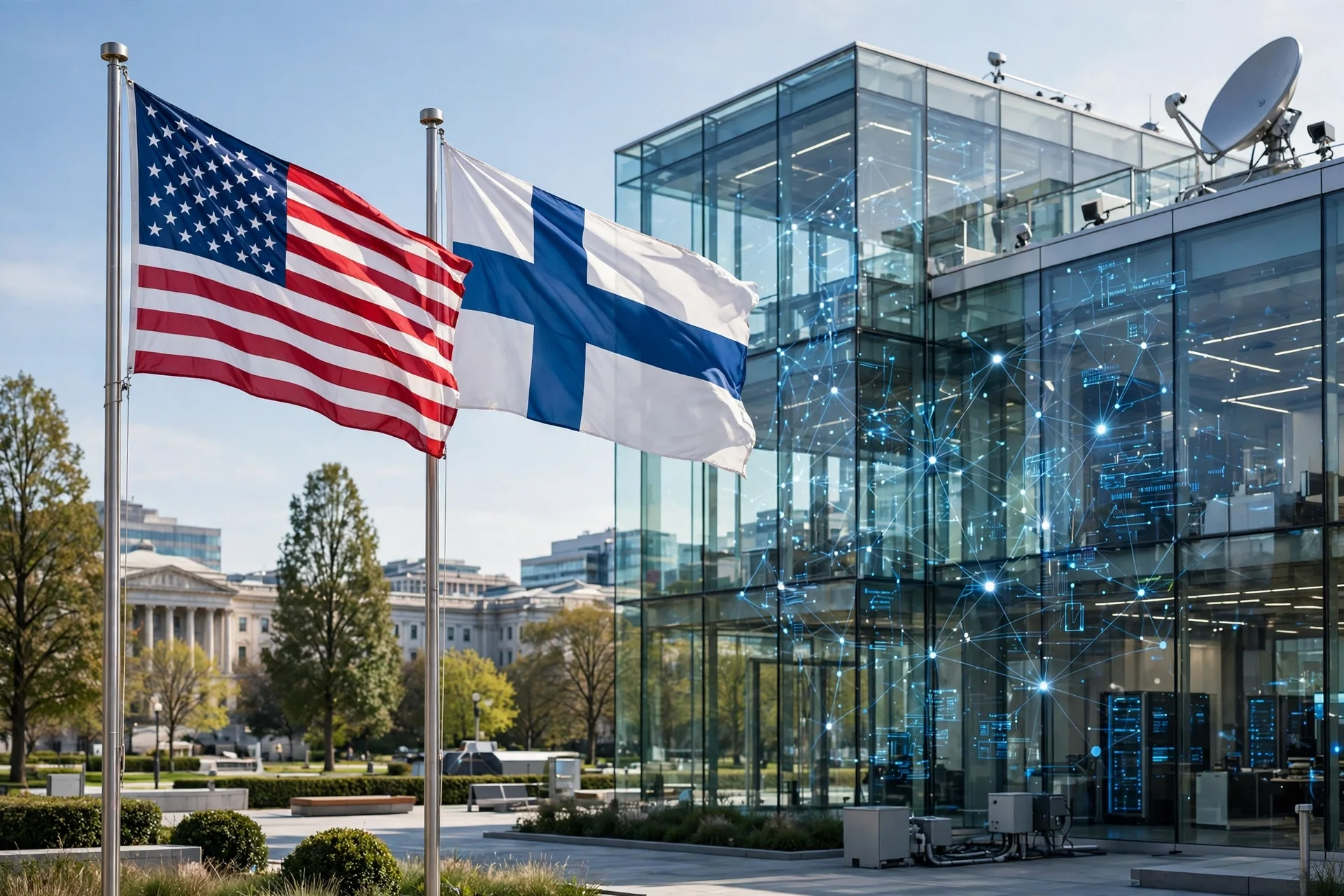
United States and Finland sign a broad technology pact
The United States and Finland signed a memorandum of understanding in Washington on technology prosperity, expanding cooperation on intelligence, 5G and 6G…
Washington and Helsinki align on strategic technology
The United States and Finland signed a memorandum in Washington ordering their cooperation on strategic technologies, from 5G and 6G networks and post-quantum…
--- The context ---
The United States and Finland signed a memorandum of understanding in Washington on October 29 on a technology prosperity deal intended to elevate their bilateral alliance to a higher level. Both governments expressed, according to the signed text, a mutual interest in science and technology capabilities and standards to usher in a new era of innovation that strengthens freedom and prosperity for generations to come.
The document builds on an established foundation. It rests on the scientific and technological cooperation agreement signed in Washington on May 16, 1995, and it takes note of the earlier joint statements by both countries on quantum information science and technology and on cooperation in advanced wireless communications. Its central idea is that deepening ties with a strategic partner strengthens stability, security and competitiveness for both sides.
--- The facts ---
The stated purpose of the memorandum is to enable collaboration in strategic science and technology disciplines, with a focus on strengthening industrial cooperation and accelerating the development, deployment and adoption of emerging technologies. The fronts it names include next-generation global connectivity, secure quantum advantage, energy leadership, advanced semiconductors, space collaboration, secure biotechnology, shipbuilding modernization and Arctic technology cooperation.
On intelligence and connectivity, both governments said they intend to deepen cooperation on the super intelligence technology stack and on next-generation network technologies. The plan covers telecommunications research and development, promotion and financing of trusted technology stack exports to third countries, coordination on international standards, and stronger 5G and 6G research with trusted, secure and interoperable supply chains.
On quantum technologies, the text envisages collaboration through leading institutions and national laboratories to assess quantum performance, develop quantum algorithms and advance hybrid quantum and classical computing. It also provides for regulatory harmonization efforts and targeted investments in both countries, support for the next generation of scientists and engineers, and endorsement of post-quantum cryptographic standards together with migration of systems to those standards.
The energy chapter expands cooperation toward secure, resilient and diversified systems. It includes development and deployment of small modular reactors known as SMRs, nuclear fission research, geothermal technologies, fusion work and critical minerals technologies, alongside bulk power components, energy storage devices, high-efficiency motors and advanced batteries.
On space, both governments said they intend to continue their partnership on space science and exploration, including potential collaboration on future Artemis lunar surface exploration missions and beyond. In the Arctic, the memorandum recognizes established Finnish leadership in icebreaker design and construction and envisages modernizing the United States icebreaker fleet under the ICE Pact framework, supporting the next-generation Arctic Security Cutters.
--- The positions ---
Both governments presented the cooperation as a way to enrich the lives and livelihoods of citizens in both countries. On defense, they said they intend to pursue joint research projects and pilot activities and to explore pathways for scaling promising technologies from demonstration to operational and industrial deployment, building on existing defense agreements and on dual-use applications.
On biotechnology, the text envisages using nationally governed health and research data infrastructures to advance precision medicine research and clinical research readiness, while reinforcing research and industrial security. That chapter includes intellectual property security, investment screening and a bilateral research security dialogue with information exchange on threats, cases and risk assessments.
--- What remains unknown ---
The memorandum does not set out concrete projects with deadlines, owners or amounts, and its own text states important limits. It does not create legally binding obligations, it does not commit either participant to the expenditure of funds, and it does not authorize the disclosure or transfer of classified, controlled, confidential business or proprietary information. Intellectual property matters are expected to be addressed through separate implementing arrangements or project-specific agreements.
--- Unanswered questions ---
Which concrete projects will emerge first from such a broad framework, and on what timetable will they be announced? How will exports of trusted technology to third countries be financed in practice if the memorandum commits no funds? What measurable results will cooperation on 5G and 6G deliver over the coming years? When will the joint committee meeting mechanism charged with advancing implementation hold its next steps?
--- EPM analysis ---
The immediate value of the document lies in its ordered breadth. In a single text, Washington and Helsinki connect intelligence, connectivity, quantum, energy, space, defense, biotechnology and the Arctic, and they do so on a prior institutional base, the 1995 agreement. For Finland, the memorandum extends the reach of its industry and research. For the United States, it adds a partner with very specific strengths, from icebreaker design to advanced networks.
📌 EPM Take: In EPM's view, this memorandum matters less for what it compels than for what it coordinates, because it places technology cooperation between two allies that have shared science since 1995 inside a single ordered framework. Its real test will not be the Washington signing, but the projects that follow in 6G networks, quantum, energy and the Arctic, in the training of researchers and in visible and verifiable benefits for citizens in both countries over the coming years, with continuity, openness and public accountability in every field, from post-quantum cryptography to icebreakers and to the shared training of scientists between universities, laboratories and industry in both nations.
--- The context ---
The United States and Finland signed a memorandum of understanding in Washington on October 29 on technology prosperity that strengthens their bilateral alliance. Both governments stressed, according to the text, the importance of deepening ties with strategic partners as a means to strengthen stability, security and competitiveness, and they affirmed the value of bilateral science and technology collaboration.
The deal is built on firm and verifiable foundations. It builds on the cooperation established under the science and technology agreement signed in Washington on May 16, 1995, and it takes note of the earlier joint statements on quantum information and on advanced wireless communications. It is the deliberate expansion of a three-decade relationship between two countries that share security interests.
--- The facts ---
The memorandum aims to enable collaboration in strategic disciplines, strengthen industrial cooperation and accelerate the development, deployment and adoption of emerging technologies. Its fronts include next-generation connectivity, secure quantum advantage, energy leadership, advanced semiconductors, space, an open and secure super intelligence stack, secure biotechnology, research security and shipbuilding modernization with Arctic cooperation.
On the super intelligence stack and on connectivity, both governments said they intend to promote development and exports across the full chain, from hardware and models to software, applications and network equipment. They also intend to strengthen research in 5G and 6G, build trusted and interoperable supply chains and coordinate positions in international telecommunications standards bodies.
On quantum, the text provides for collaboration between institutions and laboratories to assess performance, develop algorithms and advance hybrid computing, alongside aligned efforts to secure supply chains and build a trusted ecosystem. A central point is support for post-quantum cryptographic standards and migration of systems to them, together with cooperation in encryption and stronger exports by cyber security companies.
On energy, cooperation covers accelerating the development and commercial deployment of American and Finnish nuclear reactors, including small modular reactors known as SMRs, with regulatory harmonization. It adds fission research, enhanced geothermal systems, fusion, advanced manufacturing and critical minerals work for materials essential to energy systems.
In the Arctic, the memorandum recognizes the established leadership of Finland in icebreaker design and construction and envisages accelerated industrial cooperation to modernize the United States icebreaker fleet under the ICE Pact. Its stated aim is to support the secure and timely design, construction and delivery of the next-generation Arctic Security Cutters, together with joint investment in intelligence-driven manufacturing, unmanned systems and space-enabled situational awareness.
--- The positions ---
On defense, both governments said they intend to pursue joint research projects and pilot activities and to explore pathways for scaling promising technologies to operational and industrial deployment. On research security, the text envisages protecting intellectual property, applying investment screening, mitigating participation by high-risk entities in sensitive activities and strengthening disclosure of foreign funding and affiliations in publicly funded research and talent programs.
The legal design of the document is sober and protects the sovereignty of both parties. The memorandum becomes operative on the date of the last signature, it may be modified only by written mutual decision, and either participant may discontinue it at any time by written notice, with discontinuation expected to commence 180 days after the notice is delivered. It also states that it creates no legally binding obligations and that nothing in its text commits the participants to spend funds.
--- What remains unknown ---
The text announces no contracts, purchases or investments with figures, and it leaves results in the hands of later implementation. Application is expected to advance, according to the document itself, through the joint committee meeting mechanism and, as appropriate, through the science and technology agreement as an operational framework. It does not alter existing agreements between the two countries and it does not replace the respective regulatory processes of either party.
--- Unanswered questions ---
Will the framework translate into concrete industrial contracts for shipyards, networks and energy within a short period? Which entities will in practice be excluded from sensitive research under the new shared controls? Will the United States use Finnish expertise to deliver its new icebreakers without further delays? What coordinated positions will both countries take to the major international telecommunications conferences of 2026 and 2027?
--- EPM analysis ---
The strategic reading is clear. Washington secures an ally with industrial and Arctic capabilities that are hard to replace, and Helsinki gains scale and access to American markets and laboratories. The repeated emphasis on trusted chains, shared standards and research security shows that technological competition is also played out in rules, supplies and controls, not only in laboratories. And the text does all of this without surrendering sovereignty or signing blank checks.
📌 EPM Take: In EPM's view, the most valuable feature of this memorandum is its discipline, because it strengthens two allies in the technologies that will decide future security and industry without creating binding obligations or committing funds in advance. If cooperation on icebreakers, 5G and 6G networks, quantum and SMR reactors is executed with the same firmness with which it is written, Washington and Helsinki will have gained real, industrial and verifiable capability against competitors that share neither their values, their market rules nor their national security standards, while protecting their research, their critical supplies and their presence in the Arctic for the long term ahead.
Estados Unidos y Finlandia firman un pacto tecnológico amplio
Estados Unidos y Finlandia firmaron en Washington un memorando de entendimiento sobre prosperidad tecnológica que amplía su cooperación en inteligencia…
Washington y Helsinki ordenan su alianza en tecnología clave
Estados Unidos y Finlandia firmaron en Washington un memorando que ordena su cooperación en tecnologías estratégicas, desde redes 5G y 6G y criptografía…
--- El contexto ---
Estados Unidos y Finlandia firmaron en Washington, el 29 de octubre, un memorando de entendimiento sobre un acuerdo de prosperidad tecnológica. Ambos gobiernos expresaron, según el texto firmado, un interés mutuo en las capacidades y los estándares de ciencia y tecnología para impulsar una nueva etapa de innovación que fortalezca la libertad y la prosperidad.
El documento no parte de cero. Se apoya en el acuerdo de cooperación científica y tecnológica firmado también en Washington el 16 de mayo de 1995, y toma nota de las declaraciones conjuntas previas de ambos países sobre ciencia y tecnología de la información cuántica y sobre cooperación en comunicaciones inalámbricas avanzadas. La idea central es profundizar los lazos con un socio estratégico para reforzar la estabilidad y la competitividad compartidas.
--- Los hechos ---
El propósito declarado del memorando es habilitar la colaboración en disciplinas estratégicas de ciencia y tecnología, con énfasis en la cooperación industrial y en acelerar el desarrollo y la adopción de tecnologías emergentes. Entre los frentes citados figuran la conectividad global de próxima generación, la ventaja cuántica segura, el liderazgo energético, los semiconductores avanzados, la colaboración espacial, la biotecnología segura y la modernización de la construcción naval y la cooperación tecnológica en el Ártico.
En conectividad e inteligencia, los dos gobiernos manifestaron su intención de profundizar la cooperación sobre la pila tecnológica de superinteligencia y sobre redes de próxima generación. El plan abarca investigación en telecomunicaciones, financiación de exportaciones de pilas tecnológicas confiables hacia terceros países, coordinación en estándares internacionales y más investigación en 5G y 6G, con cadenas de suministro confiables y seguras.
En materia cuántica, el texto plantea colaborar a través de instituciones y laboratorios nacionales para evaluar el rendimiento cuántico, desarrollar algoritmos y avanzar en computación híbrida cuántica y clásica. También prevé armonización regulatoria, inversiones en ambos países, formación de nuevos científicos e ingenieros, y respaldo a los estándares de criptografía poscuántica y a la migración de los sistemas hacia ellos.
El capítulo energético amplía la cooperación hacia sistemas seguros, resilientes y diversificados. Incluye reactores modulares pequeños conocidos como SMR, investigación en fisión nuclear, geotermia, tecnologías de fusión y minerales críticos, además de almacenamiento, motores de alta eficiencia y baterías avanzadas.
En el espacio, ambos gobiernos plantearon continuar la asociación en ciencia y exploración, incluida una posible colaboración en futuras misiones lunares del programa Artemis. En el Ártico, el memorando reconoce el liderazgo finlandés en rompehielos y plantea modernizar la flota estadounidense bajo el marco ICE Pact, con apoyo a los nuevos Arctic Security Cutters.
--- Las posiciones ---
Los dos gobiernos presentaron la cooperación como una vía para enriquecer la vida y los medios de subsistencia de sus ciudadanos. En defensa, manifestaron su intención de impulsar proyectos conjuntos de investigación, actividades piloto y vías para llevar tecnologías prometedoras desde la demostración hasta el despliegue operativo e industrial, apoyándose en los acuerdos de defensa ya existentes y en aplicaciones de doble uso.
En biotecnología, el texto plantea aprovechar infraestructuras nacionales de datos de salud e investigación para avanzar en medicina de precisión y en preparación para la investigación clínica, reforzando la seguridad en la investigación y la industria, con protección de la propiedad intelectual, control de inversiones y un diálogo bilateral sobre amenazas y riesgos.
--- Lo que falta saber ---
El memorando no detalla proyectos concretos con plazos, responsables ni montos, y su propio texto aclara límites importantes. No crea obligaciones jurídicamente vinculantes, no compromete a las partes a gastar fondos y no autoriza a divulgar o transferir información clasificada, controlada, confidencial de negocio o propietaria. Las cuestiones de propiedad intelectual deberán abordarse, según el documento, en arreglos de ejecución separados o en acuerdos específicos por proyecto.
--- Preguntas sin respuesta ---
¿Qué proyectos concretos saldrán primero de un marco tan amplio y con qué calendario se anunciarán? ¿Cómo se financiarán en la práctica las exportaciones de tecnología confiable hacia terceros países si el memorando no compromete fondos? ¿Qué resultados medibles tendrá la cooperación en 5G y 6G durante los próximos años? ¿Cuándo se reunirá el mecanismo de comité conjunto encargado de impulsar la ejecución del acuerdo?
--- Análisis EPM ---
El valor inmediato del documento está en su amplitud ordenada. En un solo texto, Washington y Helsinki conectan inteligencia, conectividad, cuántica, energía, espacio, defensa, biotecnología y Ártico sobre la base del acuerdo de 1995. Para Finlandia, amplifica su industria y su investigación. Para Estados Unidos, suma a un socio con fortalezas específicas, del diseño de rompehielos a las redes avanzadas.
📌 Conclusion EPM: A juicio de EPM, este memorando importa menos por lo que obliga que por lo que coordina, porque ordena en un solo marco la cooperación tecnológica entre dos aliados que ya compartían ciencia desde 1995. Su prueba real no estará en la firma de Washington, sino en los proyectos que sigan en redes 6G, cuántica, energía y Ártico, en la formación de investigadores y en beneficios visibles y comprobables para los ciudadanos de ambos países durante los próximos años, con continuidad, transparencia y rendición de cuentas en cada frente, de la criptografía poscuántica a los rompehielos y a la formación científica compartida entre universidades, laboratorios e industria.
--- El contexto ---
Estados Unidos y Finlandia firmaron en Washington, el 29 de octubre, un memorando de entendimiento sobre prosperidad tecnológica que refuerza su alianza bilateral. Ambos gobiernos subrayaron, según el texto, la importancia de profundizar los lazos con socios estratégicos como medio para fortalecer la estabilidad, la seguridad y la competitividad, y afirmaron el valor de la colaboración científica y tecnológica bilateral.
El acuerdo se construye sobre cimientos firmes y verificables. Recupera la cooperación establecida por el acuerdo de ciencia y tecnología firmado en Washington el 16 de mayo de 1995, y toma nota de las declaraciones conjuntas anteriores sobre información cuántica y sobre comunicaciones inalámbricas avanzadas. Es la ampliación deliberada de una relación de tres décadas entre dos países que comparten intereses de seguridad.
--- Los hechos ---
El memorando busca habilitar la colaboración en disciplinas estratégicas, fortalecer la cooperación industrial y acelerar el desarrollo, el despliegue y la adopción de tecnologías emergentes. Sus frentes incluyen conectividad de próxima generación, ventaja cuántica segura, liderazgo energético, semiconductores avanzados, espacio, una pila abierta y segura de superinteligencia, biotecnología segura, seguridad en la investigación y modernización naval con cooperación en el Ártico.
En la pila de superinteligencia y en conectividad, los dos gobiernos plantearon promover el desarrollo y las exportaciones de toda la cadena, desde el hardware y los modelos hasta el software, las aplicaciones y el equipo de red. También plantearon fortalecer la investigación en 5G y 6G, construir cadenas confiables e interoperables y coordinar posiciones en los organismos de estándares de telecomunicaciones.
En cuántica, el texto prevé colaboración entre instituciones y laboratorios para evaluar rendimiento, desarrollar algoritmos y avanzar en computación híbrida, además de alinear esfuerzos para asegurar las cadenas de suministro y construir un ecosistema confiable. Un punto central es el respaldo a la criptografía poscuántica y a la migración de los sistemas hacia esos estándares, junto con cooperación en cifrado y exportaciones de ciberseguridad.
En energía, la cooperación abarca el desarrollo y despliegue comercial de reactores estadounidenses y finlandeses, incluidos los reactores modulares pequeños SMR, con armonización regulatoria. Suma fisión, geotermia mejorada, fusión, fabricación avanzada y minerales críticos para extraer y procesar materiales esenciales para los sistemas energéticos.
En el Ártico, el memorando reconoce el liderazgo establecido de Finlandia en diseño y construcción de rompehielos y plantea acelerar la cooperación industrial para modernizar la flota estadounidense bajo el marco ICE Pact. El objetivo es apoyar el diseño, la construcción y la entrega oportunos de los nuevos Arctic Security Cutters, con inversión conjunta en manufactura apoyada en inteligencia y sistemas no tripulados.
--- Las posiciones ---
En defensa, ambos gobiernos manifestaron su intención de impulsar proyectos conjuntos de investigación y actividades piloto, y de explorar vías para escalar tecnologías prometedoras hasta el despliegue operativo e industrial. En seguridad de la investigación, el texto plantea proteger la propiedad intelectual, controlar inversiones, mitigar la participación de entidades de alto riesgo en actividades sensibles y reforzar la divulgación de financiación extranjera en la investigación pública.
El marco jurídico del documento es sobrio y protege la soberanía de ambas partes. El memorando entra en vigor operativo en la fecha de la última firma, puede modificarse solo por decisión escrita mutua y cualquiera de las partes puede discontinuarlo en cualquier momento con aviso escrito, con efecto esperado 180 días después de entregado el aviso. Además, no crea obligaciones jurídicamente vinculantes ni compromete gasto de fondos.
--- Lo que falta saber ---
El texto no anuncia contratos, compras ni inversiones con cifras, y deja los resultados en manos de su ejecución posterior. La aplicación se apoyará, según el propio documento, en el mecanismo de reuniones del comité conjunto y, cuando resulte apropiado, en el acuerdo de ciencia y tecnología como marco operativo. Tampoco altera los acuerdos existentes entre ambos países ni sustituye los procesos regulatorios respectivos de cada parte.
--- Preguntas sin respuesta ---
¿Se traducirá el marco en contratos industriales concretos para astilleros, redes y energía en un plazo breve? ¿Qué entidades quedarán efectivamente excluidas de la investigación sensible bajo los nuevos controles compartidos? ¿Aprovechará Estados Unidos la experiencia finlandesa para entregar sus nuevos rompehielos sin retrasos adicionales? ¿Qué posiciones coordinadas llevarán ambos países a las próximas conferencias internacionales de telecomunicaciones de 2026 y 2027?
--- Análisis EPM ---
La lectura estratégica es clara. Washington asegura a un aliado con capacidades industriales y árticas difíciles de sustituir, y Helsinki gana escala y acceso al mercado y a los laboratorios estadounidenses. El énfasis en cadenas confiables, estándares propios y seguridad de la investigación muestra que la competencia tecnológica se juega también en normas y controles, no solo en laboratorios, y sin ceder soberanía.
📌 Conclusion EPM: A juicio de EPM, lo más valioso de este memorando es su disciplina, porque refuerza a dos aliados en las tecnologías que decidirán la seguridad y la industria del futuro sin crear obligaciones vinculantes ni comprometer fondos por adelantado. Si la cooperación en rompehielos, redes 5G y 6G, cuántica y reactores SMR se ejecuta con la misma firmeza con que está redactada, Washington y Helsinki habrán ganado capacidad real, industrial y verificable frente a competidores que no comparten sus valores, sus reglas de mercado ni sus estándares de seguridad nacional, y habrán protegido a la vez su investigación, sus suministros críticos y su presencia en el Ártico.