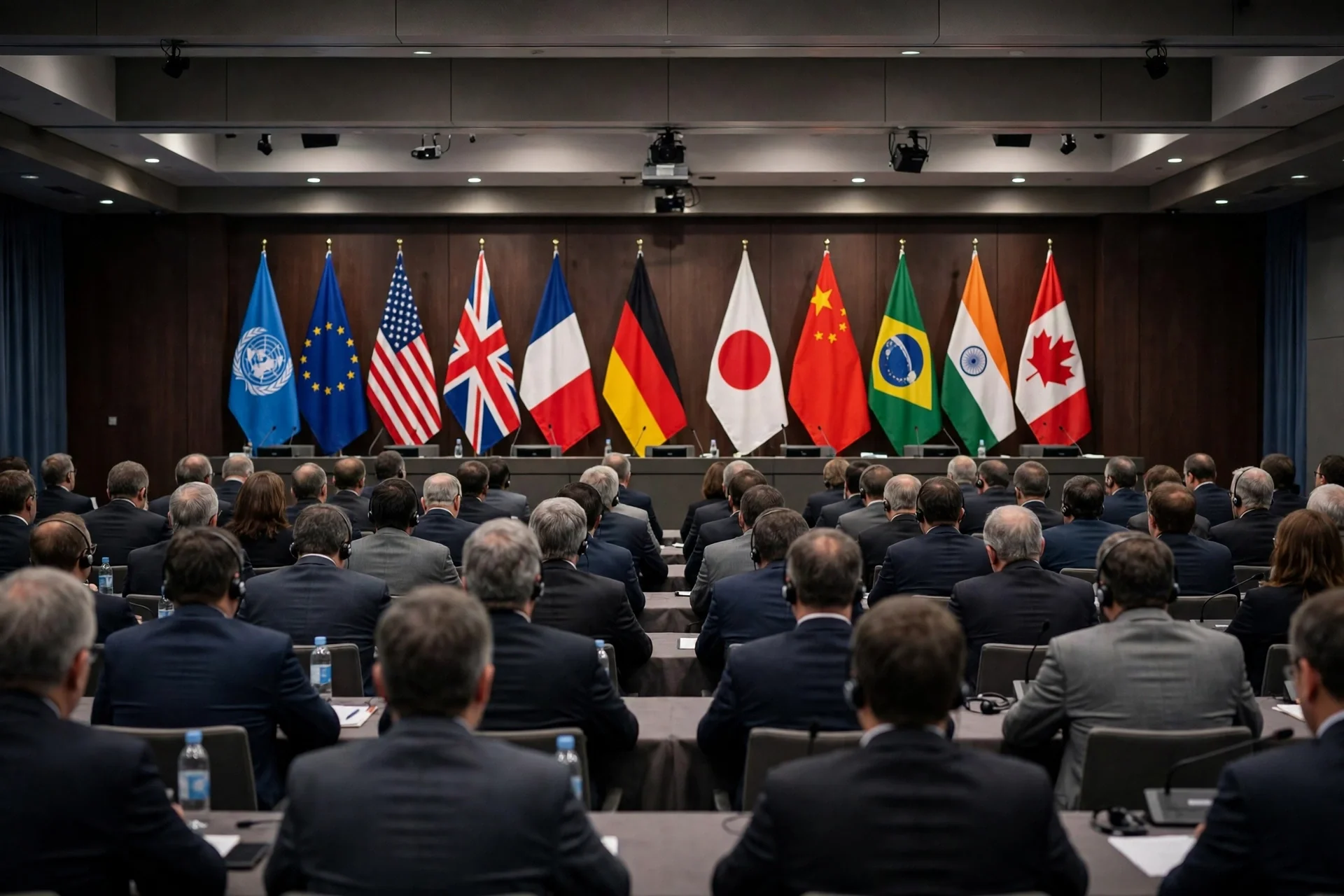
Sala de conferencia internacional de seguridad con delegados y banderas. · Imagen generada para EPM
UK rejects Russia's war justifications in OSCE statement on Ukraine
The United Kingdom rejected Russia's justifications for its war against Ukraine at the OSCE, cited 328 civilians killed and more than 2,100 injured in…
London presses Russia to clarify its stance on Helsinki principles
The United Kingdom argued at the OSCE that rules must apply equally to all, rebutted Russian claims on minorities, legitimacy, security and pre-emptive…
--- The context ---
The United Kingdom brought a full rebuttal to the OSCE of Russia's explanations for its war against Ukraine. It argued that Moscow never offered a single consistent explanation and that each justification was falsely presented as a principle.
The central idea was legal. A rule that a state claims for itself but would never accept applied to itself is not a principle, but a claim to privilege that international law does not recognise.
--- The facts ---
The UN Human Rights Monitoring Mission in Ukraine reported that Russian attacks killed at least 328 civilians and injured more than 2,100 in September, 85 per cent higher than last September, behind which lies a decision taken in Moscow.
In Kyiv, civilians were killed or injured on 22 of the month's 30 days, more often than in any month since the full-scale invasion began. Preliminary reports indicate October will match or exceed September, with 110 ballistic missiles fired between 13-28 October.
The Independent International Commission of Inquiry on Ukraine concluded in its report of 26 October that the Russian authorities have committed war crimes in intentionally directing attacks against civilian objects, a finding cited in the session.
--- The positions ---
On protecting people by language or culture, the United Kingdom replied that agreed ways exist to protect national minority rights, including through this Organisation's High Commissioner, and that invasion is not among those agreed ways.
On the alleged illegitimacy of Ukraine's democratically elected government, it warned that such a claim would let any state decide which neighbouring governments deserve to exist, exactly what sovereign equality and non-intervention were written to prevent.
On security, it recalled that security is indivisible and no state should strengthen its own at the expense of others. On pre-emptive self-defence, it stated that no one planned to attack Russia.
--- What remains unknown ---
No Russian answer yet clarifies its position on each point or offers one consistent explanation for its decision. It is also unknown whether Moscow would accept these criteria applied against its own territory or government.
--- Unanswered questions ---
Will Russia present a single consistent explanation or keep offering shifting justifications? Would Moscow accept another state applying against Russia the criteria it claims for itself? Will it confirm it still subscribes to the Helsinki principles or state which it disavowed?
--- EPM analysis ---
Applied generally, the statement warned, each Russian justification would leave no border in the region secure and no government safe from a more powerful neighbour. That is why the United Kingdom invited Russia to clarify its Helsinki commitments.
📌 EPM Take:
In EPM's view, the statement succeeds by shifting the debate from the figures to the principles those figures put to the test, because a war sustained by shifting justifications shows none was ever meant as a general rule. Requiring Russia to say whether it keeps its Helsinki commitments or which it has abandoned forces a choice between shared order and privilege. That clarity also protects smaller states, whose security depends on rules that do not change according to who invokes them at any given moment in the debate.
--- The context ---
The United Kingdom defended at the OSCE that international order works only when rules apply equally to everyone. It argued that Russia never offered a single consistent explanation, presenting successive justifications as principles that cannot survive general application.
The intervention closed with a direct invitation. It asked Russia to clarify whether it subscribes to all the Helsinki Final Act principles and how altering another state's borders by force fits those commitments.
--- The facts ---
The UN Human Rights Monitoring Mission in Ukraine reported that Russian attacks killed at least 328 civilians and injured more than 2,100 in September, 85 per cent higher than last September, figures the delegation tied to a decision in Moscow.
In Kyiv, civilians were killed or injured on 22 of the month's 30 days, more often than in any month since the full-scale invasion began. Preliminary reports indicate October will match or exceed September, with 110 ballistic missiles fired between 13-28 October.
The Independent International Commission of Inquiry on Ukraine concluded in its report of 26 October that the Russian authorities have committed war crimes in intentionally directing attacks against civilian objects, part of the record Russia must answer.
--- The positions ---
Against protecting people by language or culture, the United Kingdom recalled agreed ways to protect national minority rights, including through this Organisation's High Commissioner, and stressed that invasion is not among those institutional channels.
Against the alleged illegitimacy of Ukraine's democratically elected government, it warned that generalising that criterion would let any state decide which neighbouring governments deserve to exist. Sovereign equality and non-intervention were written to prevent such imposition by force.
On security, it underlined that security is indivisible and no state should strengthen its own at others' expense, while each state chooses its arrangements. On pre-emptive self-defence, it stated no one planned to attack Russia.
--- What remains unknown ---
It remains to be seen whether Russia will respond with a formal clarification on Helsinki or keep successive explanations. Also unknown is whether it would give up territory over a neighbour's security concerns, as the statement itself posed.
--- Unanswered questions ---
Will Russia confirm it still subscribes to all the Helsinki Final Act principles? Or will it indicate which principles it has disavowed to act against Ukraine? Would it accept all states renouncing those same principles whenever it suited them?
--- EPM analysis ---
Without principles applied evenly, the whole system loses its purpose. Applied evenly, each Russian justification would leave no border secure and no government safe from a more powerful neighbour, exactly the world shared commitments were designed to prevent.
📌 EPM Take:
In EPM's view, the value of the statement lies in defending an order based on shared principles against privilege, because a system where the strongest interprets the rules to suit itself stops being a system at all. Asking Russia to clarify its adherence to Helsinki is the minimum question for knowing whether a common framework still exists. That clarity also protects smaller states, whose security depends on rules that do not change according to who invokes them at any given moment in the wider international debate about this war and its consequences for everyone involved today.
Reino Unido desmonta ante la OSCE las justificaciones rusas de la guerra
Reino Unido rechazó ante la OSCE las justificaciones rusas de la guerra contra Ucrania, citó 328 civiles muertos y más de 2,100 heridos en septiembre y pidió a…
Londres exige a Rusia aclarar si sigue en los principios de Helsinki
Reino Unido defendió ante la OSCE que las reglas deben valer para todos, refutó los argumentos rusos sobre minorías, legitimidad, seguridad y autodefensa…
--- El contexto ---
Reino Unido llevó ante la OSCE una refutación completa de las explicaciones rusas de la guerra contra Ucrania. Sostuvo que Moscú nunca presentó una explicación consistente y que cada justificación se presentó falsamente como principio.
La idea central fue jurídica. Una regla que un Estado reclama para sí pero nunca aceptaría aplicada contra sí mismo no es un principio, sino un reclamo de privilegio que el derecho internacional no reconoce.
--- Los hechos ---
La Misión de Monitoreo de Derechos Humanos de la ONU en Ucrania reportó que los ataques rusos mataron al menos a 328 civiles e hirieron a más de 2,100 en septiembre, un 85 per cent más que el septiembre anterior.
En Kyiv hubo civiles muertos o heridos en 22 de los 30 días del mes, más que en cualquier mes desde la invasión a gran escala. Los informes preliminares indican que octubre igualará o superará a septiembre, con 110 misiles balísticos disparados entre el 13-28 October.
La Comisión Internacional Independiente de Investigación sobre Ucrania concluyó en su informe del 26 October que las autoridades rusas cometieron crímenes de guerra al dirigir intencionalmente ataques contra objetos civiles.
--- Las posiciones ---
Sobre proteger a personas por idioma o cultura, Reino Unido respondió que existen vías acordadas para los derechos de las minorías nacionales, incluso mediante el Alto Comisionado de esta organización, y que la invasión no es una de ellas.
Sobre la supuesta ilegitimidad del gobierno democráticamente electo de Ucrania, advirtió que esa tesis permitiría a cualquier Estado decidir qué gobiernos vecinos merecen existir, lo que la igualdad soberana y la no intervención buscan impedir.
En seguridad recordó que esta es indivisible y que ningún Estado debe fortalecerla a expensas de otros. Sobre la autodefensa preventiva, afirmó que nadie planeaba atacar a Rusia, por lo que golpear primero ante amenazas percibidas dejaría a todos expuestos.
--- Lo que falta saber ---
No consta una respuesta rusa que aclare su posición ante cada señalamiento ni una explicación única de su decisión. Tampoco se sabe si Moscú aceptaría estos criterios aplicados contra su propio territorio o su gobierno.
--- Preguntas sin respuesta ---
¿Presentará Rusia una explicación única y consistente o seguirá con justificaciones cambiantes? ¿Aceptaría que otro Estado aplicara contra Rusia los criterios que reclama para sí? ¿Confirmará que sigue suscribiendo los principios de Helsinki o dirá cuáles repudió?
--- Análisis EPM ---
Aplicadas de forma general, advirtió la declaración, cada justificación rusa dejaría insegura cualquier frontera de la región y expuesto a cualquier gobierno ante un vecino más poderoso. Por eso Reino Unido invitó a Rusia a aclarar su adhesión a Helsinki.
📌 Conclusion EPM:
A juicio de EPM, la declaración acierta al desplazar el debate desde las cifras hacia los principios que esas cifras ponen a prueba, porque una guerra sostenida con justificaciones cambiantes revela que ninguna fue pensada como regla general. Exigir a Rusia que diga si mantiene los compromisos de Helsinki o cuáles abandonó obliga a elegir entre el orden compartido y el privilegio del más fuerte. Esa claridad también protege a los Estados más pequeños, cuya seguridad depende de que las reglas no cambien según quién las invoque en cada momento concreto.
--- El contexto ---
Reino Unido defendió ante la OSCE que el orden internacional solo funciona si las reglas valen para todos. Sostuvo que Rusia nunca ofreció una explicación consistente y que presentó justificaciones sucesivas como principios sin que resistan aplicación general.
La intervención cerró con una invitación directa. Pidió a Rusia aclarar si suscribe todos los principios del Acta Final de Helsinki y cómo encaja con ellos alterar por la fuerza las fronteras de otro Estado.
--- Los hechos ---
La Misión de Monitoreo de Derechos Humanos de la ONU en Ucrania reportó que los ataques rusos mataron al menos a 328 civiles e hirieron a más de 2,100 en septiembre, un 85 per cent más que el septiembre anterior.
En Kyiv hubo civiles muertos o heridos en 22 de los 30 días del mes, más que en cualquier mes desde la invasión a gran escala. Los informes preliminares señalan que octubre igualará o superará a septiembre, con 110 misiles balísticos entre el 13-28 October.
La Comisión Internacional Independiente de Investigación sobre Ucrania concluyó en su informe del 26 October que las autoridades rusas cometieron crímenes de guerra al dirigir intencionalmente ataques contra objetos civiles, hallazgo citado en la sesión.
--- Las posiciones ---
Contra proteger a personas por idioma o cultura, Reino Unido recordó las vías acordadas para las minorías nacionales, incluida la del Alto Comisionado de esta organización, y subrayó que la invasión no figura entre esas vías institucionales.
Contra la supuesta ilegitimidad del gobierno democráticamente electo de Ucrania, advirtió que generalizar ese criterio permitiría decidir qué gobiernos vecinos merecen existir. La igualdad soberana y la no intervención fueron escritas para impedir esa imposición por la fuerza.
En seguridad subrayó que esta es indivisible y que ningún Estado debe reforzarla a costa de otros, mientras cada Estado elige sus arreglos. Sobre la autodefensa preventiva, afirmó que nadie planeaba atacar a Rusia.
--- Lo que falta saber ---
Falta ver si Rusia responderá con una aclaración formal sobre Helsinki o mantendrá explicaciones sucesivas. También falta saber si cedería territorio ante preocupaciones de seguridad de un vecino, como planteó la propia declaración británica.
--- Preguntas sin respuesta ---
¿Confirmará Rusia que sigue suscribiendo todos los principios del Acta Final de Helsinki? ¿O indicará cuáles ha repudiado para actuar contra Ucrania? ¿Aceptaría que todos los Estados pudieran renunciar también a esos principios cuando les conviniera?
--- Análisis EPM ---
Sin principios aplicados por igual, el sistema pierde su razón de ser. Aplicadas parejo, cada justificación rusa dejaría insegura cualquier frontera y expuesto a cualquier gobierno ante un vecino más poderoso, el mundo que los compromisos comunes buscaban evitar.
📌 Conclusion EPM:
A juicio de EPM, el valor de la declaración está en defender el orden basado en principios compartidos frente al privilegio, porque un sistema donde el más fuerte interpreta las reglas a su medida deja de ser un sistema. Pedir a Rusia que aclare su adhesión a Helsinki es la pregunta mínima para saber si aún existe un marco común. Esa claridad también protege a los Estados más pequeños, cuya seguridad depende de que las reglas no cambien según quién las invoque en cada momento concreto del debate internacional actual.