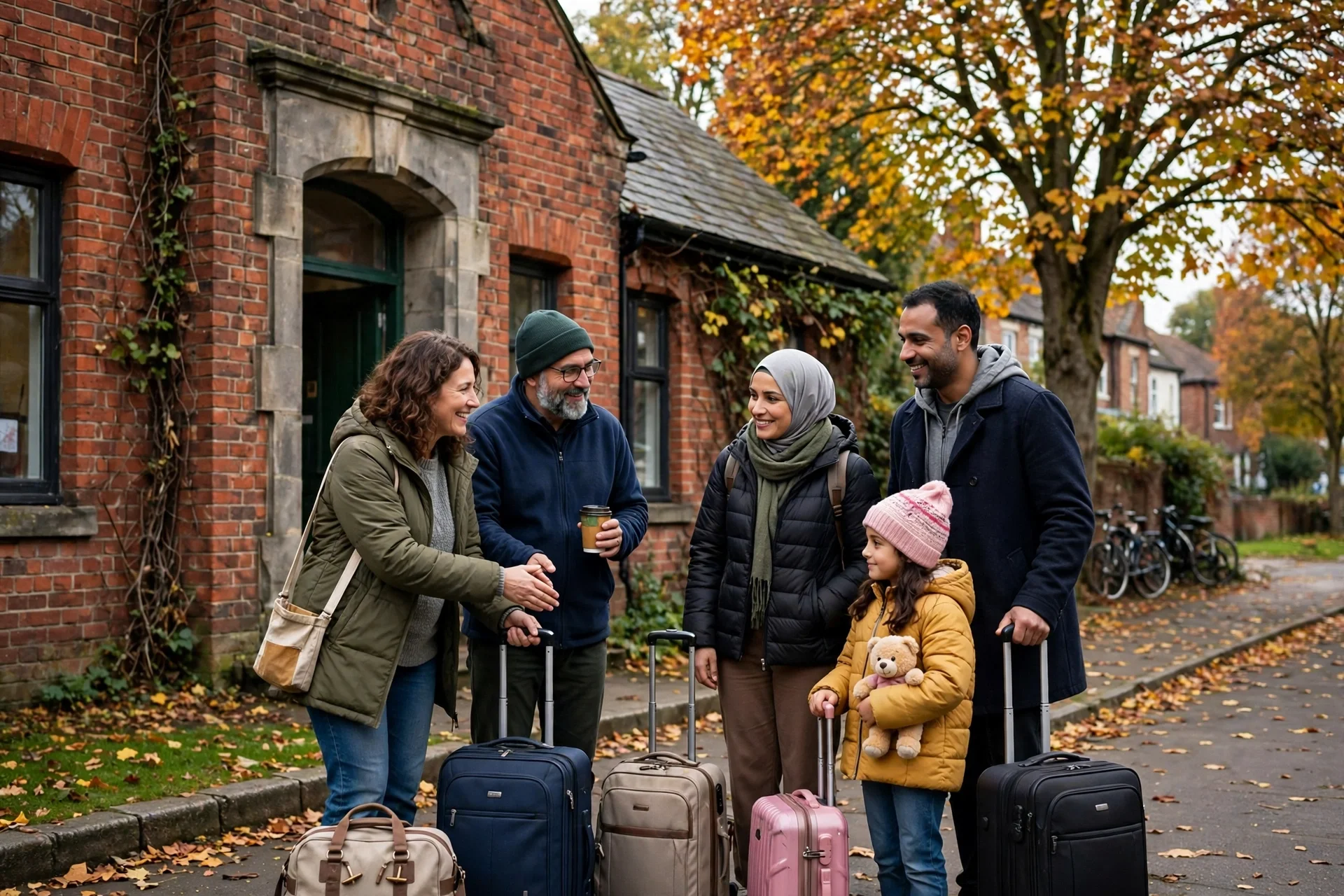
UK opens lead sponsor applications for safe refugee routes
The British Government opened applications on 29 October for charities to become lead sponsors of new safe and legal refugee routes, with first arrivals…
UK launches capped community sponsorship for new refugee routes
Britain's new refugee routes will be capped, accredited and overseen: lead sponsor applications opened on 29 October and arrivals will grow only with community…
--- The context ---
The United Kingdom has a long tradition of offering sanctuary to people fleeing war and persecution, reflected in its response to the Syrian civil war, the Russian invasion of Ukraine and its commitments to Hong Kong. Building on that record, the British Government now proposes safe and legal routes rooted in local communities ready to welcome newcomers.
The Home Secretary pledged last November to open these new pathways. The chosen model draws on the Canadian private sponsorship programme, running for nearly 50 years, and shares the work of welcome between the state, accredited organisations and neighbourhood groups willing to support each family welcomed.
--- The facts ---
Applications to become lead sponsors opened today, 29 October, for registered charities and non-profit organisations in the United Kingdom. Applicants must show a good reputation and have the right safeguards and resources in place. Lead sponsors will be accredited and overseen by the Home Office while they support community groups, churches and universities.
The first arrivals through the Named Community Sponsorship and Refugee Study routes are expected next autumn, while a separate refugee work route will open in spring 2027. Lead sponsors will help set up sponsor groups, verify sponsorship arrangements and provide ongoing oversight, helping refugees with accommodation, education, employment and local services.
--- The positions ---
Border Security and Asylum Minister Anna Turley says indirectly that communities across the country will be able to welcome refugees fleeing war and persecution and help them put down roots, and she stresses that charities, community groups and universities will sit at the heart of the effort.
Matthew Bolton of Citizens UK welcomes indirectly the idea that the power to welcome rests with local communities ready to help. Amina Khanom and Ben Still of the Community Sponsorship Alliance welcome indirectly the step, while Hannah Gregory of Pathways International notes indirectly that private sponsorship has welcomed Canadian neighbours for nearly 50 years.
--- What remains unknown ---
The routes will be capped and controlled, with the number of arrivals based on community capacity to sponsor refugees. Arrivals through the new routes and the existing British resettlement scheme will initially number in the hundreds and then grow into the low thousands as levels of illegal migration fall, according to the source.
--- Unanswered questions ---
How many organisations will secure accreditation as lead sponsors in this first round of applications? What real capacity for housing and services will local groups be able to guarantee before next autumn? How will ministers demonstrate that growth into the low thousands follows a sustained fall in illegal migration rather than other pressures?
--- EPM analysis ---
The significant shift is institutional: welcome is no longer treated only as a task for central government and instead rests on organised civil society, with churches, universities and neighbours as the first network. That design can improve everyday integration, although its scale will depend on how many durable local groups sponsorship can mobilise.
📌 EPM Take: In EPM's view, the opening of applications gives concrete form to the pledge made last November and places communities at the centre of routes presented as safe, legal and controlled. Its value will depend on demanding accreditation, real support with housing and employment and growth in arrivals that follows local capacity alone. If that discipline holds, sponsorship can turn scattered goodwill into verifiable, lasting integration for every family welcomed into a British community that has chosen to take part.
--- The context ---
The announcement follows the pledge made by the Home Secretary last November to open new refugee pathways. The British Government places the measure after the Syrian civil war, the Russian invasion of Ukraine and its commitments to Hong Kong, while insisting the new routes will be capped and controlled from the outset.
The external reference is the Canadian private sponsorship programme, operating for nearly 50 years. The British adaptation is not an open route: it shifts part of the effort to accredited organisations and local groups, while the Home Office keeps accreditation and oversight of the sponsors.
--- The facts ---
Applications to become lead sponsors opened today, 29 October, and are limited to registered charities and non-profit organisations in the United Kingdom. Each applicant must demonstrate a good reputation and have the right safeguards and resources in place, prerequisites for taking part in the system.
The first arrivals through the Named Community Sponsorship and Refugee Study routes are expected next autumn, and a separate refugee work route will open in spring 2027. Lead sponsors must set up and support local groups, verify sponsorship arrangements and provide ongoing oversight covering accommodation, education, employment and local services.
--- The positions ---
Border Security and Asylum Minister Anna Turley says indirectly that communities will be able to welcome people fleeing war and persecution and help them rebuild their lives, and she highlights that organisations will be at the heart of the effort.
Matthew Bolton of Citizens UK values indirectly that the power to welcome sits with communities. Amina Khanom and Ben Still of the Community Sponsorship Alliance welcome indirectly the step, and Hannah Gregory of Pathways International recalls indirectly that Canada has welcomed neighbours through private sponsorship for nearly 50 years, a precedent cited by supporters.
--- What remains unknown ---
The source stresses that the number of arrivals will depend on community capacity to sponsor, not on an imposed figure. Initial arrivals, together with the existing British resettlement scheme, will number in the hundreds and grow into the low thousands only as illegal migration falls, a link the Government presents as central to the design of the routes.
--- Unanswered questions ---
What concrete controls will the Home Office apply to remove accreditation from a sponsor that fails its safeguards? What happens to a route if local housing capacity runs out before next autumn arrives? What public data will allow voters to verify that arrivals grow only when illegal migration is falling in practice?
--- EPM analysis ---
The core of the plan lies in its sequence: accreditation and local capacity first, arrivals afterwards. That order answers the demand for control that dominates the British migration debate, yet it creates a clear risk: if local groups do not form at the expected pace, the routes will remain an announcement without real scale.
📌 EPM Take: In EPM's view, community sponsorship will only be credible if the promised control is verified at every stage, from the reputation and resources of sponsors to continuing oversight of housing, education and employment. The cap linked to local capacity and growth tied to falling illegal migration are the safeguards that set this plan apart from an open-ended opening. If the Government publishes results and corrects failures quickly, the model can deliver order, integration and public confidence at the same time.
Reino Unido abre solicitudes para patrocinar rutas seguras de refugio
El Gobierno británico abrió el 29 de octubre las solicitudes para que organizaciones benéficas sean patrocinadores principales de nuevas rutas seguras de…
Reino Unido activa un patrocinio controlado para nuevas rutas de refugio
Las nuevas rutas británicas de refugio tendrán cupo, acreditación y supervisión oficial: las solicitudes para patrocinadores principales se abrieron el 29 de…
--- El contexto ---
El Reino Unido mantiene una tradición de santuario hacia personas que huyen de la guerra y la persecución, reflejada en su respuesta ante la guerra civil siria, la invasión rusa de Ucrania y sus compromisos con Hong Kong. El Gobierno británico plantea ahora nuevas vías seguras y legales apoyadas en comunidades locales.
La ministra del Interior asumió el pasado noviembre el compromiso de abrir esas vías. El modelo elegido mira al programa canadiense de patrocinio privado, con casi 50 años de trayectoria, y reparte la acogida entre el Estado, organizaciones acreditadas y grupos vecinales dispuestos a acompañar a cada familia acogida.
--- Los hechos ---
Las solicitudes para ser patrocinadores principales se abrieron este 29 de octubre. Pueden presentarse organizaciones benéficas registradas y entidades sin ánimo de lucro del Reino Unido que acrediten buena reputación, salvaguardas adecuadas y recursos suficientes. Los patrocinadores quedarán acreditados y supervisados por el Ministerio del Interior británico.
Las primeras llegadas por las rutas Named Community Sponsorship y Refugee Study se esperan el próximo otoño, y una ruta laboral separada abrirá en primavera de 2027. Los patrocinadores crearán y apoyarán grupos locales, verificarán acuerdos y mantendrán supervisión continua, ayudando a los refugiados en vivienda, educación, empleo y servicios locales.
--- Las posiciones ---
La ministra de Seguridad Fronteriza y Asilo, Anna Turley, afirma en indirecto que las comunidades podrán acoger a refugiados que huyen de la guerra y la persecución, y subraya que las organizaciones, los grupos comunitarios y las universidades serán el corazón del esfuerzo nacional de acogida.
Matthew Bolton, de Citizens UK, celebra en indirecto que la capacidad de acoger quede en manos de comunidades listas para ayudar. Amina Khanom y Ben Still, de la Community Sponsorship Alliance, dan la bienvenida en indirecto al paso, y Hannah Gregory, de Pathways International, destaca en indirecto la larga experiencia canadiense.
--- Lo que falta saber ---
Las rutas tendrán cupo y estarán controladas, y el número de llegadas dependerá de la capacidad comunitaria de patrocinio. Las llegadas iniciales, sumadas al programa británico de reasentamiento ya existente, serán de cientos y luego crecerán hasta miles bajos a medida que caiga la migración ilegal, según la fuente.
--- Preguntas sin respuesta ---
¿Cuántas organizaciones lograrán la acreditación como patrocinadores principales en esta primera ronda de solicitudes? ¿Qué capacidad real de vivienda y servicios podrán garantizar los grupos locales antes del próximo otoño? ¿Cómo se medirá que el crecimiento hasta miles bajos coincide efectivamente con una caída sostenida de la migración ilegal?
--- Análisis EPM ---
El giro relevante es institucional: la acogida deja de pensarse solo como gestión estatal y pasa a apoyarse en la sociedad civil organizada, con iglesias, universidades y vecinos. Ese diseño puede mejorar la integración cotidiana, aunque su escala real dependerá de cuántos grupos sostenibles consiga movilizar el patrocinio en cada territorio británico.
📌 Conclusion EPM: A juicio de EPM, la apertura de solicitudes da contenido concreto al compromiso asumido el pasado noviembre y coloca a las comunidades en el centro de unas rutas que se presentan como seguras, legales y controladas. Su valor dependerá de una acreditación exigente, de apoyos reales en vivienda y empleo y de que el cupo anunciado crezca solo al ritmo de la capacidad local. Si esa disciplina se mantiene, el patrocinio puede convertir la solidaridad dispersa en integración verificable y duradera para cada familia acogida.
--- El contexto ---
El anuncio llega tras el compromiso asumido por la ministra del Interior el pasado noviembre de abrir nuevas vías de refugio. El Gobierno británico presenta la medida tras la guerra civil siria, la invasión rusa de Ucrania y los compromisos con Hong Kong, pero insiste en que nacerán con cupo y bajo control oficial.
La referencia externa es el programa canadiense de patrocinio privado, con casi 50 años de funcionamiento. La adaptación británica no abre una vía libre: traslada parte del esfuerzo a organizaciones acreditadas y grupos locales, mientras el Ministerio del Interior conserva la acreditación y la supervisión de los patrocinadores.
--- Los hechos ---
Las solicitudes para ser patrocinadores principales se abrieron este 29 de octubre y se limitan a organizaciones benéficas registradas y entidades sin ánimo de lucro del Reino Unido. Cada candidata debe demostrar buena reputación, salvaguardas adecuadas y recursos suficientes, condición previa para participar en el sistema.
Las primeras llegadas por las rutas Named Community Sponsorship y Refugee Study se esperan el próximo otoño, y una ruta laboral separada abrirá en primavera de 2027. Los patrocinadores deberán crear y apoyar grupos locales, verificar los acuerdos de patrocinio y ejercer supervisión continua sobre vivienda, educación, empleo y servicios locales.
--- Las posiciones ---
La ministra de Seguridad Fronteriza y Asilo, Anna Turley, sostiene en indirecto que las comunidades podrán acoger a quienes huyen de la guerra y la persecución y ayudarlos a echar raíces, y destaca que las organizaciones serán el corazón del esfuerzo.
Matthew Bolton, de Citizens UK, valora en indirecto que el poder de acoger quede en manos de las comunidades. Amina Khanom y Ben Still, de la Community Sponsorship Alliance, dan la bienvenida en indirecto al paso, y Hannah Gregory, de Pathways International, recuerda en indirecto que Canadá acoge vecinos mediante patrocinio privado desde hace casi 50 años.
--- Lo que falta saber ---
La fuente subraya que el número de llegadas dependerá de la capacidad comunitaria de patrocinio, no de una cifra impuesta. Las llegadas iniciales, junto al programa británico de reasentamiento vigente, serán de cientos y crecerán hasta miles bajos solo a medida que caiga la migración ilegal, un vínculo central en el diseño oficial.
--- Preguntas sin respuesta ---
¿Qué controles concretos aplicará el Ministerio del Interior para retirar la acreditación a un patrocinador que incumpla sus salvaguardas? ¿Qué ocurrirá con una ruta si la capacidad local de vivienda se agota antes del próximo otoño? ¿Qué datos públicos permitirán comprobar que las llegadas crecen únicamente cuando desciende la migración ilegal?
--- Análisis EPM ---
La clave del plan está en su secuencia: primero acreditación y capacidad local, después llegadas. Ese orden responde a la exigencia de control del debate migratorio británico, aunque crea un riesgo: si los grupos locales no se forman al ritmo esperado, las rutas quedarán reducidas a un anuncio sin escala.
📌 Conclusion EPM: A juicio de EPM, el patrocinio comunitario solo será creíble si el control prometido se verifica en cada fase, desde la reputación y los recursos de los patrocinadores hasta la supervisión continua de vivienda, educación y empleo. El cupo ligado a la capacidad local y el crecimiento condicionado a la caída de la migración ilegal son las salvaguardas que distinguen este plan de una apertura sin límites. Si el Gobierno publica resultados y corrige fallos con rapidez, el modelo puede ofrecer orden, integración y confianza pública al mismo tiempo.