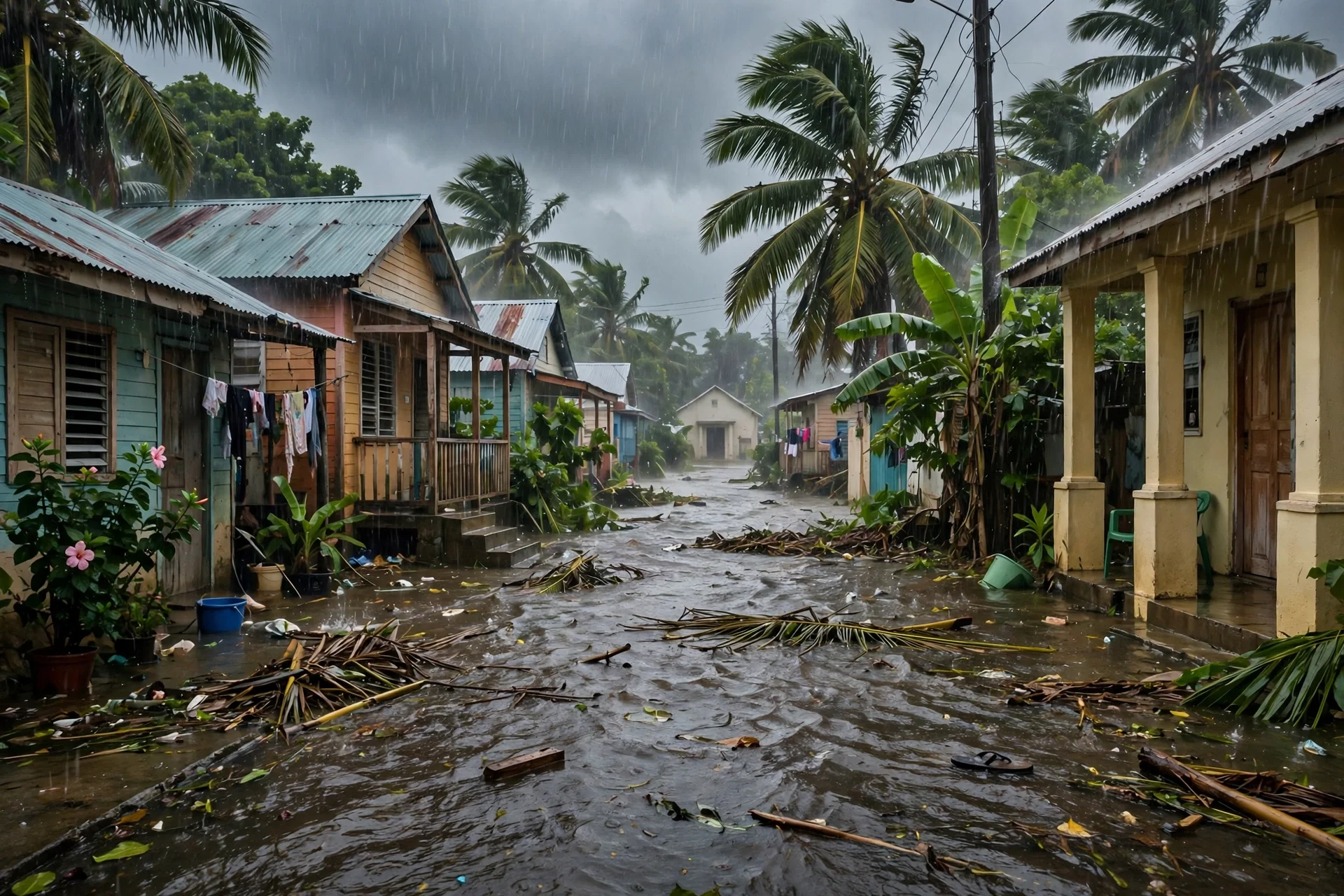
Comunidad caribeña bajo lluvias intensas, con la calle principal anegada y restos vegetales arrastrados por la corriente. · Imagen generada para EPM
Rains leave 2,675 affected and 51 communities cut off
The Emergency Operations Center report of Thursday, October 29 counts 2,675 people affected, 535 homes damaged, 51 communities cut off and 39 aqueducts out of…
Trough floods rivers and cuts off 51 communities
Trough rainfall left 2,675 people affected, 535 homes damaged, 51 communities cut off and 39 aqueducts out of service, according to the Emergency Operations…
--- The context ---
Rainfall from a trough once again struck Dominican communities living alongside rivers and ravines. The official toll arrived two days after the Emergency Operations Center lifted its yellow alerts and kept 18 provinces and the National District at green.
--- The facts ---
According to the report the Emergency Operations Center issued on Thursday, October 29 at 11:30 a. m., the rains left 2,675 people affected, 535 homes damaged and 51 communities cut off, along with 39 aqueducts out of service and one bridge affected. No deaths or destroyed homes were reported, and residents who had left their houses have returned. Damage is concentrated beside rivers that burst their banks: the Soco, in Ramón Santana, left nine communities partially cut off; the Ozama, in Santo Domingo Norte, flooded about 500 homes; the Pedernales river partially isolated Los Arroyos and Hans Pitre; the Yabacao, in Monte Plata, left Mata de los Indios partially cut off, and in Barahona a fallen tree in Cañada de Papoy damaged part of a home.
In Barahona, the damage took a different form: a tree fell in Cañada de Papoy and damaged part of one home, according to the point-by-point detail in the report. The same report notes that the people who had had to leave their houses have already returned, and that no home was destroyed by the rains.
--- The positions ---
The Dominican Institute of Meteorology expects the trough and the southeast wind to keep humidity and instability in place, though with less intense rainfall and afternoon downpours over the Central mountain range, the Cibao valley and the border zone. The same rains raised reservoirs to 62 % of capacity, according to the National Institute of Hydraulic Resources. Official guidance asks residents not to cross swollen rivers, streams or ravines, to consult their local council or Civil Defense before travelling, and to call 9-1-1 in an emergency.
--- What remains unknown ---
The Emergency Operations Center did not say when the 39 affected aqueducts will operate again or when access to the 51 cut-off communities will be restored.
--- Unanswered questions ---
When will the 39 aqueducts that went out of service work again? How soon will the 51 communities that remain cut off regain access? What support will families receive whose homes were damaged or flooded by the rising rivers?
--- EPM analysis ---
The vulnerability repeats: each flood isolates entire communities and interrupts drinking water across dozens of systems at once.
📌 EPM Take: In EPM's view, the absence of deaths is the best news in a toll that still leaves a clear debt toward the affected communities: 51 remain cut off and 39 aqueducts stay out of service with no public date for restoration. An emergency does not end when the water recedes; it ends when drinking water returns, access roads reopen and every damaged family receives a concrete response. Publishing those timelines, and meeting them, is now the real measure of the official response.
--- The context ---
A trough kept humidity and instability over the Dominican Republic, and its rains pushed several rivers over their banks in different provinces. The toll arrived two days after the Emergency Operations Center lifted its yellow alerts and kept 18 provinces and the National District at green.
--- The facts ---
The report issued on Thursday, October 29 at 11:30 a. m. puts the figures at 2,675 people affected, 535 homes damaged and 51 communities cut off, with 39 aqueducts out of service and one bridge affected. No deaths or destroyed homes were reported, and people who had to leave their houses have already returned. The Soco river left nine communities partially cut off in Ramón Santana; the Ozama flooded about 500 homes in Santo Domingo Norte, which accounts for almost all of the damaged housing; the Pedernales river partially isolated Los Arroyos and Hans Pitre; the Yabacao left Mata de los Indios, in Monte Plata, partially cut off, and a fallen tree in Cañada de Papoy, in Barahona, damaged part of a home.
Santo Domingo Norte accounts for almost all of the housing damage counted in the report: about 500 of the 535 damaged homes are in that municipality, where the flooding of the Ozama river also left several communities partially cut off, although their residents did not have to be displaced from their homes.
--- The positions ---
The Dominican Institute of Meteorology expects less intense rainfall, with afternoon downpours and thunderstorms over the Central mountain range, the Cibao valley and the border zone, among other regions. The National Institute of Hydraulic Resources reported that reservoirs rose to 62 % of capacity. Guidance to the public is direct: do not cross swollen rivers, streams or ravines, consult the local council or Civil Defense before travelling, and call 9-1-1 in any emergency.
--- What remains unknown ---
The Emergency Operations Center did not say when the 39 affected aqueducts will work again or when access to the cut-off communities will be restored.
--- Unanswered questions ---
When will service be restored at the 39 aqueducts affected by the rains? What date does the Emergency Operations Center have for reopening access to the 51 cut-off communities? Will the points where rivers burst their banks again be reinforced?
--- EPM analysis ---
With the official figures on the table, the priority is practical: restore water, reopen access and repair damaged homes, starting with Santo Domingo Norte.
📌 EPM Take: In EPM's view, the official toll is sober and useful: 2,675 people affected and serious damage to homes and aqueducts, but no deaths and no destroyed homes, with reservoirs at 62 % of capacity. What remains is to execute without delay: return water to the 39 aqueducts, reopen access to the 51 communities and repair what was damaged, in an orderly way and with public timelines. Authority is demonstrated by delivering that agenda, not only by measuring it in each report.
Lluvias dejan 2,675 afectados y 51 comunidades incomunicadas
El informe del COE del jueves 29 de octubre contabiliza 2,675 personas afectadas, 535 viviendas dañadas, 51 comunidades incomunicadas y 39 acueductos fuera de…
Vaguada desborda ríos y deja 51 comunidades incomunicadas
Las lluvias de una vaguada dejaron 2,675 afectados, 535 viviendas dañadas, 51 comunidades incomunicadas y 39 acueductos fuera de servicio, según el COE.
--- El contexto ---
Las lluvias asociadas a una vaguada volvieron a golpear a comunidades dominicanas situadas junto a ríos y cañadas. El balance llega dos días después de que el Centro de Operaciones de Emergencias levantara las alertas amarillas y mantuviera en verde 18 provincias y el Distrito Nacional.
--- Los hechos ---
Según el informe del Centro de Operaciones de Emergencias del jueves 29 de octubre a las 11:30 a. m., las lluvias dejaron 2,675 personas afectadas, 535 viviendas dañadas y 51 comunidades incomunicadas, además de 39 acueductos fuera de servicio y un puente afectado. No se reportaron muertes ni viviendas destruidas, y quienes salieron de sus casas ya regresaron. Los daños se concentran junto a ríos desbordados: el Soco, en Ramón Santana, incomunicó parcialmente nueve comunidades; el Ozama, en Santo Domingo Norte, anegó unas 500 viviendas; el río de Pedernales aisló parcialmente Los Arroyos y Hans Pitre; el Yabacao, en Monte Plata, incomunicó parcialmente Mata de los Indios, y en Barahona un árbol caído en Cañada de Papoy dañó parte de una vivienda.
En Santo Domingo Norte, la crecida del río Ozama no solo anegó unas 500 viviendas: también aisló de forma parcial varias comunidades de ese municipio, aunque no hizo falta desplazar a sus residentes, que permanecieron en sus casas pese a la entrada del agua en las viviendas contabilizadas por el organismo de emergencias.
--- Las posiciones ---
El Instituto Dominicano de Meteorología prevé lluvias de menor intensidad, con humedad e inestabilidad por la vaguada y el viento del sureste, y aguaceros vespertinos en la cordillera Central, el valle del Cibao y la zona fronteriza. Las mismas lluvias elevaron las presas al 62 % de su capacidad, según el Instituto Nacional de Recursos Hidráulicos. La orientación oficial pide no cruzar ríos, arroyos o cañadas crecidos, consultar al ayuntamiento o a la Defensa Civil antes de desplazarse y llamar al 9-1-1 en emergencias.
--- Lo que falta saber ---
El Centro de Operaciones de Emergencias no informó cuándo volverán a funcionar los 39 acueductos afectados ni cuándo se restablecerá el acceso a las 51 comunidades incomunicadas.
--- Preguntas sin respuesta ---
¿Cuándo volverán a funcionar los 39 acueductos afectados? ¿En qué plazo recuperarán el acceso las 51 comunidades que siguen incomunicadas? ¿Qué apoyo recibirán las familias con viviendas dañadas o anegadas por las crecidas?
--- Análisis EPM ---
La vulnerabilidad se repite: cada crecida aísla comunidades enteras e interrumpe el agua potable en decenas de sistemas a la vez.
📌 Conclusion EPM: A juicio de EPM, la ausencia de muertes es la mejor noticia de un balance que, aun así, deja una deuda clara con las comunidades afectadas: 51 siguen incomunicadas y 39 acueductos permanecen fuera de servicio sin fecha pública de restablecimiento. La emergencia no termina cuando baja el agua; termina cuando vuelve el agua potable, se reabren los accesos y cada familia dañada recibe una respuesta. Publicar esos plazos y cumplirlos es la medida real de la gestión oficial.
--- El contexto ---
Una vaguada mantuvo la humedad y la inestabilidad sobre República Dominicana y sus lluvias desbordaron varios ríos en distintas provincias. El balance llega dos días después de que el Centro de Operaciones de Emergencias levantara las alertas amarillas y mantuviera en verde 18 provincias y el Distrito Nacional.
--- Los hechos ---
El informe emitido el jueves 29 de octubre a las 11:30 a. m. cifra en 2,675 las personas afectadas, 535 las viviendas dañadas y 51 las comunidades incomunicadas, con 39 acueductos fuera de servicio y un puente afectado. No se reportaron muertes ni viviendas destruidas, y quienes habían salido de sus casas ya regresaron. El Soco incomunicó parcialmente nueve comunidades en Ramón Santana; el Ozama anegó unas 500 viviendas en Santo Domingo Norte, que concentra casi todas las dañadas; el río de Pedernales aisló parcialmente Los Arroyos y Hans Pitre; el Yabacao incomunicó parcialmente Mata de los Indios, en Monte Plata, y un árbol caído en Cañada de Papoy, en Barahona, dañó parte de una vivienda.
El detalle provincial precisa que en Pedernales el río del mismo nombre aisló parcialmente Los Arroyos y Hans Pitre, y que en Monte Plata la crecida del río Yabacao dejó parcialmente incomunicada la comunidad de Mata de los Indios, dos de los puntos donde el desbordamiento de los ríos cortó la comunicación terrestre.
--- Las posiciones ---
El Instituto Dominicano de Meteorología prevé lluvias de menor intensidad, con aguaceros y tormentas eléctricas por la tarde en la cordillera Central, el valle del Cibao y la zona fronteriza, entre otras regiones. El Instituto Nacional de Recursos Hidráulicos reportó que las presas subieron al 62 % de su capacidad. La orientación a la población es directa: no cruzar ríos, arroyos ni cañadas crecidos, consultar al ayuntamiento o a la Defensa Civil antes de desplazarse y llamar al 9-1-1 en emergencias.
--- Lo que falta saber ---
El Centro de Operaciones de Emergencias no informó cuándo volverán a funcionar los 39 acueductos afectados ni cuándo se restablecerá el acceso a las comunidades incomunicadas.
--- Preguntas sin respuesta ---
¿Cuándo se restablecerá el servicio de los 39 acueductos afectados por las lluvias? ¿Qué fecha maneja el COE para reabrir el acceso a las 51 comunidades incomunicadas? ¿Se reforzarán los puntos donde los ríos volvieron a salirse de su cauce?
--- Análisis EPM ---
La prioridad es práctica: restablecer el agua, reabrir los accesos y atender las viviendas dañadas, empezando por Santo Domingo Norte.
📌 Conclusion EPM: A juicio de EPM, el balance oficial es sobrio y útil: 2,675 afectados y daños serios en viviendas y acueductos, pero sin muertes ni viviendas destruidas, y con las presas al 62 % de su capacidad. Ahora corresponde ejecutar sin demora lo que falta: devolver el agua a los 39 acueductos, reabrir el acceso a las 51 comunidades y reparar lo dañado con orden y plazos públicos. La autoridad se demuestra cumpliendo esa agenda, no solo midiéndola en cada informe.