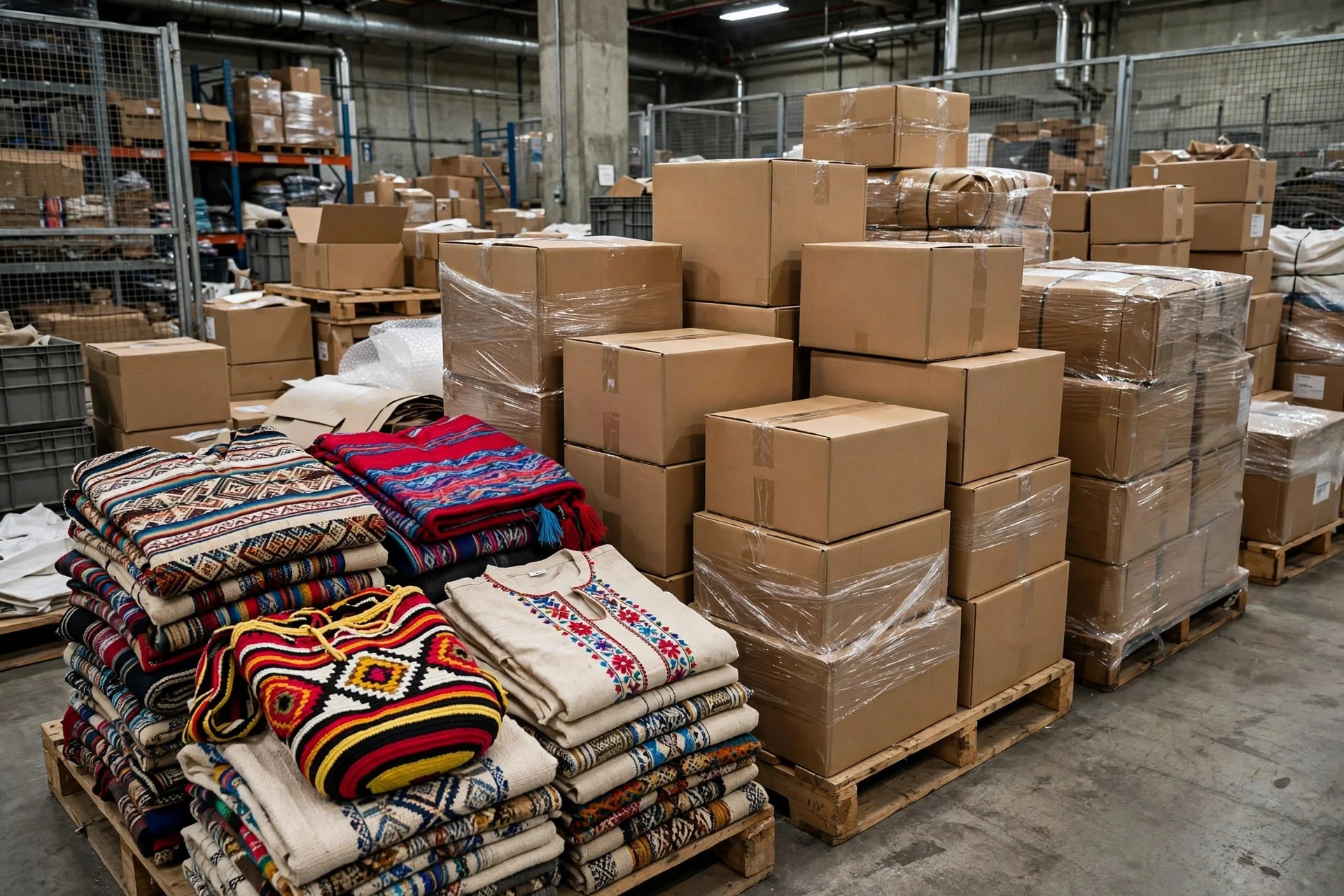
Bodega con paquetes de mensajería expresa y confecciones, en medio del debate por las nuevas reglas al comercio transfronterizo en Colombia. · Imagen generada para EPM
Colombia proposes 40% tariff on Shein and Temu courier clothing imports
A House subcommittee filed for second debate the bill regulating Shein, Temu and AliExpress in Colombia.
Colombia moves to end Minimis break for courier clothing imports
Colombia is processing a bill to regulate Shein, Temu and AliExpress: filed for second debate, it would end the Minimis regime, set a 40% tariff on garments…
--- The context ---
The debate over the survival of Colombian manufacturing in the face of cross-border digital trade has reached Congress. Business associations, small workshops and major national brands raised the alarm in public hearings about competition they consider asymmetric and that destroys local jobs.
According to the Colombian Chamber of Clothing and Related Industries, the lack of regulation allows roughly 650 tons of merchandise to enter the country every day through urgent shipments.
--- The facts ---
The subcommittee of the Third Commission of the House of Representatives filed the text for the second debate of the bill that strictly regulates the operations of Shein, Temu and AliExpress in the country. It is a process under way, not a law in force, and its floor discussion has no set date yet.
At the center of the dispute is the Minimis regime, which exempts purchases abroad of no more than USD 200 FOB from VAT and taxes, provided they come from countries with a Free Trade Agreement. According to the textile sector, the platforms, of Chinese origin, ship from distribution centers in the United States to benefit from that treaty.
The initiative proposes three changes. First, a unified 40% tariff on imports of garments, clothing and footwear through express courier services, regardless of value, ending the exemption. Second, a requirement that platforms collect 19% VAT at the moment of purchase and register with the DIAN. Third, controls on under-invoicing, with technological enforcement tools for the DIAN.
--- The positions ---
Congress and the associations argue that the priority is to safeguard the productive apparatus, which competes unevenly with foreign goods sold for as little as a fifth of the national production cost. Consumer advocates warn that the measure will hit the pockets of citizens looking for affordable options in times of inflation.
--- What remains unknown ---
The date on which the full House will schedule the debate is still unknown, although it is expected in the coming weeks. The final text is not defined either, and it may change during the second debate.
--- Unanswered questions ---
How will the 40% tariff be applied to each package entering through express courier services? Will collecting 19% VAT immediately raise the price of smaller orders? What will happen to orders shipped from distribution centers in the United States?
--- EPM analysis ---
The underlying discussion is not digital trade itself, but who bears the cost of competing. If the relief for Colombian workshops is transferred entirely to consumers, jobs would be protected at the expense of household income. The challenge will be to calibrate the protection without closing online shopping.
📌 EPM Take: In EPM's view, the bill addresses a real problem: a daily flow of that magnitude through urgent shipments cannot remain outside every rule while national workshops meet every obligation. But leveling the field also requires protecting the buyer, with a clear application of the tariff and the VAT that does not indiscriminately punish household budgets. The full House has the floor, and the country expects a debate with numbers on the table.
--- The context ---
For years, a growing share of Colombia's clothing and footwear trade entered through a side door: express courier shipments sheltered by an exemption designed for minor purchases. That channel grew until, according to the garment associations, it became a problem of unfair competition.
The Colombian Chamber of Clothing and Related Industries estimates that roughly 650 tons of merchandise enter every day through urgent shipments. Associations, small workshops and national brands asked in public hearings that anyone selling in Colombia follow the same rules as Colombian producers.
--- The facts ---
The subcommittee of the Third Commission of the House of Representatives filed the text for the second debate of the bill that strictly regulates the operations of Shein, Temu and AliExpress. The initiative is still in process, it is not a law in force, and the full House is expected to schedule its discussion in the coming weeks.
The starting point is the Minimis regime, which exempts purchases abroad of no more than USD 200 FOB from VAT and taxes, provided they come from countries with a Free Trade Agreement. The textile sector also denounces a triangulation scheme: the platforms, of Chinese origin, ship from distribution centers in the United States to benefit from that treaty, outside its original intent.
The filed text rests on three pillars. The first ends the exemption with a unified 40% tariff on imports of garments, clothing and footwear through express courier services, regardless of value. The second requires platforms to collect 19% VAT at purchase and register with the DIAN. The third empowers the DIAN to police under-invoicing with technological tools.
--- The positions ---
Congress and the associations maintain that the priority is to safeguard the productive apparatus, which competes with foreign goods sold for as little as a fifth of the national production cost. Consumer advocates reply that the measure will hit the pockets of those seeking affordable options in times of inflation.
--- What remains unknown ---
It remains unknown when the full House will schedule the second debate and whether the filed text will stand unchanged. The details of the platforms' registration with the DIAN and of the tools against under-invoicing are also unknown.
--- Unanswered questions ---
Will the 40% tariff be enough to close the triangulation denounced by the textile sector? How will the DIAN verify that packages are not declared below their real values? Will the 19% VAT be passed entirely into the final price?
--- EPM analysis ---
An open economy is not an economy without rules. When an exemption designed for minor purchases covers a massive commercial flow, it stops being relief for consumers and becomes a regulatory advantage for the foreign seller. Correcting that distortion does not require shutting down digital trade; it requires that competing in Colombia means complying in Colombia.
📌 EPM Take: In EPM's view, the bill gets its premise right: the Minimis exemption lost its purpose when the urgent-shipment channel reached roughly 650 tons a day, and no free trade rule obliges a country to tolerate triangulation or under-invoicing. The 40% tariff and the 19% VAT collected at purchase are debatable in their calibration, but legitimate in their purpose: a level field for everyone. The debate ahead should protect that principle while giving the DIAN workable tools to enforce it in practice.
Colombia propone arancel del 40% a Shein y Temu por mensajería expresa
La subcomisión de la Comisión Tercera de la Cámara radicó para segundo debate el proyecto que regula a Shein, Temu y AliExpress en Colombia.
Fin del régimen Minimis: Colombia busca reglas parejas en confecciones
Colombia tramita un proyecto que regula a Shein, Temu y AliExpress: radicado para segundo debate, propone terminar el régimen Minimis, fijar un arancel del 40%…
--- El contexto ---
El debate por la supervivencia de la manufactura colombiana frente al comercio transfronterizo digital llegó al Congreso. Gremios, pequeños talleres y grandes marcas nacionales encendieron las alarmas en audiencias públicas sobre una competencia que consideran asimétrica y que destruye empleo local.
De acuerdo con la Cámara Colombiana de la Confección y Afines, la falta de regulación permite el ingreso diario de aproximadamente 650 toneladas de mercancías bajo la modalidad de envíos urgentes.
--- Los hechos ---
La subcomisión de la Comisión Tercera de la Cámara de Representantes radicó el texto para segundo debate del proyecto que regula las operaciones de Shein, Temu y AliExpress en el país. Es un trámite en curso, no una ley vigente, y su discusión en plenaria aún no tiene fecha.
El núcleo de la discordia es el régimen Minimis, que exime del pago de IVA e impuestos a las compras en el exterior que no superen los USD 200 FOB, siempre que provengan de países con Tratado de Libre Comercio. Según el sector textil, las plataformas, de origen chino, despachan desde centros de distribución en Estados Unidos para acogerse a los beneficios de ese tratado.
La iniciativa propone tres cambios. Primero, un arancel unificado del 40% a las importaciones de confecciones, ropa y calzado por mensajería expresa, sin importar su valor, que pone fin a la exención. Segundo, que las plataformas recauden el 19% de IVA en el momento de la compra y se registren ante la DIAN. Tercero, un control a la subfacturación con herramientas tecnológicas para la DIAN.
--- Las posiciones ---
El Congreso y los gremios defienden que la prioridad es salvaguardar el aparato productivo, que compite de forma desigual con artículos extranjeros vendidos hasta por una quinta parte del costo de producción nacional. Los defensores de los consumidores advierten que la medida afectará el bolsillo ciudadano en épocas de inflación.
--- Lo que falta saber ---
Aún no se conoce la fecha en que la plenaria agendará la discusión del articulado, aunque se espera que ocurra en las próximas semanas. Tampoco está definido el texto final, que puede cambiar en el debate.
--- Preguntas sin respuesta ---
¿Cómo se aplicará el arancel del 40% a cada paquete que ingrese por mensajería expresa? ¿El recaudo del 19% de IVA encarecerá los pedidos de menor valor? ¿Qué pasará con los pedidos despachados desde Estados Unidos?
--- Análisis EPM ---
La discusión de fondo no es el comercio digital en sí, sino quién soporta el costo de competir. Si el alivio para el taller colombiano se traslada por completo al consumidor, se protegerán empleos a costa del ingreso de los hogares. El reto será graduar la protección sin cerrar las compras en línea.
📌 Conclusion EPM: A juicio de EPM, el proyecto ataca un problema real: un flujo diario de esa magnitud bajo envíos urgentes no puede seguir por fuera de toda regla mientras los talleres nacionales cumplen cada obligación. Pero nivelar la cancha exige cuidar también al comprador, con una aplicación clara del arancel y del IVA que no castigue indiscriminadamente el bolsillo. La plenaria tiene la palabra y el país espera un debate con números sobre la mesa.
--- El contexto ---
Durante años, una parte creciente del comercio de ropa y calzado en Colombia entró por una puerta lateral: la mensajería expresa amparada en una exención pensada para compras menores. Ese canal creció hasta volverse, según los gremios, un problema de competencia desleal.
La Cámara Colombiana de la Confección y Afines calcula que cada día ingresan aproximadamente 650 toneladas de mercancías bajo la modalidad de envíos urgentes. Gremios, talleres y marcas nacionales lo plantearon en audiencias públicas.
--- Los hechos ---
La subcomisión de la Comisión Tercera de la Cámara de Representantes radicó el texto para segundo debate del proyecto que regula las operaciones de Shein, Temu y AliExpress. La iniciativa sigue en trámite, no es una ley vigente, y la plenaria deberá agendar su discusión en las próximas semanas.
El punto de partida es el régimen Minimis, que exime del pago de IVA e impuestos a las compras en el exterior que no superen los USD 200 FOB, siempre que provengan de países con Tratado de Libre Comercio. El sector textil denuncia una triangulación: las plataformas, de origen chino, despachan desde centros de distribución en Estados Unidos para acogerse a los beneficios del tratado, por fuera de su intención original.
El articulado se estructura en tres pilares. El primero pone fin a la exención con un arancel unificado del 40% a las importaciones de confecciones, ropa y calzado por mensajería expresa, sin importar su valor. El segundo exige que las plataformas recauden el 19% de IVA en la compra y se registren ante la DIAN. El tercero faculta a la DIAN para fiscalizar la subfacturación con herramientas tecnológicas.
--- Las posiciones ---
El Congreso y los gremios sostienen que la prioridad es salvaguardar el aparato productivo, que compite con artículos extranjeros vendidos hasta por una quinta parte del costo de producción nacional. Los defensores de los consumidores responden que la medida afectará el bolsillo de los consumidores en épocas de inflación.
--- Lo que falta saber ---
Falta saber cuándo agendará la plenaria el segundo debate y si el texto radicado se mantendrá sin cambios. Tampoco se conocen los detalles del registro ante la DIAN ni de las herramientas contra la subfacturación.
--- Preguntas sin respuesta ---
¿Bastará el arancel del 40% para cerrar la triangulación denunciada por el sector textil? ¿Cómo verificará la DIAN que los paquetes no se declaren por valores inferiores a los reales? ¿El recaudo del 19% de IVA se trasladará por completo al precio final?
--- Análisis EPM ---
Una economía abierta no es una economía sin reglas. Cuando una exención diseñada para compras menores cubre un flujo masivo, deja de ser alivio al consumidor y se vuelve ventaja regulatoria para el vendedor extranjero. Corregir esa distorsión no exige cerrar el comercio digital: exige que competir en Colombia implique cumplir en Colombia.
📌 Conclusion EPM: A juicio de EPM, el proyecto acierta en su premisa: la exención del régimen Minimis perdió su sentido cuando el canal de envíos urgentes alcanzó aproximadamente 650 toneladas diarias, y ninguna regla de libre comercio obliga a tolerar la triangulación ni la subfacturación. El arancel del 40% y el IVA del 19% recaudado en la compra son discutibles en su calibración, pero legítimos en su propósito: cancha pareja para todos.