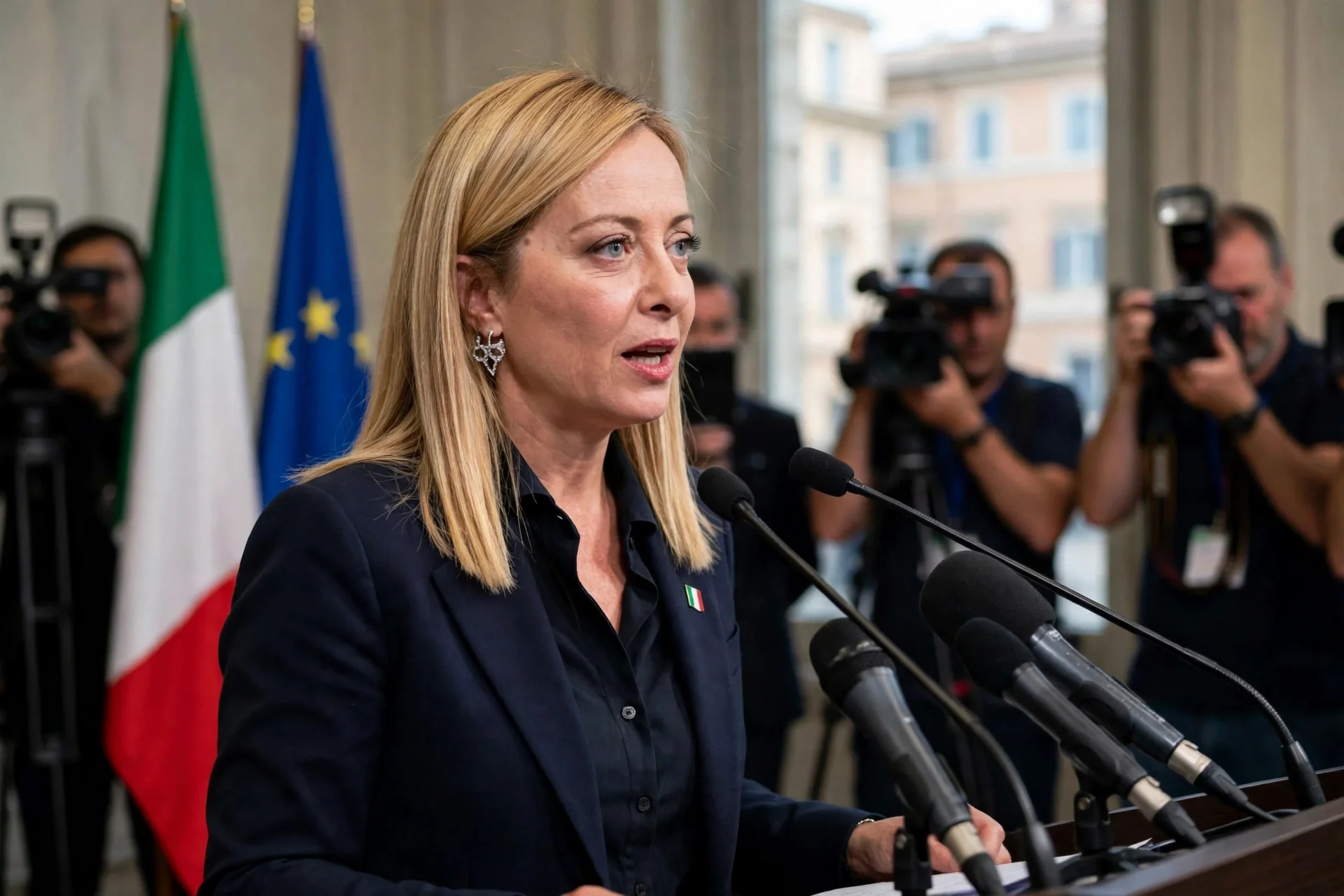
Giorgia Meloni durante la presentación de la ley de presupuestos de 2027 tras el Consejo de Ministros. · Imagen generada para EPM
Meloni presents a EUR 26 billion budget centred on youth and families
According to Meloni's presentation, the Council of Ministers approved the 2027 budget law worth about EUR 26 billion, with an IRPEF cut up to EUR 55,000…
Meloni defends tax cuts and discipline in the 2027 budget law
According to Meloni's presentation, the 2027 budget law, worth about EUR 26 billion, extends the IRPEF cut, raises the self-employed flat-rate threshold to EUR…
--- The context ---
According to Giorgia Meloni's presentation, the Council of Ministers approved the 2027 budget law, her Government's fifth, worth a total of approximately EUR 26 billion. She said its guiding philosophy is again to focus resources she described as limited on the same priorities pursued over the last four years: families, the birth rate, cutting taxes, protecting purchasing power, employment incentives, business incentives and citizens' health.
--- The facts ---
According to her account, the law confirms all the measures in the previous budget that would otherwise have expired at the end of the year, a package worth around EUR 9 billion. Among them she listed the tax credit for investments in the Single SEZ for the South, the 1% tax rate on productivity bonuses, the bonus for working mothers and the 120% super-deduction on labour costs, summed up as the idea that the more you hire, the less you pay.
She also confirmed, as she listed them, the abolition of IRPEF for farmers, duty reductions on agricultural diesel worth around EUR 1 billion and the 5% rate on increases arising from the renewal of national collective bargaining agreements, a measure she said had encouraged renewals for more than 4.25 million workers.
On IRPEF, Meloni announced that the upper threshold for the second bracket at 33% rises to EUR 55,000, meaning a benefit of up to around EUR 500 per year. To illustrate the full path she said those who earned EUR 55,000 paid EUR 16,550 when her Government entered office and now pay around EUR 15,350, a benefit of EUR 1,200 per year, or EUR 100 per month. She added that the flat-rate scheme for the self-employed rises from EUR 85,000 to EUR 100,000 and that there will be no vehicle tax on cars of up to 80 kW, about 70% of vehicles in circulation.
For people under 30 she presented an incentive of EUR 2,500 taxed at 1%, payable as 12 monthly instalments or as a one-off payment. The Piano Casa housing plan, she recalled, aims at 100,000 homes over ten years, and the law cuts the flat-rate tax on agreed-rate rentals from 10% to 5%, and to 1% if the tenant is under 35.
On families, she explained that parental leave paid at 80% gains one further general month, rises to up to 5 months for a second child and to six months from the third child, and that INPS will open an account for each newborn with an initial EUR 100, available at 18. For the South, the SEZ allocation rises to up to EUR 2.4 billion, and the new Energy Release scheme for small and medium-sized companies receives EUR 1 billion.
On health, she announced that the national healthcare fund rises by EUR 3.4 billion to EUR 146.3 billion in 2027, and a social voucher of EUR 300 for people over 75 with a pension of up to EUR 28,000, which by her figures reaches 5.5 million people and costs EUR 1.6 billion. For pensions she set aside a fund of EUR 850 million.
--- The positions ---
The Government's position, as Meloni framed it, is that the law is not against anyone and that in a complex time those with fewer problems are asked to help. According to her presentation, around EUR 5 billion will come from a contribution from the financial sector, with an exemption of EUR 90,000, around EUR 700 million from energy companies and another EUR 700 million from gambling, while cuts to ministries' spending provide around EUR 1 billion.
--- What remains unknown ---
Her own presentation left fronts open. Meloni acknowledged that the details on pensions need to be worked on above all during the parliamentary debate, and that the VAT side of the flat-rate scheme needs authorisation from the European Commission, with a year to negotiate it.
--- Unanswered questions ---
How many families will actually feel the IRPEF cut, and at what income will the maximum benefit land? Will European authorisation for the self-employed VAT scheme arrive before the negotiating window closes? Will agreed-rate rent taxed at 1% for tenants under 35 bring empty homes onto the market, or will it remain an incentive without enough supply? What final shape will pensions take once the parliamentary debate ends?
--- EPM analysis ---
Read on its own terms, the presentation puts its social emphasis on young people, families and older citizens: youth employment taxed at 1%, housing with a tax reward for renting to people under 35, stronger parental leave, an account for newborns and a EUR 300 voucher for people over 75. The other side is delivery: several pieces depend on European negotiations, on the parliamentary debate or on landlords responding to the incentive. The funding rests on asking for around EUR 5 billion from the financial sector and hundreds of millions from energy and gambling, an architecture the presentation defends as solidarity but which still has to become concrete rules.
📌 EPM Take:
In EPM's view, the worth of this budget will be measured less by the announced list than by its real arrival among young people, families and older citizens. The EUR 2,500 incentive, rent taxed at 1% for tenants under 35, extended parental leave and the EUR 300 voucher all point to concrete and recognisable problems. But the presentation leaves European authorisation, pension details and the housing market's response still pending. Without those three closures, the law risks promising relief where it is most needed and delivering less than announced. The reasonable demand is not distrust on principle, but to follow each measure until the money, the rule and the beneficiary meet in the daily practice of Italian households.
--- The context ---
According to Giorgia Meloni's presentation, the Council of Ministers approved the 2027 budget law, her Government's fifth, worth a total of approximately EUR 26 billion. She placed it on the same line as the last four years: families, the birth rate, cutting taxes, protecting purchasing power, employment incentives, business incentives and citizens' health, concentrating resources she herself described as limited.
--- The facts ---
According to her account, the law confirms the measures in the previous budget that would otherwise have expired at the end of the year, a package worth around EUR 9 billion. Among them she listed the tax credit for investments in the Single SEZ for the South, the 1% tax rate on productivity bonuses, the bonus for working mothers and the 120% super-deduction on labour costs, presented as the rule that the more you hire, the less you pay.
She also confirmed, as she listed them, the abolition of IRPEF for farmers, duty reductions on agricultural diesel worth around EUR 1 billion and the 5% rate on increases arising from the renewal of national collective bargaining agreements, a measure she said had helped renew agreements for more than 4.25 million workers, about half a million more than initial estimates.
On IRPEF, she announced that the upper threshold for the second bracket at 33% rises to EUR 55,000, meaning a benefit of up to around EUR 500 per year. To show the full path she said those who earned EUR 55,000 paid EUR 16,550 when her Government entered office and now pay around EUR 15,350, that is EUR 1,200 less per year or EUR 100 per month. The flat-rate scheme for the self-employed rises from EUR 85,000 to EUR 100,000, and the vehicle tax disappears for cars of up to 80 kW, about 70% of vehicles in circulation.
For people under 30 she presented EUR 2,500 taxed at 1%, in 12 instalments or as a one-off payment. The Piano Casa plan foresees 100,000 homes over ten years, and the tax on agreed-rate rentals falls from 10% to 5%, and to 1% if the tenant is under 35, seeking to make it worthwhile for owners to let at a capped rent rather than leave a home empty.
On families, she explained that parental leave paid at 80% adds one general month, rises to up to 5 months for a second child and to six months from the third child, and that INPS will open an account for each newborn with an initial EUR 100 available at 18. The SEZ for the South rises to up to EUR 2.4 billion and the new Energy Release scheme for small and medium-sized companies receives EUR 1 billion.
On health, the national healthcare fund rises by EUR 3.4 billion to EUR 146.3 billion in 2027. Meloni also announced a social voucher of EUR 300 for people over 75 with a pension of up to EUR 28,000, for 5.5 million people at a cost of EUR 1.6 billion, and a pensions fund of EUR 850 million.
--- The positions ---
The Government's position, as Meloni framed it, combines tax cuts with a shared effort. She presented a contribution from the financial sector of around EUR 5 billion, with an exemption of EUR 90,000 to protect banks closest to citizens, around EUR 700 million from energy companies and another EUR 700 million from gambling, plus cuts to ministries' spending worth around EUR 1 billion.
--- What remains unknown ---
There are explicit cautions in her own remarks. The VAT side linked to the flat-rate scheme requires authorisation from the European Commission and has a year of negotiation.
--- Unanswered questions ---
Will the European Commission confirm the authorisation needed for the self-employed VAT scheme within the year foreseen? Will the parliamentary text keep intact the EUR 55,000 threshold and the benefit of up to EUR 500 per year? How will the use of the EUR 850 million pensions fund be settled in the debate? Will the financial sector accept its contribution of around EUR 5 billion without passing costs on to customers?
--- EPM analysis ---
The thread Meloni claimed is fiscal: less IRPEF in the middle bracket, a wider flat-rate scheme for the self-employed, the end of the vehicle tax for most cars and rewards for hiring and for renewing agreements. Funding rests partly on contributions asked of banking, energy and gambling and on cuts to ministries, presented as sustainable and not punitive. Prudence requires watching the small print: European authorisation pending, pensions still to be defined and a total budget of around EUR 26 billion that forces choices.
📌 EPM Take:
In EPM's view, the presentation defends a clear and defensible idea: cut taxes where they are most felt, reward work and ask the greatest effort from the sectors with the most margin. The EUR 55,000 example, from EUR 16,550 to around EUR 15,350 in IRPEF, sums up that bet better than any slogan. But caution is part of discipline: the European authorisation for the flat-rate scheme, the pension detail and the financial contribution must be closed without surprises or hidden costs for families and small firms. If the Government holds that line in Parliament, the budget will gain in credibility what today is still an orderly and well aimed announcement.
Meloni presenta un presupuesto de 26 mil millones centrado en jóvenes y familias
Según presentó Meloni, el Consejo de Ministros aprobó la ley de presupuestos de 2027 por unos 26 mil millones de euros, con rebaja del IRPEF hasta 55.000…
Meloni defiende rebajas fiscales y disciplina en el presupuesto de 2027
Según presentó Meloni, la ley de presupuestos de 2027, de unos 26 mil millones de euros, amplía la rebaja del IRPEF, eleva el forfait de autónomos a 100.000…
--- El contexto ---
Según presentó Giorgia Meloni, el Consejo de Ministros aprobó la ley de presupuestos de 2027, la quinta de su Gobierno, por un total aproximado de 26 mil millones de euros. La presidenta explicó que la filosofía rectora vuelve a concentrar unos recursos que describió como escasos en las mismas prioridades de los últimos cuatro años: familias, natalidad, rebaja de impuestos, protección del poder adquisitivo, incentivos al empleo y a las empresas y salud de los ciudadanos.
--- Los hechos ---
De acuerdo con su exposición, la ley confirma todas las medidas de la anterior que vencían a fin de año, un paquete valorado en unos 9 mil millones de euros. Entre ellas citó el crédito fiscal por inversiones en la Zona Económica Especial única del sur, el tipo del 1% en las primas de productividad, la ayuda a las madres trabajadoras y la superdeducción del 120% de los costes laborales resumida en la idea de que quien más contrata, menos paga.
También confirmó, según enumeró, la abolición del IRPEF agrícola, las rebajas al diésel agrícola por un valor cercano a 1.000 millones de euros y el tipo reducido del 5% sobre los aumentos derivados de la renovación de convenios colectivos, una medida que, afirmó, incentivó renovaciones para más de 4,25 millones de trabajadores.
En el IRPEF, Meloni anunció que el umbral superior del segundo tramo al 33% sube hasta 55.000 euros, con un beneficio de hasta unos 500 euros al año. Para ilustrarlo dijo que quien ganaba 55.000 euros pagaba 16.550 euros cuando su Gobierno llegó y ahora paga unos 15.350 euros, un beneficio de 1.200 euros al año, es decir 100 euros al mes. Añadió que el régimen forfait de los autónomos sube de 85.000 a 100.000 euros y que desaparece el impuesto de vehículos para coches de hasta 80 kW, en torno al 70% de los vehículos en circulación.
Para los menores de 30 años presentó un incentivo de 2.500 euros al 1%, en 12 cuotas mensuales o en un pago único. El Piano Casa, recordó, aspira a 100.000 viviendas en diez años, y la ley rebaja el impuesto pactado del alquiler del 10% al 5%, y al 1% si el inquilino es menor de 35 años.
En familias, explicó que el permiso parental al 80% gana un mes general, llega hasta 5 meses con el segundo hijo y a seis meses desde el tercer hijo, y que el INPS abrirá por cada recién nacido una cuenta con 100 euros iniciales, disponible a los 18 años. Para el sur, la ZES sube hasta 2,4 mil millones de euros, y el nuevo Energy Release para pymes recibe 1.000 millones de euros.
En salud, anunció que el fondo sanitario crece en 3,4 mil millones hasta 146,3 mil millones de euros en 2027, y un vale social de 300 euros para mayores de 75 años con pensión de hasta 28.000 euros, que según sus cifras alcanza a 5,5 millones de personas y cuesta 1,6 mil millones de euros. Para pensiones reservó un fondo de 850 millones de euros.
--- Las posiciones ---
La posición del Gobierno, tal como la formuló Meloni, es que la ley no es contra nadie y que en un momento complejo se pide ayudar a quienes tienen menos problemas. Según su presentación, unos 5 mil millones de euros vendrán de una contribución del sector financiero, con una exención de 90.000 euros, unos 700 millones de las energéticas y otros 700 millones del juego, mientras los recortes ministeriales aportarán en torno a 1.000 millones de euros.
--- Lo que falta saber ---
La propia presentación dejó frentes abiertos. Meloni reconoció que el detalle de las pensiones debe trabajarse sobre todo durante el debate parlamentario, y que el régimen de IVA ligado al forfait necesita autorización de la Comisión Europea, con un año para negociarlo.
--- Preguntas sin respuesta ---
¿Cuántas familias notarán de verdad la rebaja del IRPEF y con qué renta quedará el beneficio máximo? ¿Llegará la autorización europea para el régimen de IVA de los autónomos antes de que venza el plazo de negociación? ¿Conseguirá el alquiler pactado al 1% para menores de 35 años sacar viviendas vacías al mercado o quedará como un incentivo sin oferta suficiente? ¿Qué detalle final tendrán las pensiones cuando termine el debate parlamentario?
--- Análisis EPM ---
Leída en sus propios términos, la presentación pone el acento social en jóvenes, familias y mayores: empleo juvenil al 1%, vivienda con premio fiscal por alquilar a menores de 35 años, permiso parental reforzado, cuenta para recién nacidos y vale de 300 euros para mayores de 75 años. La otra cara es la ejecución: varias piezas dependen de negociaciones europeas, del debate parlamentario o de que los propietarios respondan al incentivo. La cobertura descansa en pedir unos 5 mil millones al sector financiero y cientos de millones a energía y juego, una arquitectura que la presentación defiende como solidaria pero que aún debe traducirse en normas concretas.
📌 Conclusion EPM:
A juicio de EPM, el valor de este presupuesto se medirá menos por la lista anunciada que por su llegada real a jóvenes, familias y mayores. El incentivo de 2.500 euros, el alquiler al 1% para menores de 35 años, el permiso parental ampliado y el vale de 300 euros apuntan a problemas concretos y reconocibles. Pero la presentación deja pendientes la autorización europea, el detalle de pensiones y la respuesta del mercado de vivienda. Sin esos tres cierres, la ley corre el riesgo de prometer alivio donde más se necesita y entregar menos de lo anunciado. La exigencia razonable no es desconfiar por principio, sino seguir cada medida hasta que el dinero, la norma y el beneficiario coincidan en la práctica diaria de los hogares italianos.
--- El contexto ---
Según presentó Giorgia Meloni, el Consejo de Ministros aprobó la ley de presupuestos de 2027, la quinta de su Gobierno, por un total aproximado de 26 mil millones de euros. La presidenta la inscribió en la misma línea de los últimos cuatro años: familias, natalidad, rebaja de impuestos, protección del poder adquisitivo, incentivos al empleo y a las empresas y salud de los ciudadanos, concentrando unos recursos que ella misma describió como limitados.
--- Los hechos ---
De acuerdo con su exposición, la ley confirma las medidas de la anterior que vencían a fin de año, un paquete de unos 9 mil millones de euros. Entre ellas citó el crédito fiscal por inversiones en la Zona Económica Especial única del sur, el tipo del 1% en las primas de productividad, la ayuda a las madres trabajadoras y la superdeducción del 120% de los costes laborales, presentada como la regla de que quien más contrata, menos paga.
También confirmó, según enumeró, la abolición del IRPEF agrícola, las rebajas al diésel agrícola por cerca de 1.000 millones de euros y el tipo del 5% sobre los aumentos por renovación de convenios colectivos, medida que, afirmó, ayudó a renovar acuerdos para más de 4,25 millones de trabajadores, alrededor de medio millón más de lo estimado inicialmente.
En el IRPEF, anunció que el umbral superior del segundo tramo al 33% sube hasta 55.000 euros, con un beneficio de hasta unos 500 euros al año. Para mostrar el recorrido completo dijo que quien ganaba 55.000 euros pagaba 16.550 euros al llegar su Gobierno y ahora paga unos 15.350 euros, es decir 1.200 euros menos al año o 100 euros al mes. El régimen forfait de los autónomos sube de 85.000 a 100.000 euros, y el impuesto de vehículos desaparece para coches de hasta 80 kW, en torno al 70% de los vehículos en circulación.
Para los menores de 30 años presentó 2.500 euros al 1%, en 12 cuotas o en pago único. El Piano Casa prevé 100.000 viviendas en diez años, y el impuesto pactado del alquiler baja del 10% al 5%, y al 1% si el inquilino es menor de 35 años, buscando que al propietario le compense alquilar a precio pactado en vez de dejar la vivienda vacía.
En familias, explicó que el permiso parental al 80% suma un mes general, llega hasta 5 meses con el segundo hijo y a seis meses desde el tercer hijo, y que el INPS abrirá por cada recién nacido una cuenta con 100 euros iniciales disponible a los 18 años. La ZES del sur sube hasta 2,4 mil millones de euros y el nuevo Energy Release para pymes recibe 1.000 millones de euros.
En salud, el fondo sanitario crece en 3,4 mil millones hasta 146,3 mil millones de euros en 2027. Meloni anunció además un vale social de 300 euros para mayores de 75 años con pensión de hasta 28.000 euros, para 5,5 millones de personas y con un coste de 1,6 mil millones de euros, y un fondo de pensiones de 850 millones de euros.
--- Las posiciones ---
La posición del Gobierno, según la formuló Meloni, combina rebaja fiscal y reparto del esfuerzo. Presentó una contribución del sector financiero de unos 5 mil millones de euros, con exención de 90.000 euros para proteger a la banca cercana al ciudadano, unos 700 millones de las energéticas y otros 700 millones del juego, además de recortes ministeriales por en torno a 1.000 millones de euros.
--- Lo que falta saber ---
Quedan cautelas explícitas en la propia intervención. El régimen de IVA vinculado al forfait requiere autorización de la Comisión Europea y dispone de un año de negociación.
--- Preguntas sin respuesta ---
¿Confirmará la Comisión Europea la autorización necesaria para el régimen de IVA de los autónomos dentro del año previsto? ¿Mantendrá el texto parlamentario intactos el umbral de 55.000 euros y el beneficio de hasta 500 euros al año? ¿Cómo se concretará en el debate el uso del fondo de pensiones de 850 millones de euros? ¿Aceptará el sector financiero la contribución de unos 5 mil millones sin trasladar costes a los clientes?
--- Análisis EPM ---
El hilo conductor que Meloni reivindicó es fiscal: menos IRPEF en el tramo medio, forfait más amplio para autónomos, fin del impuesto de vehículos para la mayoría de coches y premios a contratar y a renovar convenios. La financiación descansa en parte en contribuciones pedidas a banca, energía y juego y en recortes ministeriales, presentadas como sostenibles y no punitivas. La prudencia manda mirar la letra pequeña: autorización europea pendiente, pensiones por definir y un presupuesto total de unos 26 mil millones que obliga a elegir.
📌 Conclusion EPM:
A juicio de EPM, la presentación defiende una idea clara y defendible: bajar impuestos donde más se notan, premiar el trabajo y pedir el esfuerzo mayor a los sectores con más margen. El ejemplo de los 55.000 euros, de 16.550 a unos 15.350 euros de IRPEF, resume esa apuesta mejor que cualquier eslogan. Pero la cautela es parte de la disciplina: la autorización europea del forfait, el detalle de pensiones y la contribución financiera deben cerrarse sin sorpresas ni costes ocultos para familias y pymes. Si el Gobierno mantiene esa línea en el Parlamento, el presupuesto ganará en credibilidad lo que hoy todavía es anuncio ordenado y bien dirigido.