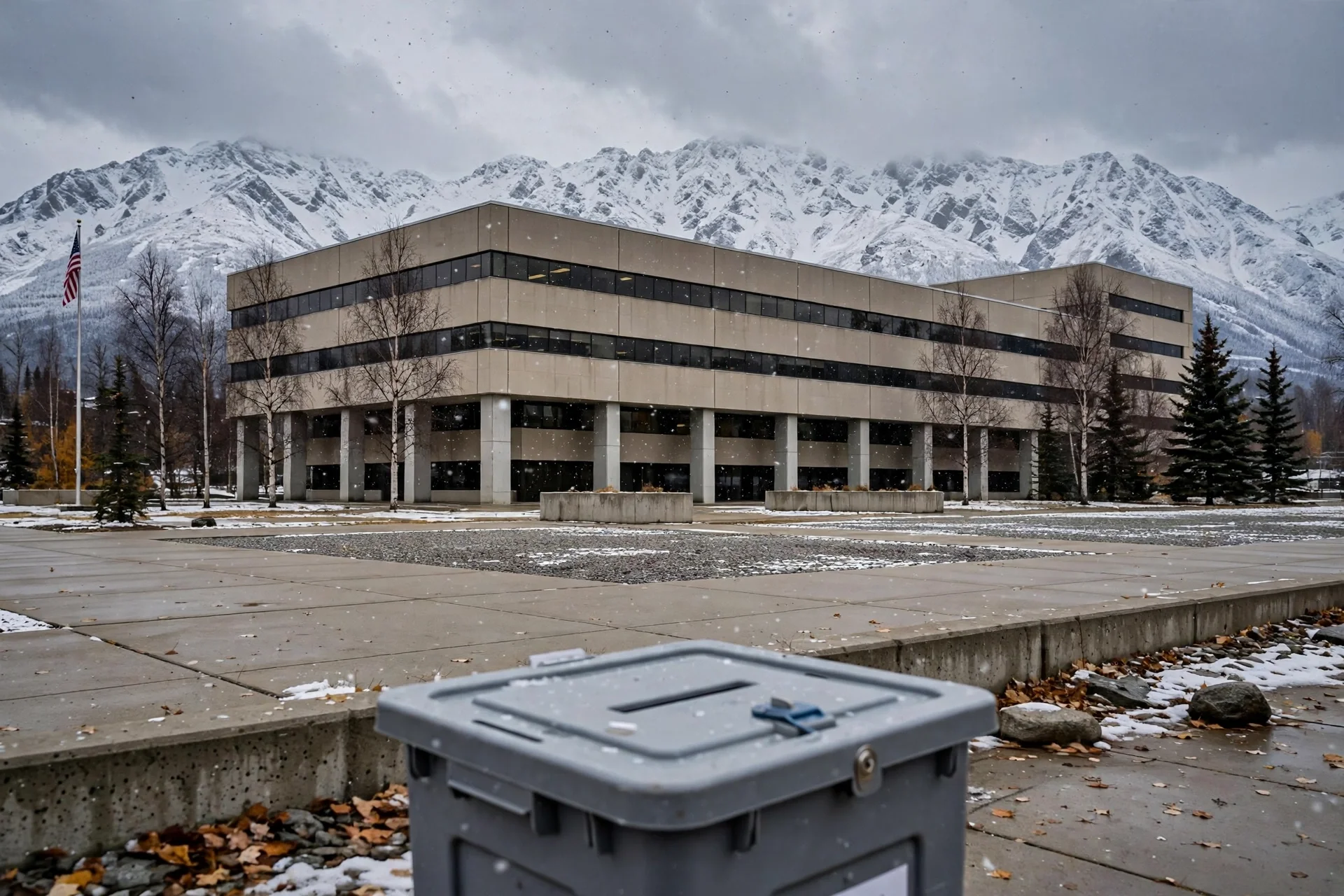
Imagen alusiva a un edificio federal en Alaska y una urna electoral, en ambiente invernal. · Imagen generada por EPM
Justice Department seeks to isolate Alaska ballots amid criminal probe
The Justice Department asked to segregate ballots ranking Daniel J. Sullivan to investigate possible voter confusion, while U.S.
Criminal probe and ballot dispute shadow Alaska Senate election
The civil request to preserve and segregate ballots and the criminal probe confirmed by U.S.
--- The context ---
Alaska's general election on Tuesday will be decided by ranked choice voting between Republican Senator Dan Sullivan, who has served two terms, and Democrat Mary Peltola. The race is among a handful nationwide expected to determine control of the Senate, and it reaches its final days under both a civil lawsuit and a criminal probe involving another candidate whose name is nearly identical to the incumbent's.
Two different Sullivans appear on the ballot. The senator is listed as Dan S. Sullivan, Republican and incumbent, while the other aspirant is listed as Daniel J. Sullivan Jr., with no party affiliation. State attorneys say that same distinction was already used on the August open primary ballot, and the ranked voting system allows each voter to rank both men if that is their choice.
--- The facts ---
The Justice Department, as part of a civil lawsuit it filed last week, asked a judge on Friday to order state elections officials to isolate and segregate all ballots ranking Daniel J. Sullivan, in order to investigate whether such ranking was the product of voter confusion should such an investigation become necessary. The filing, signed by Assistant U.S. Attorney E. Bryan Wilson, requests a decision by Monday and argues that there is a substantial risk the candidacy will mislead voters and produce an electoral process that lacks integrity.
Separately, Alaska U.S. Attorney Michael Heyman told reporters in Anchorage that a criminal investigation into the matter has been ongoing for several months. Heyman said recent revelations that Peltola's campaign appeared to be involved in recruiting retired teacher Dan J. Sullivan resulted in a significant surge of law enforcement assets to Alaska. This week, federal prosecutors also issued dozens of grand jury subpoenas and requests to preserve records.
The reporting on the possible recruitment was based partly on interviews with a former campaign manager, Elisa Rios, who was fired before the August primary. After that reporting, Republican Governor Mike Dunleavy said he had ordered an investigation into whether any violations took place. Heyman would not say what potential crimes authorities are looking into or the targets of the probe, and he asked members of the public to come forward with tips that could help investigators.
--- The positions ---
Attorneys for the state questioned how segregation would even be possible, writing that voters' ballots are commingled in the ballot box on Election Day and that election workers could not segregate ballots ranking Dan J. Sullivan without violating ballot secrecy protections. They added that, segregated or not, those ballots would not reveal any voter's reason for voting as they did, asked a judge to dismiss the case, and pointed to the steps officials already took to distinguish the two Sullivans on the ballot.
Peltola denied on Thursday that she knew anything about the effort to put Dan J. Sullivan on the ballot and conveyed, in indirect terms, that she is not interested in tricking voters. Democrats, including the party's Senate campaign committee, have repeatedly denied involvement in any campaign trick, and Dan J. Sullivan has long denied he was running at Democrats' behest. President Donald Trump has said he told the department to file the civil case, which seeks to block certification of the Senate race if the incumbent loses.
At a rally in Florida late Friday, Trump argued that Peltola and Dan J. Sullivan should be prosecuted, noted that U.S. Attorney General Todd Blanche was in attendance, and said Blanche would make his own decision; addressing him directly, he asked him to decide for himself and then added that Blanche had answered affirmatively. Peltola, at a rally in Anchorage late Friday, said she was deeply offended by the accusations, said she needs no help beyond voters' support, and, when asked whether someone on her campaign could have been involved in recruiting Dan J. Sullivan, replied that she honestly had no idea.
--- What remains unknown ---
What remains unknown includes the specific crimes under examination and the targets of the probe, because the prosecutor disclosed neither. Nor is it established what real links existed between the namesake candidacy and any campaign, or how the judge will rule before Monday without compromising ballot secrecy. The immediate precedent does not favor the department: the 9th U.S. Circuit Court of Appeals rejected its request for California to set aside disputed ballots sent to some 20,000 people the administration contends may not be U.S. citizens, while California officials argued the list is highly unreliable and most likely includes many citizens.
In parallel, the Alaska Democratic Party has sued state elections officials, alleging that absentee in-person voting sites did not open as advertised in some rural communities. The director of the Division of Elections replied in a letter dated Monday that the agency signs agreements with local or tribal offices to operate the sites and that most of the 18 highlighted sites had opened. A message seeking comment from the state Department of Law was not immediately returned.
--- Unanswered questions ---
What specific crimes and which targets does the criminal probe that the prosecutor confirmed actually involve? How could commingled ballots be segregated without violating the ballot secrecy that protects every voter? What will the dozens of grand jury subpoenas and the preserved records establish about the origin of Daniel J. Sullivan's candidacy? Will federal intervention days before the election strengthen or weaken Alaska voters' confidence in the process?
--- EPM analysis ---
The case joins two legitimate tensions: the integrity of a ballot carrying two nearly identical names, and the protection of ballot secrecy and effective access to voting, including in rural communities. It is highly unusual for Justice Department officials to publicly discuss a criminal investigation or even confirm its existence, and the timing is particularly notable given the department's longstanding practice of avoiding public steps in the weeks before an election that could be perceived as influencing a political outcome. That exceptional character requires every measure to be judged by its evidence and its effect on voters.
📌 EPM Take: In EPM's view, potential confusion between two candidates must be investigated rigorously, but no integrity measure can be paid for with ballot secrecy or with rural communities' access to the polls. The state already distinguished the Republican incumbent from the unaffiliated aspirant on the ballot, the preference system allows ranking both, and the requested segregation collides with ballots already commingled. The criminal probe should advance on verifiable evidence, with the judge deciding before Monday and with equal guarantees for every Alaska voter, without exceptions in this election.
--- The context ---
On Tuesday, Alaska will decide by ranked choice voting one of the races expected to determine control of the Senate: Republican Senator Dan Sullivan, holder of two terms, against Democrat Mary Peltola. The election has been marked by the presence of another candidate, Daniel J. Sullivan Jr., with no party affiliation, whose name can be confused with the incumbent's, who is listed on the ballot as Dan S. Sullivan, Republican and incumbent.
That ballot distinction was already applied on the August open primary ballot, according to attorneys for the state, and the preference system itself allows a voter to rank both Sullivans if that is their will. The controversy is therefore not a typographical error: it is the suspicion that a nearly identical candidacy may have been promoted to disperse votes and alter a decisive contest for the chamber.
--- The facts ---
The Justice Department asked on Friday, within the civil lawsuit it filed last week, for a judge to order that all ballots ranking Daniel J. Sullivan be preserved and segregated, to investigate whether such ranking was the product of voter confusion should such an investigation become necessary. The filing by Assistant U.S. Attorney E. Bryan Wilson requests a decision by Monday and maintains that there is a substantial risk the candidacy will mislead voters and result in an electoral process that lacks integrity. The civil case also seeks to block certification if the incumbent loses.
Alaska U.S. Attorney Michael Heyman confirmed in Anchorage that the criminal probe into the case has been ongoing for several months. As he explained, recent revelations about Peltola's campaign apparently being involved in recruiting retired teacher Dan J. Sullivan led to a significant surge of law enforcement assets in Alaska. This week federal prosecutors issued dozens of grand jury subpoenas and requests to preserve records, and Heyman asked the public to come forward with useful tips, although he did not identify the potential crimes or the targets of the probe.
The information about the possible recruitment rested partly on interviews with Elisa Rios, a former campaign manager fired before the August primary. After that reporting, Republican Governor Mike Dunleavy said he had ordered an investigation into whether violations took place. President Donald Trump stated that he told the department to file the civil case.
--- The positions ---
Peltola denied on Thursday that she knew anything about the effort to put Dan J. Sullivan on the ballot and conveyed, in indirect terms, that she is not interested in tricking voters. Democrats, including their Senate campaign committee, have repeatedly denied any involvement in a campaign trick, and Daniel J. Sullivan himself has long denied running at that party's behest. At an event in Anchorage late Friday, Peltola said she was deeply offended, said she needs no help beyond voters' support, and, when asked whether someone on her campaign could have been involved in the recruitment, replied that she honestly had no idea.
Attorneys for the state answered that segregation is impracticable: ballots are commingled in the ballot box on Election Day, workers could not separate those ranking Dan J. Sullivan without violating ballot secrecy, and, segregated or not, no ballot reveals a voter's reason. On those grounds they asked for the case to be dismissed and underscored the measures already adopted to distinguish the two candidates.
Trump, at a rally in Florida late Friday, argued that Peltola and Daniel J. Sullivan should be prosecuted. He noted that Attorney General Todd Blanche was attending the event, said Blanche would make his own decision, addressed him directly to ask him to decide for himself, and added afterward that Blanche had answered affirmatively, by his own reading of the reaction.
--- What remains unknown ---
The specific crimes under examination and the targets of the probe are still unknown, and the judge must rule before Monday on the requested segregation. The department reaches that decision with an adverse precedent: the 9th U.S. Circuit Court of Appeals rejected its request to set aside disputed California ballots sent to some 20,000 people the administration contends may not be U.S. citizens, while California officials argued that the list is highly unreliable and most likely includes many people who are U.S. citizens.
At the same time, the Alaska Democratic Party has sued state elections officials, alleging that absentee in-person voting sites did not open as advertised in some rural communities. The director of the Division of Elections replied in a letter dated Monday that the agency signs agreements with local or tribal offices to operate those sites and that most of the 18 highlighted sites had opened. A message seeking comment from the state Department of Law was not immediately returned.
--- Unanswered questions ---
What real links joined Daniel J. Sullivan's candidacy to Peltola's campaign, according to the subpoenas and preserved records? What specific crimes are prosecutors examining, and whom does the criminal probe confirmed after several months reach? Will the judge order before Monday that ballots ranking the near-namesake candidate be preserved and segregated? Are the printed ballot distinction and ranked choice voting enough to rule out voter confusion in this race?
--- EPM analysis ---
Preserving evidence is not convicting anyone: segregating ballots so that possible induced confusion can be investigated protects both the misled voter and the harmed candidate, and doing so before certification is more serious than regretting it afterward. The ballot secrecy debate is real and the judge will have to resolve it with precise safeguards, but it cannot become an argument for looking away. If a candidacy was promoted as a decoy, the fraud would lie in its origin, not in investigating it with subpoenas, records, and a timely judicial decision.
📌 EPM Take: In EPM's view, the integrity of Alaska's election requires preserving the flagged ballots and exhausting the criminal probe before certifying a result potentially tainted by confusion between two Sullivans. The printed distinction and ranked choice voting reduce the risk, but they do not answer the central question of whether the near-namesake candidacy was born as an organized deception. The denials by Peltola and by Daniel J. Sullivan must be tested against the subpoenas and the records, and the process must move swiftly, on documentary proof and without privileges for any campaign in Alaska.
Justicia pide aislar boletas en Alaska mientras avanza pesquisa penal
El Departamento de Justicia pidió segregar las boletas que clasifiquen a Daniel J.
Pesquisa penal y disputa por boletas marcan la elección en Alaska
La demanda civil para preservar y segregar boletas y la pesquisa penal confirmada por el fiscal Michael Heyman marcan la elección al Senado en Alaska entre Dan…
--- El contexto ---
La elección general del martes en Alaska se decidirá por voto por orden de preferencia entre el senador republicano Dan Sullivan, que suma dos mandatos, y la demócrata Mary Peltola. La contienda figura entre el reducido grupo de carreras en el país de las que se espera que definan el control del Senado, y llega a su tramo final atravesada por una disputa judicial y una pesquisa penal sobre otro candidato con un nombre casi idéntico al del titular.
En la boleta aparecen dos Sullivan distintos. El senador figura como Dan S. Sullivan, republicano e incumbente, mientras que el otro aspirante figura como Daniel J. Sullivan Jr., sin afiliación partidaria. Esa misma distinción se aplicó ya en la primaria abierta de agosto, según los abogados del estado, y el sistema de voto por orden de preferencia permite a cada elector ordenar a ambos si así lo decide.
--- Los hechos ---
El Departamento de Justicia, como parte de una demanda civil presentada la semana pasada, pidió el viernes a un juez que ordene aislar y segregar todas las boletas que clasifiquen a Daniel J. Sullivan, para investigar si esa clasificación fue producto de confusión del votante en caso de que tal investigación resulte necesaria. La presentación, del fiscal federal adjunto E. Bryan Wilson, solicita una decisión para el lunes y sostiene que existe un riesgo sustancial de que esa candidatura engañe a los votantes y deje un proceso sin integridad.
Por separado, el fiscal federal de Alaska, Michael Heyman, confirmó ante periodistas en Anchorage que existe una pesquisa penal sobre el caso, en curso desde hace varios meses. Heyman señaló que las revelaciones recientes sobre una aparente participación de la campaña de Peltola en el reclutamiento del maestro retirado Daniel J. Sullivan provocaron un aumento importante de recursos destinados a Alaska. Esta semana, los fiscales emitieron decenas de citaciones de gran jurado y solicitudes para preservar registros.
La historia sobre el posible reclutamiento se basó en parte en entrevistas con una exgerente de campaña, Elisa Rios, despedida antes de la primaria de agosto. Tras conocerse esa información, el gobernador republicano Mike Dunleavy dijo que había ordenado una investigación sobre si se cometieron violaciones. Heyman no precisó qué posibles delitos se examinan ni quiénes son los objetivos, y pidió al público aportar datos que puedan ayudar a los investigadores.
--- Las posiciones ---
Los abogados del estado cuestionaron que la segregación sea siquiera posible: señalaron que las boletas de los votantes quedan mezcladas en la urna el día de la elección y que los trabajadores electorales no podrían separar las que clasifican a Daniel J. Sullivan sin violar las protecciones del secreto del voto. Añadieron que, segregadas o no, esas boletas no revelarían el motivo de ningún votante, pidieron desestimar el caso y recordaron las medidas ya adoptadas para distinguir a ambos candidatos en la boleta.
Peltola negó el jueves conocer algo sobre el esfuerzo para colocar a Daniel J. Sullivan en la boleta y afirmó, en forma indirecta, que no le interesa engañar a los votantes. Los demócratas, incluido su comité de campaña senatorial, han negado repetidamente haber participado en cualquier truco de campaña, y Daniel J. Sullivan ha negado durante mucho tiempo postularse por encargo demócrata. Trump afirmó que él indicó al departamento que presentara el caso civil, que busca bloquear la certificación si el incumbente pierde.
En un mitin en Florida la noche del viernes, Trump sostuvo que Peltola y Daniel J. Sullivan deberían ser procesados, señaló que el fiscal general Todd Blanche estaba presente y afirmó que este tomaría su propia decisión; dirigiéndose directamente a él, le pidió decidir por sí mismo y añadió que había respondido afirmativamente. Peltola, en un acto en Anchorage esa noche, se declaró profundamente ofendida por las acusaciones, aseguró que solo necesita el apoyo de los votantes y, preguntada si alguien de su campaña pudo participar en el reclutamiento, respondió que honestamente no tenía idea.
--- Lo que falta saber ---
Falta saber qué delitos concretos examina la pesquisa y quiénes son sus objetivos, porque el fiscal no lo reveló. Tampoco está establecido qué vínculos reales existieron entre la candidatura homónima y alguna campaña, ni cómo responderá el juez antes del lunes sin comprometer el secreto del voto. El precedente no favorece al departamento: el 9º Circuito rechazó su pedido de apartar en California boletas disputadas enviadas a unas 20,000 personas que el gobierno sostiene que podrían no ser ciudadanas, frente a la respuesta californiana de que la lista es muy poco confiable y probablemente incluye a muchos ciudadanos.
En paralelo, el Partido Demócrata de Alaska demandó a los funcionarios electorales estatales alegando que sitios de voto ausente en persona no abrieron como se anunció en algunas comunidades rurales. La División de Elecciones respondió en una carta del lunes que firma acuerdos con oficinas locales o tribales para operar los sitios y que la mayoría de los 18 sitios señalados sí había abierto. Una solicitud de comentario al Departamento de Ley estatal no obtuvo respuesta inmediata.
--- Preguntas sin respuesta ---
¿Qué delitos concretos y qué objetivos tiene la pesquisa penal que el fiscal confirmó sin detallarlos? ¿Cómo podrían segregarse boletas mezcladas en la urna sin violar el secreto del voto que protege a cada elector? ¿Qué demostrarán las decenas de citaciones de gran jurado y los registros preservados sobre el origen de la candidatura de Daniel J. Sullivan? ¿Influirá la intervención federal, a días de la elección, en la confianza de los votantes de Alaska?
--- Análisis EPM ---
El caso reúne dos tensiones legítimas: la integridad de una boleta con dos nombres casi idénticos y la protección del voto secreto y del acceso al sufragio, también en comunidades rurales. Que funcionarios del Departamento de Justicia confirmen públicamente una pesquisa penal es muy inusual, y su momento es especialmente notable porque el departamento ha mantenido la práctica de evitar pasos públicos en las semanas previas a una elección que puedan percibirse como un intento de influir en el resultado. Esa excepcionalidad obliga a examinar cada medida por su respaldo probatorio y su efecto sobre los votantes.
📌 Conclusion EPM: A juicio de EPM, la confusión potencial entre dos candidatos debe investigarse con rigor, pero ninguna medida de integridad puede pagarse con el secreto del voto ni con el acceso de las comunidades rurales a las urnas. El estado ya distinguió en la boleta al incumbente republicano del aspirante sin afiliación, el sistema de preferencias permite ordenar a ambos, y la segregación pedida choca con boletas ya mezcladas. La pesquisa penal debe avanzar sobre evidencia verificable, con el juez decidiendo antes del lunes y con garantías iguales para todos los votantes de Alaska, sin excepciones.
--- El contexto ---
Alaska decidirá el martes, por voto por orden de preferencia, una de las carreras de las que se espera que definan el control del Senado: el senador republicano Dan Sullivan, con dos mandatos, frente a la demócrata Mary Peltola. La elección quedó marcada por la presencia de otro candidato, Daniel J. Sullivan Jr., sin afiliación partidaria, cuyo nombre puede confundirse con el del incumbente, que figura en la boleta como Dan S. Sullivan, republicano e incumbente.
Esa distinción en la boleta ya se aplicó en la primaria abierta de agosto, según los abogados del estado, y el propio sistema de preferencias permite al votante ordenar a ambos Sullivan si esa es su voluntad. La controversia no es, por tanto, un error tipográfico: es la sospecha de que una candidatura casi homónima pudo ser promovida para dispersar votos y alterar una contienda decisiva para la cámara.
--- Los hechos ---
El Departamento de Justicia pidió el viernes, dentro de la demanda civil presentada la semana pasada, que un juez ordene preservar y segregar todas las boletas que clasifiquen a Daniel J. Sullivan, para investigar si esa clasificación fue producto de confusión del votante en caso de que tal investigación resulte necesaria. La presentación del fiscal federal adjunto E. Bryan Wilson pide una decisión para el lunes y sostiene que existe un riesgo sustancial de que esa candidatura engañe a los votantes y deje un proceso carente de integridad. La demanda busca además bloquear la certificación si el incumbente pierde.
El fiscal federal de Alaska, Michael Heyman, confirmó en Anchorage que la pesquisa penal sobre el caso lleva varios meses en curso. Según explicó, las revelaciones recientes sobre la aparente participación de la campaña de Peltola en el reclutamiento del maestro retirado Daniel J. Sullivan derivaron en un aumento importante de recursos en Alaska. Esta semana los fiscales emitieron decenas de citaciones de gran jurado y solicitudes para preservar registros, y Heyman pidió al público aportar datos útiles, aunque no identificó los posibles delitos ni los objetivos.
La información sobre el posible reclutamiento se apoyó en parte en entrevistas con Elisa Rios, exgerente de campaña despedida antes de la primaria de agosto. Tras esa publicación, el gobernador republicano Mike Dunleavy afirmó que había ordenado investigar si se produjeron violaciones. El presidente Donald Trump declaró que él indicó al departamento que presentara el caso civil.
--- Las posiciones ---
Peltola negó el jueves saber algo del esfuerzo para colocar a Daniel J. Sullivan en la boleta y manifestó, en forma indirecta, que no le interesa engañar a los votantes. Los demócratas, incluido su comité de campaña senatorial, han negado repetidamente cualquier truco de campaña, y el propio Daniel J. Sullivan ha negado durante mucho tiempo postularse por encargo de ese partido. En un acto en Anchorage la noche del viernes, Peltola se declaró profundamente ofendida, dijo no necesitar ayuda más allá del apoyo de los votantes y, preguntada si alguien de su campaña pudo participar en el reclutamiento, respondió que honestamente no tenía idea.
Los abogados del estado respondieron que segregar es impracticable: las boletas quedan mezcladas en la urna el día de la elección, los trabajadores no podrían separar las que clasifican a Daniel J. Sullivan sin violar el secreto del voto y, segregadas o no, ninguna boleta revela el motivo del votante. Con esos argumentos pidieron desestimar el caso y subrayaron las medidas ya adoptadas para distinguir a ambos candidatos.
Trump, en un mitin en Florida la noche del viernes, sostuvo que Peltola y Daniel J. Sullivan deberían ser procesados. Señaló que el fiscal general Todd Blanche asistía al acto, afirmó que este tomaría su propia decisión, se dirigió directamente a él para pedirle que decidiera por sí mismo y añadió después que Blanche había respondido afirmativamente, según su propia lectura de la reacción.
--- Lo que falta saber ---
Aún no se conocen los delitos concretos bajo examen ni los objetivos de la pesquisa, y el juez debe pronunciarse antes del lunes sobre la segregación pedida. El departamento llega con un precedente adverso: el 9º Circuito rechazó su solicitud de apartar en California boletas disputadas enviadas a unas 20,000 personas que el gobierno considera que podrían no ser ciudadanas, mientras funcionarios californianos argumentaron que la lista es muy poco confiable y probablemente incluye a muchos ciudadanos estadounidenses.
Al mismo tiempo, el Partido Demócrata de Alaska demandó a los funcionarios electorales del estado alegando que sitios de voto ausente en persona no abrieron como se anunció en algunas comunidades rurales. La dirección de la División de Elecciones respondió por carta fechada el lunes que la agencia firma acuerdos con oficinas locales o tribales para operar esos sitios y que la mayoría de los 18 sitios señalados sí había abierto. Una solicitud de comentario al Departamento de Ley estatal quedó sin respuesta inmediata.
--- Preguntas sin respuesta ---
¿Qué vínculos reales unieron la candidatura de Daniel J. Sullivan con la campaña de Peltola, según las citaciones y los registros preservados? ¿Qué delitos concretos examinan los fiscales y a quiénes alcanza la pesquisa penal confirmada tras varios meses? ¿Ordenará el juez antes del lunes preservar y segregar las boletas que clasifican al candidato casi homónimo? ¿Bastan la distinción impresa en la boleta y el voto por preferencias para descartar la confusión del votante?
--- Análisis EPM ---
Preservar evidencia no es condenar a nadie: segregar boletas para poder investigar una posible confusión inducida protege tanto al elector engañado como al candidato perjudicado, y hacerlo antes de certificar resulta más serio que lamentarlo después. La discusión sobre el secreto del voto es real y deberá resolverla el juez con salvaguardas precisas, pero no puede convertirse en un argumento para no mirar. Si una candidatura fue promovida como señuelo, el fraude estaría en su origen, no en investigarlo con citaciones, registros y una decisión judicial oportuna.
📌 Conclusion EPM: A juicio de EPM, la integridad de la elección de Alaska exige preservar las boletas señaladas y agotar la pesquisa penal antes de certificar un resultado potencialmente viciado por la confusión entre dos Sullivan. La distinción impresa y el voto por preferencias reducen el riesgo, pero no responden la pregunta central de si la candidatura casi homónima nació como un engaño organizado. Las negativas de Peltola y de Daniel J. Sullivan deben contrastarse con las citaciones y los registros, y el proceso debe avanzar con rapidez, con prueba documental y sin privilegios para ninguna campaña en Alaska.