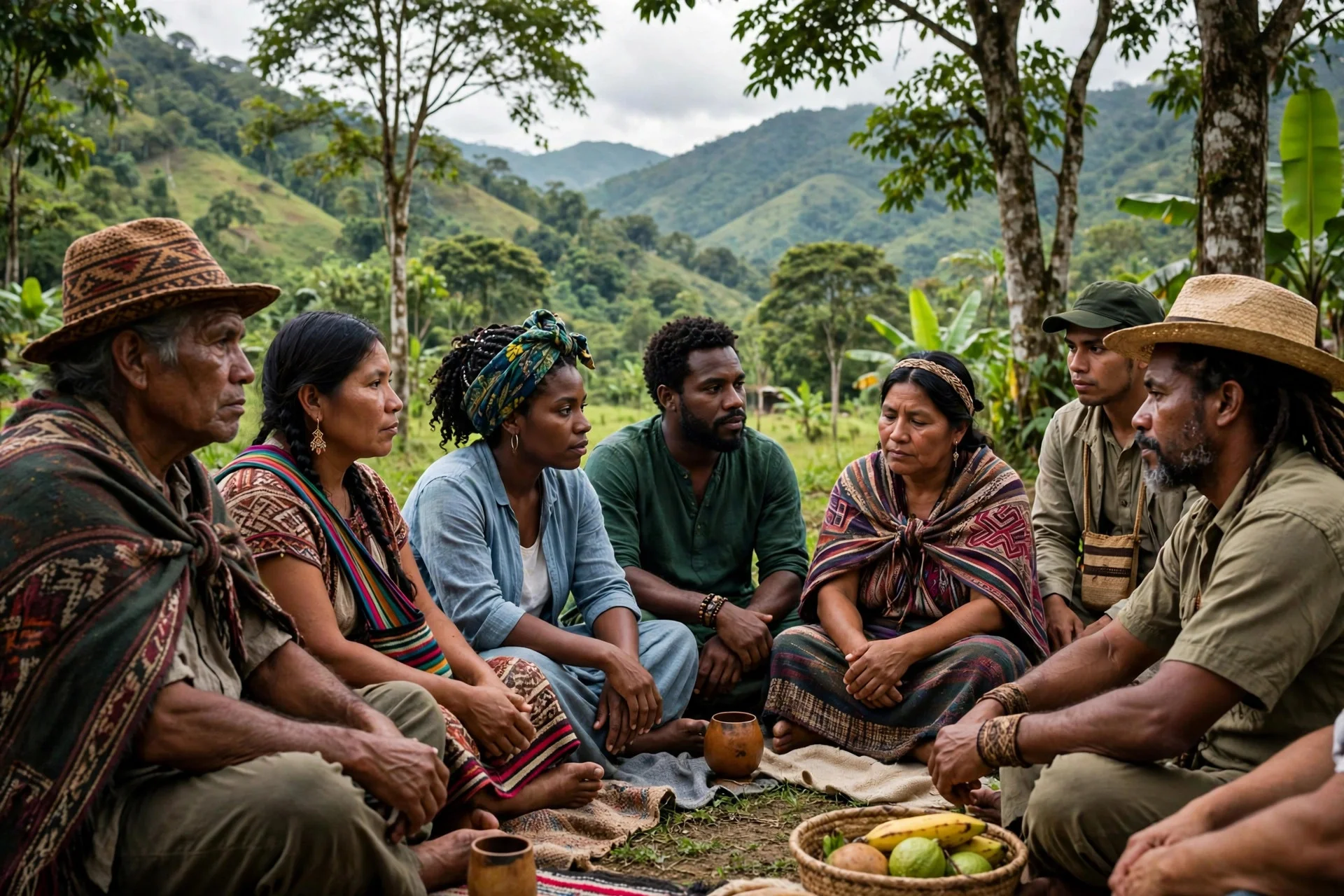
Asamblea territorial de comunidades étnicas en Colombia, en el debate sobre las reglas de la consulta previa.
Ombudsman urges halt to prior consultation reform in Colombia
Colombia's Ombudsman's Office asked the Ministry of the Interior to refrain from issuing, in its current version, the decree that would modify Decree 1066 of…
Prior consultation reform needs review before decree is issued
Colombia's Ombudsman's Office submitted observations on the draft that would modify Decree 1066 of 2015 and asked that it not be issued in its current version.
--- The context ---
Colombia's Ombudsman's Office asked the Ministry of the Interior to refrain from issuing, in its current version, the draft decree that would modify the rules of prior consultation in Colombia, considering that some provisions could affect the participation of ethnic peoples and communities in decisions about their territories and fundamental rights.
--- The facts ---
The position was presented in a document addressed on October 23, 2026, to Eliana Marcela Espinosa Silva, the Ministry of the Interior's legal director, with observations on the draft that would modify sections of Decree 1066 of 2015 on when prior consultation applies and its timing.
According to the office, the draft introduces new information burdens, preclusive appearance deadlines and restrictions on incorporating communities not identified in a timely manner, which could make it harder for the State to rigorously determine all possible direct impacts on Indigenous peoples and other ethnic communities. It also questions the automatic exclusion of communities that do not appear within certain deadlines.
The office asks for those burdens to be reviewed, for the absolute character of some preclusion rules to be removed and for more flexible terms, adaptable to each community's territorial, cultural, linguistic and organizational circumstances. It also requests that the draft itself be submitted to prior consultation with the potentially affected peoples, in good faith and through their representative institutions, and that authorities identify and assess on their own initiative the communities with reasonable indications of a direct impact.
--- The positions ---
The office recognizes the need to update the regulatory framework, improve legal certainty and overcome problems in identifying ethnic communities. Its warning is that administrative efficiency cannot hinder the effective exercise of prior consultation, a guarantee of participation, autonomy, cultural integrity and self-determination, whose applicability must remain for the State to determine.
--- What remains unknown ---
It is not known whether the Ministry of the Interior will accept the observations, what adjustments it would introduce or whether it will open prior consultation on the draft itself. No new timetable for issuing the decree is known either.
--- Unanswered questions ---
Will the Ministry of the Interior issue the decree in its current version despite the Ombudsman's request? Will the Government submit the draft itself to prior consultation with the potentially affected peoples? Will appearance deadlines be made more flexible and the absolute character of the preclusion rules removed?
--- EPM analysis ---
The office further asks that ordinary cases be differentiated from those in which free, prior and informed consent is required, and warns that an administrative closure for lack of agreement must not automatically become an authorization to execute a project. It also proposes that a new assessment after later modifications depend on the possible direct impact and not only on the environmental classification.
📌 EPM Take: In EPM's view, the request not to issue the decree in its current version protects the core of prior consultation without blocking reform: if a community can be excluded for failing to appear by a deadline, participation ceases to be an effective guarantee. Consulting the draft itself with the potentially affected peoples, making terms more flexible and keeping the responsibility for determining applicability with the State are reasonable prior adjustments before changing the rules of that intercultural dialogue.
--- The context ---
Colombia's Ombudsman's Office asked the Ministry of the Interior not to issue, in its current version, the draft decree that would modify sections of Decree 1066 of 2015 on when prior consultation applies and its timing in Colombia. It considers that some provisions could affect the participation of ethnic peoples and communities in decisions about their territories and fundamental rights.
--- The facts ---
The request was presented in a document addressed on October 23, 2026, to Eliana Marcela Espinosa Silva, the Ministry of the Interior's legal director. The observations include the new information burdens, the preclusive appearance deadlines and the restrictions on incorporating communities not identified in a timely manner.
The office warns that those conditions could make it harder for the State to rigorously determine all possible direct impacts on Indigenous peoples and other ethnic communities, and questions the automatic exclusion of communities that do not appear within the set deadlines. The main responsibility for determining whether a consultation applies, it holds, must remain with the State.
In response, it recommends removing the absolute character of some preclusion rules and establishing more flexible terms, adaptable to each community's territorial, cultural, linguistic and organizational circumstances. It also asks that the draft itself be submitted to prior consultation with the potentially affected peoples, in good faith and through their representative institutions, and that communities with reasonable indications of a direct impact be assessed on the authorities' own initiative.
--- The positions ---
The office does not oppose the reform: it recognizes the need to update the framework, improve the legal certainty of administrative actions and overcome the problems in identifying ethnic communities. Its objection is one of method, since it understands prior consultation as a guarantee of participation, autonomy, cultural integrity and self-determination, and states that the reform can move forward with safeguards compatible with constitutional and conventional standards.
--- What remains unknown ---
It remains to be seen whether the Ministry will introduce the requested adjustments and within what timeframe, whether the draft will be submitted to prior consultation and how the rules on appearance, preclusion and closure of consultations without agreement will be worded. No new issuance date is on record.
--- Unanswered questions ---
Will the Ministry of the Interior agree to halt issuance and adjust the text before signing the decree? How will legal certainty be guaranteed if terms become more flexible, as the office recommends? What rules will govern closing a consultation without agreement so that it does not amount to an automatic authorization of the project?
--- EPM analysis ---
The office further asks that the rules on the content of agreements be reformulated to preserve the intercultural character of the dialogue and allow measures of protection, prevention, mitigation, reparation, compensation and participation in benefits. And it proposes that, after later modifications to a project, a new assessment depend on the possible direct impact and not exclusively on its environmental classification.
📌 EPM Take: In EPM's view, addressing the observations before issuing the decree is also the safest path for the legal certainty the draft seeks: absolute preclusion rules and automatic exclusions by deadline would be a foreseeable source of litigation. Reviewing burdens, making terms flexible according to each community's circumstances and differentiating the cases that require free, prior and informed consent strengthens the rule without giving up on updating Decree 1066 of 2015.
Defensoría pide no expedir aún la reforma de la consulta previa
La Defensoría del Pueblo pidió al Ministerio del Interior no expedir en su versión actual el decreto que modificaría el Decreto 1066 de 2015 sobre consulta…
Consulta previa: piden revisar plazos y cargas antes del decreto
La Defensoría del Pueblo formuló observaciones al proyecto que modificaría el Decreto 1066 de 2015 y pidió no expedirlo en su versión actual.
--- El contexto ---
La Defensoría del Pueblo pidió al Ministerio del Interior abstenerse de expedir, en su versión actual, el proyecto de decreto que modificaría las reglas de la consulta previa en Colombia, por considerar que algunas disposiciones podrían afectar la participación de pueblos y comunidades étnicas en decisiones sobre sus territorios y derechos fundamentales.
--- Los hechos ---
La posición se presentó en un documento dirigido el 23 de octubre de 2026 a Eliana Marcela Espinosa Silva, directora Jurídica del Ministerio del Interior, con observaciones al proyecto que modificaría apartados del Decreto 1066 de 2015 sobre la procedencia y oportunidad de la consulta previa.
Según la entidad, el proyecto incorpora nuevas cargas de información, términos de comparecencia preclusivos y restricciones para incorporar comunidades no identificadas oportunamente, lo que podría dificultar que el Estado determine rigurosamente todas las posibles afectaciones directas sobre pueblos indígenas y otras comunidades étnicas. También cuestiona la exclusión automática de comunidades que no comparezcan dentro de determinados plazos.
La Defensoría pide revisar esas cargas, eliminar el carácter absoluto de algunas reglas de preclusión y fijar términos más flexibles, adaptables a las circunstancias territoriales, culturales, lingüísticas y organizativas de cada comunidad. Además, solicita que el propio proyecto sea sometido a consulta previa con los pueblos potencialmente afectados, de buena fe y a través de sus instituciones representativas, y que las autoridades identifiquen y valoren de oficio a las comunidades con indicios razonables de afectación directa.
--- Las posiciones ---
La entidad reconoce la necesidad de actualizar el marco reglamentario, mejorar la seguridad jurídica y superar problemas en la identificación de comunidades étnicas. Su advertencia es que la eficiencia administrativa no puede dificultar el ejercicio efectivo de la consulta previa, garantía de participación, autonomía, integridad cultural y autodeterminación, cuya procedencia debe seguir en cabeza del Estado.
--- Lo que falta saber ---
No consta si el Ministerio del Interior acogerá las observaciones, qué ajustes introduciría ni si abrirá la consulta previa sobre el propio proyecto. Tampoco se conoce un nuevo calendario para la expedición del decreto.
--- Preguntas sin respuesta ---
¿Expedirá el Ministerio del Interior el decreto en su versión actual pese a la solicitud de la Defensoría? ¿Someterá el Gobierno el propio proyecto a consulta previa con los pueblos potencialmente afectados? ¿Se flexibilizarán los términos de comparecencia y se eliminará el carácter absoluto de las reglas de preclusión?
--- Análisis EPM ---
La entidad pide además diferenciar los casos ordinarios de aquellos en los que resulte exigible un consentimiento previo, libre e informado, y advierte que el cierre administrativo por falta de acuerdo no debe convertirse automáticamente en una autorización para ejecutar un proyecto. También plantea que una nueva evaluación tras modificaciones posteriores dependa de la posible afectación directa y no solo de la clasificación ambiental.
📌 Conclusion EPM: A juicio de EPM, la petición de no expedir el decreto en su versión actual protege el núcleo de la consulta previa sin bloquear la reforma: si una comunidad puede quedar excluida por no comparecer en un plazo, la participación deja de ser una garantía efectiva. Consultar el propio proyecto con los pueblos potencialmente afectados, flexibilizar los términos y mantener en el Estado la responsabilidad de determinar la procedencia son ajustes previos razonables antes de cambiar las reglas de ese diálogo intercultural.
--- El contexto ---
La Defensoría del Pueblo pidió al Ministerio del Interior no expedir, en su versión actual, el proyecto de decreto que modificaría apartados del Decreto 1066 de 2015 sobre la procedencia y oportunidad de la consulta previa en Colombia. Considera que algunas disposiciones podrían afectar la participación de pueblos y comunidades étnicas en decisiones sobre sus territorios y derechos fundamentales.
--- Los hechos ---
La solicitud se presentó en un documento dirigido el 23 de octubre de 2026 a Eliana Marcela Espinosa Silva, directora Jurídica del Ministerio del Interior. Entre las observaciones figuran las nuevas cargas de información, los términos de comparecencia preclusivos y las restricciones para incorporar comunidades no identificadas oportunamente.
La entidad advierte que esas condiciones podrían dificultar que el Estado determine rigurosamente todas las afectaciones directas posibles sobre pueblos indígenas y otras comunidades étnicas, y cuestiona la exclusión automática de comunidades que no comparezcan dentro de los plazos fijados. La responsabilidad principal de determinar la procedencia de la consulta, sostiene, debe permanecer en cabeza del Estado.
Frente a ello, recomienda eliminar el carácter absoluto de algunas reglas de preclusión y establecer términos más flexibles, adaptables a las circunstancias territoriales, culturales, lingüísticas y organizativas de cada comunidad. Pide también someter el propio proyecto a consulta previa con los pueblos potencialmente afectados, de buena fe y por sus instituciones representativas, y valorar de oficio a las comunidades con indicios razonables de afectación directa.
--- Las posiciones ---
La Defensoría no se opone a la reforma: reconoce la necesidad de actualizar el marco, mejorar la seguridad jurídica de las actuaciones administrativas y superar los problemas en la identificación de comunidades. Su reparo es de método, pues entiende la consulta previa como garantía de participación, autonomía, integridad cultural y autodeterminación, y afirma que la reforma puede avanzar con salvaguardas compatibles con los estándares constitucionales y convencionales.
--- Lo que falta saber ---
Falta saber si el Ministerio introducirá los ajustes pedidos y en qué plazos, si el proyecto será sometido a consulta previa y cómo quedarán las reglas sobre comparecencia, preclusión y cierre de consultas sin acuerdo. No consta una fecha nueva de expedición.
--- Preguntas sin respuesta ---
¿Aceptará el Ministerio del Interior frenar la expedición y ajustar el texto antes de firmar el decreto? ¿Cómo se garantizará la seguridad jurídica si los términos se vuelven más flexibles, como recomienda la entidad? ¿Qué reglas regirán el cierre de una consulta sin acuerdo para que no equivalga a una autorización automática del proyecto?
--- Análisis EPM ---
La entidad pide además reformular las reglas sobre el contenido de los acuerdos para preservar el carácter intercultural del diálogo y permitir medidas de protección, prevención, mitigación, reparación, compensación y participación en beneficios. Y plantea que, tras modificaciones posteriores de un proyecto, la nueva evaluación dependa de la posible afectación directa y no exclusivamente de su clasificación ambiental.
📌 Conclusion EPM: A juicio de EPM, atender las observaciones antes de expedir el decreto es también la vía más segura para la certeza jurídica que el proyecto busca: reglas de preclusión absolutas y exclusiones automáticas por plazos serían fuente previsible de litigios. Revisar cargas, flexibilizar términos según las circunstancias de cada comunidad y diferenciar los casos que exigen consentimiento previo, libre e informado fortalece la norma sin renunciar a actualizar el Decreto 1066 de 2015.