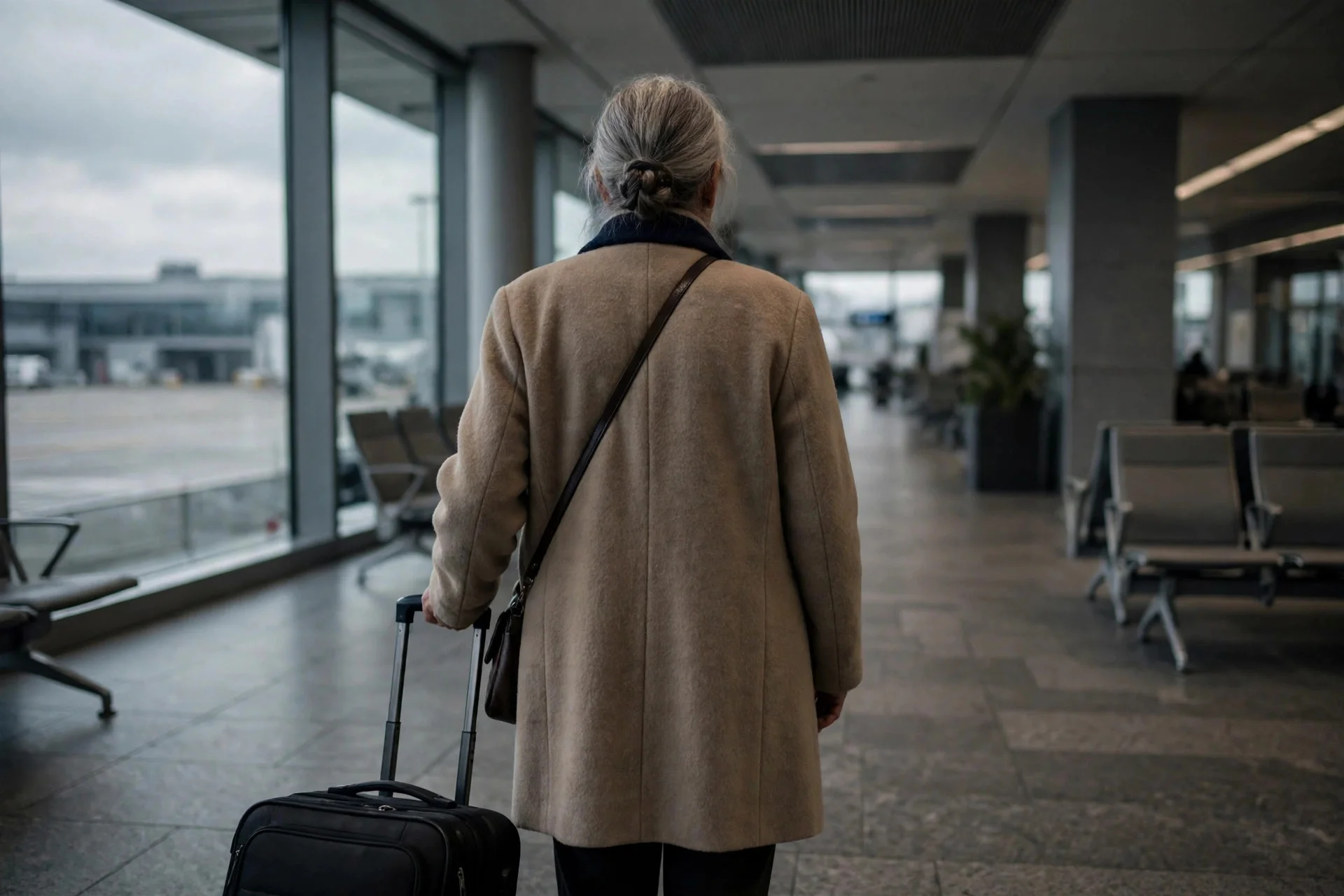
Imagen alusiva: una mujer mayor de espaldas, con su maleta, en la terminal de un aeropuerto.
Family seeks help for Venezuelan deported to Central African Republic
The family of Marilú Paredes, a 66-year-old Venezuelan deported according to its account to Bangui, is asking for financial support and legal advice to help…
A 66-year-old Venezuelan deported from Louisiana to Bangui
According to her family, Marilú Paredes was transferred from Louisiana to Bangui together with nine other women.
--- The context ---
The case of Marilú Paredes, a 66-year-old Venezuelan, sits, according to her family, within deportations from the United States to third countries. An international human rights organization reported on October 8 that, according to its analysis, more than 500 people were transferred to African countries between January 2025 and August 2026.
--- The facts ---
According to the family, Paredes was deported to Bangui, capital of the Central African Republic, and her relatives are asking for financial support and legal advice to help her leave there and reunite with her loved ones. According to testimony from those affected, she was transferred from Louisiana together with nine other women.
According to that testimony, the group believed it would be taken to Miami, where its immigration detention process would continue, but it ended up in the Central African Republic. Her daughter, Maylú López, said Immigration and Customs Enforcement officers detained her mother when she attended a mandatory immigration check-in.
Her daughter said, in attributed indirect terms, that her mother is alone in a country completely unknown to her, without relatives or a support network, and alleged that authorities retained her passport, which makes it harder, she explained, to obtain travel documents and explore legal alternatives.
--- The positions ---
The family maintains that Paredes had immigration protection that prevented her deportation to Venezuela and is seeking legal advice to review her transfer. Its fundraising campaign seeks to cover legal and documentary expenses to achieve a family reunion.
The information released carries no statement from Immigration and Customs Enforcement or any other authority about this specific case. The only contextual figure is the count from the international human rights organization cited.
--- What remains unknown ---
There is no official explanation of the destination chosen, nor the current state of the steps the family is trying to pursue from Bangui to obtain travel documents.
--- Unanswered questions ---
What legal route could allow Paredes to leave Bangui according to the review her family is seeking? How will the retention of her passport, alleged by her daughter, affect any documentary process? Will there be an official statement on this specific transfer?
--- EPM analysis ---
The force of the case lies in the contrast the family describes between the expected destination, Miami, and the final destination, a country that, according to her daughter, is completely unknown to her.
📌 EPM Take: In EPM's view, what the family describes requires careful and verifiable legal review, because a 66-year-old woman would have been left alone in Bangui, far from her husband and her family network, with her passport retained according to her daughter's account. With no official statement in the available information, the case rests on testimony that deserves to be tested, and the human priority the family raises, reuniting her with her loved ones after more than 40 years of marriage, should not be lost amid prolonged procedures and administrative silence.
--- The context ---
The family of Marilú Paredes, a 66-year-old Venezuelan, has made her case public after her deportation from the United States to the Central African Republic. An international human rights organization put on October 8, according to its analysis, at more than 500 the people transferred to African countries between January 2025 and August 2026.
--- The facts ---
According to the family, Paredes is in Bangui, the Central African capital, and her relatives are asking for financial support and legal advice to help her leave there and reunite with her loved ones. According to testimony from those affected, she was transferred from Louisiana together with nine other women.
According to that testimony, they believed they would be taken to Miami to continue their immigration detention process, but the transfer ended in the Central African Republic. Her daughter, Maylú López, said Immigration and Customs Enforcement officers detained her mother when she attended a mandatory immigration check-in.
Her daughter said, in attributed indirect terms, that her mother is alone in a country completely unknown to her, without relatives or a support network, and alleged that authorities retained her passport, which makes it harder, she explained, to process travel documents and pursue legal alternatives.
--- The positions ---
The family maintains that she had immigration protection that prevented her deportation to Venezuela and is asking for legal advice to review the transfer. Its fundraising campaign seeks to cover legal and documentary expenses to allow a solution.
The information released includes no statement from Immigration and Customs Enforcement or any other authority about this specific case. The contextual figure comes from the international human rights organization cited and its analysis of the period indicated.
--- What remains unknown ---
An official account is missing on why the transfer ended in Bangui, on the protection the family maintains existed and on her current documentary situation.
--- Unanswered questions ---
Will any authority review the circumstances of the transfer described by the family? What effect will the retention of the passport alleged by her daughter have on travel documents? What concrete legal path could the advice the family is seeking open?
--- EPM analysis ---
The case adds a family dimension: according to her daughter, her husband, to whom she has been married for more than 40 years, is recovering after the amputation of his left leg above the knee.
📌 EPM Take: In EPM's view, a firm immigration system must also be able to explain its decisions case by case, and in the available information that explanation does not yet appear for Marilú Paredes's transfer to Bangui. The family provides a detailed account, with protection it maintains existed, a retained passport and an unexpected destination instead of Miami, and those points require official testing and orderly legal review. Legal certainty is also measured by how the most vulnerable cases, far from any support network, are resolved in practice.
Familia pide ayuda para venezolana deportada a República Centroafricana
La familia de Marilú Paredes, venezolana de 66 años deportada según su relato a Bangui, pide apoyo económico y asesoría legal para ayudarla a salir de la…
Una venezolana de 66 años, deportada desde Luisiana a Bangui
Según su familia, Marilú Paredes fue trasladada desde Luisiana a Bangui junto con otras nueve mujeres.
--- El contexto ---
El caso de Marilú Paredes, venezolana de 66 años, se inscribe, según su familia, en las deportaciones desde Estados Unidos hacia terceros países. Una organización internacional de derechos humanos informó el 8 de octubre que, según su análisis, más de 500 personas fueron trasladadas a países africanos entre enero de 2025 y agosto de 2026.
--- Los hechos ---
De acuerdo con la familia, Paredes fue deportada a Bangui, capital de la República Centroafricana, y sus allegados piden apoyo económico y asesoría legal para ayudarla a salir de allí y reunirse con sus seres queridos. Según los testimonios de las afectadas, fue trasladada desde Luisiana junto con otras nueve mujeres.
Según esos testimonios, el grupo creyó que sería llevado a Miami, donde continuaría su proceso de detención migratoria, pero terminó en la República Centroafricana. Su hija, Maylú López, relató que agentes del Servicio de Inmigración y Control de Aduanas detuvieron a su madre cuando acudió a una presentación migratoria obligatoria.
Su hija señaló, en términos atribuidos, que su madre está sola en un país completamente desconocido para ella, sin familiares ni red de apoyo, y denunció que las autoridades retuvieron su pasaporte, lo que dificulta, según explicó, conseguir documentos de viaje y explorar alternativas legales.
--- Las posiciones ---
La familia sostiene que Paredes contaba con una protección migratoria que impedía su deportación a Venezuela y busca asesoría jurídica para revisar su traslado. Su campaña de recaudación de fondos busca cubrir gastos legales y documentales para lograr la reunión familiar.
La información difundida no recoge pronunciamiento del Servicio de Inmigración y Control de Aduanas ni de otra autoridad sobre este caso concreto. El único dato de contexto es el conteo de la organización internacional de derechos humanos citada.
--- Lo que falta saber ---
No consta una explicación oficial del destino elegido ni el estado de los trámites que la familia intenta impulsar desde Bangui para obtener documentos de viaje.
--- Preguntas sin respuesta ---
¿Qué vía legal podría permitir a Paredes salir de Bangui según la revisión que busca su familia? ¿Cómo afectará la retención de su pasaporte, denunciada por su hija, a cualquier trámite documental? ¿Habrá un pronunciamiento oficial sobre este traslado concreto?
--- Análisis EPM ---
La fuerza del caso está en el contraste que describe la familia entre el destino esperado, Miami, y el destino final, un país que, según su hija, le resulta completamente desconocido.
📌 Conclusion EPM: A juicio de EPM, lo que la familia describe exige una revisión jurídica cuidadosa y verificable, porque una mujer de 66 años habría quedado sola en Bangui, lejos de su esposo y de su red familiar, con su pasaporte retenido según el relato de su hija. Sin pronunciamiento oficial en la información disponible, el caso queda sostenido por testimonios que merecen contraste, y la prioridad humana que plantea la familia, reunirla con los suyos tras más de 40 años de matrimonio, no debería perderse entre trámites y silencios administrativos prolongados.
--- El contexto ---
La familia de Marilú Paredes, venezolana de 66 años, ha hecho público su caso tras su deportación desde Estados Unidos a la República Centroafricana. Una organización internacional de derechos humanos cifró el 8 de octubre, según su análisis, en más de 500 las personas trasladadas a países africanos entre enero de 2025 y agosto de 2026.
--- Los hechos ---
Según la familia, Paredes se encuentra en Bangui, capital centroafricana, y sus allegados piden apoyo económico y asesoría legal para ayudarla a salir de allí y reunirse con los suyos. De acuerdo con los testimonios de las afectadas, fue trasladada desde Luisiana junto con otras nueve mujeres.
Según esos testimonios, creyeron que serían llevadas a Miami para continuar su proceso de detención migratoria, pero el traslado terminó en la República Centroafricana. Su hija, Maylú López, relató que agentes del Servicio de Inmigración y Control de Aduanas detuvieron a su madre cuando acudió a una presentación migratoria obligatoria.
Su hija indicó, en términos atribuidos, que su madre está sola en un país completamente desconocido para ella, sin familiares ni red de apoyo, y denunció que las autoridades retuvieron su pasaporte, lo que dificulta, según explicó, los trámites documentales y las alternativas legales.
--- Las posiciones ---
La familia sostiene que contaba con una protección migratoria que impedía su deportación a Venezuela y pide asesoría jurídica para revisar el traslado. Su campaña de recaudación de fondos busca cubrir gastos legales y documentales para lograr una solución.
La información difundida no incluye pronunciamiento del Servicio de Inmigración y Control de Aduanas ni de otra autoridad sobre este caso concreto. El dato de contexto procede de la organización internacional de derechos humanos citada y su análisis del periodo indicado.
--- Lo que falta saber ---
Falta una versión oficial sobre por qué el traslado terminó en Bangui, sobre la protección que la familia sostiene que existía y sobre su situación documental actual.
--- Preguntas sin respuesta ---
¿Revisará alguna autoridad las circunstancias del traslado que describe la familia? ¿Qué efecto tendrá la retención del pasaporte denunciada por su hija sobre los documentos de viaje? ¿Qué camino legal podría abrir la asesoría que la familia busca?
--- Análisis EPM ---
El caso añade una dimensión familiar: según su hija, su esposo, con quien lleva más de 40 años de matrimonio, se recupera tras la amputación de su pierna izquierda por encima de la rodilla.
📌 Conclusion EPM: A juicio de EPM, un sistema migratorio firme también debe ser capaz de explicar sus decisiones caso por caso, y en la información disponible esa explicación todavía no aparece para el traslado de Marilú Paredes a Bangui. La familia aporta un relato detallado, con una protección que sostiene que existía, un pasaporte retenido y un destino inesperado frente a Miami, y esos extremos requieren contraste oficial y revisión legal ordenada. La seguridad jurídica se mide también en cómo se resuelven los casos más vulnerables y alejados de cualquier red de apoyo.